 |
|
Happy Wednesday.
|
|
Welcome back to Dry Powder, and thanks as always for following our work here at Puck. In today’s email, a closer look at Animal Capital, a newfangled venture capital firm that relies on its investors’ social media prowess to improve the fortunes of the early-stage companies in which the firm invests. Is it the next step in the democratization of capital, or does it presage another sea change for the intersection of finance and celebrity?
Bill
|
 |
| TikTok Capitalism Comes to Wall Street |
| In our age of Robinhood short squeezes and AMC apefests, social media influence is becoming the people’s leverage in the world of professional finance—where money is usually made from money. Now Animal Capital, a pioneering V.C. firm, is treating social media follower counts like real capital. |
|
|
|
Ndamukong Suh, the All-Pro defensive tackle and likely future NFL Hall-of-Famer, has made more than $150 million in career earnings playing for the Lions, Dolphins, Rams, and the Bucs, when they won the Super Bowl in 2021. Along with his heart-stopping athleticism, Suh has also been focused on business and on what he’s going to do after his storied football career comes to an end. (He is a free agent at the moment.) On a recent Zoom, he shared that he has been “looking at companies,” their profitability and their future prospects, ever since he was an undergraduate at the University of Nebraska—the last truly great player in that program’s legendary history.
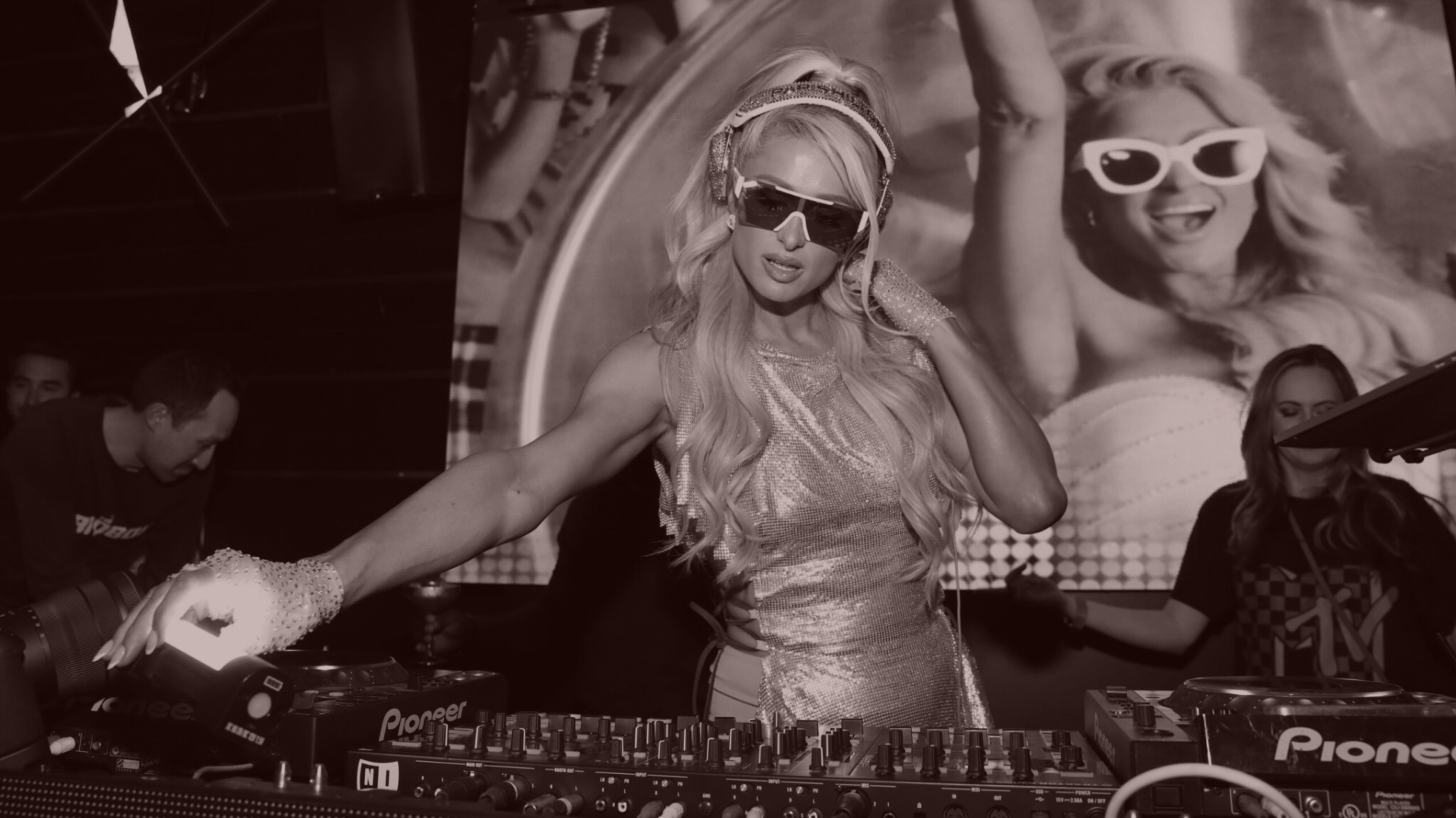
To that end, we also spoke about his recent decision to invest in Animal Capital, a newfangled venture capital firm that relies on its investors’ social media prowess to improve the fortunes of the early-stage companies in which the firm invests. As a gifted professional athlete, Suh was an instant believer—and investor, alongside the likes of Anthony Scaramucci and The Winklevii, the noted investor Paris Hilton, and Christina Aguilera, joining a group that knows it can improve the fortunes of a company with a well-timed Tweet or TikTok video. “This is kind of the tip of the iceberg, to say the least,” Suh told me.
I became fascinated about a year ago by the growing phenomenon of how celebrities and social media influencers of all stripes were suddenly joining the venture capitalist ranks. That’s when I first met Marshall Sandman, an ex-Goldman Sachs investment-banking analyst and a former director of strategy at WarnerMedia, who had teamed up with a group of young social-media celebrities such as Josh Richards, Griffin Johnson and Bryce Hall to start Animal Capital. Sandman’s key insight was to recruit social media influencers to accomplish the dual mission of getting them access to early-stage investment opportunities (like the big boys) and then for his celebrity partners to help make those portfolio companies more valuable by harnessing their vast social-media followings. And then for everyone to get really rich.
We’re not talking about a group of traditionally trained investment professionals here. There’s not a graduate of Harvard Business School among them. Josh Richards, a high-school dropout from outside Toronto, moved to Los Angeles when he was 17. He’s now 20 and has more than 40 million followers across his various social-media platforms. Along with Johnson and Hall, Richards became famous, in his way, by making short videos about his life in the (now defunct) Sway House, in Los Angeles, and posting them to social media platforms, such as TikTok and Triller. Richards now wants to become an actor.
Animal Capital, version 1.0, ended up raising around $17 million, according to Sandman. He said the fund was offered more than $40 million in proceeds, but decided to limit the size of the round to what he and his partners could reasonably invest. The thesis was to be a complementary investor to bigger venture capital funds, not a competitor, and to make valuable connections and, at the right time, to jumpstart the companies’ brands on social media. In its first fund, Animal Capital invested alongside A16Z in Breakr, a music marketplace that connects artists, creators and brands to “create movements,” according to the Breakr website. Animal Capital has also invested in PYM, a company started by Zak Williams—the late Robin Williams’s son—that makes anti-anxiety chewables, and in Fairseed, a maker of inexpensive smoothies. It has also invested in Chums, a Yelp-like online review site for products, as opposed to restaurants. Sandman explained that the first fund ended up making around 60 investments.
One of its biggest hits was Whatnot, a trading card marketplace. Animal invested at a $50 million valuation; Whatnot just raised a new round of equity financing at a $1.5 billion valuation. (Whoa.) Animal also invested in Underdog Fantasy, a fantasy sports business, also at a $50 million valuation; now it is valued at $500 million. About three months ago, Animal invested in Inkbox, a maker of temporary tattoos, alongside Maveron Capital; Bic, the pen manufacturer, just bought the company for $65 million. “We got our money back, plus about 55 percent,” Sandman told me. “So that was a nice IRR.”
Not everything worked, of course. Animal’s biggest loser was the appropriately named Ugly, a maker of non-alcoholic seltzer with cool flavor drops, like for instance a Shirley Temple. Ugly was having a great 2021 but then signed a big distribution deal with CVS that it couldn’t fulfill because of supply-chain issues. “He ran himself straight out of business,” Sandman said of the founder. “I think it’s a cautionary tale.”
Animal Capital 1.0 has invested about $10 million of its $17 million. Now that $10 million is worth $20 million, based on the (often subjective) current valuations of the portfolio companies, Sandman explained. With that kind of track record, it’s not surprising that Animal Capital and the ex-Sway House bros are in the market raising a second fund. “It’ll be $35 million,” Sandman explained to me recently by Zoom from Raleigh, North Carolina, where he grew up and is now thinking of buying a home, “and we are batting away people with a stick.” The Winklevoss Twins and the Mooch are back in “and upsized,” Sandman said. Paris Hilton is in with a bigger investment than she made in the first fund, as is Aguilera. Thomas Tull, the founder of Legendary Pictures, re-upped for more money. Cousin Greg, a.k.a. Nicholas Braun, is also an investor. Sandman told me that a “major Hollywood producer” tried to buy the firm out from under them. “They saw some media opportunity,” he said. That didn’t happen.
For his part, Suh said he likes working with Sandman to figure out ways to help the Animal Capital portfolio companies. For instance, he’s been helping Cometeer, a coffee company that is using new flavor-strip-ish technology to try to break the Nespresso stronghold, to deliver hot and cold coffee. “I’m all about adding value,” he said. He isn’t making the investment in Animal Capital frivolously. “I've never been the person to—I guess the unprofessional way of saying it's—kind of spray and pray,” Suh told me. “I've always been pretty calculated.”
Suh said he is not scared off by recent market choppiness. “We were in a bull-bull market this last year,” he explained, “and it's actually not a bad thing to have some volatility be healthy for us.” And yes, Suh and Tom Brady have talked about investing in Bitcoin and cryptocurrencies and about FTX, the cryptocurrency exchange that has made Sam Bankman-Fried the wealthiest 30-year-old in the world. “I've actually got my own relationships with FTX and Sam primarily,” Suh said. “I'm really big on Solana, so heavily focused over there and the amazing things that they're doing in growing their Metaplex platform around N.F.T.'s.”
|
|
|
On some level, sure, Animal sounds like a gimmick. But I think it also represents something a lot more powerful, and may be the latest data point in the evolving, and often controversial, era of what I like to call the Democratization of Capital. Once upon a time, back in the days of HBO’s The Gilded Age, access to capital was the preserve of the wealthy. But that all began to change in the 1980s, when, thanks to an outbreak of financial innovation, more and more regular people gained access to capital in ways that would have been inconceivable a century earlier.
Take, for instance, the lowly credit card. According to the latest statistics I could find, there are more than 1 billion credit cards issued to Americans these days. That means that most people in the United States probably have access in their pockets to an unsecured line of credit to use any way they choose, at any time, without asking anyone for permission. That’s quite an innovation if you think about it. The only requirement, if you want to keep the gig going, is that you need to pay back the money at some point, preferably without incurring the usurious interest rates that credit card issuers charge for the use of their money for more than a month.
Thanks to such Wall Street innovators as Michael Milken and Lewis Ranieri, the Democratization of Capital took another quantum leap forward in the late 1980s. Before he ended up in prison, Milken, of course, created what we now call the high-yield debt market, which makes capital available, at a price, to companies, municipalities and other institutions with less than stellar credit. Before Milken, it was very difficult, if not impossible, for many of these companies to get the capital they needed to grow. Without Milken and the market he created, companies such as Safeway, Paramount Global and Warner Bros. Discovery, among many others, might not exist.
Ranieri, the father of securitization, made it possible for more Americans to get mortgages to buy homes and loans to buy cars at attractive rates. Ranieri pioneered the idea of pooling together mortgages and car loans, as well as credit-card receivables, into securities that investors—looking for higher yields than could be found in safer credit markets—could then buy and sell. By making the market for mortgages and auto loans bigger and “more liquid,” it has become easier and easier for more Americans to buy homes and cars using other people’s money.
With the rise of Animal Capital, it seems, the Democratization of Capital may finally be coming to one of the last bastions of elitism and privilege in high finance: the venture capital ecosystem. Back in the day, it was people like J.P. Morgan and Henry Villard, in New York, or Henry Higginson, S. Endicott Peabody and T. Jefferson Coolidge, in Boston—people with generational wealth—who were the ones called upon, and willing, to take a flier on start-up companies. Later, it was the Whitneys and the Rockefellers who were the venture capitalists. While it’s true that over the decades, venture capital has moved beyond Boston and New York to places such as Sand Hill Road in Silicon Valley and to firms such as A16z, Kleiner Perkins, Sequoia Capital, Greylock Partners, among many others, the business has long still remained a tight club of wealthy elites (mostly white men) who control the information and the access to the best deals and seem to make the most money.
In recent years, that has started to change. Slowly but surely, more and more Americans are beginning to get access to these kinds of risky and potentially lucrative investment opportunities, if they have the cajones for them (and many people seem to). The desire for higher risk, and higher returns, is one reason that millions of Americans recently piled into SPACs—blank-check entities looking to take private companies public. (The SPAC market has since all but collapsed.) Of course, for most Americans, it remains difficult—if not impossible—to invest in early-stage ventures. Opening the moat of accredited investors to include social-media influencers, actors and athletes, at least, is a start.
Among the former athletes investing in Animal Capital are retired journeyman long snapper Andrew East and his wife, Shawn Johnson, the Olympic gold-medal gymnast. East and Johnson are the “biggest parent influencers” in the country through their podcast, Sandman told me. “When they say, ‘You need to go buy this car seat for your baby,’ that thing sells out at Target,” he continued. “They just went on a dozen-city live tour. It was about 5,000 seats per auditorium. Sold the whole thing out, people crying in the audience…”
On a Zoom, Johnson and East explained that they met Sandman about eight months ago and afterward decided that investing in Animal Capital would be a great way to participate in the boom they see coming in the “creator space.” East praised his wife for being one of the “pioneers” in the “creator space,” with a YouTube channel and by actively creating content for social-media platforms. “It’s been fun to see how things have evolved and grown,” he said. “Apparently there are 50 million people worldwide who consider themselves to be creators.” He said he “never dreamed” he would be “editing TikTok videos that are 14 seconds long” for a living. (He was a civil engineering undergraduate at Vanderbilt and also has a M.B.A. from the university.) “The whole goal with these creator funds, of which Animal Capital is one of several,” East continued, “is to really create a unique win-win situation for both the company and the creator.”
East and Johnson said they are looking to invest in companies in “our family lifestyle realm” where they can “add extra value” beyond “just the check that we’re writing.” He said if the creators partner with the right companies “there is a kind of a one-plus-one equals-three type effect when these investments made by creators are executed well.”
I wondered, as I did with Suh, whether they were worried about investing in venture capital as the market turns rockier. “It's honestly all risk,” Johnson said. “Literally anywhere you put [money] these days, it's a risk. So yes, I think we worry about it as much as we would worry about anywhere else we are investing our money.” She believed it comes down to their “relationships” and to “hope.” East quickly jumped in. “I do think that venture capital is kind of a place where a lot of institutional capital is looking as the more traditional markets do get choppy,” he said. “And there is always risk, but I think there's Andrew Carnegie who said, ‘You should put all your eggs in one basket and watch that basket.’”
|
|
|
Sandman said that Animal Capital has changed his life, for the better. “When we started this business, the sole goal, with blinders on, was to change the way people viewed celebrities getting involved with venture-backed businesses,” he explained. “I wanted to seismically shift the way that when a founder has a conversation with a celebrity, they view it as a commercial partnership, an equity partnership, a long-term partnership.”
He said company founders need to make a bet on social media celebrities the same way social media celebrities need to make a bet on the company founders. It’s a symbiotic relationship. “But for someone like Josh [Richards] or any other social media celebrity, this is a bigger part of their pie, and in success that pie can help both sustain their fame and sustain their finances for a longer period of time,” he concluded.
Plenty of people, over the years, have gotten singed by passively investing in venture-capital funds, or in private-equity funds, and leaving the fate of their investments in the hands of the so-called professionals. (I’ve certainly done that.) Most of the time, the professionals get rich and the investors do more or less OK, after the professionals get their 2 and 20 or 3 and 30. What Sandman and Animal Capital are doing feels different to me. Here the investors are not only plunking down their money, but also are using their large and growing social media influence—their leverage—to help the companies they are investing in to become a success. I’ve certainly heard of crazier things. And when you can turn $10 million into $20 million in a few months and then have investors lining up to give you more, these guys just might be onto something.
|
|
|
|
| FOUR STORIES WE'RE TALKING ABOUT |
 |
| The Will Smith Legal Fallout |
| ABC, the F.C.C., the L.A.P.D.—making sense of slapgate and its various legal ramifications one day later. |
| ERIQ GARDNER |
|
 |
| Will Smith’s Tragic Lesson |
| Smith’s meandering and pained Oscars acceptance speech was couched in the language of abuse. |
| BARATUNDE THURSTON |
|
 |
| Silicon Valley’s Enemy No. 1 |
| S.F.’s embattled D.A. discusses the media, billionaires, and the recall. Is he being unfairly smeared, or just bad at his job? |
| THEODORE SCHLEIFER |
|
 |
| The Buffett Mystery |
| A bizarre and unexpected proxy statement leaves Wall Street to speculate: Do Warren Buffett and Goldman Sachs have beef? |
| WILLIAM D. COHAN |
|
|
|

|
|
|
You received this message because you signed up to receive emails from Puck.
Was this email forwarded to you?
Sign up for Puck here
Sent to
{{customer.email}}
Unsubscribe
Interested in exploring our newsletter offerings?
Manage your preferences
.
Puck is published by Heat Media LLC.
64 Bank Street
New York, NY 10014
For support, just reply to this e-mail.
For brand partnerships, email ads@puck.news |
|
|