{{ 'now' | timezone: 'America/New_York' | date: '%b %d, %Y' }} |
|
|
Hello and welcome back to The Best & The Brightest. I’m Leigh Ann
Caldwell.
In tonight’s issue, I’m taking a look at the latest drama in Texas, which is among the most fascinating political laboratories in the country. I have some fresh intel on Sen. Ted Cruz’s sudden display of independence; the state attorney general race featuring Rep. Chip Roy and others; and the latest potential entrants—yes, plural—to the Republican Senate primary. All these micro-moves have big implications for the balance of
power in the U.S. Senate and the 2028 presidential campaign.
Finally, a reminder that you can take 20 percent off a Puck membership by clicking here, courtesy of our fourth anniversary sale.
But first… |
- Messaging
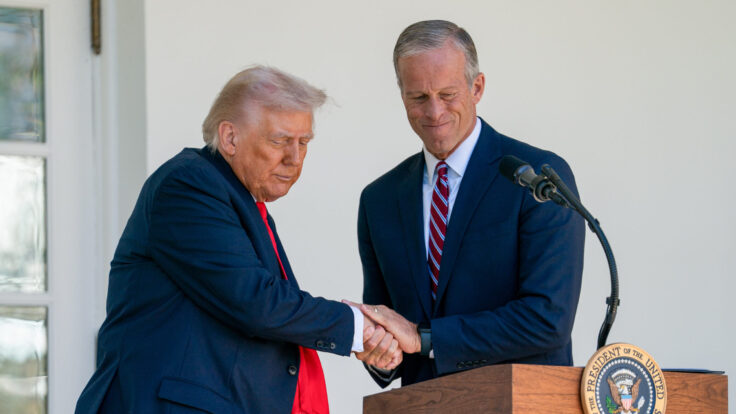
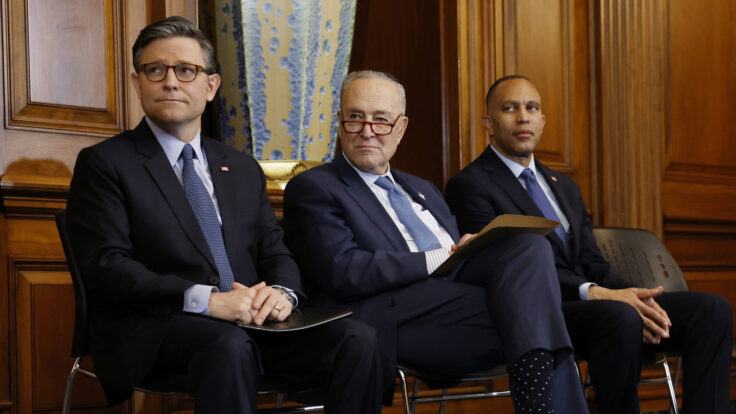
wars: We’ve entered the standoff stage of this government shutdown fight. Senate Majority Leader John Thune, who submitted to a rare CNN interview today, called Democrats “completely unhinged and unreasonable and unserious” about their demands for a seven-week stopgap spending bill. Thune implored Democrats to instead support a clean, short-term funding extension—and insisted there was no need to negotiate something so straightforward.
But
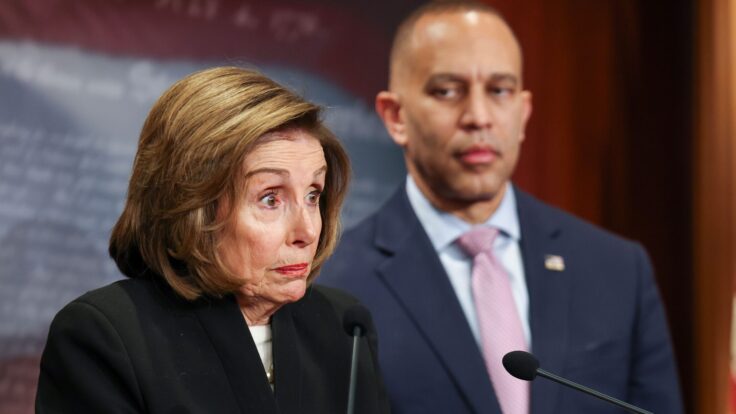
the Democrats, many of whom insist that times are far from normal, are trying to use their scant leverage to force concessions from Trump and the Republicans. House Democratic leader Hakeem Jeffries told reporters at the Capitol today that Republicans “have launched an all-out assault on the healthcare of everyday Americans.” Democrats are demanding that Republicans enter into negotiations to restore Medicaid cuts from the One Big
Beautiful Bill and extend expiring tax subsidies for the Affordable Care Act.
Meanwhile, Trump canceled a meeting that was scheduled for tomorrow with the Democratic leaders. Senate Democratic leader Chuck Schumer and Thune have yet to talk about the deadline. As you know, government funding runs out on September 30.
|
|
|
A MESSAGE FROM OUR SPONSOR |
Hospitals are here when you need us most – but hospitals across America are at risk of closure. |
|
|
- Clean-up
in the medicine aisle: Trump administration officials are trying to walk back statements from the president’s jaw-dropping press conference earlier this week—you know, the one where he encouraged pregnant women to “tough it out” and “fight like hell not to take” Tylenol. Dr. Mehmet Oz, the director of the Centers for Medicare and Medicaid Services, offered somewhat softer advice, telling TMZ Live that women should consult their doctors about it. (Of course, the mere fact
that he did a TMZ interview suggested that the administration was panicking and trying to reach a mass audience that might not consume much political news.) And Vice President J.D. Vance, who was in North Carolina for a rally, passed on the same message in a News Nation interview today.
- YouTube’s standards: As you may recall, I noted on
Sunday that many Republicans have kept mum about the Trump administration’s attempt to silence free speech, both because they’re scared and, in some cases, genuinely resentful. Many felt that their views were unfairly censored, on social media and elsewhere, during the Biden administration. Well, conservatives are celebrating a new development this week. After
a years-long investigation led by House Judiciary Committee Chair Jim Jordan, Google told the committee in a letter yesterday that it would reinstate access to YouTubers kicked off the platform for violating content standards related to Covid and the 2020 election. I’m sure this will
make everything better.
- Will Wesley run?: In the very high-profile Republican Texas Senate primary, Rep. Wesley Hunt is still on the sidelines considering whether he should jump into the race against John Cornyn and Ken Paxton under the assumption that the former is a weak primary candidate and the latter is a general election nightmare. In the meantime, Cornyn and his allies have spent
millions to boost his standing among base voters, and recent primary polls show him either tied or winning. A poll out today by One Nation found that 32 percent of primary voters support Cornyn, while 31 percent were behind Paxton. (One Nation has close ties to Senate Republican leadership, which is backing Cornyn.) Anyway, it says something that the N.R.S.C. and the Senate Leadership Fund are spending money to prove Cornyn can win while also writing
memos that explain why Paxton would be a drain on the party.
Hunt, meanwhile, garnered 17 percent support, which is not terrible for a House member who hasn’t yet declared, although his allies have spent a few million boosting his name I.D. (I’m also hearing from a couple of Texas Republicans that another House member is contemplating getting in the
race.) When I asked Texas Republican sources if Hunt will actually run, several felt it was likely. But Hunt’s district has become more Republican amid the latest map changes, setting him on an easy path to reelection. Giving up his congressional seat for a dirty, expensive, and messy primary might not be in his best interest.
|
|
|
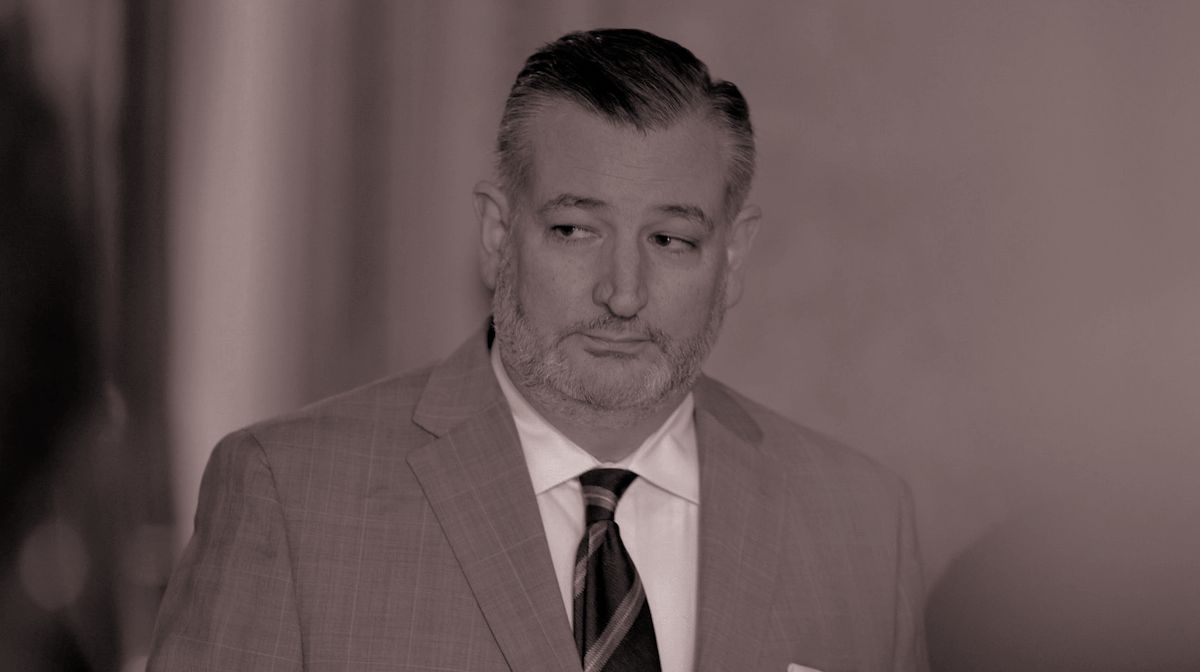
Many have noticed that the Texas senator has been displaying an unusual amount of
independence from the White House lately. Is it simply a naked bid to position himself in a sure-to-be crowded ’28 primary? |
|
|
During his first two Senate terms, Ted Cruz has earned his reputation as a
bombastic culture warrior, taking special pleasure in provoking the libs as well as colleagues in his own party. (Famously, former House Speaker John Boehner once called him “Lucifer in the flesh.”) But like the rest of the G.O.P. of late, he has tended to be in lockstep with Donald Trump—which is why his recent independent streak
has been so noteworthy. First, earlier this year, he warned that Trump’s signature tariffs could “hurt jobs and hurt America.” And in the aftermath of Charlie Kirk’s murder, he criticized both A.G. Pam Bondi, for suggesting she’d prosecute hate speech, and F.C.C. Chair Brendan Carr, for
threatening broadcasters over Jimmy Kimmel’s remarks on the shooting.
Of course, this is all part of a grand strategy for the Cancun-loving Trump loyalist: Cruz is laying the groundwork for a 2028 presidential run—and, according to people who know him, a debate over the future of the Republican Party. In what could be a crowded
primary, Vice President J.D. Vance is expected to take up the Trumpist, populist mantle (although Marco Rubio and probably a dozen others will also be reaching for it), while Cruz is positioning himself as the standard-bearer of a party returning to its small-government, free-market roots. |
|
|
A MESSAGE FROM OUR SPONSOR |
Hospitals need your help to stay. Protect 24/7 care—because when the doors close, it is too late |
|
|
That’s why Cruz and his political team have decided that the senator should begin differentiating himself in
places where he disagrees with Trump, according to two people familiar with his plans. After all, it’s a return to form: He came of political age during the era of the Tea Party, whose ethos still drives much of his politics, albeit more subtly under Trump. It’s possible to read his recent statements on tariffs and free speech as those of a former Justice Department official and Supreme Court clerk occupied with matters of free speech and religious liberty—or, at least, that’s the
bet.
Naturally, Cruz has personal motivations as well. There’s absolutely no love lost between him and Vance, a beef that originated during the latter’s Senate run in 2022. In the Republican primary for that Ohio seat, Cruz backed one of Vance’s opponents, Josh Mandel, who also had the support of the small-government Club for Growth (a Cruz backer and ally) and the consulting services of Axiom Strategies. (Cruz, of course, is a client and friend of its founder,
Jeff Roe). Trump, obviously, supported Vance. We all know how that turned out.
Meanwhile, Cruz is also trying to position himself as a serious, even bipartisan, legislator. He’s tried this before, during his 2024 reelection campaign against Democrat Rep. Colin Allred, when he unveiled a group called Democrats for Cruz and convinced local and national reporters to write about his rebrand. At the time, though, he had very little record to show for it: He
repeatedly ranked near the bottom (or even last) in the Lugar Center’s bipartisanship rankings through 2023. But last year, the Center for Effective Lawmaking ranked him the third-most-effective Republican senator—a major improvement. (Disclosure: I sit on the board
of CEL.)
Since assuming the chairmanship of the Senate Commerce Committee this year, Cruz has leaned into its key hot-button issues—the F.C.C., trade, and A.I. This has also been an opportunity for Cruz to try to influence the G.O.P.’s policy stances in preparation for whatever political world comes after the Trump cult of personality. When the Wall Street Journal editorial board dubbed Cruz’s clapback of Carr as his
“finest hour,” it was more than just a compliment. It was a boost from the pages that speak to small-government conservatives. |
Lone Star
Consultant Wars
|
Meanwhile, Cruz is also enmeshed in his state’s high-profile and crowded race to succeed state Attorney
General Ken Paxton, who is primarying Sen. John Cornyn for his Senate seat. After all, two of the candidates—Rep. Chip Roy and former Trump Justice Department official Aaron Reitz—served as chiefs of staff to Cruz and deputies to Paxton. Roy, a die-hard fiscal conservative, is positioning himself against Reitz’s Trumpist, anti-immigration populism. Naturally, they’re both desperately seeking Trump’s endorsement. Roy has Cruz’s
support and Reitz has Paxton’s; where Trump decides to place his thumb is still uncertain. |
|
|
In any case, Roy is the better-known candidate after three terms as a bombastic and (mostly) principled
member of the House Freedom Caucus. He became a household name well outside his district—a rural swath of the state that stretches between Austin and San Antonio. However, he has criticized Trump for not doing enough to reduce the deficit, privately opposed his efforts to overturn the 2020 election, and claimed that Trump’s January 6 conduct was “clearly impeachable.” Worse, arguably, he backed Ron DeSantis in the 2024 presidential primary. Reitz, meanwhile, was a
Senate-confirmed Trump appointee before getting into the race.
The political consulting wars are also playing an outsize role in the contest. Axiom’s Sam Cooper is helping Roy, which could threaten his already slim chances of getting the Trump endorsement. After all, Roe has made a lot of enemies in Republican circles, including in Trump’s political orbit. On the other hand, the consultant crossover is at least one reason why Roy got the Cruz endorsement,
according to two people familiar.
Paxton, however, did not use the same endorsement logic. Axiom runs his campaign, too—which, as I’ve reported, has hampered his own chances of a Trump endorsement against Cornyn—but he went with Reitz because he loathes Roy, who called on the A.G. to resign when he was accused of bribery and abuse of office. (Paxton was impeached in the Texas House but acquitted by the Senate.) Paxton’s nod as the incumbent A.G. was a boost to a candidate with hardly any
name I.D., but the real game changer would be a Trump endorsement. It just so happens that Reitz has hired Trump’s former campaign manager, Chris LaCivita, and FP1, a Trump-aligned consulting firm.
However the race shakes out, the results will have implications for Cruz’s presidential ambitions. A big win for a Cruz-backed candidate in a high-profile statewide race would signal to donors and the consultant class that his vision for the G.O.P. is voter-tested and approved,
and that he knows how to both pick and prop up winning candidates. And while a Roy loss wouldn’t be politically devastating for his former boss, it certainly wouldn’t help his shadow campaign. |
|
|
The industry’s go-to source for unflinching reporting on the trillion-dollar business of artificial intelligence - perhaps the
single most important technology of our time. Ian Krietzberg, the powerhouse journalist behind The Deep View, delivers twice-weekly insights into the latest dealmaking and breakthroughs in A.I., and how the intersecting worlds of finance, entertainment, media, and politics are being transformed in its wake. |
|
|
Join Puck’s chief political columnist, John Heilemann, as he roams the corridors of power and influence in America on this
twice-weekly interview show, taking you beyond the headlines with the people who shape our culture: icons and up-and-comers, incumbents and insurgents, moguls and machers in the overlapping worlds of politics, entertainment, tech, business, sports, media, and beyond. The conversations are rich and revealing, unrehearsed and unexpected… and reliably impolitic. A Puck-Audacy joint, new episodes drop every Wednesday and Friday. |
|
|
Need help? Review our FAQ page or contact us for assistance. For brand partnerships, email ads@puck.news. You received this email because you signed up to receive emails from Puck, or as part of your Puck account associated with {{customer.email}}. To stop receiving this newsletter and/or manage all your email preferences,
click here. |
Puck is published by Heat Media LLC. 107 Greenwich St, New York, NY 10006 |
|
|
|