{{ 'now' | timezone: 'America/New_York' | date: '%b %d, %Y' }} |
|
|
|
Hello and welcome back to The Best & The Brightest. I’m Leigh Ann Caldwell,
writing during this appallingly chilly spring weekend.
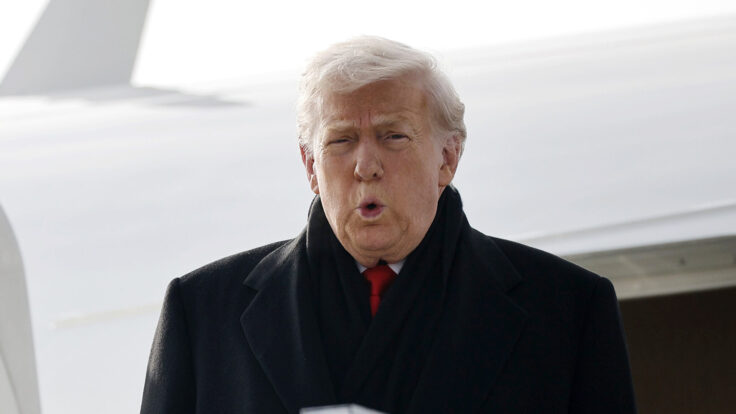
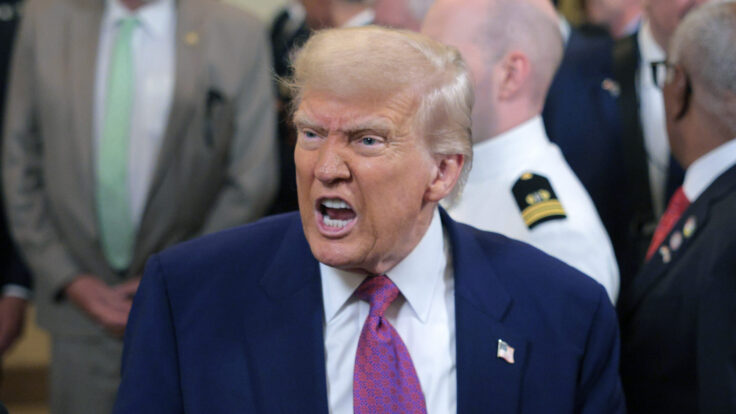
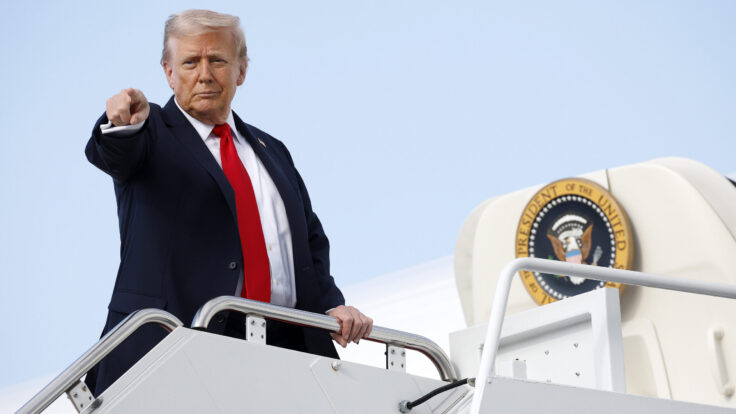
Trump has announced on Truth Social that, beginning Monday morning, the U.S. will guide ships through the Strait of Hormuz that have been stranded since the start of the Iran war. Naturally, this initiative is called Project Freedom. Safe passage to all involved.
Congress is out of town for the week, and for the first weekend since January 30, most of the Department of Homeland Security is funded. But
the process took a toll on the two Republican leaders. Below, I take a look at the slow-motion rupture between House Speaker Mike Johnson and Senate Majority Leader John Thune. It’s already been a long year for congressional Republicans, and lately, their own internal divisions are bursting into the open—an ominous sign as they head into a difficult midterm season. Up top, news and notes on Trump’s war powers battle and some brutal midterm
polling.
Also mentioned in this issue: Dusty Johnson, Paul Ryan, Brian Mast, Tip O’Neill, Mitch McConnell, Chip Roy, Adam Schiff, Mario Diaz Balart, and more… |
|
|
|
A MESSAGE FROM OUR SPONSOR |
When insurers delay approvals or require endless paperwork, patients are left waiting for care they need now. Addressing harmful corporate insurer practices can help ensure timely access to treatment and protect 24/7 care. See how. |
|
|
|
The White House, with flawless timing, sent letters to Congress late last week arguing that the
War Powers Resolution—the 1973 law requiring congressional authorization for any deployment of the U.S. Armed Forces that lasts beyond 60 days—no longer applies to the war in Iran because hostilities have “terminated.” Of course, an A.U.M.F. vote would be awkward for the White House—it would struggle to clear the 60-vote threshold in the Senate and might not even pass the House, risking a public bipartisan rebuke for Trump. Notably, the memo arrived just one day after that 60-day deadline
passed.
Democrats, meanwhile, aren’t buying the narrative that the war is over. “The Navy is still deployed. It is still blockading Iranian ports. It is still interdicting ships,” Sen. Adam Schiff said on Meet the Press today. Republicans, for their part, have been gaming out how to address the 60-day deadline. One idea is to rally behind something narrow that could get Republican support, such as protecting navigation in the Strait of Hormuz.
“I’m not going to push a war-powers vote,” Rep. Brian Mast, the Trump-allied chairman of the House Foreign Affairs Committee, told me. But he noted that others likely will. |
A new Washington Post–ABC News–Ipsos
poll offers yet more warning signs for Republicans heading into the midterms. Donald Trump is saddled with a 37 percent approval rating, with just 23 percent approving of his handling of the cost of living—a brutal number on the very issue that anchored the president’s 2024 campaign. And the bad news doesn’t stop there. Trump is also underwater on the
border, with 45 percent approving of his handling of the issue and 54 percent disapproving—a striking reversal on what has long been his strongest political asset, even as Republicans think he’s solved the problem. Much of the dissatisfaction is coming from independents, with only 25 percent approving of the job Trump’s doing as president. Not a good sign for the G.O.P. heading into November, especially since Republicans can’t separate themselves from Trump without depressing base
turnout.
The poll also revealed two issues where both parties have room to capture voters. For instance, just 19 percent of respondents trust Democrats and 18 percent trust Republicans to handle A.I. The majority—51 percent—trust neither. The same dynamic applies to “reducing corruption in government,” with only 26 percent trusting each party to tackle it, while 44 percent trust neither. The party that can successfully define or address either issue could own it well into the
future.
And now, over to Johnson and Thune… |
|
|
|
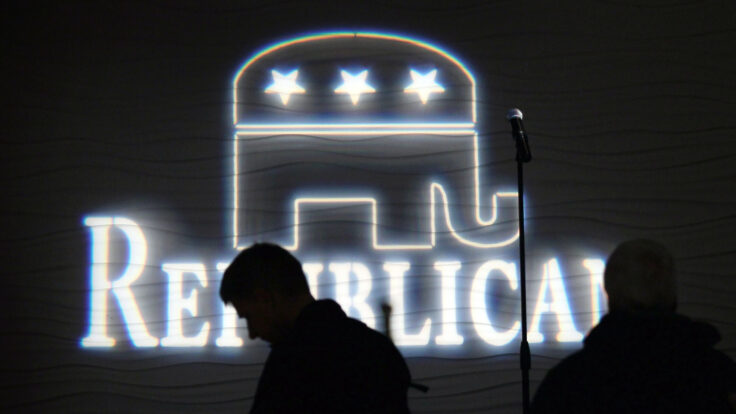
The Republican civil war isn’t just ideological, it’s institutional, with the House and
Senate engaged in an intra-party feud with no obvious exit ramp before the midterms. |
|
|
|
It was an exhausting week for House Republicans. They scrambled to end the 76-day Homeland Security shutdown,
move a contentious farm bill, and avert a midnight expiration of the government’s key surveillance authority—ultimately managing to do all three. But members of the House Freedom Caucus still had bones to pick, furious that Senate Republicans had jammed them with their own versions of must-pass bills while stalling on other priorities, so they held a press conference to vent. “Where the hell is the Senate?” Rep. Chip Roy demanded from the Capitol steps. “The greatest
deliberative body in the world—when are they deliberating?” Another conservative House Republican texted me privately, “The Senate oozes arrogance, centered around the rules of their royal court. It’s abhorrent.”
This kind of inter-chamber sniping is not new—for decades, Democrats have echoed the saying attributed to Tip O’Neill that “House Republicans are not the enemy. They are the opposition. The enemy is the Senate.” Former House speaker Paul Ryan
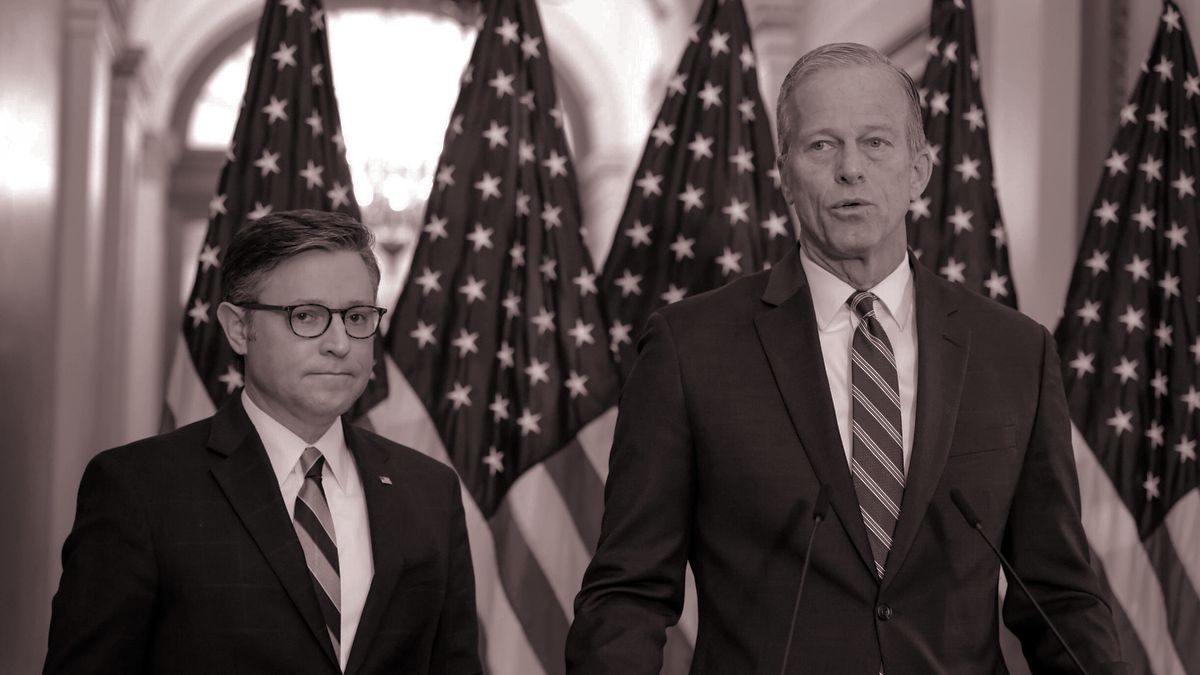
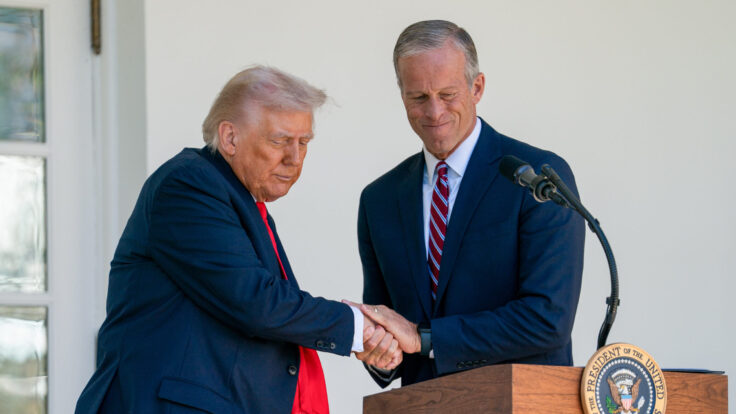
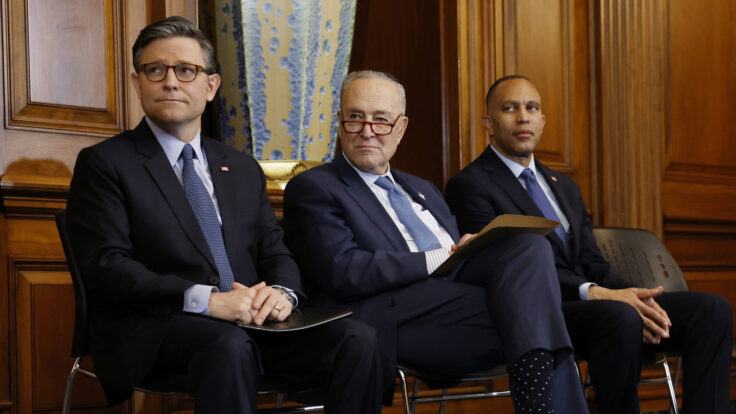
reminded me this week that Republican members had their own version of this adage: “Democrats are the adversary; the enemy is the Senate.” But that traditional rivalry has curdled into something much more sour between House Speaker Mike Johnson and Senate Majority Leader John Thune, who, at times, aren’t even pretending to be in sync. |
|
|
|
A MESSAGE FROM OUR SPONSOR |
Prior authorizations and administrative hurdles can slow down critical care, forcing patients to wait while their health
hangs in the balance. Reforming insurer practices can help reduce delays and keep care moving when it matters most. Learn more. |
|
|
|
Congressional leaders of the same party are typically assiduous about projecting unity. “You want to always
be seen in lockstep,” a former leadership aide told me. But Johnson and Thune, both almost aggressively earnest, have struggled to conceal their irritation with one another and their respective chambers. For Johnson, redirecting outrage toward the Senate gives cover to his caucus and helps the speaker himself evade some scrutiny, as conservative reps defend him while blaming
the Senate for the House’s problems. Thune’s conference, meanwhile, often views the daily drama in the House as little more than political theater—ignorant of Senate rules and untethered from legislative reality. “They are both exasperated with each other,” another former aide told me. “The tension is real.”
Among the factors contributing to that tension is the differing political incentive structures each man operates in. Johnson’s majority is a historically narrow 218 on the best of
days, and his mandate is to pass bills with Republicans alone; Thune cannot pass legislation without Democrats, except through reconciliation. Throw in a restless G.O.P. base, an empowered Democratic minority, and a demanding yet intermittently disengaged president, and strain becomes inevitable. “It’s a pressure cooker,” Ryan told me. “Sometimes that spills out in public because people are human beings.”
Johnson is also constantly fighting to not only keep his job but to build up enough
goodwill among his members to perhaps hold on to his leadership position in the next Congress. “A fundamental difference in the leverage they both have stems from the fact that Thune needs 27 votes to keep his job, and Mike Johnson needs 218,” a House Republican lawmaker told me—a much more challenging threshold for the speaker. And then there’s that other crucial irritant in the Johnson–Thune relationship: Donald Trump. |
Johnson owes his speakership, in large part, to Trump—and he prioritizes his relationship with the president
over his ties to Thune. The Senate majority leader, meanwhile, rose to power largely without Trump’s support, and he operates within an institution that remains less deferential to the president. In theory, Trump could play referee, but several congressional sources told me that he and his staff are largely disengaged from Capitol Hill. In fact, the White House has done little to ease the tensions between Johnson and Thune, and may have exacerbated them.
The cracks have been showing for
months. Johnson felt blindsided when the Senate moved to let its members sue the Justice Department for seizing their phone records, telling reporters he was “shocked” and “angry” the provision had been tucked into a major government funding bill. He was just as shocked and angry when Thune declined to amend the Epstein Transparency Act—which, not coincidentally, would have slowed down and potentially killed a bill Trump did not support—instead opting to pass it immediately.
The two
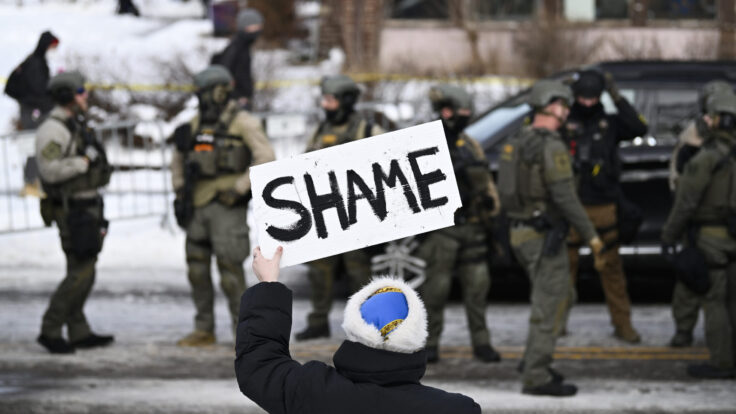
leaders were also at odds from the beginning of the D.H.S. standoff, which started in January after federal immigration agents killed two U.S. citizens in Minneapolis. When Democrats held up D.H.S. funding as a result, Thune stripped the bill from a broader funding package in order to keep the remainder of the government open. But Johnson argued that doing so deprived their party of negotiating leverage. “What was the alternative?” an exasperated Thune said to me this week. “That’s what I said
to them at the time: ‘Tell me—give me a better option, because I’m open to ideas,’ but I don’t think anybody had one.”
The relationship hit a nadir in late March, around the 40-day mark of the D.H.S. shutdown, as Democrats refused to fund the department without reforms to ICE and Customs and Border Protection. With recess approaching, the Senate struck a deal to fund most of D.H.S., excluding the two agencies, passing the measure by unanimous consent at 2 a.m. Johnson woke to a flurry of
angry texts and calls from his members, and insisted he hadn’t been consulted on the deal—although Thune allies say Johnson was in fact read in. |
|
|
|
Johnson worried about the precedent that breaking apart one agency’s funding bill would set for the
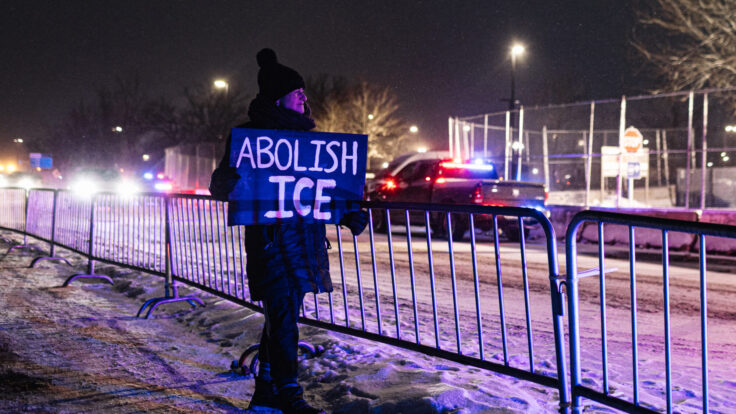
appropriations process. He also agreed with members who argued that doing so would look like a vote to defund ICE after Republicans had successfully campaigned on tying Democrats to their “abolish ICE” rhetoric from Trump 1.0. So Johnson turned to Trump, who said he didn’t love the deal, giving the speaker the political cover he needed to dismiss it. Thune was furious—it would be difficult to blame Democrats for a shutdown after Republicans rejected a unanimously passed Senate plan. A terse
phone call followed, the closest the mild-mannered South Dakotan comes to a tirade.
Days later, the two men agreed on a face-saving compromise: a party-line reconciliation bill to fund ICE and C.B.P., alongside a commitment that the House would take up the Senate’s broader D.H.S. package “in the coming days.” That was April 1. But Johnson immediately backtracked after far-right members of his conference revolted, saying they didn’t trust the Senate to move on an ICE-focused reconciliation
bill. Though a significant number of House Republicans disagreed with the delay, Johnson sided with the majority in his party—the ones who tended to be the most vocal and threatening to Johnson’s job.
“There was Senate frustration that Mike Johnson wouldn’t acknowledge reality,” one House Republican lawmaker told me. “There were House members who had been very clear with the conference that we can delay swallowing this bill, but there is no other way to resolve this shutdown.” (The logjam
broke more than a month later—during the last days of April—when the Senate moved on the ICE and C.B.P. reconciliation bill, sending step one to the House.)
Perhaps most notably, Johnson has embraced Trump’s norm-exploding pressure campaign to kill the Senate filibuster—the first speaker, at least in recent history, to push for such a change. The dispute centers on the SAVE Act, the strict voter-ID legislation that’s now a cause célèbre on the online right. House Republicans have passed
it, but Thune has warned repeatedly—and proved in a recent amendment vote—that he lacks a filibuster-proof majority. Trump and House Republicans, predictably, have responded that the 60-vote threshold has to go or be changed. “The Senate is more concerned about preserving the filibuster than they are about preserving the Constitution,” Florida Rep. Mario Diaz-Balart told reporters this week.
Johnson has done little to tamp down the outrage, giving his members—and Trump—no
reason to back down on the issue. On a private conference call about Iran two months ago, he told members that he was privately pressuring Thune to take up the SAVE Act, per Fox News. He even sent the bill to the Senate on a legislative vehicle designed to ease consideration, a not-so-subtle jab at his counterpart across
the rotunda.
Some members insist that the tension between the two leaders is overblown. “They are able to shake off the frustrations of a Tuesday and try to figure out a way forward on Wednesday,” said Rep. Dusty Johnson, a member of Thune’s small South Dakota congressional delegation and an informal Johnson advisor. “These are not men with long political memories and sharp daggers held behind their backs.” Either way, given the tough midterm landscape, they might be
better off focusing their ire on Democrats. |
|
|
|
Join Emmy Award-winning journalist Peter Hamby, along with the team of expert journalists at Puck, as they let you in on the
conversations insiders are having across the four corners of power in America: Wall Street, Washington, Silicon Valley, and Hollywood. Presented in partnership with Audacy, new episodes publish daily, Monday through Friday. |
|
|
|
Unique and privileged insight into the private conversations taking place inside boardrooms and corner offices up and down Wall
Street, relayed by best-selling author, journalist, and former M&A senior banker William D. Cohan. |
|
|
|
Need help? Review our
FAQ page or contact us for assistance. For brand partnerships, email ads@puck.news.
You received this email because you signed up to receive emails from Puck, or as part of your Puck account associated with {{customer.email}}. To stop receiving this newsletter and/or manage all your email preferences, click here.
|
Puck is published by Heat Media LLC. 107 Greenwich St., New York, NY 10006 |
|
|
|
|