{{ 'now' | timezone: 'America/New_York' | date: '%b %d, %Y' }} |
|
|
|
Welcome back to Dry Powder. I’m Bill Cohan.
Today, I’ll walk through
the drama surrounding Thoma Bravo’s $6.4 billion acquisition of software company Medallia, a rare fumble for co-founder Orlando Bravo. Now lenders like Blackstone and Apollo Global Management are preparing to take the keys. Is this a one-off—or a harbinger of a storm brewing on the previously cloudless horizon of the private credit market? As my readers are well aware, private markets, unlike public ones, often allow these periods of denial to stretch out, until it’s too
late.
Mentioned in this issue: Paul Taubman, John Zito, Lincoln International, Mark Bishof, Goldman Sachs, Morgan Stanley, Mike Lipps, KKR, Brookfield Asset Management, Tom Gober, and more…
But first… |
- The
Lincoln logs: Here’s something you don’t see very often: a bona fide I.P.O. of an investment bank. But that’s what is about to happen with Lincoln International, a midmarket, Chicago-based partnership that specializes in M&A sell-side assignments. Of course, Lincoln wants to be thought of as much more than that. “We are a global independent investment banking advisory firm focused on the private capital markets,” the firm writes in its I.P.O. prospectus. It claims to have completed more
than 435 transactions and to be the number two sell-side advisor to private equity firms during the past three years. According to the prospectus, Lincoln’s revenue has exploded since the 2008 financial crisis—growing from $57 million in “client revenues” that year to $843 million in pro-forma revenues in 2025. (By contrast, in 2025, JPMorgan Chase had revenue of $185 billion.)
Lincoln is also quite profitable. For 2025—on a non-pro-forma basis—Lincoln had revenue of $784 million
and good old-fashioned EBITDA of $254 million, a margin of 32.4 percent. Now that is a good business, though perhaps not all that surprising for an investment bank focused mostly on giving advice. Compensation is Lincoln’s most significant cost—in 2025, the bank paid out about half of its revenue, or $388 million, in compensation. The firm has indicated, as a placeholder most likely, that it is trying to raise at least $100 million in the I.P.O., which it will use to pay off debt and
cash out some partners, as well as for general corporate purposes.
Based on comparable companies—say, Lazard, Moelis, Houlihan Lokey, and Evercore—Lincoln will probably be valued between $3 billion and $4 billion, depending on whether investors give it an Evercore multiple of around 17x EBITDA, or a Lazard multiple of around 12x. That task falls to the lead underwriters, Goldman Sachs and Morgan Stanley—a safe choice, indeed.
As I wrote in my 2017 book,
Why Wall Street Matters, investment banks were undercapitalized private partnerships until 1970, when Donaldson Lufkin & Jenrette, or DLJ, broke the rules of the New York Stock Exchange and decided to move forward with an I.P.O. That opened the floodgates—Merrill Lynch went public in 1972, Bear Stearns in 1985, Morgan Stanley in 1986, and then Goldman in
1999. Next, the boutiques got into the act, with my old firm Lazard going public in 2005, Evercore in 2006, Moelis in 2014, and Houlihan Lokey in 2015. Perella Weinberg Partners was the last firm to go public, via a merger with a SPAC, FinTech Acquisition Corp. IV, in 2021. That was pretty unconventional. PJT Partners also took an unconventional route when the Blackstone Group, under Paul Taubman, spun it off in 2015. The Lincoln I.P.O. will be the first investment bank to go
public in a conventional way since Houlihan’s in 2015.
|
|
|
|
The highly levered software company is becoming a morality tale for this inflection point in
the private-credit journey. How will Thoma Bravo, Blackstone, Apollo, KKR, and Antares Capital interpret this moment? |
|
|
|
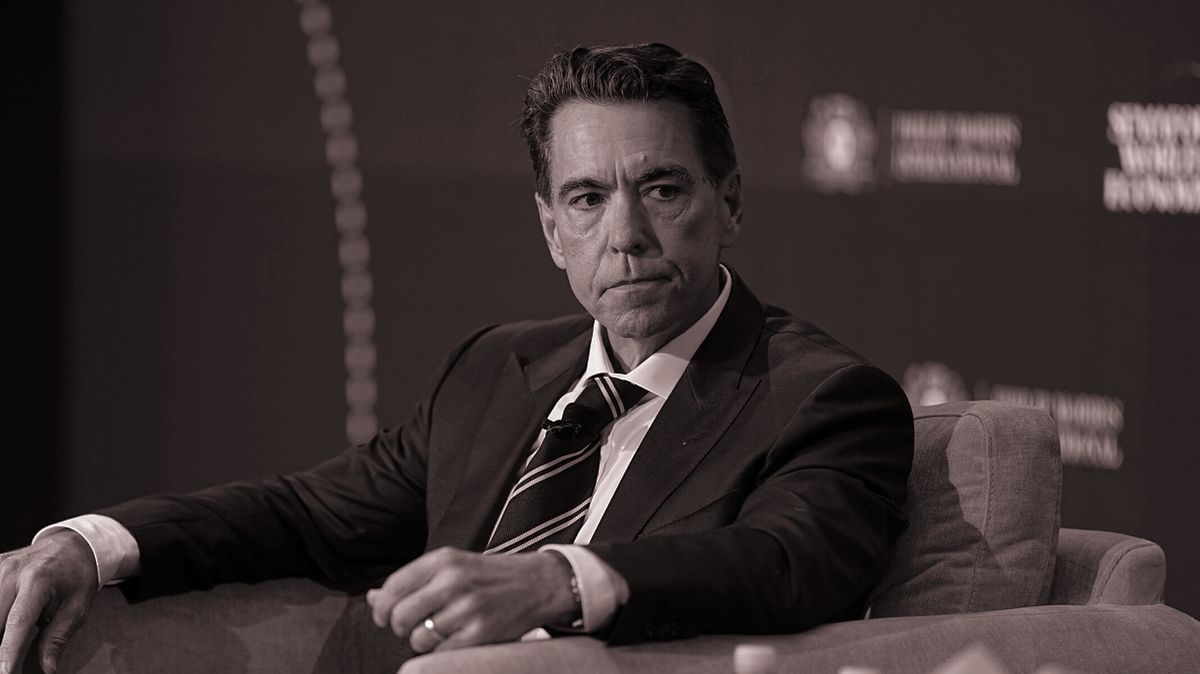
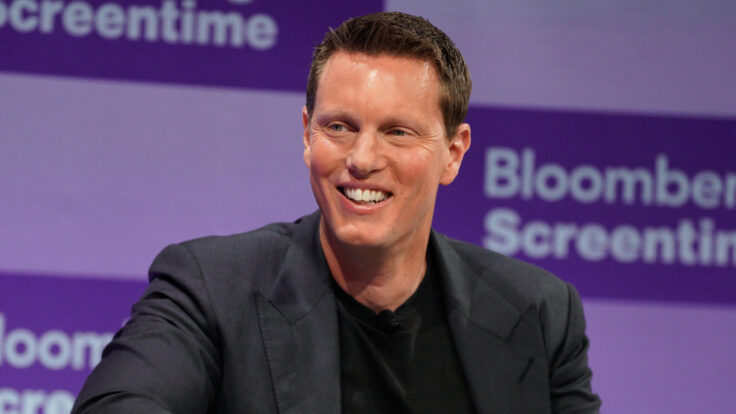
Orlando Bravo, the co-founder of the much-admired buyout firm Thoma Bravo, found himself in
an unusual position last month—acting as a spinmeister and indirectly explaining away a miss. From its base in Chicago, Thoma Bravo manages roughly $180 billion, making it one of the largest nearly pure-play private-equity firms—and among the most aggressive investors in software. Its track record includes wins like its $2.4 billion acquisition of Dynatrace in 2014, which ultimately generated around $8 billion in profit. Bravo, himself, is worth about $12 billion. And yet there he was on CNBC,
trying to calm the waters over a software company his firm owns, Medallia. |
|
|
|
A MESSAGE FROM OUR SPONSOR |
INSPIRE AWE
Revered by all. Driven by those who lead by example. Elevate every move you make in a Range Rover.
EXPLORE
|
|
|
|
Medallia, a market leader in customer, employee, citizen, and patient experience, allegedly helps “customers
reduce churn, turn detractors into promoters and buyers, create in-the-moment cross-sell and up-sell opportunities, and drive revenue-impacting business decisions,” according to press materials. Whatever any of that means, Thoma Bravo was hot on the company when it launched an unsolicited bid, in July 2021, for $6.4 billion in cash. Most of the purchase price—as much as $5.1 billion, according to reports—came from Thoma Bravo’s own equity coffers, with the balance at that time of more than $1
billion coming from private-credit providers, including the usual suspects: Blackstone, Apollo, KKR, and Antares Capital.
That’s a lot of equity for a buyout—nearly 80 percent of the capital structure—which no doubt reflected Thoma Bravo’s collective wisdom, garnered over many years, about how software buyouts should be structured. After the deal closed in October 2021, Medallia went private—as did its financial statements. Over the following year, Medallia made four small acquisitions;
no purchase price was disclosed for any of them. Then the silence set in.
It’s now been well over a year since Thoma Bravo last issued a press release about Medallia—a January 2025 announcement naming Mark Bishof as chairman and C.E.O., replacing Mike Lipps. During that time, you might not be shocked to learn, things have been going haywire for Medallia. Two days before Bravo’s CNBC appearance, The Wall Street Journal reported that during a
February meeting arranged for clients by UBS, John Zito, a very senior executive at Apollo, expressed concern about the Medallia buyout. “There will be an issue … with respect to that credit, which I think will be worse than people expect,” Zito said, according to the Journal, which noted that the lender group for Medallia had already begun to write down the value of their senior secured loans.
For its part, Blackstone started marking down the value of its
Medallia debt back in 2024, and has been talking about the company’s underperformance ever since. Last quarter, Blackstone said Medallia has been underperforming “not because of anything related to A.I.”—the presumed concern these days across the software landscape—“but due to what we believe to be execution-driven issues, particularly in its go-to-market function.”
Now, Reuters is reporting that Thoma Bravo is preparing to abandon Medallia, and its $5.1 billion of invested equity, and
turn the company over to its lenders—Blackstone, Apollo, and KKR—in what will likely be a rare noncontentious, out-of-court restructuring, with Kirkland & Ellis advising Medallia and Latham & Watkins advising the tight creditor group. Things appear so bad at Medallia, it seems it’s not worth it for Thoma Bravo to put up a stink or even bother hiring financial advisors. A face plant on more than $5 billion of equity in one deal is quite something, but sometimes it’s easier to just walk
away.
During his CNBC hit, Bravo was quick to point to his firm’s record of success in the sector. “What [investors] see is for the most part, our companies are crushing it. Our companies are incredibly positioned to be winners in the agentic era,” he said, deploying tech speak for A.I. software that is able to act independently on your behalf, rather than merely responding to commands. When asked specifically about Medallia, Bravo conceded that his buyout firm had overestimated
Medallia’s growth rate. “Medallia is a fine company,” he said. “We made a mistake, and that caused us to pay too much.” But, he reiterated, the rest of the Thoma Bravo portfolio is “absolutely crushing it.” (A Thoma Bravo spokesman did not respond to my request for comment.) |
Medallia represents one of the largest private-equity wipeouts in a while. It’s not doing much for the
private-credit firms, either. Blackstone and Apollo have written down their debt positions—now totaling around $2.8 billion, given that interest on the original debt was paid partly in cash and partly in kind with more debt—to around 60 cents on the dollar. |
|
|
|
A MESSAGE FROM OUR SPONSOR |
INSPIRE AWE
Revered by all. Driven by those who lead by example. Elevate every move you make in a Range Rover.
EXPLORE
|
|
|
|
According to financial blogger Nick Nemeth, the lenders, led by Blackstone, with a loan of
$1.5 billion to Medallia, told the company on April 2 that they would no longer accept interest payments in kind. “Pay all interest in cash, they said, or hand over the keys,” as Nemeth put it. Of course, that would be exceedingly difficult for Medallia given that, according to Nemeth, Medallia’s EBITDA is around $200 million, while cash interest on the debt would be around $300 million. “Even if Medallia fired every employee, stopped developing new software, and laid off the cleaning staff, it
could not produce three hundred million in cash,” Nemeth wrote. (Spokesmen for Blackstone and Apollo declined to comment on the record, but confirmed the essence of what’s going on at Medallia.)
To understand the implications, if any, for the private-equity and private-credit markets, I rang up Tom Gober, a forensic accountant who has tracked the role of insurance companies in funding private credit. In testimony before the Senate Banking Committee three years ago, he
warned about growing concentrations of risk, particularly among reinsurers. These days, he points to Athene (owned by Apollo), Global Atlantic Financial Group (owned by KKR), and the various insurance companies owned by Brookfield Asset Management, because of their leveraged capital structure and the vast number of private-credit positions swelling their balance sheets. As he told me on Monday, he doesn’t understand why state regulators are letting insurance companies take these risks,
potentially at the expense of policyholders. (I don’t even have to ask Apollo if they disagree with Gober about Athene; I know they do.)
What troubles Gober most is the lack of transparency. “The most important thing today, period, in the financial reporting of the life and annuity [insurance] industry is the absence of transparency,” he told me. “Everywhere I look in the reporting of the life and annuity industry, where they’re owned by private credit or private equity, every time I see
substantial opacity. And when you see something that you can’t see, look out.”
I don’t know whether the private-credit market is nearing an inflection point or how it might unwind, if it does. I do know that if the private-credit industry is in trouble, then it stands to reason that the private-equity industry is in much more trouble, given that equity is the first to get lost when a company starts going belly up. By that measure, Medallia may be a warning shot. It looks like
Blackstone will take a big hit, although Medallia accounts for less than 1 percent of the fair market value of its big credit fund, known as BCRED. (Apollo has much less exposure than Blackstone, I’m told, with $40 million in one BDC, or business development corporation, and a bit more Medallia debt spread out in other Apollo funds.)
So maybe Blackstone ends up with the company and makes something out of it and eventually recoups a greater chunk of its $1.5 billion loan. Blackstone seems
happy with current management and is apparently confident the company’s offerings won’t get decimated by A.I. There’s at least a chance of that, given Blackstone’s seemingly infinite resources. (It did that, and more, during its roller-coaster ownership of Hilton, turning it into one of the most successful buyouts of all time.)
“Right now, the company does $200 million of earnings,” a creditor close to the Medallia situation told me. “The market has obviously sold off for software
companies. But at the same time, there is a real value here. It is not a story of taking over a business that is burning hundreds of millions of dollars—or any cash, frankly—on an unlevered basis. It’s generating real cash on an unlevered basis that gives it a lot of room to invest, if it has the right balance sheet. It’s got great customers and it is currently very, very highly levered, and, frankly, very overlevered. So that needs to get fixed.”
But for Thoma Bravo, that $5 billion is
lost and there’s no way to get it back, short of reinvesting new money (probably throwing good money after bad at this point). And for the private-credit cohort more generally, the Medallia debacle is one of the first pure instances where that group is taking it on the chin. There are no Wall Street banks in the Medallia credit. Live and learn, I guess. |
|
|
|
Join Puck’s chief political columnist, John Heilemann, as he roams the corridors of power and influence in America on this
twice-weekly interview show, taking you beyond the headlines with the people who shape our culture: icons and up-and-comers, incumbents and insurgents, moguls and machers in the overlapping worlds of politics, entertainment, tech, business, sports, media, and beyond. The conversations are rich and revealing, unrehearsed and unexpected… and reliably impolitic. A Puck-Audacy joint, new episodes drop every Wednesday and Friday. |
|
|
|
Puck’s daily political newsletter from Washington on what’s really happening in this town, from the White House to the Pentagon
to Capitol Hill, K Street, and the campaign trail. |
|
|
|
Need help? Review our
FAQ page or contact us for assistance. For brand partnerships, email ads@puck.news.
You received this email because you signed up to receive emails from Puck, or as part of your Puck account associated with {{customer.email}}. To stop receiving this newsletter and/or manage all your email preferences, click here. |
Puck is published by Heat Media LLC. 107 Greenwich St., New York, NY 10006 |
|
|
|
|