{{ 'now' | timezone: 'America/New_York' | date: '%b %d, %Y' }} |
|
|
On Monday, I joined Bob Rubin and other politically savvy finance types to hear
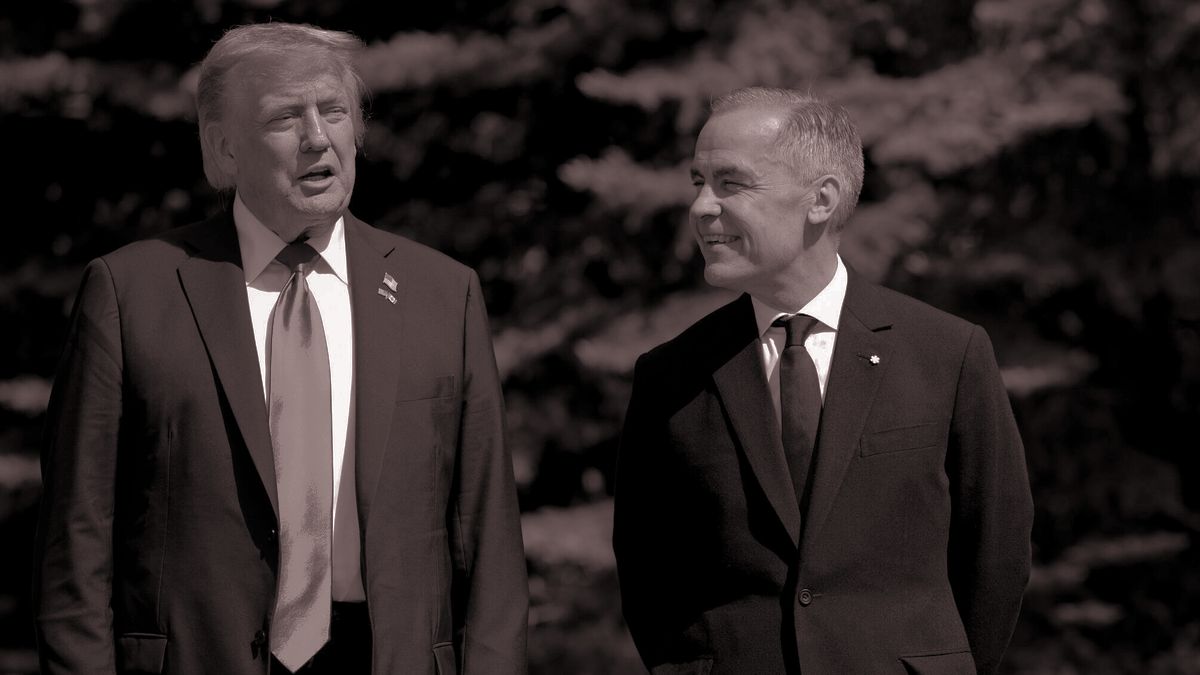
Mark Carney, the former Goldman banker and current Canadian prime minister, give a talk at the Council on Foreign Relations. Carney’s presentation was equal parts TED Talk and polite Canadian scolding—he noted that the world order was fraying, America was treating diplomacy like a garage sale, and somebody had to keep the lights on. He never mentioned Trump by name, but the contrast was obvious: Canada was the sober designated driver while America was the guy on
his third tequila shot drifting onto the wrong side of the road.
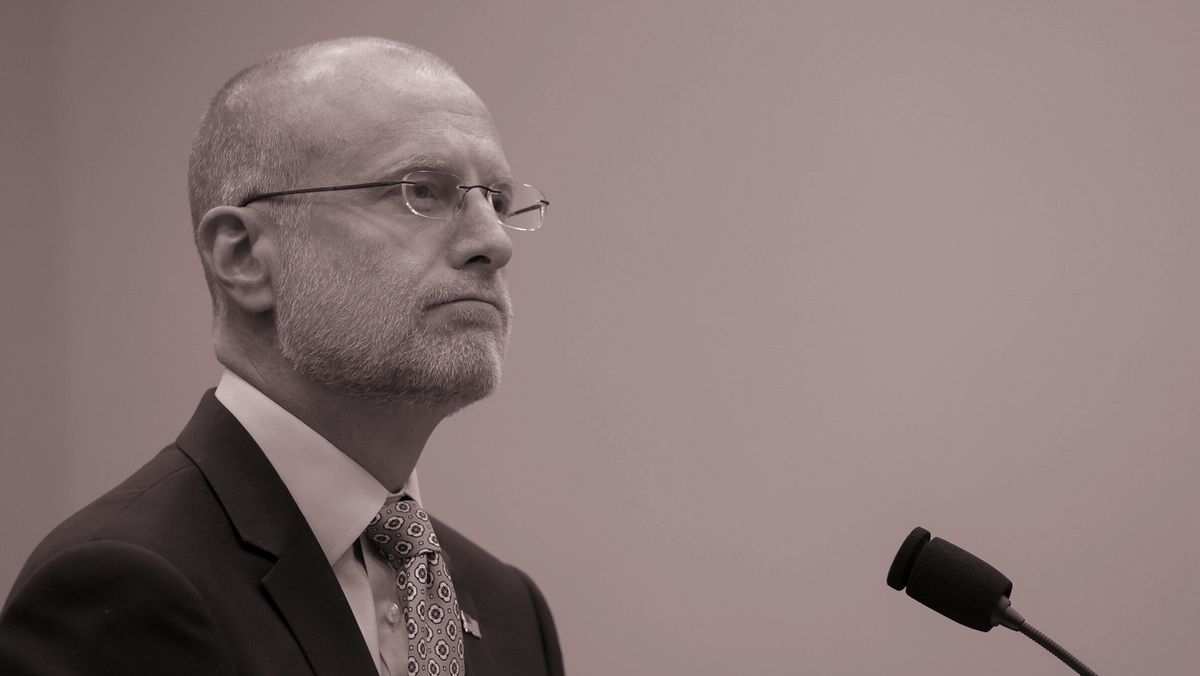
Meanwhile, across town at the Economic Club of New York, Trump’s handpicked new Fed governor, Stephen Miran, was making his debut with a push for deeper rate cuts—echoing the president’s broader effort to bend the central banking system to his agenda. Anyway, tonight I compare the two performances and hypothesize the road ahead. (Anybody else craving some poutine about now?)
But
first… |
- The
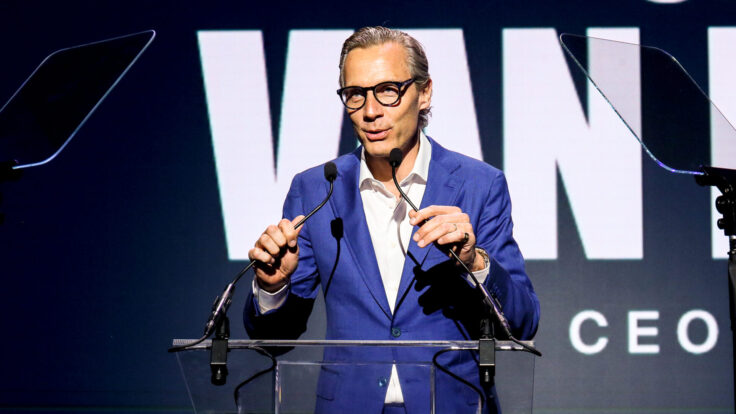
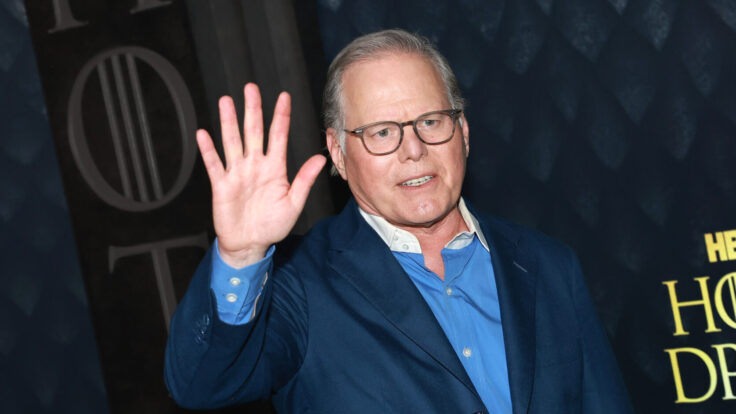
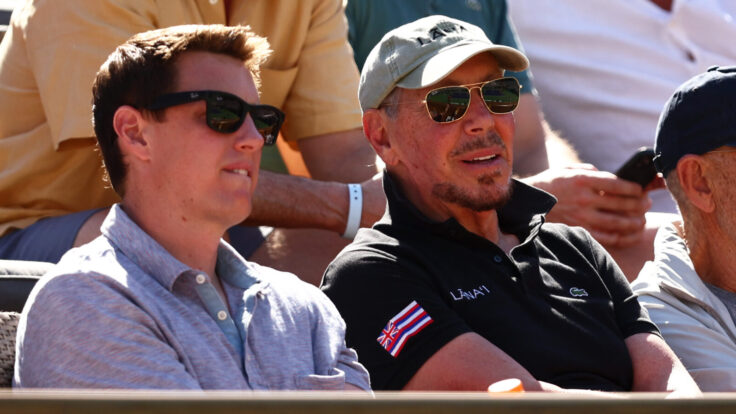
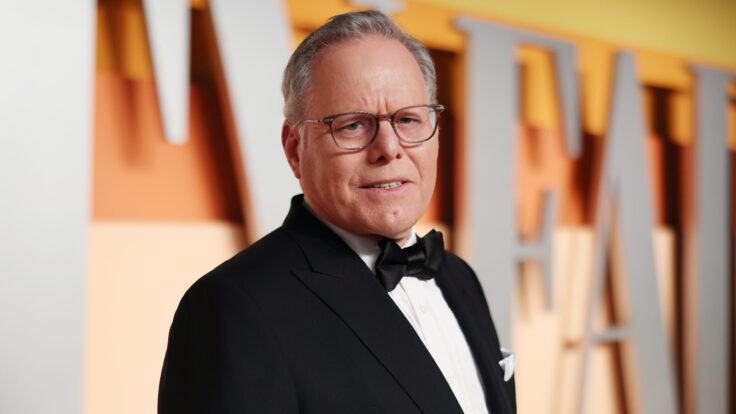
Comcast case for WBD: All has seemed strangely quiet on the Warner Bros. Discovery front since the Journal reported on September 11 that the Ellisons and Paramount Skydance were preparing a bid to acquire the entire company, potentially thwarting David Zaslav’s plans to split his baby into two pieces. Since the Journal leak, the WBD stock has rocketed up some 63 percent, making it difficult for Zaz to argue that his split-up plan
will create more shareholder value than an outright sale for cash and stock.
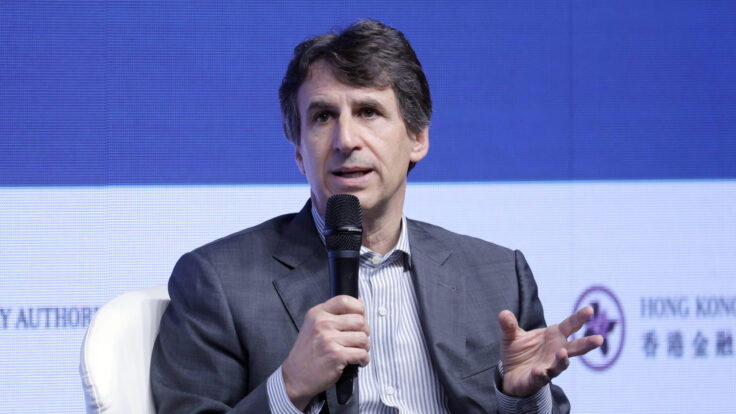
Zaz, no doubt, will make that argument—as he should—and try to gin up an auction. Whether he succeeds remains to be seen. (The Ellisons also have to actually prepare that bid.) In the meantime, one of my favorite longtime ideas has been resurfaced by our analyst friend Peter Supino at Wolfe Research: the notion that Brian Roberts’s NBCU should buy WBD. On Sunday, Peter wrote,
“While the Ellisons’ money gives them the inside track on Warners, Comcast should try hard to buy it. NBCU has much to gain.”
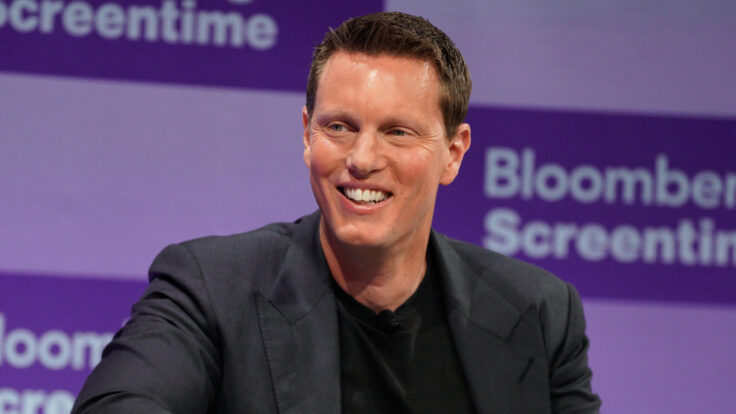
Comcast’s financial and political obstacles, Peter wrote, “might be solvable” with a little creativity. He suggested that Comcast create “a new NBCU stock” and issue enough of it to WBD shareholders to compete with the Ellison offer. In an interesting set of wrinkles, Peter also suggested that the new NBCU stock not have the Roberts family as the supermajority
voting bloc, as is the case with Comcast, and that the combined NBCU-WBD not have Roberts—whom Trump has referred to as “a lowlife”—as chairman or C.E.O. Peter’s solution? “Everyone thinks David Zaslav enjoys being C.E.O. of Warners very much, and NBCU is temporarily overseen by Comcast president Michael Cavanagh,” he wrote. “NBCU could sweeten its bid with a position for Zaslav atop NBCU-Warner.” Will Brian agree? Who knows. But he certainly has to be thinking about
it, or something like it.
I’ve been pushing a similar concept for a while. And Tom Rogers, the O.G. cable TV pioneer, first raised this idea a few years ago. (Tom, who recently became a consultant to Versant, the Comcast cable spinoff, probably can’t publicly advocate for it any longer.) There are many complicating factors with this proposal, but the most immediate is, indeed, the Versant question. Would NBCU, which is exiting the linear TV business, really want to take
on the cable assets that Zaz is hanging out to dry with Gunnar Wiedenfels (and a ton of debt)?
Of course, this complexity could actually be an investment banker’s fever dream: Have NBCU buy all of WBD, then spin off Global Networks as planned, then maybe merge Global Networks into Versant, leaving NBCU and WBD’s studio and streaming business to ride off into the sunset under Zaz’s rule—bringing him nearly full circle back to his days at NBC, when
GE owned it. Only in Hollywood. - Bergdorf on the block: A few words on Saks Global’s reported efforts to sell 49 percent of its ownership of Bergdorf Goodman, which was recently reported by my partner Lauren Sherman. Sources close to executive chairman Richard Baker told the Journal this week that
some four parties were interested, including strategic investors and a Middle Eastern sovereign wealth fund. Saks is reportedly seeking $1 billion for its near-half interest in the luxury department store on Fifth Avenue, although not the real estate, which is owned by the Goodman family. There’s no question that a fresh influx of $1 billion in cash, were it to happen, would help Saks Global reduce its more than $4 billion debt load. And that would be a good thing for both
Saks’s nervous creditors and its forlorn equity holders.
But according to a September 9 S&P credit report, concerns remain. Following the debt exchange offer that closed in August, which I have written about
extensively, the ratings agency decided to upgrade Saks Global’s debt to CCC, from SD—selective default. It’s still in junk territory, of course, and the exchange merely rearranged the deck chairs on the debt stack, rewarding bondholders who agreed to provide $600 million in new financing—$300 million immediately, $300 million later, upon the achievement of certain goals—with a higher priority in the Saks Global capital structure. S&P maintained a “negative” credit outlook on the company,
post-restructuring, and the agency suggested that it could again lower its rating on the company if “Saks Global cannot build a sufficient liquidity position while it invests to stabilize operating performance.”
According to S&P, the original $2.2 billion in Saks’s public debt, issued last December, was exchanged for $762.5 million in new special purpose vehicle notes in August—$162.5 million from the exchange, plus the $600 million of new money—in addition to $1.4 billion in “second-out”
notes, plus another $441 million in “third-out” notes. The new debt all carries the same 11 percent interest rate as the original debt, and continues to mature in 2029. A small portion of the original bonds remain outstanding, although they’ve been stripped of what few covenants they had.
S&P also noted that Saks Global was able to capture a $115 million discount to the original face amount of bonds through the exchange. That’s news. The report also suggests that Saks Global will
use the proceeds of the new financing from its bondholders to repay vendors, pay down its $1.8 billion asset-based-lending line of credit—with $1.1 billion outstanding as of July 16—and “invest in synergies” from the acquisition of Neiman Marcus Group, whatever that means. If Saks succeeds in selling 49 percent of Bergdorf, that cash could also be used to pay down debt.
In sum, the credit rating agency is still predicting a tough road for Saks Global, although its latest report came out
before confirmation of the attempted sale of the Bergdorf stake. S&P predicted that Saks Global’s 2025 EBITDA will be less than its interest expense—never a good thing. “While the new capital structure provides a much-needed infusion of cash,” S&P wrote, “we expect liquidity will be rapidly depleted by the investments required to stabilize the business amid a challenging macroeconomic environment. Longer-term, the elevated outstanding debt is an additional hurdle to the company’s ability to
generate FOCF [free operating cashflow].” (A spokesman for Saks Global said about the S&P report: “We are in a solid financial position and remain focused on executing our multiyear transformation strategy, including working with our brand partners to drive growth, continuing to capture synergies, and delivering for our customers across all of our retail brands.”)
|
|
|
News and notes on Canadian prime minister and Goldman alum Mark Carney’s
view of America under Trump 2.0, and an opening interest rate salvo from the president’s new man at the Fed. |
|
|
The prime minister of Canada began his talk at the Council on Foreign Relations on Monday night by giving a
shout-out to two former Goldman Sachs colleagues in the audience, Bob Hormats and Bob Rubin. “Bob [Hormats] taught me everything about foreign relations,” he said. “Bob Rubin taught me how to make decisions under uncertainty. Unfortunately, those two are coming together at the same time.”
For those of you who may have forgotten what an articulate, thoughtful leader sounds like, may I present to you Mark Carney, Canada’s P.M. since March,
following stints at Goldman Sachs and as governor of both the Bank of Canada and the Bank of England—the only person to hold both those jobs. While Carney took some glancing shots at Trump, he never mentioned him by name, framing his brief remarks at the C.F.R. as “a few words about how a middle power like Canada can deal with the situation where the rules-based order is eroding, great-power rivalry is intensifying, and authoritarian models are hardening,” he said. “I’ll start
by admitting, up front, that we prospered under the old system. We would like the old system back. Can we have the old system back?” The crowd laughed heartily.
Back then, Carney noted, “we were able to pursue a values-based foreign policy anchored on a rules-based multilateral trading system, an open global financial system. We had collective security anchored in NATO.” The expectation was that authoritarian countries would eventually change their stripes “through engagement to free
markets, open societies, and even democratic values. And this meant, for a country with a values-based foreign policy, [Canada’s] engagement with those countries could be justified by the expectation of progress.” Now, however, “things have changed,” he said, and “that convergence of values has proved elusive.”
The whiplash of changes in the U.S. over the past nine months, the P.M. suggested, has shifted the global power balance. “The economic strategy of the United States has clearly
changed, from the support for the multilateral system to a more transactional and managed bilateral trade and investment approach,” he said. “Global power is moving—you can debate how much, or how far, this will go—from American hegemony to great-power rivalry. Technological change is shrinking the geographic advantage that [Canada] had, and expanding the fields of conflict from the virtual to the extraterrestrial. All of this is reducing … the effectiveness of our multilateral institutions,
from the W.T.O. to the U.N., on which middle powers like Canada have greatly relied. So what do we do about it? I’m going to give you a punch line, which is, We think we can thrive.”
Carney rattled off the areas where Canada is a leader, from its status as holder of one of the world’s largest reserves of oil and gas and critical minerals, to its big pension funds. “We’re a pluralistic society that works,” he noted. “Our cities are known as the most diverse in the world. The
public square is loud, diverse, and free.”
Canadians understand what’s going on here, he said. “This is not a transition. This is a rupture. … We have a determination to rise up and meet this.” Since he became prime minister, he said, Canada has cut taxes on income and capital gains, and fast-tracked “hundreds of billions of dollars” in A.I., infrastructure, and energy projects. Canada will be doubling defense spending by 2030, he said, and “diversifying” its trading and security
relationships—thanks, Donald. In June, he noted, Canada signed the “most comprehensive agreement” with the European Union by a non-E.U. country.
Before taking questions, Carney said, “When you think about Canada—think about Canada, actually. That’s my request: Think about Canada as a strong, sovereign, independent nation. But there is a big opportunity in this shifting in Canada. … We understand the scale of the responses required.” I don’t know about you, but I find Carney’s
calm, measured, self-deprecating confidence very admirable and refreshing. |
Meanwhile, across town on Monday at the Economic Club of New York, the newest member of the Federal Reserve
Board of Governors, Stephen Miran, gave his first speech since being confirmed earlier this month. The appointment of Miran, who is on leave from his position as chair of the Council of Economic Advisers, is yet another blow to the Fed’s independence. That’s no longer much of a surprise, I guess. At his first FOMC meeting, Miran cast the only dissenting vote from the 11-person majority’s view that a 25-basis-point cut in short-term interest rates was the way to go. Instead,
Miran pushed for a 50-basis-point cut.
At the Economic Club, Miran made clear that he was there to do Trump’s bidding on lower interest rates. “I view [the FOMC’s interest rate] policy as very restrictive, and believe it poses material risks to the Fed’s employment mandate,” he said. He then launched into a bunch of economic gobbledygook—“the neutral rate” or “r*”—before declaring short-term interest rates should be 200 basis points lower than they are now. Instead of the 4 percent to
4.25 percent Fed Funds rate that the Federal Reserve is now targeting, he said, “I believe the appropriate Fed Funds rate is in the mid-2 percent area. … The Federal Reserve has been entrusted with the important goal of promoting price stability for the good of all American households and businesses, and I am committed to bringing inflation sustainably back to 2 percent. However, leaving policy restrictive by such a large degree brings significant risks for the Fed’s employment
mandate.”
It is difficult for noneconomists to parse his argot, but he seemed to be arguing that inflation targets are too high, and that the labor markets will face shortages on account of illegal immigrant deportation targets and the country’s overall population growth. His argument, I think, was that slower population and workforce growth, combined with higher interest rates, would diminish economic output and lead to lower employment. “The upshot is that monetary policy is well into
restrictive territory,” he said in closing. “Leaving short-term interest rates roughly two percentage points too tight risks unnecessary layoffs and higher unemployment.”
After the speech, Justin Wolfers, an economist at the University of Michigan, posted on X: “Stephen Miran has outlined his case for massive rate cuts. The logic is utterly tortured—and bizarre.” It might have been easier if Miran had just admitted that he was there to do Trump’s bidding on lower interest
rates at the next two FOMC meetings this year, in October and December. Then we’ll see whether Trump reappoints him to the Fed for a full 14-year term, or whether he returns to the White House as chair of the Council of Economic Advisers. Anyway, we’re not in Canada anymore. |
|
|
Join Puck’s chief political columnist, John Heilemann, as he roams the corridors of power and influence in America on this
twice-weekly interview show, taking you beyond the headlines with the people who shape our culture: icons and up-and-comers, incumbents and insurgents, moguls and machers in the overlapping worlds of politics, entertainment, tech, business, sports, media, and beyond. The conversations are rich and revealing, unrehearsed and unexpected… and reliably impolitic. A Puck-Audacy joint, new episodes drop every Wednesday and Friday. |
|
|
The ultimate fashion industry bible, offering incisive reportage on all aspects of the business and its biggest players.
Anchored by preeminent fashion journalist Lauren Sherman, Line Sheet also features veteran reporter Rachel Strugatz, who delivers unparalleled intel on what’s happening in the beauty industry, and Sarah Shapiro, a longtime retail strategist who writes about e-commerce, brick-and-mortar, D.T.C., and more. |
|
|
Need help? Review our FAQ page or contact us for assistance. For brand partnerships, email ads@puck.news. You received this email because you signed up to receive emails from Puck, or as part of your Puck account associated with {{customer.email}}. To stop receiving this newsletter and/or manage all your email preferences, click here. |
Puck is published by Heat Media LLC. 107 Greenwich St, New York, NY 10006 |
|
|
|