|
Welcome back to Dry Powder. I’m Bill Cohan.
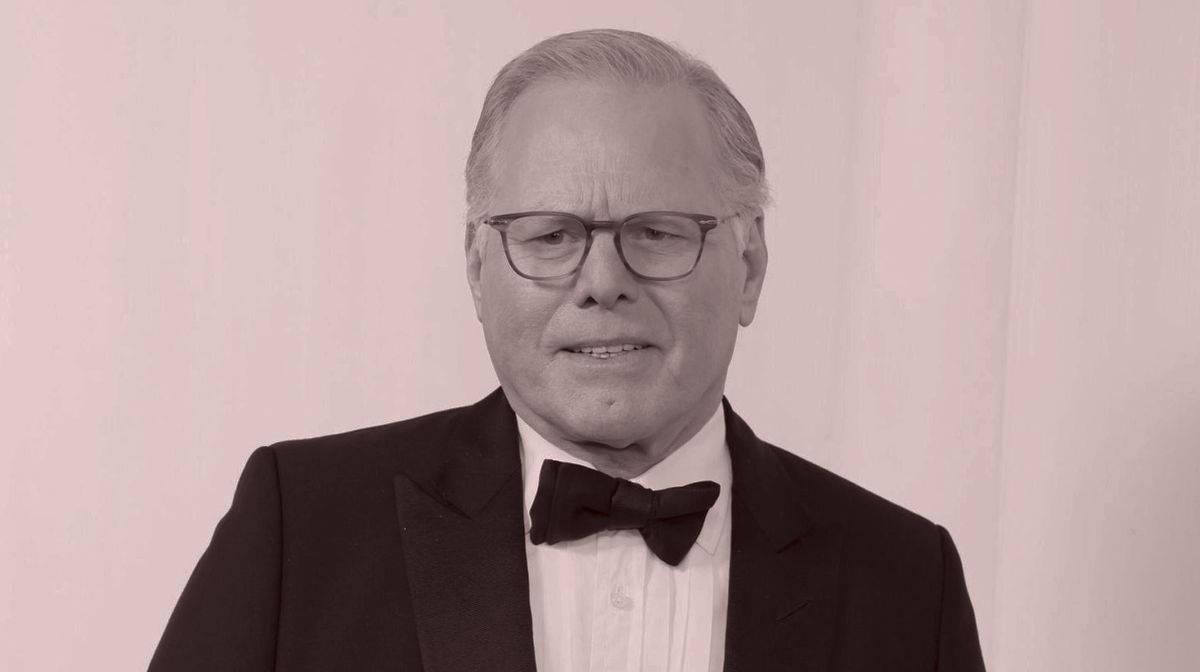
If Warner Bros. Discovery’s fourth quarter 2024 performance is a harbinger of things to come, the worst may be over for David Zaslav. On Thursday, the company’s direct-to-consumer unit reported adjusted EBITDA of $677 million for 2024, up exponentially from $103 million the year before, plus the Warners’ film and television studio division also performed well. Then, of course, there’s the $19 billion that Zaz and C.F.O. Gunnar Wiedenfels have managed to shave off the company’s debt load in less than three years. Investor sentiment seems to be responding: In the past six months, the stock is up 51 percent, even though it’s still down 55 percent since the company was formed. So is the glass half empty or half full? More on all that below.
But first…
|
- The Trump Media dip: Equity investors in Trump Media & Technology Group, Donald Trump’s folly of a publicly traded company, finally seem to be getting the message that there’s no there there. Last month, TMTG reported revenue of just $3.6 million in 2024 and a net loss of some $400 million—almost all of which is attributable to the company’s sole enterprise, Truth Social. During the past month, more or less tracking with the start of Trump II, the company’s stock is down 25 percent while the S&P 500 is down only 2.5 percent. (This is not investment advice.)In December, Trump transferred his 114.75 million shares in DJT to a revocable trust, of which he is the sole beneficiary. Miraculously, those shares are still worth around $2.7 billion these days. But some degree of reality seems to be breaking out all over Trump’s financial balls of string. In addition to the decline in DJT, the price of $TRUMP—the Donald Trump memecoin that his S.E.C. recently ruled was not a security and therefore free from regulation—is down 58 percent in the past month. $MELANIA, the equally ridiculous Melania Trump memecoin, is also down 64 percent. Could a modicum of sanity be kicking in?
|
|
|
|
A MESSAGE FROM OUR SPONSOR
|
PERFORMANCE UNLEASHED
With a distinct sporting personality, the Range Rover Sport is a
peerless performer.
EXPLORE
|
|
|
|
Meanwhile, across the Atlantic…
|
|
|
 |
Marion Maneker |
|
- A Brave Neuendorf World: The long-running battle for control of Artnet, the art media and auction data company, finally came to a head yesterday during the annual general meeting in Berlin, which lasted 14 hours and caused the stock to drop by 20 percent. At the shareholder event, grievances were aired, tables were pounded, and one shareholder even complained the company wasn’t doing enough to protect him from the Spanish aristocrat sitting beside him. The aristocrat happened to be the husband of prospective board member Sophie Neuendorf, who was, he claimed, trying to intimidate him. One person in attendance told me that the meeting resembled a “Jerry Springer episode at a circus.”The annual general meeting had attracted a number of factions—some existing shareholders, others waiting in the wings—interested in reviving the company to cater to a perceived underserved demand for art market information. Yet, according to one interested party in attendance, no one seemed to have an overall strategy for the company, nor did anyone present a clear plan for its future. Artnet C.E.O. Jacob Pabst presided over the event. His sister Sophie was a candidate for a board seat, and his brother Albert was seen working the room to drum up support for the family’s slate. Hans Neuendorf, the 88-year-old founder of Artnet and paterfamilias of the Neuendorf clan, whose members take substantial salaries from the company, was notably absent.That was probably a good thing. A significant part of the meeting, according to one neutral shareholder, consisted of investors airing their misgivings and “telling the board and management to resign today.” The result, according to this shareholder, was “total humiliation for the Neuendorfs—all of the family members.” (Curiously, according to another shareholder, the shareholders excluded Hans from the list of board members they demanded to vacate their roles. Not that it really mattered.) [Read More]
|
|
|
|
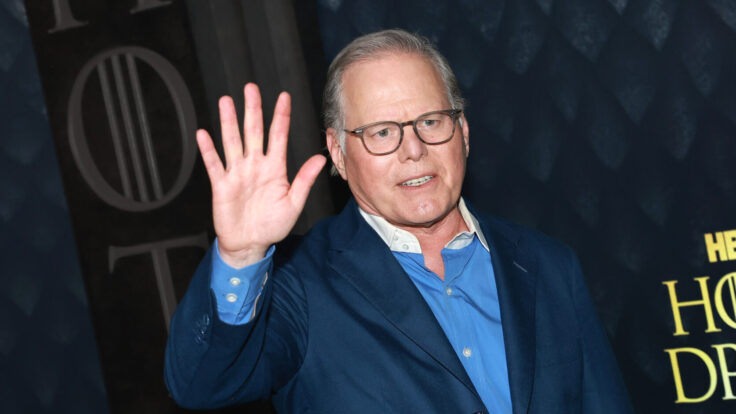
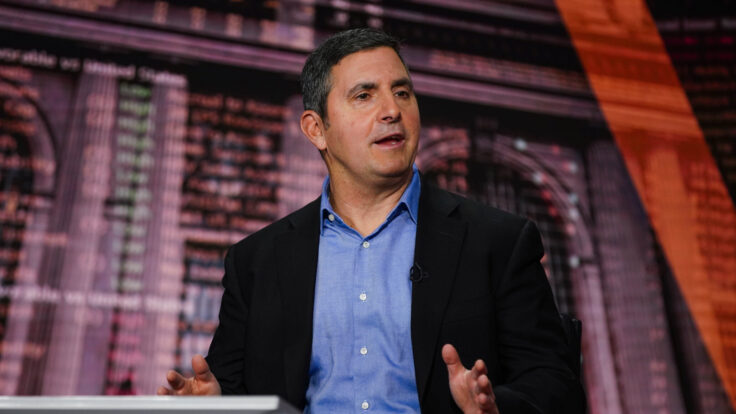
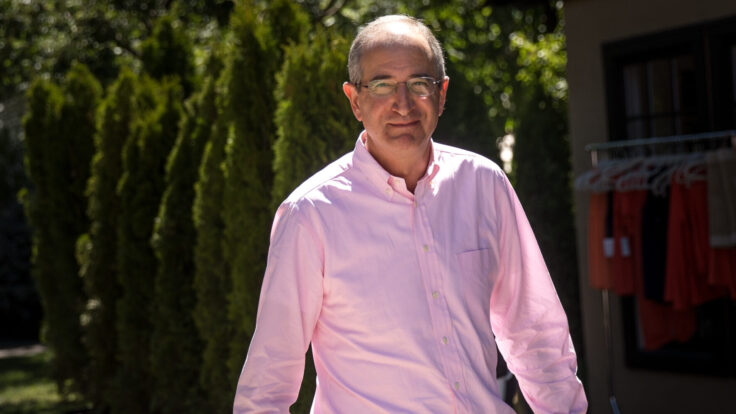
Three years after the fraught inception of David Zaslav’s Warner Bros. Discovery, the company’s Q4 earnings report suggests that things are finally turning a corner—and investors seem to agree. But can Zaz continue to outrun the decline of the TV business?
|
|
|
Back in April 2022, Warner Bros. Discovery came into the world with a slew of near-existential disadvantages—the company was burdened by a $55 billion debt load, a BBB credit rating, and a rocky operating environment for its array of linear TV offerings, cable channels, and Hollywood fare. The equity markets didn’t look kindly upon the Frankenmonster that David Zaslav had created through the combination of Discovery Communications, his challenged cable TV business, and the vestiges of AT&T’s Warner Media. Since the company’s formation, the stock is down 55 percent. The S&P 500 has risen 20 percent during the same time period.
And yet if WBD’s fourth quarter 2024 performance is a harbinger of things to come, the worst may be over. I’ve long argued that WBD is really a publicly traded leveraged buyout, and the key to unlocking value was the simultaneous reduction of its debt—an objective that Zaz has been highly rewarded to achieve—in combination with the hoped-for growth of its direct-to-consumer business and an increase in overall profitability. At some point, I’ve contended, the company would pay down enough debt and make enough free cash flow (and project the ability to rev it up on both fronts) that investors would look past the ominous headlines about its declining linear TV assets, its forfeiture of the rights to televise the NBA, and the vicissitudes of its film division.
It looks like we’ve now reached an inflection point for the company. Net debt at WBD is $34.6 billion—$40 billion of gross debt, less $5.4 of cash and cash equivalents—and the company’s leverage ratio of 3.8x adjusted EBITDA is on its way down, or so management hopes, to a ratio of 2.5x-3x gross leverage. Meanwhile, Max is growing, and Zaz has signaled that he’s willing to kill his little darlings at Discovery, if it comes to that. “D.T.C. net adds and EBITDA continue to shine,” Kutgun Maral, at Evercore ISI, wrote in a quick note after the earnings release on Thursday.
The $3 Billion Improvement
|
WBD has paid down $19 billion of its debt load in nearly three years. “We will continue to be super, super focused on this,” C.F.O. Gunnar Wiedenfels said during the company’s earnings call on Thursday morning. As I’ve reported before, the tenor of the WBD debt is also quite advantageous to the company, at least in the current interest-rate environment. At the end of December, the average maturity of the company’s remaining debt was 13.4 years, at an average interest rate cost of 4.7 percent. That’s tasty for a company with a BBB credit rating, considering the yield on the 10-year Treasury is currently 4.2 percent.
WBD does have some near-term debt maturities, including $2.2 billion due this month, which explains the company’s logic for carrying $5.4 billion in cash on its balance sheet. On the earnings call, Gunnar said the balance sheet is in “very good shape now” and that he is not worried about any near-term debt maturities. “I view our capital structure as a real asset,” he said. I don’t know when, or if, the credit rating agencies will upgrade WBD’s BBB credit rating. But when they do—and it should be soon(ish), I would think—that will be the day the rocket fuel gets injected into the WBD publicly traded L.B.O. (This is not investment advice.)
This isn’t just a balance sheet narrative, however. WBD has achieved a fair amount of success in the fastest growing parts of the business. Zaz’s strategy of internationalizing HBO/Max, WBD’s direct-to-consumer offering, seems to be paying off. Total D.T.C. subscribers reached 117 million in the fourth quarter, with the majority of those subscribers, nearly 60 million, coming from outside the United States. After penetrating Latin America, the service will soon light up in the U.K., Ireland, Australia, Germany, and Italy. “Max became one of the very few global scaled and profitable streaming services,” the company wrote in a letter to shareholders that accompanied the earnings report.
There was also unexpected subscriber growth in the U.S., with some 4.5 million new subscribers domestically, as compared to analysts’ expectations of 2.8 million. “The U.S. is a pretty mature market,” Zaz said. “We think that there’s still some growth, given the quality of our service, and we’re fighting for that.” Meanwhile, streaming is now solidly profitable at WBD. In the fourth quarter, D.T.C. adjusted EBITDA—I hate that term, as Zaz knows—was $409 million, up from a loss in the fourth quarter of 2023 and above the $275 million that Wall Street was expecting, as Maral wrote in his note. For all of 2024, D.T.C.’s adjusted EBITDA was $677 million, up exponentially from $103 million in 2023. |
|
|
A MESSAGE FROM OUR SPONSOR
|
PERFORMANCE UNLEASHED
With a distinct sporting personality, the Range Rover Sport is a
peerless performer.
EXPLORE
|
|
|
Zaz wasn’t shy about touting the success of this division. “Our direct-to-consumer business contributed almost $700 million in EBITDA, a $3 billion improvement in just two years,” he said on the call. “And we expect direct-to-consumer EBITDA to nearly double in 2025.” He specifically cited the success globally of The White Lotus, House of the Dragon, and The Pitt as “compelling,” “quality,” and “original storytelling.” (The Pitt, of course, is not without its legal headaches, as my partner Eriq Gardner can assure you.) Maral wrote in a subsequent note on Friday that WBD’s D.T.C. “trends” remain “highly encouraging,” with subscribers growing to “over” 150 million by the end of next year and EBITDA “nearly” doubling to $1.3 billion this year.
The other happy story in the fourth quarter results came in WBD’s studio segment. The company reported that the television production business manufactured 80 shows for both WBD and other streamers and broadcast networks, and was the top supplier of live-action TV to WBD and to others. Zaz highlighted hits such as The Penguin, “one of the top three most viewed original debut seasons on Max ever,” and Presumed Innocent, a big hit for Apple TV. In the fourth quarter, WBD’s studio segment generated revenue of nearly $3.7 billion, up 16 percent year over year, and adjusted EBITDA—kills me every time—of $950 million, up a whopping 75 percent year over year. Zaz is especially jazzed about the debut of Warner Bros.’ Superman film in July. (Superman, alas, is also not without some legal issues, as Eriq can also remind you…)
WBD’s linear TV offerings are still struggling, of course, no matter how creatively Robert Gibbs, the new WBD head of communications, is trying to apply lipstick to the pig. And, critically, this segment of WBD’s business is still generating the bulk of the company’s adjusted EBITDA. In 2024, the networks segment generated adjusted EBITDA of $8.1 billion, down 10 percent from the $9 billion in 2023. The trend lines are even worse: In the fourth quarter, adjusted EBITDA was $1.9 billion, down 13 percent from $2.2 billion from the year earlier quarter. “The earnings generated by our linear networks continue to support our ability to invest in our transformation,” the company wrote to shareholders. You’ve got to hand it to Gibbs for his spin capabilities.
That, of course, is why Zaz recently reorged WBD to make it easier to potentially spin off CNN, TNT, the Food Network, and other declining cable assets into their own publicly traded company, or possibly gin up some future merger with Comcast’s SpinCo. My sense, particularly based on the signals that he sent Thursday, is that he’s getting close to pulling the trigger here. “This new structure will provide investors with better visibility to the strength of our streaming and studios business and will give us real strategic value and optionality into the future,” Zaz told the Wall Street analysts. When BofA’s Jessica Reif Ehrlich asked about future strategic initiatives, Zaz replied that the company’s new structure allowed it to be “better able to respond to this generational disruption” and “create potential opportunities to unlock additional shareholder value, which we’re focused on.”
Zaz tried to provide some hopium for the folks at CNN by citing the coming subscription and digital offerings being designed by Mark Thompson and Alex MacCallum, who “built the digital business at The New York Times.” But that’s still going to be a long putt. The WBD C.E.O. garnered perhaps the most attention for what he said about the company’s sports agenda. (My partner John Ourand has done terrific reporting on this, of course.)
Our friend Rich Greenfield at LightShed Partners asked Zaz about the WBD sports strategy these days. He replied that his team is “disciplined” and “opportunistic” when it comes to the sports rights opportunities and that WBD is “money good” on almost all of its current sports offerings: “We don’t need any more sports anywhere in the world in order to support our business.” Gunnar added that “several hundred million” dollars of expenses related to sports will be eliminated in 2026, along with some associated ad revenue, of course. “But this should certainly be a few hundred million dollar improvement in 2026 over 2025,” he said.
|
Where WBD goes from here is anyone’s guess, of course. Investor sentiment seems to be changing for the better. In the past six months, the stock is up 51 percent. But it’s also down the aforementioned 55 percent since the company was formed nearly three years ago. Is the glass half empty or half full?
That’s one of the most intriguing parlor games being played in Hollywood and on Wall Street these days. Zaz, of course, remains supremely optimistic. “We really believe that the global players will be those that will really prosper in the years ahead, and ultimately be the largest sustainable growth media companies,” he told Barclays analyst Kannan Venkateshwar on the earnings call. “There will probably be four, or five, or six, and our job every day is to fight to get a seat at that table.” The fourth quarter results, if they can be sustained, at least indicate that Zaz and WBD will likely be one of the “four, five, or six.”
|
|
|
|
An insider-friendly tip sheet from Matthew Belloni, who spent 14 years in the trenches at The Hollywood Reporter and five before that as an entertainment lawyer. Subscribers also receive What I’m Hearing+, a companion email focused on entertainment law, the streaming industry, and more.
|
|
|
|
Puck senior political correspondent Tara Palmeri grapples with the aftermath of what may be the most chaotic and consequential presidential election cycle of our lifetime. With 15 years covering politics, Tara speaks with the smartest political minds to discuss what’s happening behind the scenes in Washington, D.C., from the campaign trail to the Capitol.
|
|
|
Need help? Review our FAQ page or contact us for assistance. For brand partnerships, email ads@puck.news.
You received this email because you signed up to receive emails from Puck, or as part of your Puck account associated with . To stop receiving this newsletter and/or manage all your email preferences, click here.
|
|
Puck is published by Heat Media LLC. 107 Greenwich St, New York, NY
10006
|
|
|
|