|
Welcome to Dry Powder. I’m Bill Cohan.
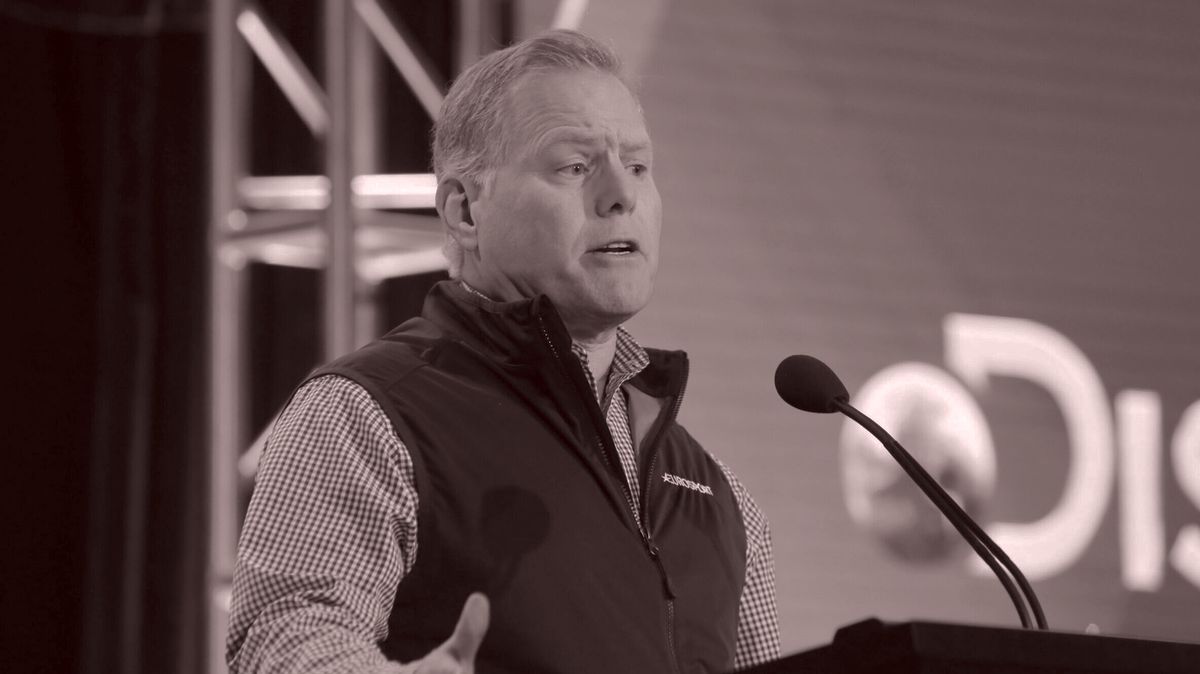
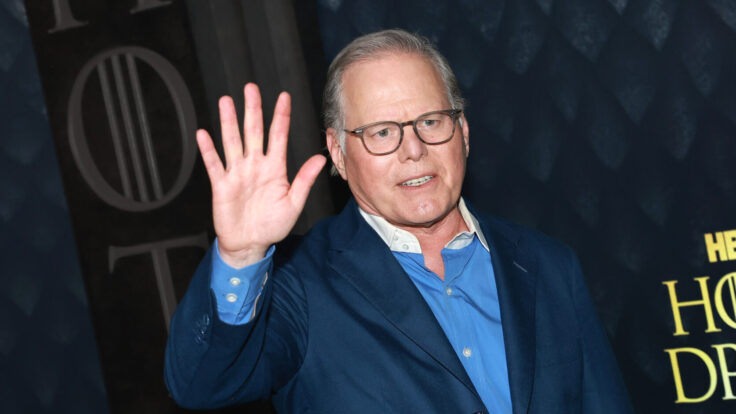
Last week, when a denim-clad David Zaslav sat courtside at Madison Square Garden during the Knicks-Pacers playoffs, he didn’t look like a guy whose company had recently been downgraded by S&P from BBB– to BB+, right on junk bond borderline. The downgrade came as a bit of a surprise—as readers know, I’ve long been expecting a credit-rating upgrade for Warner Bros. Discovery, thanks to Zaz and C.F.O. Gunnar Wiedenfels paying down $21 billion of WBD’s $55 billion in debt in three years. Below, I’ll get into S&P’s thinking, and why all this mishegas may actually be good news for Zaz’s larger ambitions.
But first…
|
- Let’s talk about Saks, baby…: Saks Global is trying to put a positive spin on its recent announcement that the company added $350 million of liquidity to its capital structure—giving it a total of “approximately $700 million in available liquidity on a pro forma basis,” according to the company, when this deal closes soon. This new loan, of course, would offer the company more of a safety net to make its first interest payment of $120 million on the company’s publicly traded $2.2 billion bond, which is due at the end of this month. The loan could also help it refinance the $599 million commercial mortgage-backed security coming due in August, which would require an infusion of cash from Saks and its partner, the Simon Property Group, to get the deal done.Upon further inspection, however, the new “liquidity” facility is simply more cause for concern. The deal adds $350 million of debt to the company, in addition to the $4 billion-plus of debt the company already has to support. Saks Global also owes vendors $275 million in overdue payments. When the company was previously talking about this new liquidity facility—a so-called FILO (first in, last out) inventory line—it was supposed to be part of their existing $1.8 billion asset-based loan facility. But now the company is touting the fact that the new $350 million is in addition to the $1.8 billion ABL line, of which around $350 million is still available to Saks. Of the new $350 million, $300 million is a new FILO line, while the remaining $50 million is another senior facility, secured by certain subsidiaries of the company, which presumably makes that $50 million piece structurally superior to the $2.2 billion of bonds.Also, this new $350 million is coming from a subsidiary of SLR Investment Corp., which was started by Michael Gross, one of the original employees of Apollo Global Management. (Gross left Apollo in 2006 and started SLR the following year.) It would be fair to say that Gross has Apollo in his D.N.A.—so his capital ain’t coming cheap. He’s not likely to make a deal with Saks Global for $350 million unless the terms are, how shall we say, somewhat onerous. But of course, Saks isn’t talking about the terms of the SLR deal. The company declined to comment about the cost of that $350 million.
That leaves the trading of the bonds—not an enthusiastic press release—as the best way to gauge what’s really happening at the company on a day-to-day basis. The bonds are now priced at 44 cents on the dollar, and yielding 37 percent. Investors who bought the bonds at par last December have lost 56 percent of their investment in five months. The bond had been trading at around 36 cents on the dollar before the latest influx of “liquidity” that the company announced on Thursday, before trading up and then taking another dip after SLR and its $350 million entered the picture. (This is not investment advice.) The saga continues, and we’re now in June, when that first interest payment on the bonds is scheduled to be made…
|
And now, a couple quick updates on the roiling Shari Redstone drama from my partner Dylan Byers. Be sure to subscribe to his excellent private email, In the Room…
|
|
|
 |
Dylan Byers |
|
- Shari’s shareholder problem: While representatives for Paramount and Trump remain at an impasse over settling the president’s lawsuit against 60 Minutes—Paramount is reportedly offering $15 million, Trump wants at least $25 million—Paramount’s board and leadership remain fearful of the potential shareholder retaliation over their willingness to settle such a blatantly meritless lawsuit in order to win approval for Shari Redstone’s Skydance deal. Months ago, the Journal’s Jessica Toonkel flagged the concerns of directors and executives over exposure to liability for bribing a public official, as well as anxiety that such settlements would not be covered by their corporate insurance. In recent days, sources close to the company have stressed to me that these issues continue to plague the negotiations, and could conceivably run out the clock on the deal’s July 6 deadline—an existential crisis for Shari, who, as I’ve noted, really needs this deal.On a related note, Semafor’s Max Tani reports that the California State Senate has invited recently excised CBS News C.E.O. Wendy McMahon and 60 Minutes executive producer Bill Owens to testify in their own inquiry into whether Paramount has already violated state laws against bribery and competition—which gives you a flavor of what’s to come.And finally, the president’s lawyers have argued in court papers that their client suffered “mental anguish” as a result of CBS’s editing of the 60 Minutes interview with Kamala Harris, and that his status as a “content creator” was damaged by the attention given to the interview. Yes, it’s okay to laugh; it’s also okay to cry.
|
|
|
|
Now, on to the main event…
|
|
|
|
For years, David Zaslav and henchman Gunnar Wiedenfels had been following the yeoman’s path of paying down Warner Bros. Discovery’s $55 billion debt, all in the service of exploding the value of their publicly traded L.B.O. So why did S&P Global just swat WBD down to BB+?
|
|
|
|
Those following the travelogue of David Zaslav’s debt journey know that I’ve long anticipated a credit-rating upgrade for his beleaguered Warner Bros. Discovery—a putative reward that might finally boost the company’s long-languishing stock, which is down some 60 percent since WBD was created in April 2022. The logic was simple: Zaz and WBD C.F.O. Gunnar Wiedenfels have paid down $21 billion of their original $55 billion in debt in three years. A pretty impressive feat, all things considered. Indeed, Zaz and Gunnar have been specifically rewarded by the WBD board of directors to reduce that debt—Zaz’s 2024 salary was $3 million, but his overall compensation, laden with stock-related incentives, ballooned to $52 million.
But the debt upgrade at Warner Bros. Discovery seems a long way off, at least according to Jawad Hussain, a research analyst at S&P Global. On May 20, Hussain downgraded WBD’s debt from BBB– to BB+—right on the borderline of a dreaded junk bond rating. (As usual, this is not investment advice.)
How can a company with $55 billion in debt be rated BBB while a company with $34 billion of net debt gets downgraded to BB+? Well, there are two parts to the formula by which the credit-rating agency makes its determination: net debt, of course, but also EBITDA. The ratio is net debt divided by EBITDA (or adjusted EBITDA, but whatevs). And therein, according to S&P, lies the problem. While WBD’s net debt has been coming down steadily, its adjusted EBITDA has been stuck in second gear—at $9 billion a year, to be precise.
In fact, Hussain figures that WBD’s adjusted EBITDA will be stuck at $9 billion a year for the next three years, primarily due to “the continued revenue and cashflow declines at its linear TV operations.” As a result, S&P concluded, WBD’s “leverage” ratio—net debt divided by the adjusted EBITDA—will be 4.3x, or “significantly higher” than the 3.5x “threshold” for an improved rating, and it’s expected to remain above 3.5x until 2027, at the earliest.
This is all a little bit confusing because WBD puts its current leverage ratio at 3.8x, not 4.3x. But S&P adds to its calculus some $3.5 billion of WBD lease liabilities and $167 million of other liabilities, such as those for executive pensions. And, in the end, it’s S&P’s calculations that matter, not the company’s own. In a shareholder letter, released in May, along with WBD’s first quarter earnings, the company reiterated that it was continuing to target a gross leverage ratio of 2.5x to 3x, and that it “will act on opportunities to make further progress toward that goal.” And yet S&P clearly does not see a scenario where WBD leverage ratios approach anything like the levels that the company is hoping to achieve. That’s kind of disturbing, to be honest.
|
|
Neither side seems to be disputing that the $9 billion of adjusted EBITDA is here to stay. S&P puts the problem of WBD’s stagnant EBITDA squarely on its “global networks” segment, citing the ongoing decline of the company’s linear TV offerings. “We now forecast EBITDA at global networks will decline 20 percent to $6.5 billion due to accelerating revenue declines and elevated content costs from newly acquired sports rights content coupled with its last year of NBA rights in 2025,” Hussain wrote. (Of course, TNT’s multi-decade relationship with the NBA ended last night with the Pacers’ blowout victory over the Knicks in the Eastern Conference Finals.)
Interestingly, S&P does not think Zaz will be spinning out WBD’s linear TV networks anytime soon. S&P noted that it does not expect WBD to take any “inorganic” steps to reduce leverage in the foreseeable future, such as selling assets or raising fresh equity, that would materially decrease its leverage and potentially lead to the ratings upgrade. “We view it as more likely that the company will seek to maximize its long-term growth opportunities, particularly at its streaming segment, which may slow the pace of deleveraging,” Hussain wrote.
This is, of course, contrary to conventional wisdom. The market already appears to be moving in the SpinCo direction, after all. Comcast has created Versant—the forthcoming spinoff of most of its cable and linear TV assets—and Zaz has taken the step of separating WBD’s linear TV assets, for operational and financial reporting purposes. It sure seems like a prelude to a spinoff, as many people on Wall Street expect will happen one of these days. Anyway, such a separation is not “factored” into its analysis, S&P wrote, and even if it were, such a spin would be—gulp—a “negative” from a credit perspective. According to Hussain, if the global networks business were spun off from the rest of WBD, credit ratings would suffer further, because “it would weaken our view on the individual businesses, particularly the Global Linear Networks company, due to ongoing secular pressure in the linear television ecosystem.”
I’m not sure I get this logic, either. Even taking for granted S&P’s declining EBITDA projections for the linear TV assets—$6.5 billion in 2025, $5.9 billion in 2026, and $5 billion in 2027—it still seems like spinning off the linear TV assets with a bunch of WBD’s inexpensive debt should improve the outlook for its streaming and studios business. For instance, taking $6 billion as the EBITDA for the linear business, and WBD’s 4.7 percent average interest rate on its debt, it seems to me that a spun-off linear business could easily service something like $27 billion of WBD’s $34 billion of net debt, and be able to make the annual interest payments of $1.3 billion from that EBITDA. That would leave something like $4.5 billion in EBITDA, in 2027, according to S&P’s projections, in the studio and streaming business to cover the remaining $7 billion in debt that stays with that business. Surely, a leverage ratio of 1.5x ($7 billion/$4.5 billion) is worthy of a credit upgrade, isn’t it? These are just illustrative numbers, on my part—I have not read the bond indentures or the loan agreements to see whether it’s even possible to split apart WBD debt onto a new SpinCo. I’ll leave that task to WBD’s lawyers and bankers—and it’s all a bit confusing, alas. But the credit downgrade stands, as does the fact that the WBD stock is up 5.4 percent since S&P downgraded the company’s debt. Go figure.
|
|
In truth, a credit rating downgrade is only really relevant if a company plans to issue new debt, which I seriously doubt WBD is looking to do anytime soon. The credit rating downgrade could also affect the value of WBD’s existing debt stack—although, given that the cost of WBD’s debt is slightly below what the U.S. government can borrow at these days on a long-term basis, the downgrade should have minimal impact on the value of WBD’s debt. In fact, as I’ve written before, WBD’s cheap debt is actually an asset of the company, all things considered.
In fact, there’s a subtle benefit to the downgrade: It may make WBD easier to sell. The unexpected downgrade of the Paramount Global debt, in March 2024, made that company easier to sell, too—still pending, as we all know—because its $11 billion-ish of net debt did not have to be repaid immediately upon a change of control. The downgrade, ironically, relieved a buyer of that burden. I suspect the S&P downgrade of the WBD debt last week can serve the same purpose, if anyone out there is looking to make a deal with Zaz.
|
|
|
|
Join Puck’s chief political columnist, John Heilemann, as he roams the corridors of power and influence in America on this twice-weekly interview show, taking you beyond the headlines with the people who shape our culture: icons and up-and-comers, incumbents and insurgents, moguls and machers in the overlapping worlds of politics, entertainment, tech, business, sports, media, and beyond. The conversations are rich and revealing, unrehearsed and unexpected… and reliably impolitic. A Puck-Audacy joint, new episodes drop every Wednesday and Friday.
|
|
|
|
Puck’s daily political newsletter from Washington on what’s really happening in this town, from the White House to the Pentagon to Capitol Hill, K Street, and the campaign trail.
|
|
|
Need help? Review our FAQ page or contact us for assistance. For brand partnerships, email ads@puck.news.
You received this email because you signed up to receive emails from Puck, or as part of your Puck account associated with . To stop receiving this newsletter and/or manage all your email preferences, click here.
|
|
Puck is published by Heat Media LLC. 107 Greenwich St, New York, NY 10006
|
|
|
|