• Washington
  • Wall Street
  • A.I.
  • Hollywood
  • Media
  • Fashion
  • Sports
  • Art
  • Join Puck Newsletters What is puck? Authors Podcasts Gift Puck Careers Events
  • Join Puck

    Directly Supporting Authors

    A new economic model in which writers are also partners in the business.

    Personalized Subscriptions

    Customize your settings to receive the newsletters you want from the authors you follow.

    Stay in the Know

    Connect directly with Puck talent through email and exclusive events.

  • What is puck? Newsletters Authors Podcasts Events Gift Puck Careers
Welcome back to Dry Powder. I’m Bill Cohan. The debate over E.S.G. on Wall Street is about as heated as any that I’ve encountered in my many years reporting on finance. But the vitriol of its opponents was never more clear to me than after talking with the State Treasurer of South Carolina, Curtis Loftus, who is responsible for managing some $60 billion in public funds—and had a few choice words for Larry Fink.
 ‌ ‌ ‌ ‌ ‌ ‌ ‌ ‌ ‌ ‌ ‌ ‌ ‌ ‌ ‌ ‌ ‌ ‌ ‌  ‌ ‌ ‌ ‌ ‌ ‌ ‌ ‌ ‌ ‌ ‌ ‌ ‌ ‌ ‌ ‌ ‌ ‌ ‌  ‌ ‌ ‌ ‌ ‌ ‌ ‌ ‌ ‌ ‌ ‌ ‌ ‌ ‌ ‌ ‌ ‌ ‌ ‌  ‌ ‌ ‌ ‌ ‌ ‌ ‌ ‌ ‌ ‌ ‌ ‌ ‌ ‌ ‌ ‌ ‌ ‌ ‌  ‌ ‌ ‌ ‌ ‌ ‌ ‌ ‌ ‌ ‌ ‌ ‌ ‌ ‌ ‌ ‌ ‌ ‌ ‌  ‌ ‌ ‌ ‌ ‌ ‌ ‌ ‌ ‌ ‌ ‌ ‌ ‌ ‌ ‌ ‌ ‌ ‌ ‌  ‌ ‌ ‌ ‌ ‌ ‌ ‌ ‌ ‌ ‌ ‌ ‌ ‌ ‌ ‌ ‌ ‌ ‌ ‌  ‌ ‌ ‌ ‌ ‌ ‌ ‌ ‌ ‌ ‌ ‌ ‌ ‌ ‌ ‌ ‌ ‌ ‌ ‌  ‌ ‌ ‌ ‌ ‌ ‌ ‌ ‌ ‌ ‌ ‌ ‌ ‌ ‌ ‌ ‌ ‌ ‌ ‌  ‌ ‌ ‌ ‌ ‌ ‌ ‌ ‌ ‌ ‌ ‌ ‌ ‌ ‌ ‌ ‌ ‌ ‌ ‌ 
Dry Powder

Welcome back to Dry Powder. I’m Bill Cohan.

The debate over E.S.G. on Wall Street is about as heated as any that I’ve encountered in my many years reporting on finance. But the vitriol of its opponents was never more clear to me than after talking with the State Treasurer of South Carolina, Curtis Loftus, who is responsible for managing some $60 billion in public funds—and had a few choice words for Larry Fink. I hope you find our conversation as fascinating as I did.

The Wall Street Woke Wars
On the Wall Street of yore, economics always trumped politics. But now the E.S.G. phenomenon has changed all that, setting off beefs galore between state treasurers and money managers. Herewith, a view from the front lines…
WILLIAM D. COHAN WILLIAM D. COHAN
In the good old days on Wall Street, it was rare for a banker to be overtly political. People may have known that Felix Rohatyn, at Lazard, was a Big Dem—he helped save New York City from bankruptcy, after all—but other leading Wall Street bankers used to be a tad more discreet about their political affiliations. Robert Rubin ended up being Bill Clinton’s Secretary of the Treasury and Hank Paulson ended up serving in the same position under George W. Bush, but it probably could have gone either way. All of which is to say that not so long ago, Wall Street bankers hoping to make the leap to Washington tended to be more of the statesmen variety and less of the partisan type.

These days, of course, everything is political. And that goes for investing, too. Suddenly with the rise of the E.S.G. movement—the weighting of environmental, social and governance factors in business—investing has also become a political battleground. If you want to stay on the right side of the mob, money managers, apparently, would be wise to abandon investing in anything resembling hydrocarbons or anything that adds to the problem of the Earth heating up. The hope, I suppose, is that if investors quit ExxonMobil, for instance, the company would just fold up its tent and disappear.

Obviously we know it doesn’t work this way, not even remotely so, in large part because human beings don’t seem the slightest bit ready to eschew oil and gas products and ExxonMobil, now worth nearly $500 billion, is trading near its all-time high, up 45 percent in the last year, while a more politically correct company, such as Microsoft, perhaps, is down 12 percent in the past year. This is not investment advice, of course.

And so now there is a battle royale brewing between the big money managers that are trying to be (and stay) woke, and the managers of big pools of capital at the state level—the state treasurers—who are sworn to be fiduciaries for billions and billions of their citizens’ dollars, and thereby becoming some of the most desirable limited partners for venture capital, private equity, mutual funds, and all manner of institutional investing. Their job is to maximize returns. They don’t want to be told what they can and can’t invest in, and many don’t want third-party investment managers avoiding ExxonMobil for political reasons when its stock is up 45 percent in a tough year.

Welcome to the new Wall Street war zone. Curtis Loftus, the state treasurer of South Carolina, who is responsible for managing some $60 billion in public, state funds is on the front lines of this battlefield. He thinks that E.S.G. represents a serious violation of the freedom to decide what you want to invest in, free of all the political whiplash. “E.S.G., for me as a treasurer, interferes with the basic and most important principle of investing which is, of course, a fiduciary responsibility,” Loftus told me in a recent conversation. “Part and parcel of E.S.G. is you move [your duty] from the shareholders to the stakeholder; well, you know, where’s the responsibility in that? Who are you responsible to?”

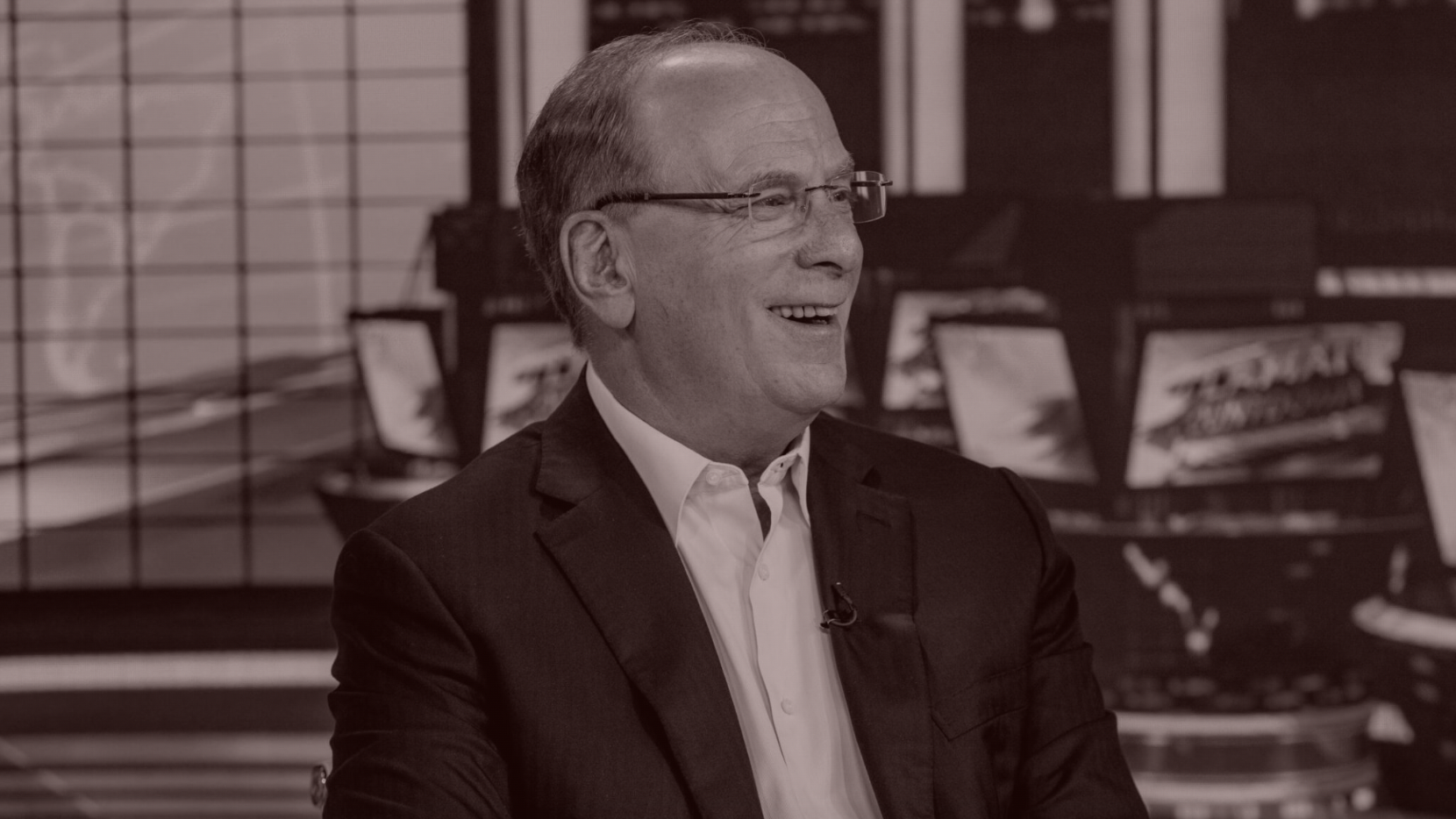
He continued on his diatribe, invoking Larry Fink, the C.E.O. of BlackRock, a leader in E.S.G. investing, with its $9 trillion under management. He worries especially about individuals who ask BlackRock to manage their life savings. “Their job is to live life and they turn their money over to the people like Larry Fink and say, Here, manage this money for me, and they have very little idea that Fink’s interest is elsewhere,” he said. “So as a state treasurer, I’m very concerned about the breaches of fiduciary responsibilities and the whole regulatory scheme in general.”

Loftus told me that he no longer has the “same level of trust” in money managers as he used to have before E.S.G. investing became a thing. “I realized that they would, in a moment’s notice, ignore their fiduciary responsibilities,” Loftus continued. “In fact, I think they have. When the large investment houses and the banks and some of the largest corporations in the world go to these conferences… and they decide what’s going to happen in 2030 and in 50 years, and then they decide that’s important, I decide that that’s a self-fulfilling prophecy in one of the greatest grifts of all time. At the end of the day, E.S.G. is just a great grift. It’s how the rich get richer and the powerful become more powerful.”

I asked him to explain his thinking further, since I knew some people don’t like E.S.G. investing but I’d never heard an elected public official, let alone a state treasurer, go off on the concept with such antipathy. “It gives them more power to use the funds they have been entrusted with for purposes that were not realized,” he said. By his reckoning, 80 percent of the corporate shareholder voting in America is done by three asset managers—Vanguard, BlackRock and State Street, which are fiduciaries for their customers and end up voting the shares in their custody. Since they manage so much money, they end up voting a ton of shares, especially since most individual shareholders don’t bother to vote at proxy time. He said the 1,000 or so people in the top management of these three companies control 80 percent of the voting on shareholder issues. “Now if that’s not minority rule, what is?” he wondered.

What Would Warren Do?
Some investors, of course, have pretty much ignored the E.S.G. debate. In the past year or so, Warren Buffett, perhaps the greatest investor of all time, backed up the Berkshire Hathaway truck to buy oil and gas stocks, including some $20 billion worth of Chevron stock and about a 28 percent stake in Occidental Petroleum. Like Loftus, Buffett just wants to make money as a fiduciary to Berkshire Hathaway stockholders and appears not to care about the E.S.G. implications.

Back in 2015, Loftus made the decision to cut BlackRock, which has become a leader in trying to adhere to E.S.G. investing (while also being careful to hold onto a bunch of oil and gas stocks), out from managing any of South Carolina’s state funds. He also made sure any remnants of money that BlackRock had been managing for his state had also been ended. “I’m under no illusions that Larry Fink is shedding tears over Curtis,” he said. “But there are a lot of people out in the hinterlands, if you will, that are paying attention to this. I’ve had people send me emails and text messages, or telling me in person, that they’ve changed their retirement systems and are taking money away from some of these big E.S.G. plans.”

He blamed what he calls the “Hard Left” for “politicizing” investing, and grew increasingly animated as he spoke. “It’s Silicon Valley money,” he said. “It’s in response to Occupy Wall Street where Wall Street got itself in a very bad situation. So they made a deal with the Hard Left wing that was always after them. You notice they’re no longer after them anymore. So they said, ‘Hey, we will help you if you help us.’ And what Wall Street said is ‘We will impose these speech and behavior codes.’ E.S.G. is effectively a trillion-dollar boycott on the working and middle class of Americans. And if you don’t do as we say, we continue to put our fingers on you, we continue to oppress you. We take away your options to invest.”

Loftus isn’t the only fiduciary who is getting animated about this topic. He joins hedge fund manager Vivek Ramaswamy, who just announced he’s running for, yep, president. But he is putting his money where his mouth is. Loftus said he selected Federated Investors, in Pittsburgh, to manage a big chunk of South Carolina’s billions. “They are all aware and they are not unfriendly to E.S.G.,” he said. “But they understand our sensitivities and they have gone out of their way to make sure that they are a proper fiduciary for us. So from a realistic standpoint, from a guy who’s got to get this done every day. I’m very happy about it… We feel very confident they are adhering to our wishes.”

I wondered if Curtis had heard from other state treasurers who shared his point of view on E.S.G.-related investing, or whether this was just a Red State thing? That set him off, again. “It’s maddening when somebody says to me, like most reporters will, they’ll say, ‘Well, you’re just interjecting politics.’ And I say back to them, ‘I’m not sure. Are you crazy? The Blue State treasurers, the Blue State pension plans, the Blue City treasurers, the university foundations, the unions have all been working hand-in-hand on this for 15 years now. The Blue State treasurers have five what they call ‘Interstate Compacts’—one’s run from Connecticut, one’s run from Illinois, and they bring the investors in where they talk to them about diversity, equity, inclusion, sustainability, climate change. You vote their way or they don’t give you money. So we’re late to the program. They started this a decade ago. In fact, I dropped out of the National Association of State Treasurers, a group that I loved and learned a lot from, because there was just no turning back.”

Larry’s Gonna Be Fine
It’s a tough debate, to be honest. You’d have to be living in a cave not to realize the climate is changing and fast, and that burning hydrocarbons is a big part of the reason why. But if people aren’t quite ready to stop driving their gasoline-powered cars or to stop getting their electricity from coal-fired or natural-gas-fired power plants, are the men and women who are responsible for managing other peoples’ life savings supposed to give up on the stocks of the ExxonMobils and Chevrons of the world when they are seriously outperforming? On the other hand, the movement to electric vehicles seems to be happening faster than most people expected (after a 100-year lag) and so maybe the market is slowly but surely making the transition without money managers having to make the tough call.

In any event, you can be sure that Larry Fink isn’t losing sleep over Curtis Loftus. As Fink noted in Davos, responding to a question about “the political backlash” he’s experienced as a result of his and BlackRock’s advocacy of E.S.G. investing, he conceded that treasurers from “various states” had withdrawn some $4 billion from BlackRock in the past year or so because of its stance on E.S.G. investing. At the same time, though, he said, BlackRock had been “awarded,” in Fink-speak, another $400 billion in assets to manage, $230 billion of which came from existing BlackRock clients. You could see Larry almost wink. “So you tell me: $4 billion out, and $230 [billion] in, in the U.S.,” Fink replied.

FOUR STORIES WE’RE TALKING ABOUT
D.C. in Munich
D.C. in Munich
Detailing the after hours conversations at the Munich Security Conference.
JULIA IOFFE
AMC+ Tea Leaves
AMC+ Tea Leaves
Notes on the plight of AMC+ and the future of the streaming wars.
JULIA ALEXANDER
S.B.F.’s P.R. Riddle
A new thread in the FTX and Bankman-Fried investigations.
TEDDY SCHLEIFER
The Yellowstone Debacle
Inside the Costner-Sheridan tensions that could derail the hit show.
MATTHEW BELLONI
Puck
Facebook Twitter Instagram LinkedIn

Need help? Review our FAQs
page
or contact
us
for assistance. For brand partnerships, email ads@puck.news.

Puck is published by Heat Media LLC. 227 W 17th St New York, NY 10011.

SEE THE ARCHIVES

SHARE
Try Puck for free

Sign up today to join the inside conversation at the nexus of Wall Street, Washington, A.I., Hollywood, and more.

Already a member? Log In


  • Daily articles and breaking news
  • Personal emails directly from our authors
  • Gift subscriber-only stories to friends & family
  • Unlimited access to archives

  • Exclusive bonus days of select newsletters
  • Exclusive access to Puck merch
  • Early bird access to new editorial and product features
  • Invitations to private conference calls with Puck authors

Exclusive to Inner Circle only


Latest Articles from Wall Street

Geoffroy van Raemdonck
William D. Cohan • February 22, 2023
The Saks Financial Colonoscopy
Amid a torrent of bankruptcy filings, a blunt declaration by Saks Global’s newly appointed chief restructuring officer lays out precisely what went wrong and when, and who got screwed hardest—plus which risk-hungry investors are likely to call the shots moving forward. As it turns out, the company’s capital structure became “unsustainable” almost immediately after its $2.7 billion acquisition of Neiman Marcus Group in December 2024.
David Ellison
William D. Cohan • February 22, 2023
The Ellison Way of Parenting
David Ellison’s latest schemes to wrest Warner Bros. from Netflix have proved insufficient after his previous negotiating tactics ran up the price. Meanwhile, he’s losing the respect of the WBD guys across the table. But will his dad come to the rescue with another, say, $10 billion to bail him out?
Patrick Drahi
William D. Cohan • February 22, 2023
A History of Creditor-on-Creditor Violence
Wall Street invented the coercive liability management exercise, which allows companies to play their creditors against one another as they extract beneficial terms for themselves—a now-routinized tradition referred to as “creditor-on-creditor violence.” But now Apollo, Oaktree, BlackRock, and JPMorgan Chase are teaming up to put an end to this mess.


Larry Ellison, David Ellison
William D. Cohan • February 22, 2023
The Zaz–Ellison Dagger Contest
Warner Bros. Discovery’s most recent S.E.C. filing reveals the latest battle lines between the company and its hostile suitor. In particular, the document evinces a deep distrust of Paramount Skydance’s proposed deal financing, recasting the $108 billion all-cash offer as an $87 billion L.B.O. that could fall apart before closing.
David Zaslav
William D. Cohan • February 22, 2023
What Is Zaz TV Really Worth?
The battle for Warner Bros. Discovery is increasingly coming down to how Netflix and Paramount Skydance value the declining TV assets (and CNN) that David Zaslav is determined to separate from the Warners mothership. Versant, which just started trading on Nasdaq this week, may provide the answer.
greg abel
William D. Cohan • February 22, 2023
Make Berkshire Hathaway Great Again?
Greg Abel, the handpicked successor to Warren Buffett, faces one of the most exalted and daunting jobs in finance: determining what to do with the staggering $358 billion bequeathed to him by the most legendary investor of his generation. Herewith, three proposals for what Abel should buy with all that cash.


David Ellison, Larry Ellison
William D. Cohan • February 22, 2023
Zaz Is From Mars, the Ellisons Are From Venus
Murmurs from sources close to the Warner Bros. Discovery deal illuminate the latest machinations surrounding the Paramount-Netflix showdown—and where this thing is headed.


Get access to this story

Enter your email for a free preview of Puck’s full offering, including exclusive articles, private emails from authors, and more.

Verify your email and sign in by clicking the link we just sent.

Already a member? Log In


Start 14 Day Free Trial for Unlimited Access Instead →


Latest Articles from Wall Street

Larry Ellison
William D. Cohan • February 22, 2023
“Larry Didn’t Show Up, and David Got Ahead of His Skis”
Everything you wanted to know about the Warner Bros. Discovery board’s doubts with the Ellisons’ bid (but were afraid to ask) is revealed in its 14D-9 filing—a mother lode of alleged Paramount missteps, from squabbles over consent provisions and breakup fee reimbursements to junior lien debt and the financial capacity of the world’s fifth-richest man.
larry ellison david ellison
William D. Cohan • February 22, 2023
Ellison Irrevocable Trust Issues
Despite their numerous bids for all of WBD, a rift has opened between the principals at Paramount Skydance and the board and advisors of their target company—at least for now. Can money heal all wounds?
larry ellison david ellison
William D. Cohan • February 22, 2023
The Ellisons at the Gates
Paramount has raised the stakes in its hostile bid for Warner Bros. Discovery, and may yet go higher. Now Netflix must decide how much it wants to venture into junk credit-rating territory, or play games with its stock, to secure the prize.


Larry Ellison, David Ellison
William D. Cohan • February 22, 2023
Netflix’s $83B Math & The Ellison Hostile Meter
A talmudic reading of the mishegas following the $83 billion Netflix-WBD deal: Zaz’s personal economics; the likelihood that this turns hostile; the unusual consortium of banks underwriting the deal; the value of the Gunnar stub; regulatory open questions; the $5.8 billion breakup fee; and more.
Leon Black
William D. Cohan • February 22, 2023
The Epstein Monologues
The recently released, one-sided correspondence between Jeffrey Epstein and Leon Black illustrates a discourse between a hustler and a billionaire with too much money and too little time on his hands. So why couldn’t Black get rid of him sooner?
Mike Mayo
William D. Cohan • February 22, 2023
Wall Street Enters the “Cockroach” Wars
The multitrillion-dollar growth of private credit is fueling an acrimonious debate on Wall Street over whether this surging shadow market is the future of finance or the seed corn of the next crisis. Is Rowan right? Or Dimon? Or Gundlach? As Mike Mayo put it, someone is wrong.


david zaslav
William D. Cohan • February 22, 2023
Zaz the World Turns
News, notes, and palace intrigues from all sides of what might become the largest M&A deal of the year: the three-way tussle for David Zaslav’s Warner Bros. Discovery.
Get access to this story

Enter your email to get access to one article and free previews of our private emails from Puck authors and editors.

OR

Already a Member? Sign in


Latest Articles from Wall Street

wall street 1929
William D. Cohan • February 22, 2023
The Spirit of ’29
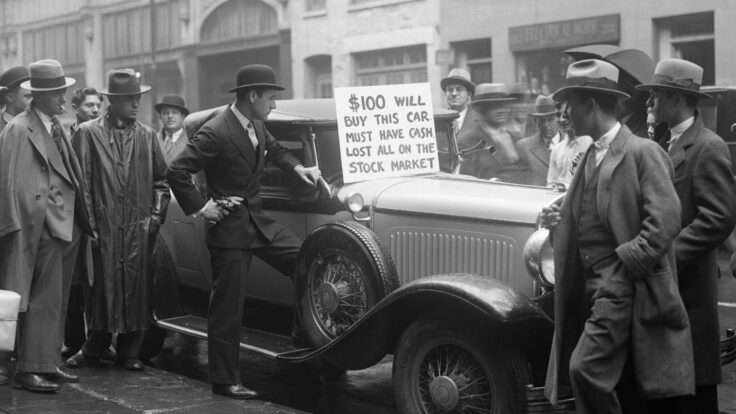
Financial history doesn’t repeat itself, but it does often rhyme. Amid a speculative frenzy, deregulation, trade wars, and a handful of megacaps propping up the markets, some of Wall Street’s brightest minds wonder whether 2026 might resemble 1929.
Marc Rowan
William D. Cohan • February 22, 2023
Street Credit
A recent string of bankruptcies and defaults suggests some challenges in the seemingly indomitable private credit market. And yet, according to some O.G.s, things have never been better. Apollo’s Marc Rowan lays bare the risks and rewards.
David Ellison
William D. Cohan • February 22, 2023
Ellisonology 101
In his first earnings call as C.E.O. of Paramount Skydance, David Ellison offered a masterclass in corporate optimism, promising “synergies” and artfully dodging questions about a possible Warner Bros. Discovery takeover. Alas, the time to act is here.


Michael Bloomberg
William D. Cohan • February 22, 2023
What Does Bloomberg Want for Bloomberg L.P.?
A modest proposal for how New York’s $100 billion man could bequeath his namesake, and its monumental profits in perpetuity.
Jim Chanos
William D. Cohan • February 22, 2023
The Mag Seven Itch
The market is notching record highs for the so-called Magnificent Seven—or should that be Mag 10?—but a subterranean counternarrative is forming as once-secure food and consumer staples crater, and cracks emerge in the $3 trillion private-credit boom.
Brian Roberts
William D. Cohan • February 22, 2023
The Brian Roberts–WBD Bull Case
A new analyst note highlights a heightened sense around Wall Street that Comcast co-C.E.O. Brian Roberts doesn’t merely want WBD, but also truly needs the company—and has a real shot at the asset.


Jamie Dimon
William D. Cohan • February 22, 2023
Jamie’s Castle in the Sky
Dimon’s $3 billion (or maybe as much as $5 billion, really) new headquarters is the physical embodiment of his fortress balance sheet and a metaphor for our fractional banking system. But the seeming permanence of its bronze facade shouldn’t fool old Wall Street hands, who know nothing is forever.


  • Terms
  • Privacy
  • Contact
  • FAQ
  • Careers
© 2026 Heat Media All rights reserved.
Create an account

Already a member? Log In

CREATE AN ACCOUNT with Google
OR YOUR EMAIL

OR

Use Email & Password Instead

USE EMAIL & PASSWORD
Password strength:

OR

Use Another Sign-Up Method

Become a member

All of the insider knowledge from our top tier authors, in your inbox.

Create an account

Already a member? Log In

Verify your email!

You should receive a link to log in at .

I DID NOT RECEIVE A LINK

Didn't get an email? Check your spam folder and confirm the spelling of your email, and try again. If you continue to have trouble, reach out to fritz@puck.news.

CREATE AN ACCOUNT with Google
CREATE AN ACCOUNT with Apple
OR USE EMAIL & PASSWORD
Password strength:

OR
Log In

Not a member yet? Sign up today

Log in with Google
Log in with Google
Log in with Apple
Log in with Apple
OR USE EMAIL & PASSWORD
Don't have a password or need to reset it?

OR
Verify Account

Verify your email!

You should receive a link to log in at .

I DID NOT RECEIVE A LINK

Didn't get an email? Check your spam folder and confirm the spelling of your email, and try again. If you continue to have trouble, reach out to fritz@puck.news.

YOUR EMAIL

Use a different sign in option instead

Member Exclusive

Get access to this story

Create a free account to preview Puck’s full offering, including exclusive articles, private emails from authors, and more.

Already a member? Sign in

Free article unlocked!

You are logged into a free account as unknown@example.com

ENJOY 1 FREE ARTICLE EACH MONTH

Subscribe today to join the inside conversation at the nexus of Wall Street, Washington, A.I., Hollywood, and more.

START 14-DAY FREE TRIAL

  • Daily articles and breaking news
  • Personal emails directly from our authors
  • Gift subscriber-only stories to friends & family
  • Unlimited access to archives
  • Bookmark articles to create a Reading List
  • Quarterly calls with industry experts from the power corners we cover