 |
|
Welcome to a special edition of Dry Powder.
|
|
And thanks as always for following our work here at Puck.
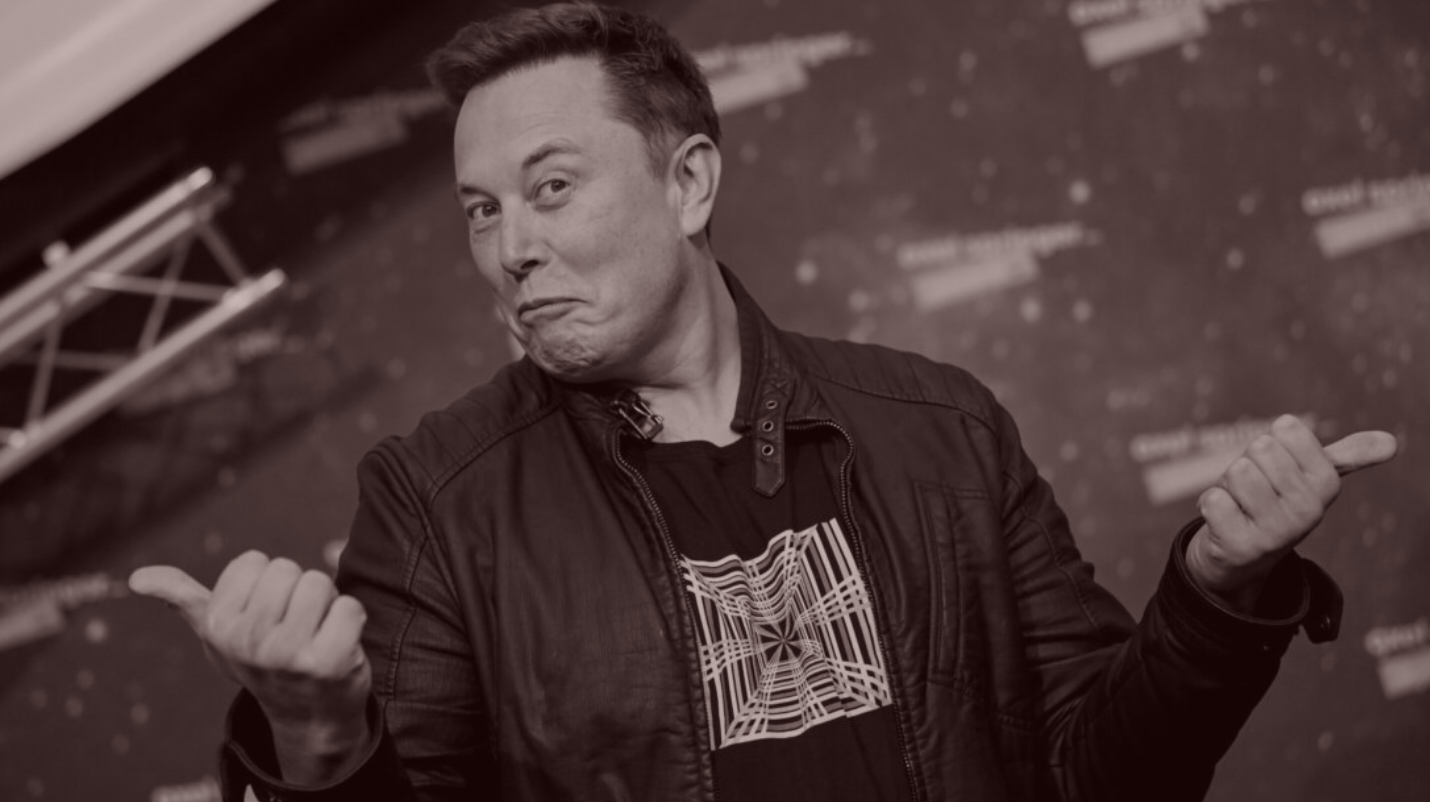
It’s not every day that the world’s wealthiest man attempts to buy Twitter, so we decided to shake up the schedule here at Dry Powder: I’ll be off on Sunday, and back in your inbox next Wednesday. In the meantime, you can read my analysis of Elon Musk’s $43 billion bid—and why I believe he’s deadly serious—below.
|
 |
| The Twitter Board’s Panic Room |
| Most of the takes out there are wrong. Musk is serious. And the Twitter board, Goldman, and its management team better be, too. |
|
|
|
If you want to understand the potential outcomes of Elon Musk’s $43 billion fight to take Twitter private, look at the company’s stock price today, in the immediate aftermath of his hostile offer. Basically, the Twitter stock is flat. It was up about 9 percent in pre-market trading, then slowly drifted back down. Some pundits are concluding that, as a result, the market is not taking Musk’s offer seriously because, you know, Musk is not a serious guy to begin with; his offer is subject to financing (not secured) and due diligence, et cetera—in other words, the same conditions that exist for all deals before they are concluded.
I disagree completely with this premise. I think the reaction of the Twitter stock today represents the market’s conclusion that Musk is a serious guy—at least about this—and that there are no other viable bidders to compete with him. His $54.20 bid for the company, in other words, may well be his highest and best offer, exactly as he said in his latest public filing. “I am not playing the back-and-forth game,” he wrote to the Twitter board. “I have moved straight to the end.”
You’ve got to respect the take-it-or-leave-it approach. I certainly do. Musk also wrote, correctly, that his offer is a 54 percent premium to where the Twitter stock was trading before he started buying it on January 31, and that it is at a 38 percent premium to where the stock was the day before he announced his 9.1 percent stake in the company, making him the largest shareholder by just a smidge above Vanguard. “It’s a high price and your shareholders will love it,” Musk also wrote.
Not that it’s the least bit relevant, but yes, Musk’s offer is 26 percent below Twitter’s 52-week high of $73.34 reached last summer, so it’s a “high” price for Elon, especially compared to where the stock has been. But it’s not the highest price it has been. Will Twitter shareholders love it? Many will. Those that bought at $73.34 won’t, but too bad for them. (This is not investment advice.)
The most important question is not whether the Twitter shareholders will love the price Musk is offering; it’s whether the $54.20 price is “fair,” from a financial point of view. That is the main question that the Twitter board and its financial advisor, Goldman Sachs, will need to answer right now—or soon enough—in their role as fiduciaries for other shareholders. If the answer is yes—and I believe it is, or soon will be—then the board will have little choice but to accept Musk’s offer, or try to negotiate him up from $54.20, despite his promise of skipping straight to the end. If the answer is no, Musk’s offer is not fair, then he can take his hostile offer directly to Twitter’s shareholders by making a tender offer for their shares. This could make the board irrelevant, but more likely would just put more pressure on the board to reach a deal.
If, say, another 42 percent of Twitter shareholders tender their stock to Elon, giving him a 51 percent ownership position, are we really to believe that the Twitter board will still give him the stiff arm? Not a chance. He’s well advised by Morgan Stanley. This is not a joke, or a drill. This is for real. If somehow, the board says no, or Musk withdraws the offer, and sells his stake, the Twitter stock will fall into the low-to-mid 30s. Then the Twitter board will really have hell to pay, when they face a plethora of shareholder lawsuits.
So let’s put our M&A advisory hat on here and put ourselves into the shoes of the Twitter board and think about what that body is facing. The board is in a tough situation, but it can make the most of a bad situation. After all, it had to know that this was coming, over the weekend, once Musk reneged on the idea of going on the board.
|
|
|
Is there a better bidder out there for Twitter than Elon Musk’s $43 billion, all-cash offer? That’s the immediate question that Goldman will need to answer, as it begins to get its mind around the Musk offer. The stock market is saying no. If the market, in its collective wisdom, thought there was a legitimately higher offer out there to compete with Musk, then the Twitter stock would be trading above $54.20 a share, in expectation of that higher offer.
That’s M&A arbitrage 101. But that’s not where the stock is trading. It’s trading around $46 a share, suggesting clearly that no higher offer is out there in the rumor mills. Is the market right? Usually, but not always. So let’s think through together who other logical bidders might be and whether they could possibly make a bid.
We know that Disney, once upon a time, in the Bob Iger era, was interested in Twitter. But that interest was fleeting and is gone. How about Apple? Not a chance. Microsoft is an intriguing thought. It still has enough cash to do the deal, even after it spends $70 billion to complete the still-pending Activision-Blizzard deal. But honestly I don’t see how Twitter would fit into the Microsoft ecosystem these days. It has all the social media it needs with LinkedIn and Skype and it’s focused on the workplace, as ever, and gaming, not the bruising social media battlefield. I put Google, which also has the cash, in the same category as Apple. It’s a beautiful machine. Why muck that up with Twitter?
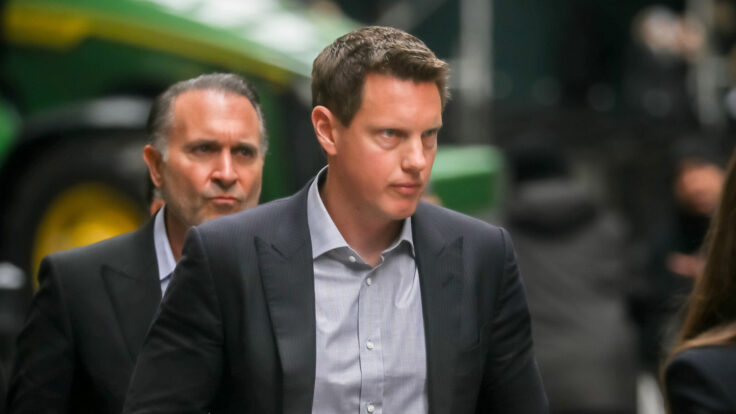
I could see Facebook, or Meta or whatever it calls itself these days, being interested in Twitter, and it, too, has the cash. But the uproar that would accompany a Meta-Twitter deal would be legendary. And if Elizabeth Warren had to use all of her political capital to kill it, I am sure she would. Beyond Disney, Apple, Google, Microsoft and Meta, I’m not sure who else would be interested and capable. The list is short. Salesforce? Maybe. Co-C.E.O. Bret Taylor is on the Twitter board. But $45 billion, or thereabouts, is a serious bite even for Salesforce. Oracle? Larry Ellison and Musk are friends. I say, no way. Warren Buffett? He has the money. But N.F.W.
What about a private equity firm, such as Blackstone? There’s plenty of dry powder tucked away inside those firms. They could team up, like they used to do once upon a time, if they wanted to. But, sorry to say, I don’t see it. First, of course, is the controversy—these firms don’t need it or want it. (Aside from Silver Lake, which still has its $1 billion stake in Twitter; it might be part of the fun here, or the solution, alongside Musk.) Then there is the small matter of economics. Let’s be kind, and suppose that Twitter can return to the days of almost making $1 billion in EBITDA. That means the purchase price for Twitter, at $43 billion—call it $45 billion to beat out Elon—would be 45 times 2022 EBITDA! I know the prices that private equity firms have been willing to pay have ratcheted up in the past few years but that only gets you to maybe 11x or 12x EBITDA, and that’s for firms where the valuation discipline has been lost. 45x EBITDA is completely off the table.
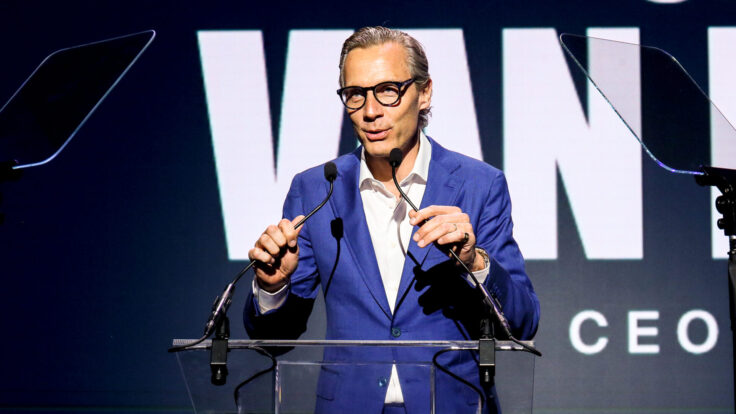
Indeed, private equity could enter into a partnership with Musk. I could see Egon Durban at Silver Lake, also a Twitter board member, kicking in some more preferred equity to Elon to help him pull together his financing. I could also see Elon tapping some equity sources in the hedge fund world, potentially both Dan Loeb, at Third Point, and Paul Singer, at Elliott Management. Both of those firms are in the rent-some-equity business. (And Elliott has been in and out of the Twitter stock, too.) I don’t see either a group of private equity firms or a hedge fund buying Twitter outright in competition with Musk. I could see them contributing equity, on a preferred basis, to Musk for his bid for Twitter. So the smart money is out as a competitor to Musk.
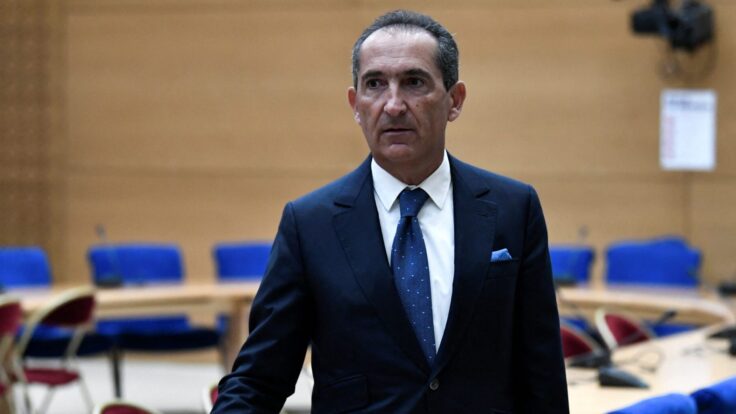
What about a foreign buyer? That’s not completely out of the question. I don’t believe there are foreign ownership rules that would prevent a foreign company from owning Twitter in the way that there would be around owning a broadcast network like CBS. So which foreign companies might be interested? Axel Springer, in Germany? Vivendi, in France? Alibaba, in China? Softbank? Axel Springer, which has numerous digital media assets, including Business Insider and Politio, is privately owned by KKR. Now we’re back in the world of the private-equity mindset. Hard pass. Vivendi, in France, is also a hard pass. Its market value is $14 billion. Not enough firepower. Alibaba? Now there’s an idea. Its market value is $260 billion.
So it has the ammo, but I don’t know if that is enough. We saw what happened with TikTok and the Trump administration. Obviously, the Biden administration is not the Trump administration but I’m still not sure Biden et al. would allow a Chinese company to buy Twitter, especially given this geopolitical moment, and that assumes Alibaba would be interested. (Chinese tech companies have enough to worry about, at the moment.) As for Softbank, once upon a time maybe, in the rah-rah WeWork era. But Softbank is struggling mightily these days. It has a $80 billion market value and access to plenty of capital. But its stock is down 50 percent in the last year. You want to see it go down further? Suggest a deal for Twitter.
|
|
|
I am fairly satisfied, like the market, that there are no alternatives buyers for the whole of Twitter. So let’s then contemplate whether what Musk has offered is “fair” from a financial point of view, since that is the question that the Twitter board and Goldman Sachs will soon be trying to answer.
Whether you look at comparable transactions, or public market comparables or a discounted cash flow analysis—all of the pieces that go into a fairness opinion—then Goldman Sachs would be very hard-pressed to say this offer from Musk at 45x projected EBITDA isn’t fair. The only criteria upon which it can be criticized—that it used to trade at a higher price—is not relevant. Yes, well, Twitter once upon a time made $950 million in EBITDA, not the $56 million it made in 2021. What happened in the past is the past and not relevant to the current situation.
So what’s the Twitter board to do? It can put in a poison pill, which it is reportedly contemplating doing, which will make the acquisition more expensive. But that’s just a negotiating ploy and might force Musk to raise his offer beyond $54.20. But that won’t stop a deal. It never has and never will. The board can make sure—it must make sure—that Musk has his financing in place. Where’s the rest of the $40 billion coming from to buy the 91.9 percent of the company he doesn’t already own? That’s for sure a gating issue. But I have no doubt that Musk can get the money between bank loans, margin loans, private equity and hedge fund partners and leveraging his own Tesla stock, and/or his SpaceX or Boring Company assets, or some version of all three. There’s plenty of money out there for Musk, even if bunches of his Tesla stock are already encumbered. He’s the world’s richest guy and still young enough to keep making more money.
|
|
|
Once upon a time, Dave Cote, who was then an executive at GE, received some epic advice. He had been offered a finance job at GE he didn’t really want—he wanted any new role to involve management of a big division, so that he could move beyond just being viewed as a finance guy. He was told that actually the “decision has already been made; they are just waiting for you to catch up.”
The decision has already been made for Twitter, too, I believe. It is toast. The job for the Twitter board will be to do whatever it can do—which isn’t much—to make the best deal with Musk that it possibly can. And it will do that. And Twitter will be sold to Elon Musk. That’s the way the world works. His price is fair and there will be no higher bidder. That is unless Musk flakes, and walks away, which he’s been known to do.
Musk’s challenge then becomes, as the new owner of Twitter, whether he can avoid screwing it up sufficiently that users flee the platform, rendering him the King of Nothing. A $45 billion face plant would be a disaster for anyone else. Maybe Musk doesn’t care if he loses $45 billion trying to make a point about free speech and Donald Trump. But I’m willing to bet that once he owns Twitter he’ll tread a lot more lightly around those issues than the heavy hand he uses when he, ahem, tweets.
|
|
|
|
| FOUR STORIES WE'RE TALKING ABOUT |
 |
| Dear Zaz... |
| Senior strategy analyst and Puck contributor Julia Alexander lays out the blueprints for a WBD streaming takeover. |
| JULIA ALEXANDER |
|
 |
| The Murdoch Empire |
| Puck's Belloni chats with NYT writer-at-large Jim Rutenberg about the Murdoch Universe in advance of a new CNN+ show. |
| MATTHEW BELLONI |
|
 |
| Life and Death in Kyiv |
| The atrocities in Bucha sent the world reeling. For Zelensky’s inner circle, it's led to a powerful new conviction. |
| JULIA IOFFE |
|
 |
| The Trump-Oz Ticklefest |
| Why did Trump turn his back on Dave McCormick, the former Bush-era appointee and Bridgewater C.E.O.? |
| TINA NGUYEN |
|
|
|

|
|
|
You received this message because you signed up to receive emails from Puck.
Was this email forwarded to you?
Sign up for Puck here
Sent to
{{customer.email}}
Unsubscribe
Interested in exploring our newsletter offerings?
Manage your preferences
.
Puck is published by Heat Media LLC.
64 Bank Street
New York, NY 10014
For support, just reply to this e-mail.
For brand partnerships, email ads@puck.news |
|
|