 |
 |
|
Happy Sunday, and welcome back to Dry Powder.
|
|
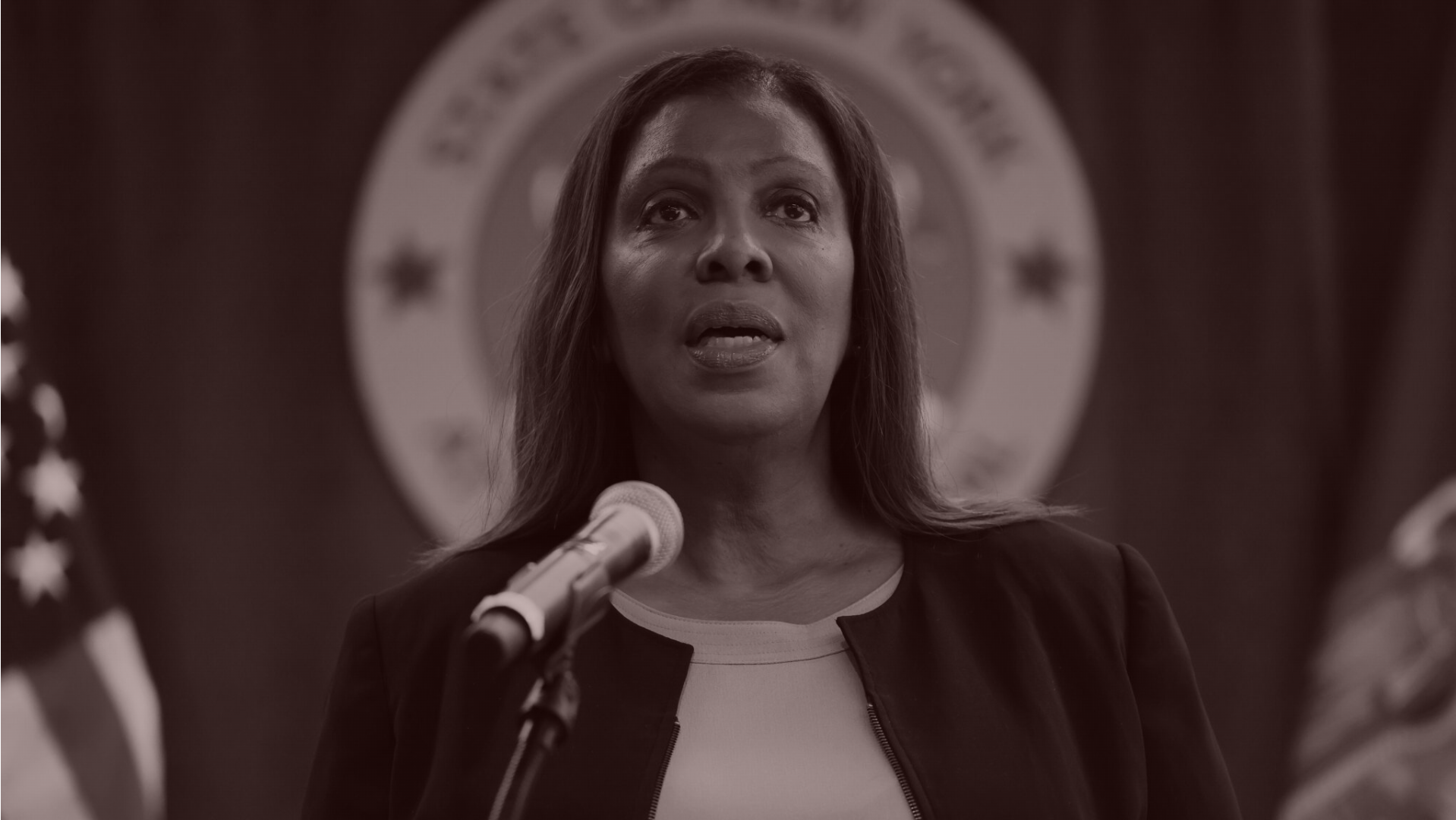
The civil lawsuit New York Attorney General Letitia James brought against Donald Trump last week was years, if not decades coming. By all accounts, she should be commended. But the inside conversation on Wall Street is that the case contains a potentially fatal flaw. In today’s column, some notes and fresh reporting on the inside chatter surrounding the suit, plus a look at one of the worst Wall Street deals of the century so far, and a eulogy for the reign of the “SPAC King.”
|
|
|
| On the one hand, New York Attorney General Letitia James must be applauded. She conducted a thorough, three-year investigation of the Trump Organization, relying primarily on documents, emails, and other correspondence and has made a compelling case for what many on Wall Street already knew about Donald Trump, the businessman: that he is a lying, conniving charlatan for whom loyalty is a one-way street. Screw his creditors? No problem. Scam the public, and his investors? Sure. Stiff his general contractors, subcontractors and suppliers? Of course. James has done a great public service in starting the process by which Trump will be held accountable for his years of despicable behavior.
But the thing we don’t know, and what remains an intriguing mystery, is whether these misdeeds are actually crimes that can be provable in court and punishable by civil penalties, which is the only club James is wielding. Alas, what I am hearing repeatedly about the lawsuit from my Wall Street brethren is various versions of: There is no victim here. Put another way: is it a crime for a huckster to overinflate his net worth and the value of his assets to make himself feel better and more important? If Trump wants to play pretend and believe that his already huge 10,000-foot apartment in Trump Tower is really 30,000 feet, is that a crime or evidence of mental illness?
If, for some deranged reason, Trump wants to believe that Mar-a-Lago is worth $739 million, or that Trump National Golf Club, in Jupiter, Florida, for which he paid $5 million, is worth $62 million, or that his spread in Aberdeen, Scotland is somehow worth $327 million because he can develop it into luxury condos… is that a crime or just more evidence that Trump is a wacked-out, shitty businessman?
James is leaning on a specific statute in New York, known as Executive Law 63 (12), that gives the attorney general broad powers to take action against businesses that have demonstrated “persistent fraud or illegality.” Theoretically, under this statute, the attorney general does not need to demonstrate that any of Trump’s creditors or insurers suffered a financial loss. But what I hear from the Wall Street crowd is that James may have made a fatal mistake by handing Trump yet another excuse to complain that he is the victim of a “witch hunt” while inspiring his base to rally around him, all at the very moment when we are all worried about the potential of his political resurrection in 2024.
Of course, the problem here for James is that it takes two to tango on Wall Street. Trump could delude himself all he wanted in his triplex in Trump Tower into thinking he was 10 times or 20 times richer than he really is, while browbeating Forbes into including him on the list of wealthiest Americans, but it would be meaningless without OPM—Other Peoples’ Money. It takes banks and other financial institutions, like Deutsche Bank and Ladder Capital, that are willing to lend money, or underwrite some mortgage-related securities, to get the money that make such business ventures possible. The real question here is why Deutsche Bank lent him the hundreds of millions of dollars he needed, regardless of the insane valuations he happened to put on them at various points along the way. |
| ADVERTISEMENT |
 |
| Facebook is taking action to keep its platform safe
We spent $16 billion to enhance safety and security across our platforms over the past 6 years. That’s enough to build 7 pro stadiums.
And it's just one example of the work we’re doing to create safer connections.
Learn more about our work ahead. |
|
|
|
|
| Let’s be clear: Deutsche Bank has a very sophisticated credit committee that makes the decisions about providing loans to each and every borrower. Loans do not get made without credit committee approval. Even Donald Trump, for all his claims about knowing how to play the game better than anyone else, can’t get the approval of a bank credit committee without, you know, the credit committee’s approval. We can ask why the Deutsche Bank credit committee could be so stupid as to decide to lend money to Donald Trump, after his legendary track record of stiffing Wall Street creditors, which was the subject of my 2013 Atlantic article about him and his tortured relationship with Wall Street. The answer is not that Donald Trump fooled Deutsche Bank into thinking that the projects that they were lending to—among them, the Doral in Miami, the Old Post Office Building in Washington, and the Chicago hotel and condominium—were worth 10 times more than they actually were. No, the presumable reason Deutsche Bank made loans to Trump despite his horrific track record as a debtor was because the bank, after haircutting The Donald’s projections or valuations, thought it could make money, lots of money. Money from fees. Money from interest payments. Money from syndicating the loans.
Take but one head-scratching example: The Trump International Hotel & Tower, in Chicago. Starting in roughly 2004, Deutsche Bank, and other creditors, including a hedge fund run by Steve Mnuchin, Trump’s future Treasury Secretary, lent the Trump Organization the money it needed to build the building. Trump invested $40 million of his own money. In 2008, Trump claimed that the financial crisis constituted an “act of God” and that he would no longer pay back the money he had borrowed for the Chicago project. Trump sued Deutsche Bank in a court in Queens; Deutsche Bank sued Trump. Eventually, the two sides worked out their differences, settled the dispute, and the project was completed. Despite the dueling lawsuits—in 2012 and again in 2014—according to James’s complaint, Deutsche Bank lent the Trump Organization another $152 million on the Chicago project. And guess what, I’m sure the loan at that time made sense and Deutsche Bank got its money back and the Deutsche Bank credit committee approved it all. So good luck, Letitia James.
Now, there may be one aspect of the suit where there could be real provable fraud, and that involves a sprawling property, Seven Springs, that Trump owns in Westchester County that used to be owned by Katharine Graham’s father, Eugene Meyer, who once upon a time bought the Washington Post out of bankruptcy for $825,000. (He was also a former partner at Lazard, my alma mater, the fifth Chairman of the Federal Reserve, and the first president of the World Bank.) Trump acquired the property in 1995, for $7.5 million. There are two mansions on the 212-acre estate, plus other buildings and undeveloped land. The question with Seven Springs is whether the Trump Organization—Trump, and his son, Eric, who for a period of time lived at Seven Springs—got an appraisal done on the property that so overvalued it that Trump got a bigger tax benefit than he should have after donating an easement on the property to charity. If there would be a victim in this instance, it’s U.S. taxpayers.
According to James’s lawsuit, Trump valued Seven Springs as high as $291 million because he claimed he could develop the property into a series of mansions that he could sell for some $35 million each. But, of course, he couldn’t, didn’t, and hasn’t. Instead he decided, not ungenerously, to donate a development easement on the property in March 2016, which would limit his ability to develop the project since he couldn’t anyway. For that, according to James’s lawsuit, he got a federal tax deduction of $3.5 million, based on an appraisal prepared by Cushman & Wakefield that was submitted to the I.R.S.
The Cushman & Wakefield appraisal came in at $56.5 million, a far cry from $291 million. “But even the 2016 appraisal is overstated and fraudulent,” according to James. “Among other things, the March 2016 appraisal omits consideration of central facts known to (and indeed negotiated by) the Trump Organization regarding the number of lots that could be developed and sold based on the restrictions imposed by local authorities, and relies on other false assumptions, like an impossibly accelerated pace of planning and obtaining environmental approvals.” After laying out several specific details of how the Trump Organization allegedly deceived Cushman & Wakefield as it did its appraisal, James wrote, “Each of these facts would have significantly lowered the valuation of the Seven Springs property. Because the Trump Organization concealed this information, the Cushman appraisal materially overstated the value of the Seven Springs property by tens of millions of dollars.” She then described how Trump “and his agents” went about covering up their “scheme.”
If James can prove what she claims Trump did at Silver Springs, then we might have our smoking gun. Still, even if she can and does, the penalties are civil: she’s seeking a return of $250 million that she claims was fraudulently obtained, as well as penalties that bar many of the Trumps from doing business in New York State, or serving on the boards of directors of companies in New York State. In other words, no jail time. On the other hand, since she believes crimes have been committed by Trump, by his three adult children and by the Trump Organization, she also referred the matter to the U.S. Attorney in the Southern District of New York, Damian Williams, for further investigation. Will he pick up the ball and run with it? We shall see. |
| ADVERTISEMENT |
 |
|
|
|
|
| The infamous deal to try to sell off most of the $15 billion, or so, of debt that Wall Street ponied up to support the leveraged buyout of Citrix Systems by Vista Equity Partners and an affiliate of Elliott Management, the hedge fund, has finally achieved the moniker it deserves: “Shittrix,” or so my Wall Street sources tell me. In other words, as I predicted several weeks ago, the deal was a disaster and will probably cost the plethora of Wall Street banks involved—led by Bank of America, Credit Suisse, Barclays and Goldman Sachs—something like $1.2 billion in losses, when all is said and done.
At the moment, the Wall Street banks have perfected a loss of around $600 million. That came in two waves. The first, from the sale of $4 billion worth of bonds, resulted in a loss of around $500 million when the bonds had to be discounted around 16 percent to get them sold. In other words, instead of selling the bonds at par, or 100 cents on the dollar, which is what the Wall Street banks agreed to pay for them, they had to sell the bonds at a significant discount to get investors to buy them. Another tranche of the debt—a $4.1 billion loan—was sold at a 9 percent discount, resulting in more than $100 million in losses. In other words, pretty much a blood bath and about as bad as people expected.
The big mistake Wall Street made on the Citrix deal back in January—a different era in the financial markets, when the deal was struck and the money committed—was capping the interest rates at a maximum of 6.5 percent. But when interest rates moved up precipitously in the past four months or so, thanks to the Federal Reserve’s new campaign to fight inflation, investors no longer were satisfied with the 6.5 percent yield. They wanted a higher yield and they got it: of around 10 percent, on the paper. That means the banks had to price the debt at a discount so that it would yield 10 percent and then eat the losses. One Wall Street veteran told me the losses were “worse” than expected but not “disastrously worse.”
But the bleeding isn’t over yet, not by a long shot. And not even on the Shittrix deal. Because while the banks managed to sell some $8 billion of the debt, there’s still another $7 billion that they couldn't sell and are keeping on their balance sheet, tying up precious capital, money that could be otherwise lent out at higher rates of interest. There will probably be another about $600 million in losses on this paper when it’s ultimately sold, my Wall Street source explains.
I don’t need to remind my careful readers that Wall Street is in the moving business, not the storage business. In other words, these loans need to be sold to make room for more loans to be made. They will likely have to be sold at a loss, too. Then there is the traffic jam of debt offerings lined up behind the Citrix deal that need to be sold, too—including big offerings for Nielsen, the data company, which Elliott Management is also buying along with Brookfield Asset Management, and Tenneco, the auto-parts manufacturer that Apollo Global Management is buying. The financing for these deals is also precarious, at best, and will probably lead to similar losses for Wall Street banks as has been experienced with the Shittrix deal.
What makes these losses worse is that there have been no particularly great wins in the world of leveraged finance this year to offset the losses from these deals. The abundance of 2021 in leverage finance has become the paucity of 2022. And you know what that means for many investment bankers: their bonuses will be down materially from what they were a year ago. My Wall Street friend tells me that bankers are pretty much “resigned” to their fate at this point: 2022 is going to suck. But, on the other hand, he says, they’ve “made a fortune” since the 2008 financial crisis, thanks in large part to the Fed’s policies, so now they’re “just going to have to give some of it back.” There are worse things. |
|
|
| I guess when the “SPAC King,” as Chamath Palihapitiya has been called, capitulates, that should be the end of the latest crazy SPAC era on Wall Street, and hopefully the end of Chamath as a cultural icon. Why anyone revered him in the first place is beyond me, but as P.T. Barnum is purported to have said, “There’s a sucker born every minute.”
In a blog post on September 20, Chamath wrote that he was pulling the plug on two of his SPACs, IPOD and IPOF, the stock symbols for his SPACs, Social Capital Hedosophia Holdings Corp IV and Social Capital Hedosophia Holdings Corp VI. Together the two SPACs raised some $1.6 billion. The good news is that with Chamath winding down these two SPACs—in large part because, as he wrote, he considered mergers with more than 100 possible private companies and then ran out of time to find a deal—investors will get back their $1.6 billion.
The better news, at least from my perspective, is that Chamath will have to eat the approximately $85 million in underwriting fees that he paid Credit Suisse two years ago to underwrite these two deals. He’ll also have to consume the millions more in fees he presumably paid to the lawyers and accountants he used on the two deals. That’s the great thing about dead SPACs: the investors get back what they invested, along with a small amount of interest, while the sponsors of the SPACs don’t get reimbursed for their up-front outlay of fees. Of course, Chamath has managed to amass a fortune of more than $1 billion, so presumably he should be able to absorb the cost of his two follies and find tax advantages in his losses. Still, something like $100 million in fees he thought he would get back if he had managed to pull off the mergers has got to hurt, at least a little.
Chamath, being Chamath, is trying to spin his latest SPAC debacle as a win. “Looking back, I am proud of the companies we helped bring public—Virgin Galactic, Opendoor, Clover Health, SoFi, ProKidney, and Akili,” he wrote on the blog. “They are well positioned to bring innovation to each of their end markets over the next several years, and I am proud we were able to have played a role in each of their respective journeys.” But what Chamath doesn’t say is how these companies have performed as public companies with him as a sponsor. After reaching a high of nearly $56 a share in June 2021, Virgin Galactic, Richard Branson’s space company, now trades at around $4.80 a share, down more than 91 percent. Opendoor Technologies, which buys and sells residential real-estate, is down 85 percent in the past year. SoFi, the online bank run by former Goldman banker Anthony Noto, is down 69 percent in the last year. Akili Interactive, a maker of a prescription video game for children with learning disabilities, went public through a Chamath SPAC in August. It traded as high as $14 a share on August 19. But pity the people who bought it then, just one month ago. Akili is now trading at $2.50 a share, down 82 percent in five weeks. That’s got to hurt, too.
How in the world can Chamath claim to be “proud” of the way these companies have performed under his reign? How can he even pretend to be a serious investor anymore? But, of course, he does. “Looking ahead,” he wrote on his blog, “our focus remains on investing in big ideas at the early stage. Our view on SPACs remains consistent since our first deal—SPACs are just one of many tools in our toolkit to support companies as they enter subsequent stages of growth. Meanwhile, we are continuing to search for targets for the two remaining vehicles in our Bio 2.0 platform.” This is not investment advice, dear reader, but I would stay as far away from any investment related to Chamath Palihapitiya as you possibly can. |
|
|
|
| FOUR STORIES WE'RE TALKING ABOUT |
 |
|
 |
| Golden Globes Woes |
| The Globes are back on NBC… but as an aging player in a contract year. |
| MATTHEW BELLONI |
|
 |
| WaPo Withdrawals |
| Will the Beltway Bible ever catch up to the Gray Lady? |
| DYLAN BYERS |
|
 |
|
|
|

|
|
|
| You received this message because you signed up to receive emails from Puck
Was this email forwarded to you?
Sign up for Puck here
Sent to
Unsubscribe
Interested in exploring our newsletter offerings?
Manage your preferences
Puck is published by Heat Media LLC
227 W 17th St
New York, NY 10011
For support, just reply to this e-mail
For brand partnerships, email ads@puck.news |
|
|