 |
 |
|
Welcome back to Dry Powder. I’m Bill Cohan.
|
|
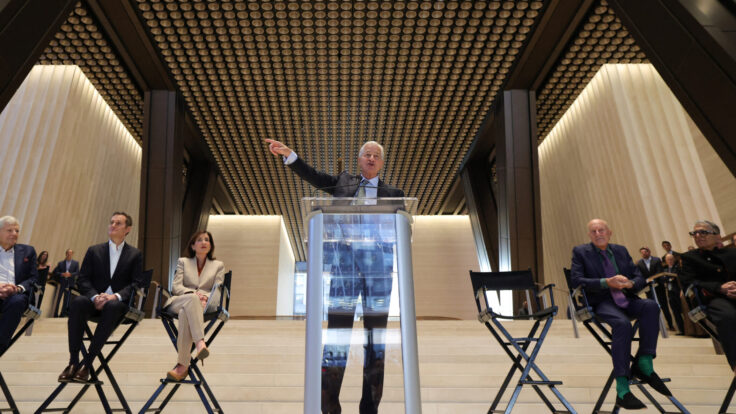
There’s a feeling around Goldman that the firm is not run as well as it used to be. In today’s issue, notes from my conversations with sources inside and around the bank, all surrounding one vital question: Has David Solomon’s luck finally started to run out?
|
|
The Testament of Solomon
|
|
The rumblings are getting louder at 200 West that things are not as wonderful as they should be in Goldmanland: Despite a relatively buoyant stock price during the David Solomon era, high-level people are pissed. And, unlike the old days at the bank, they aren’t keeping it to themselves.
|
|
|
|
|
Nearly five years ago, when I interviewed David Solomon for a profile in Vanity Fair, soon after he succeeded Lloyd Blankfein as the new C.E.O. of Goldman Sachs, he was full of humility and expectation. Goldman was about to celebrate its 150th year in business as one of the leading investment banks in the world, and Solomon could not help but be awed by the opportunity and the responsibility he had just inherited. “You look at the history of any company, Goldman Sachs included, and it’s not a straight line,” he told me back then. “Wall Street happens to be a place with a long history of volatility. Like any organization, we have to continue to evolve if we want to be around for another 150 years. You’ve got to have a good strategy, and good people, and a good culture—and probably a little bit of luck.”
Some around Goldman, though, are beginning to wonder if the path has gotten a bit more crooked, and whether Solomon’s luck is running out. Despite a stock price that has outperformed even industry titan JPMorgan Chase during the past five years, the last 18 months have been tough. Goldman had a record-setting 2021, when the bank made more money than ever before, some $21.1 billion. But if that were the party—and it was a big one—Goldman, and Solomon with it, are now suffering from the hangover. In 2022, Goldman made half of what it did the year before. Bonuses, the life blood of Wall Street, were also way down, the result of a smaller pool of money to distribute and more mouths to feed. Headcount at Goldman during the Solomon years has risen some 40 percent, to nearly 50,000 people, before some 4,000 jobs were cut this year.
The troops are getting restless, too. Some high-profile partners, including Gregg Lemkau, a co-head of investment banking, and Dina Powell McCormick, a member of the management committee, have voted with their feet and left. (McCormick, in fact, will be joining Lemkau’s firm, an affiliate of billionaire Michael Dell’s investment arm.) Compounding the problems at 200 West is the fact that 2023 has been off to a rough start: In the first quarter, Goldman’s net income of $3.1 billion was down 18 percent from the first quarter of 2022. At the firm’s investor day, on February 28, Solomon had to all but concede that his strategy to make Goldman more of a Main Street consumer bank had failed, fairly miserably, and would be nearly abandoned.
Dissenters are no longer holding back their feelings about Solomon’s reign, his strategic initiatives, his personality—even his somewhat flamboyant, gratuitously documented hobbies. The Wall Street Journal reported this week that even Solomon’s predecessor, Blankfein, took a potshot at him at a February meeting of the firm’s leaders in Miami Beach. “Blankfein, holding court at the hotel bar before a gathering of Goldman partners, groused about his successor,” the paper said, adding that Blankfein told people that Solomon “was spending too much time away from his day job, jetting around on Goldman’s private planes and DJing at nightclubs and festivals.” It’s enough to recall how Jack Welch would denigrate his successor, Jeff Immelt, to nearly anyone who would listen.
To give Solomon his proper due, the Goldman stock is up 45 percent during his tenure. Yes, in 2023, the stock is down slightly, while the S&P 500 is up 14.5 percent. On balance, though, the Goldman stock price in the Solomon era has performed well, or well enough, to keep shareholders at bay. (By way of comparison, Morgan Stanley’s stock is up 73 percent in the past five years; JPMorgan Chase’s stock is up 32 percent since 2018.) “The stock price has doubled since the depths of the pandemic,” Lemkau told the Journal. “And the firm saw record performance in 2021. Doesn’t David deserve some credit for that?” As Tony Fratto, Goldman’s new-ish head of communications, told me: “I can’t say it better than Gregg Lemkau did in the Wall Street Journal story.”
But according to what I am hearing from inside the firm, Solomon is slowly losing the support of many of the senior bankers, traders, and executives—the O.G.s who carry its culture, drive its relationships, and make the firm relevant and prominent on Wall Street and across the world. I know Solomon and his No. 2, John Waldron, the Goldman chief operating officer, as well as John F.W. Rogers, the Goldman consigliere, among others, will dismiss this as petty frustration. “The bottom line is that there’s a lot more drama in the telling of what’s going on at Goldman Sachs than what is actually happening at Goldman Sachs,” Fratto told me. Perhaps, but as a long-time chronicler of the bank, I feel duty-bound to share what I am hearing. The frustrations and grievances range from the stylistic and the strategic to the solipsistic and superficial.
|
|
|
|
C.E.O.s, by their nature and their fiduciary responsibilities, don’t have to be likable, or even liked. After all, it’s a lonely job, in which the occupant is solely responsible for strategy and performance, accountable to shareholders and to the board of directors. But Goldman is somewhat unique. Thanks to the fact that it was a private partnership for the first 130 years of its existence, there are hundreds of partners who still own a meaningful stake in the firm—something on the order of about 5 percent these days—and who demand fealty, have loud voices, and expect to reap extreme rewards. They are happy to continue to treat the firm like a capitalistic trust fund for their benefit. And they are not shy about dissenting, if the spirit moves them. (Hence, Blankfein at the bar in Miami Beach.)
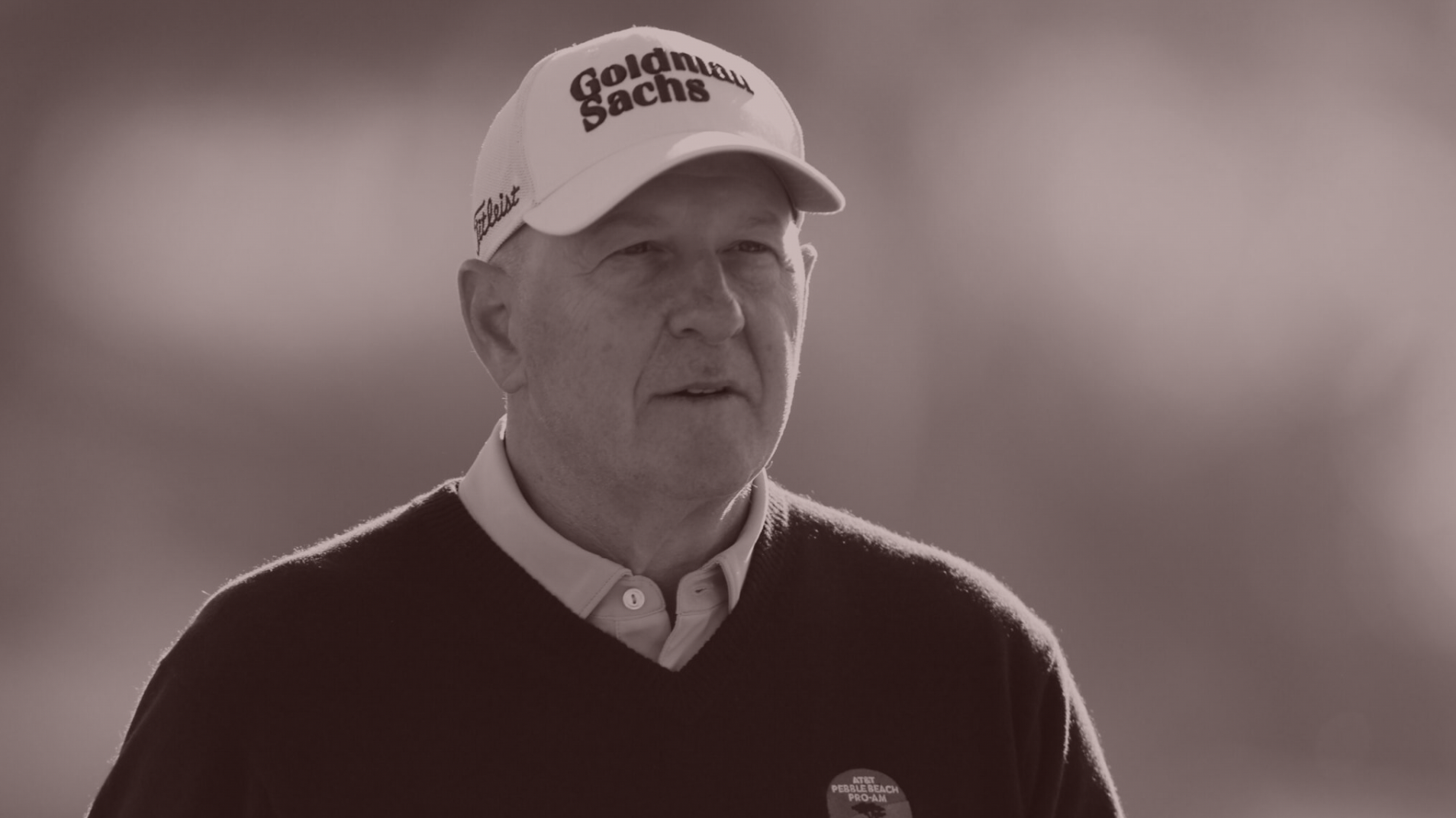
Many people at Goldman have told me that they find David can be hypocritical and sanctimonious. As I reported last week, he criticized Lemkau, a 28-year veteran of the firm, for relocating to Hawaii with his family during the pandemic. Solomon, quite reasonably, wanted his top banker back in the same time zone, and told him so in unequivocal terms. But I’ve been told by others at the firm that his message seemed somewhat discordant with his own behavior. As Insider has reported, David occasionally took one of the company’s two new Gulfstream corporate jets down to his home in the Bahamas, among other places. He was also jetting around regularly to play golf and to do his DJ-ing.
The C.E.O of Goldman Sachs is allowed to take the plane, of course. There are always issues of “security” and “efficiency” to think about with a high-profile C.E.O. But what’s more frustrating to the many people I have spoken to is that when Lemkau ended up leaving Goldman to become the C.E.O. of Dell’s investment firm, in late 2020, Solomon clawed back Lemkau’s unvested stock on his way out the door. Goldman supposedly did the same thing to Omer Ismail, who left for Walmart after 14 years at Goldman, and to Eric Lane, who left for Tiger Global, after 26 years.
In the old days, of course, Goldman executives would be peeved that stars left for other places. But Goldman was always “long term greedy”: With clenched teeth, instead of yanking stock, the bank’s leadership would often be generous and pay it forward. Indeed, the Goldman philosophy went, life is long, especially in finance—any departing banker could one day become a Goldman client, and a lucrative one at that. (This approach was a rarity on Wall Street and one of the things that made Goldman Goldman.) “We know some people don’t like the policy on unvested shares, but it’s a rule,” Fratto told me. “It’s not a rule if you make random discretionary case-by-case decisions.” He then added, regarding partner departures, “Partners, by the way, are staying at Goldman Sachs longer: In recent years, the average tenure of a Goldman partner rose from 6.1 years to 8.3 years.”
Despite Fratto’s point, senior people, many of whom have been at Goldman their whole careers, resent this kind of behavior. As one Goldman wag told me, “Everybody knows it, and says, ‘What the fuck are you doing?’ And then they say, ‘Gee, when I leave the firm, is he going to be mean to me?’”
|
|
A MESSAGE FROM OUR SPONSOR
|
 |
| Opioid use disorder is a disease that can happen to any of us. It’s possible recovery can happen to any of us too. Because while many have turned their backs on people like Kyle, Indivior is helping people turn their lives around with evidence-based treatments. So when you invest in Indivior, you’re not just investing in a stock. You’re investing in people.
Learn More
|
|
|
|
A Little More on Those Style Points…
|
|
|
The fact that David does his DJ-ing at Lollapalooza or opens for The Chainsmokers in the Hamptons, and at other places around the country, is old news, of course. And the fact that he likes to play golf with clients at exclusive golf clubs, such as Augusta National, is not news either. Nor probably is it news that Solomon has, or had, an agent whose job it was to get him DJ-ing gigs. Criticizing a man’s hobbies, as long as they are legal, seems a bit petty, puerile, and unfair to me. Fratto agrees. “David has never spent much time on his music,” he told me. “We’ve said a thousand times it’s a hobby he does occasionally on the side and one he hasn’t even done in about a year. Media raise it, and that’s a distraction, but it’s not time away from the work. That’s just not true.”
But for whatever reason, his flashy behavior during his off hours still seems to rub many people at Goldman the wrong way. There is a sense that David wants to be seen as both a “renaissance man” and as “a philanthropist,” I’m told. It’s a gut thing, a little like Chris Licht moving his office onto the 22nd floor, instead of sitting beside his colleagues in the CNN newsroom. Indeed, there is a growing sense inside Goldman that Solomon is putting himself and his image first, when it is Goldman Sachs and its reputation and image that should be first. Some have wondered, for instance, why Goldman is spending millions of dollars sponsoring a multi-year commitment to McLaren’s Formula One team. What does car racing have to do with Goldman Sachs? The Goldman website features a picture of a smiling David Solomon shaking hands with Zak Brown, the C.E.O. of McLaren Racing, along with the announcement that Goldman and McLaren have an “unambiguous commitment to accelerate” McLaren to “net zero” carbon usage. (“We’re in the business of working with people who run businesses and ultra high net worth clients,” Fratto told me. “It turns out that a lot of them like Formula 1, too.”)
It’s worth noting that David’s two predecessors, Lloyd Blankfein and Hank Paulson, were ascetics, and lived monk-like existences. Paulson still lives in the house he grew up in, outside of Chicago, while Blankfein has moved on from his upbringing in the tough East New York neighborhood, in Brooklyn, and now lives at the un-monklike 15 Central Park West. The legend about Paulson is that one day he needed socks and bought a pair for $10, only to be told by his wife, Wendy, to return them for a pack of 3-for-$10 socks. For better or for worse, when he’s not working—and he works hard, don’t get me wrong—Solomon lives a much more swashbuckling lifestyle than either of his two, more traditional Goldman predecessors. He owns restaurants, hangs out with the Discovery Land fast crowd, kitesurfs, and plays lots of golf when he can. “And that just really, really grinds on people,” one Goldman lifer told me. “People will accept failure and being wrong, like in any trading business or any markets business, but they won’t accept selfishness or self-centeredness. He has a real problem.”
|
|
|
|
There is also a feeling around Goldman that the firm is simply not as well run as it always used to be. There are too many employees, too many strange initiatives (GreenSky, anyone?), and not a big enough bonus pool to satiate the hungry maws. “Whatever else strategically is wrong or right, depending on your point of view, Goldman was always well-run even if it was going in the wrong direction,” said one longtime Goldman partner. “It was going very efficiently in the wrong direction.”
Nowadays, there is a sense, I’m told, that Goldman is becoming increasingly unwieldy and difficult to manage. When Blankfein turned the firm over to Solomon, Goldman had around 35,000 employees. Before the last three rounds of cuts, totalling nearly 4,000 people, Goldman had some 49,000 employees, an increase of 14,000 people or 40 percent, in five years.
I keep hearing that many people inside Goldman are scratching their heads wondering what these new people are doing and what they are adding to the mix. I’m sure many of the new employees are important to the firm. But there has been grumbling, especially around bonus time. In 2022, after all, the firm had a problem with compensation. Part of the backlash was that Solomon still got well paid, a total of $25 million in compensation, while other partners got cut back beyond their expectations. That’s not surprising—revenue was down significantly from 2021, a record year on Wall Street. But the firm still made $11.3 billion. Was there not enough to go around?
The problem for Goldman was that despite still making a fair amount of money in 2022, there were a lot more mouths to feed, a lot more bonus checks to cut. “It’s like if you robbed a bank,” I was told by a longtime Goldmanite, in a quirky metaphor. “And if you are robbing the bank, you want to have three people with guns on the inside and one guy driving the getaway car. And if two of the people in the bank get shot, then they split it half each. Instead of 25 percent each. They have to shoot some of these bank robbers or else nobody’s going to get paid.”
|
|
|
|
|
|
In all my conversations, I detected a feeling buzzing around Goldman that the firm is becoming, well, not quite ordinary, but certainly less extraordinary than it used to be. Some of this feeling may be superficial, at best. Solomon is just trying a bunch of maneuvers in the tougher regulatory and business environment. And if they don’t work out—like the Main Street consumer banking push—at least he’s willing to change course.
But some of the observations are more substantive. Is Solomon the go-to person on Wall Street when there is a crisis, like Paulson or Blankfein used to be, once upon a time, and as Jamie Dimon has since become? In fairness, Solomon receives plenty of air time on business news channels, and he’s positioned to be a wise man one day. Morgan Stanley’s James Gorman is stepping down in a year or so, and Dimon will one day, too.
Part of this shift, it seems, is that Solomon has pushed the bank into more mundane, consumer businesses, such as cash management, credit cards, and deposits. And it may in fact be the right decision, from a stock market point of view, for Goldman to become more of an asset management and wealth management firm, like Morgan Stanley, which trades at 15x earnings, whereas Goldman trades at 12x earnings. In fact, it would seem logical for Solomon to conclude that the market will reward Goldman for trying to pivot its business toward less volatile investment banking products and toward businesses that produce a steady stream of reliable fees, year in and year out.
But what I am hearing is that this pivot, even if it can be pulled off, rubs some the wrong way because it risks turning Goldman into every other Wall Street firm. The thought that Goldman would no longer be special, would no longer be differentiated from the Wall Street pack, would no longer be a principal risk-taker and would become just another fee-grubber, like most Wall Street firms, is what is really weighing on senior people at the firm.
Fratto chafed at the suggestion that Goldman is no longer a special place. “There’s nothing ordinary about Goldman Sachs—that’s why people write about us all the time,” he said. “We wouldn’t trade our core businesses for any other bank in the world. Our global banking and markets franchises are extraordinary, increasing our wallet and shares from our peers. The opportunity to grow and rise to partner continues to be extraordinarily attractive. And we don’t take for granted talent, but we recruit the best people in our analyst classes and across the firm. This is a special place.”
|
|
|
|
The Goldman brass think I’m being ridiculous by reporting on these minor skirmishes, which pretty much every Wall Street firm has in some fashion or other. And they are not wrong about that. You can find disgruntled employees everywhere and anywhere across Wall Street, especially in a year where investment banking revenue is increasingly moribund, meaning bonuses will likely be down, again. But there might be something else at play here, too.
When business leaders start losing the room, as some suggested was occurring, a not insignificant share of their credibility goes along with it. And that’s when they become vulnerable. That’s what happened to Immelt, in 2017, and to Bob Chapek, in 2022, and to Chris Licht last week. Increasingly, I’m hearing from people all across Wall Street who are wondering if David Solomon’s days are numbered at Goldman. It’s tough to say. As long as the stock price holds up, I think Solomon will keep his job. But a lot depends, too, on how 2023 unfolds.
If it turns out to be materially worse than the disappointing 2022, as the first quarter performance would indicate, then the dissatisfaction will continue to mount. On June 5, Mike Mayo, one of the deans of Wall Street research, at Wells Fargo, wrote in a new report that Goldman was hoping to go “back to the future” and that the firm is “driving change” to “make it look more like it did in the past.” In an interview, Mayo made the point to me that it’s a pivotal moment for Goldman, and for Solomon, and it’s anyone’s guess where it all goes from here. “Goldman is going back to the future and that involves pain,” Mayo said. “The pain is they have to take the write down on GreenSky. They have to take write downs on their principal investments. They have to be tougher with headcount. You’re at the peak point of outrage.”
|
|
|
|
|
FOUR STORIES WE'RE TALKING ABOUT
|
|
|
|
|
|

|
|
|
|
Need help? Review our FAQs
page or contact
us for assistance. For brand partnerships, email ads@puck.news.
|
|
You received this email because you signed up to receive emails from Puck, or as part of your Puck account associated with . To stop receiving this newsletter and/or manage all your email preferences, click here.
|
|
Puck is published by Heat Media LLC. 227 W 17th St New York, NY 10011.
|
|
|
|