 |
 |
|
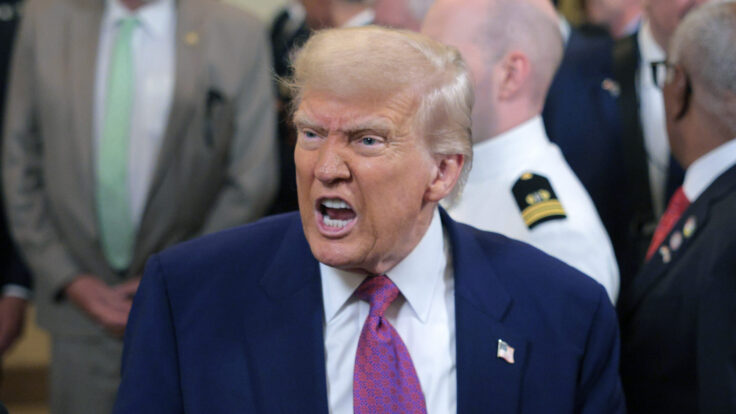
Welcome back to The Best & The Brightest. I’m Peter Hamby. Tonight, a meditation on the remarkable stability of presidential polling this cycle, even in the face of wild news events like Sunday’s failed assassination attempt on Donald Trump. Ultimately, the race will be decided by the smallest of shifts in sentiment, like one trend working against Kamala Harris and the Democrats—the drift of Gen Z men toward Trump.
By the way, if you missed Jon Kelly and yours truly rehashing Puck’s excellent third-anniversary party on The Powers That Be this morning—before digging into the end of the Code Conference and David Zaslav’s questionable fist-pumping following last week’s WBD-Charter deal—you can stream that episode right here. On that note, in celebration of Puck’s leather anniversary, we’re offering readers a special, short-lived 20 percent discount off an annual subscription. Discounts are rare around these parts, so take advantage while you can by clicking here.
Now, here’s Abby Livingston with the latest from Capitol Hill…
|
|
A MESSAGE FROM OUR SPONSOR
|
 |
| Seniors are feeling the true cost of drug price “negotiations.”
Instead of saving money, some Medicare patients will pay more for medicines.
Others may not be able to get their medicines – 89% of insurers and PBMs say they plan to reduce access to medicines in Medicare Part D because of the Inflation Reduction Act.
Higher costs and less access: Not what seniors were promised. |
|
|
|
|
Mid-September is officially the beginning of the end of this year’s election cycle, and the contours are taking their final shape. At present, polling in key races and states remains stubbornly close—much to the chagrin of strategists, who would feel substantially more comfortable with just a little more data on where things are headed. To wit…
- Attack of the ads: With the Trump-Harris debate in the rearview, pollsters are back in the field, looking to glean the down-ballot effects of last week’s Fight Night in Philly, which was watched by more than 67 million people. But what strategists really want to know are the ways in which the past fortnight of negative political ads have impacted races.
Of course, September is when both parties trot out their long-planned attack ads, hoping to score points by bringing up a rival candidate’s old tax liens, unsavory Senate votes, closeness with the locally unpopular national ticket, etcetera. As more data comes in over the next few weeks, expect to see parties move away from races where attacks are falling flat, while doubling down on races where the ads show promise. For now, both parties remain on offense in the House, while Democrats are playing defense in the Senate. Meanwhile, the temptation for Democrats to spend in Texas and Florida grows by the hour.
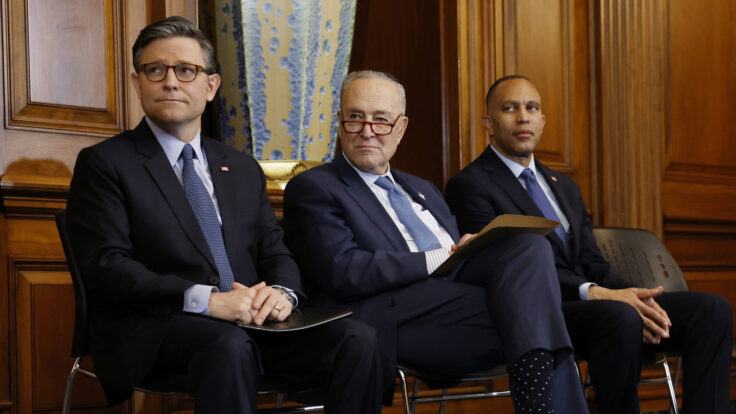
- An October surprise?: Congress is back in session, tasked with keeping the government open at the end of the month. House members and staffers are downplaying the risk of a shutdown, but there’s obviously some trepidation. This is, after all, a spending bill we’re dealing with—the same measure that, last year, catalyzed the chain of events that led to the first-ever ouster of a U.S. House speaker. There’s a sense that the 118th Congress is capable of just about anything.
But a shutdown in October of an election year would be a whole new tier of dysfunction. Sure, shutdowns and almost-shutdowns are a modern fact of life in Congress—but not when early voters are actually heading to the polls. The scale of potential disruption to campaigns across the country, including incumbents stranded in D.C. while their challengers campaign back home, should theoretically douse any firebrand fervor. Fingers crossed?
- Open territory: While Democrats seem to be in a slightly better mood than Republicans, tight races remain everywhere. In the Senate, Rick Scott and Josh Hawley are going negative on their Democratic opponents—a sign that the incumbent is at least a little concerned (though these races usually end up being money pits rather than actual pick-up opportunities.) In Iowa, Democrats are investing in two Republican-held House Districts, indicating that they’re seeing privately what a new Ann Selzer poll shows: that Trump and Republicans may be losing ground in Iowa.
At the same time, there’s chatter that Maryland, where Angela Alsobrooks is battling Republican Larry Hogan for an open seat, may be a sleeper race. The ads are spilling into the Washington market, which always excites D.C.’s political class. But there’s even better news for Republicans in Montana, where both The Cook Political Report and Inside Elections have moved incumbent Democrat Jon Tester’s race toward the Republican column, making Tester the underdog in a race that will probably determine control of the Senate.
|
 |
| The Swift-Rogan Election |
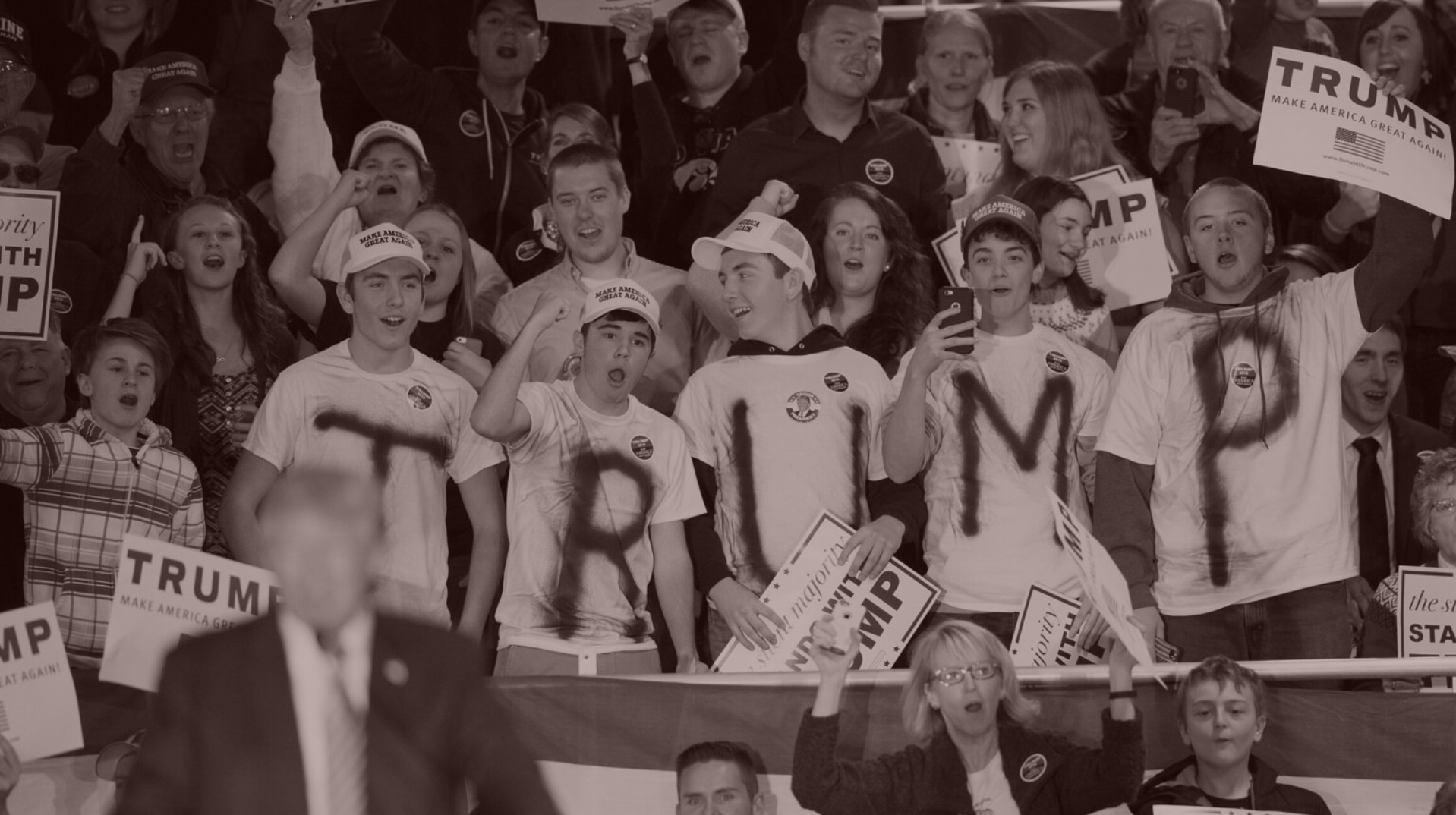
| In a mostly static, coin-flip race, the election may be determined by whether Harris can win back young men—the hyper-impressionable, internet-addled demographic that was once a competitive advantage for Democrats and is now drifting toward Trump. Can she reverse that deficit in the next 49 days? Or is the post-Dobbs coalition enough? |
|
|
|
| Outwardly, this year’s presidential race has been characterized by surprises, volatility, and ongoing threats of violence, with a second assassination attempt against Donald Trump apparently foiled over the weekend in the bushes of his West Palm Beach golf club. We’ve seen one Democratic nominee, Joe Biden, drop out in favor of another, Kamala Harris. We’ve seen public attention splinter as trust in media wanes, accompanied by a downward slide in TV ratings and the definitive arrival of social media platforms as the primary brokers of news. We’ve been talking about coconuts, TikTok, communists, Hulk Hogan, childless cat ladies, brain worms, border security, bacon, couch-fucking, Taylor Swift, racist conspiracy theories about Haitian immigrants eating dogs and cats. This race is bananas, right?!
In a more fundamental way, though, the defining characteristic of the 2024 presidential race has been its overall stability. Before Biden dropped out this summer, the race had looked the same all year: Trump held a steady if narrow lead in national polls and most battleground state surveys. Then came Biden’s atrocious debate performance in June, the only event this cycle that truly jolted the polls. His numbers collapsed, which prompted the arrival of Harris, who immediately shot up in the polls and has led Trump by about 2-3 points in national surveys ever since, with a steady but marginal lead in most of the swing states as well.
The polling averages—steady as they go—simply don’t reflect the dramas of each news cycle. Harris hosted an exuberant Democratic National Convention in Chicago in August, but that didn’t give her much of a polling bump. Both campaigns and their allied groups are spending hundreds of millions of dollars on advertising in key states, but the ad blitz hasn’t shifted the numbers, either. Last week’s debate was characterized by Trump’s inability to control himself and Harris’s ability to meet the moment, but the polling averages haven’t moved in her favor very much at all since then. There are positive indicators for Harris, but we still need more data to determine whether she got a meaningful bounce. |
|
A MESSAGE FROM OUR SPONSOR
|
|
| Seniors are feeling the true cost of drug price “negotiations.”
Instead of saving money, some Medicare patients will pay more for medicines.
Others may not be able to get their medicines – 89% of insurers and PBMs say they plan to reduce access to medicines in Medicare Part D because of the Inflation Reduction Act.
Higher costs and less access: Not what seniors were promised. |
|
|
|
|
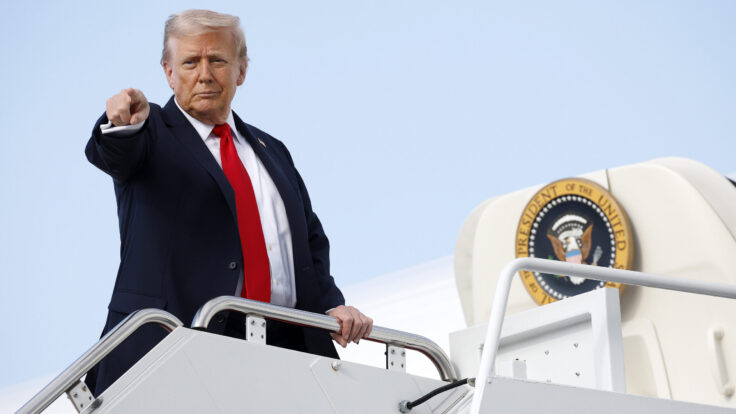
| The same is true regarding the news of the second Trump assassination attempt. Back in July, after a gunman fired on Trump in Pennsylvania, polls showed the former president gaining around a point in the polls, but that bump was hard to separate from the other big news of the time, the Republican National Convention and the ugly final days of Biden’s moribund campaign. Trump’s numbers came back down after Harris entered the fray and sucked up all the oxygen in the race. Around the time of the first assassination attempt, Trump was averaging around 45 percent in horse-race polls. Today, two months later? Well, Trump is averaging around 45 percent in horse-race polls.
The stability of the polls in the face of so many historic but also wacky events is obviously a reflection of the country’s deep partisanship. Republicans are gonna Republican, Democrats are gonna Democrat, and the diminishing pool of swing voters will continue to show up in Pennsylvania focus groups with CNN’s Phil Mattingly. But the lack of volatility in the polling averages is also an expression of the electorate’s pessimism about politics generally, and skepticism about the 2024 nominees, specifically. Trump, as both president and former president, has never had an approval rating over 50 percent, even after almost getting murdered on national television. In two elections, Trump has failed to earn more than 48 percent of the vote, and he’s unlikely to do better this year.
Harris, meanwhile, has erased Biden’s prior deficits with demographic groups and inspired enough Democrats to give her a modest lead over Trump. But large chunks of the electorate still say she’s either too liberal or that they don’t know enough about her. Yes, Harris has seen her arrow trend upward since July, but her lead over Trump has mostly plateaued following the convention. She leads Trump by only 2.7 points in the FiveThirtyEight national average, within the margin of error, and well within the polling error spreads of 2016 and 2020. Importantly, Harris is still lagging behind Biden’s 2020 numbers with certain groups she needs to shore up, including young, Black, and Latino voters.
All of this means—prepare to be bored!—that the race remains very close and will be decided by the whims of a small number of people in about seven states. It’s why you should, of course, pay attention to the national polls as a reflection of the country’s mood, but pay more attention to polling in the Electoral College battlegrounds that will actually tip the race. And in each of those states, keep an especially watchful eye on voting blocs that have shifted one way or another from the 2020 election and even the midterms of 2022, when Democrats solidified their support with college-educated white voters as a bulwark against Trumpism.
There are a few shifting dynamics I’ve been watching closely for clues about where this race is going. Every election is different, but with less than 50 days to go, a few early trends are becoming more durable, suggesting that both Harris and Trump may be putting together coalitions that look ever-so-slightly different from the ones that decided the previous election. For instance, Trump is making inroads with Black and Hispanic men, to the point where Harris has yet to reach Biden’s 2020 support among voters of color. Meanwhile, Harris could make up for those losses with historic levels of support among female voters, thanks in part to the emergence of abortion rights as a single-issue dealbreaker for women in the Dobbs era. We’ll only know for sure come Election Day.
But there’s one demographic shift that no longer seems hypothetical—and that’s the movement of young men over the last four years away from Democrats and toward Trump’s Republican Party. |
|
|
|
|
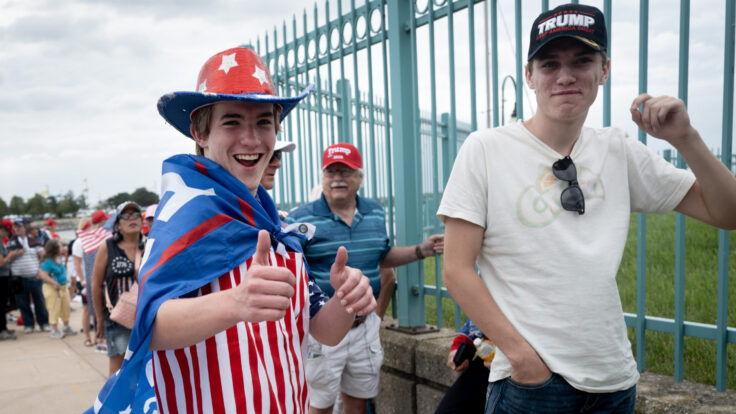
| You might have missed it, but at a rally in Las Vegas over the weekend, Trump welcomed a trio of young male internet stars—Bryce Hall, and Kyle Forgeard, and Salim Sirur of the Nelk Boys—to the stage and smiled as they took turns endorsing him. All three are full-spectrum content creators—YouTubers, podcasters, TikTok stars—who are extremely popular on the internet with younger men who see Trump as a no-bullshit role model and Democrats as a bunch of politically correct weenies. Forgeard even used his moment at the mic to attack Tim Walz for passing a tax in Minnesota on Zyn—the unofficial nicotine pouch of guys who just wanna have fun. “He put a 95 percent tax on Zyn! We gotta get that removed, President Trump!” Forgeard proclaimed, as the crowd booed Walz for his nanny state ways.
I’ve written a lot about the pro-Trump drift of young male voters since the last election, and so have others. There are many explanations for it: Trump’s rascally appeal to dudes, society’s changing norms and expectations around boyhood and masculinity, studies showing a rise in loneliness among young men, difficulty accessing the economy, a digital media environment ruled by hypermasculine podcasters and video creators—and yes—the obvious lack of a truly cool male Democratic presidential nominee since Barack Obama.
The movement of young men away from the Democratic Party is real—and probably unrecoverable before Election Day. In 2020, Biden won both men and women under 30 by large, double-digit margins. Overall, he won 60 percent of the youth vote—the winning margin Democrats have needed with young voters going back to the Obama years. Since then, though, Democrats have lost serious ground with young men, creating a remarkable Gen Z gender gap. The latest evidence: A new ABC News poll this weekend, showing Harris leading Trump by an astounding 38-point margin among women 18-29. But among men under 30? Harris only led Trump by three points.
The Democrats’ competitive advantage with young men, apparent in exit polls just four years ago, is now completely gone. The movement is driven by a lot of young white men, yes, but Trump’s support among young Black and young Latino men is higher than it was four years ago, too. It’s hard to see how Harris erases that deficit in the next 49 days. Can anyone name a Democrat who can go into the media spaces where Trump is popular—the Nelk Boys, Theo Von, Joe Rogan—and make the case for Harris? Bernie Sanders has done several of them, but it hasn’t moved the needle. Walz himself could appear on New Heights with the Kelce brothers or Pardon My Take to talk football, but I have a hunch those guys don’t want to get involved in politics—even if Travis Kelce’s girlfriend has made her endorsement known. But again, I don’t see how that changes the Gen Z bro vote in a meaningful way at this point. Early voting has already kicked off in several states.
Not every young man out there cares about crypto or Zyn or pronoun culture in the same way the loudest voices in the manosphere do. But it’s undeniable that a political shift has taken hold with Gen Z men, and I have a hard time seeing how Democrats win that support back anytime soon. The upside for Harris? Her support with young women is so strong that it offsets any losses with young men, who, past experience shows, are less likely to vote than their female peers anyway. |
|
|
|
| FOUR STORIES WE’RE TALKING ABOUT |
 |
|
 |
| Zaz Deal Heat |
| Gut-checking David Zaslav’s Charter deal euphoria. |
| DYLAN BYERS |
|
 |
|
 |
| UTA’s Art Pause |
| Unpacking the dissolution of UTA’s Fine Arts division. |
| MARION MANEKER |
|
|
|

|
 |
|
|
|
Need help? Review our FAQs
page or contact
us for assistance. For brand partnerships, email ads@puck.news.
|
|
You received this email because you signed up to receive emails from Puck, or as part of your Puck account associated with . To stop receiving this newsletter and/or manage all your email preferences, click here.
|
|
Puck is published by Heat Media LLC. 227 W 17th St New York, NY 10011.
|
|
|
|