{{ 'now' | timezone: 'America/New_York' | date: '%b %d, %Y' }} |
|
|
|
Hello and welcome back to The Best & The Brightest. I’m Leigh Ann Caldwell,
gearing up for a rollicking White House Correspondents’ Dinner week.
The festivities start on Tuesday with a Puck Power Breakfast, presented by Pharmaceutical Reform Alliance, where I’ll sit down with Republican Sen. Jim Banks of Indiana. I’ll also be swinging by the Améthyste gala at the French ambassador’s residence on Wednesday, the CAA/Vanity Fair party on Friday, and, of course, Puck’s swanky pre-WHCD cocktail party on Saturday, before sliding into the
overflowing Hilton ballroom. I know I’ll see many of you throughout the week. Remember to whisper scoops as we cross paths.
Meanwhile, Eric Swalwell continues to be all anyone is talking about on the Hill. Will his exposure and downfall lead to meaningful change, or will misbehavior continue as usual? In today’s issue, the inside conversation among staffers about the Swalwell scandal and toxic culture on the Hill.
Up top, I detail Speaker Mike
Johnson’s no good, very bad week, and how it might not get any better for him. Plus, how the Black vote could determine Tuesday’s redistricting referendum in Virginia.
Meanwhile, my Air Mail colleague Ash Carter writes poignantly about his college friendship with Ahmed Shihab-Eldin, the award-winning journalist whom the Kuwaitis have arrested on vague charges of “spreading false information”—part of a pattern in which Gulf nations work to silence
journalists brave enough to report accurately about the war in Iran. I hope you’ll read and share the petition for his release.
Also mentioned in this issue: Sara Qudah, Adam Schiff, Nancy Pelosi, Donald Trump, Jeffrey Epstein, Ruben Gallego, Tony Gonzales, Anna Paulina Luna, Laura Loomer, Nancy Mace,
Mary Gay Scanlon, Teresa Leger Fernández, Jackie Speier, and more… |
|
|
|
A MESSAGE FROM OUR SPONSOR |
When insurers delay approvals or require endless paperwork, patients are left waiting for care they need now. Addressing harmful corporate insurer practices can help ensure timely access to treatment and protect 24/7 care. See how. |
|
|
|
- Mike
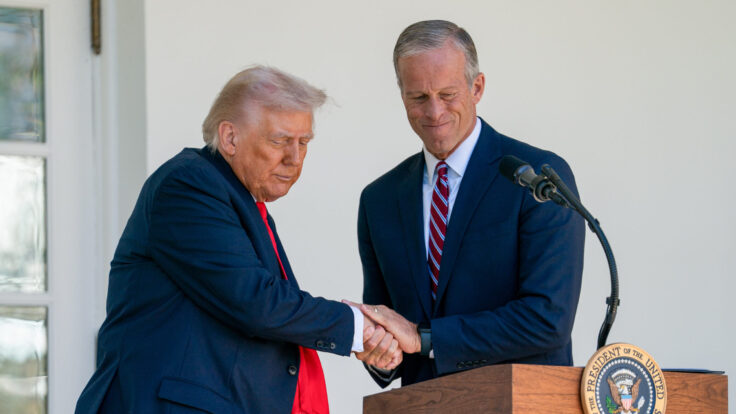
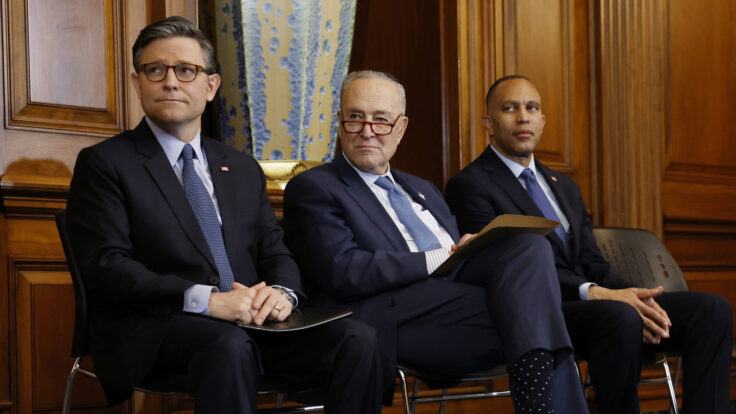
Johnson’s horrible week: Last week started with Rep. Tony Gonzales’s resignation—a move cheered by many on the Hill, but not one that Speaker Mike Johnson had encouraged. True, Johnson had publicly called on Gonzales to drop out of his reelection race, but he didn’t advocate for him to actually leave Congress, which proved that Johnson’s primary concern was his vote margin and naturally angered his colleagues.
Then came the
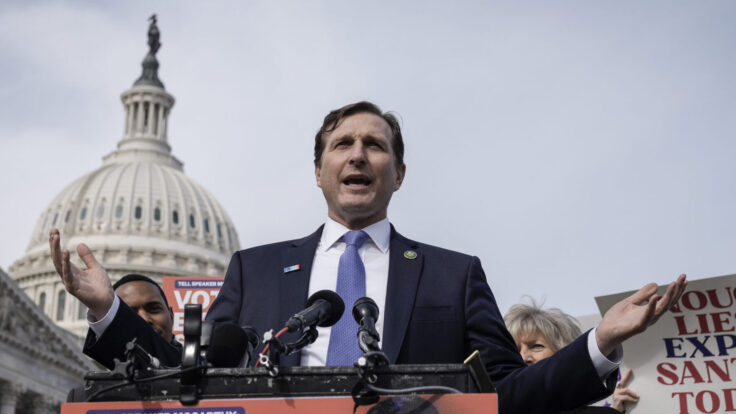
Democrats’ discharge petition—their third successful one this Congress, an extraordinarily high number. The discharge mechanism is traditionally the minority’s tool for wresting control of the floor and passing legislation. But under Johnson’s speakership, it has also been used by members of his own party. Thursday’s discharge petition to grant Temporary Protected Status to Haitians was sponsored by Rep. Ayanna Pressley, but it won the support of 10
Republicans.
On surveillance, the speaker stumbled again. Johnson failed to secure the extension of Section 702 of the Foreign Intelligence Surveillance Act; neither he nor Trump could convince Republicans to support a clean, 18-month extension. But late Thursday night, Johnson and Republican leadership tried to pass an alternate version that would extend the measure for five years while addressing the concerns of conservatives by requiring some due-process protections for Americans.
Notably, however, Johnson didn’t first survey his conference to ensure he’d have the votes. The measure failed. Instead, the House passed a mere 10-day extension of FISA through the end of April.
Johnson did, however, stave off the near passage of a Democratic war powers resolution on Iran when Republican Rep. Warren Davidson, who was expected to vote with the Democrats, voted present—sidestepping what would have been a conspicuous and embarrassing defeat for both Johnson
and Trump.
The next few weeks won’t be much easier for Johnson. He has to figure out a FISA fix and still convince his members to pass the Senate bill to fund the Department of Homeland Security, shuttered now for 64 days, as well as pass a skinny reconciliation bill to fund ICE and Customs and Border Protection. All this as his members are facing an increasingly daunting political environment heading into the midterms.
|
Ahead of Tuesday’s big redistricting vote in Virginia, a new Quantus Insights poll
finds that voters only narrowly support the referendum. Intriguingly, the crosstabs show that 81 percent of Black voters back the redistricting effort—well below the 93 percent who supported Gov. Abigail Spanberger’s election. Democrats have been working hard to offset Republican efforts to
depress Black turnout, with House Democratic Leader Hakeem Jeffries and Maryland Gov. Wes Moore campaigning in Black communities to shore up the Spanberger coalition. In November, Black voters made up 16 percent of the electorate, according to
exit polls—a number that pro-referendum organizers would be beyond thrilled to approach on Tuesday, even as they tell me it might not be necessary given that Spanberger won by 15 points. |
|
|
|
A MESSAGE FROM OUR SPONSOR |
Prior authorizations and administrative hurdles can slow down critical care, forcing patients to wait while their health
hangs in the balance. Reforming insurer practices can help reduce delays and keep care moving when it matters most. Learn more. |
|
|
|
- I met Ahmed
Shihab-Eldin in the fall of my freshman year at Boston University. His dorm room was down the hall, and we later shared an apartment with a mutual friend. One night, we went to a party that got loud enough to draw the attention of the police, who singled out Ahmed for arrest. He was released an hour or so later, but that didn’t stop us from making “Free Ahmed” t-shirts in mock solidarity.
In a terrible irony, our private joke is now an all-too-real hashtag. Kuwaiti authorities
arrested Ahmed, an award-winning journalist who has contributed to The New York Times, the BBC, PBS Frontline, and Al Jazeera, on March 3 for allegedly “spreading false information, harming national security, and misusing his mobile phone.”
Many observers believe his real offense was sharing publicly available footage of the Iran war on social media, in defiance of Kuwait’s Ministry of Interior, which has forbidden the photographing or filming of Iranian strikes.
“Shihab-Eldin’s case reflects a broader pattern of using national security laws to stifle scrutiny and control the narrative,” said Sara Qudah, the regional director of the Committee to Protect Journalists, which released a report last year documenting Kuwait’s deteriorating press freedoms.
Ahmed’s supporters
fear that he will be charged and tried under a new law—passed after his arrest—which seeks to punish anyone who “disseminates news, publishes statements, or spreads false rumors related to military entities.” If found guilty, Ahmed could face up to 10 years in prison.
Kuwait, it will be recalled, is a “major non-NATO ally” of the U.S. According to the State Department website, the two countries have “a long history of friendship and cooperation, rooted in shared values,
democratic traditions, and institutional relationships.” But with allies like this, who needs adversaries?
The State Department is reportedly aware of Ahmed’s case, but has not commented on the specifics. Meanwhile, the CPJ has drawn up a petition calling for Ahmed to be “immediately and unconditionally” released, which, at the
time of this writing, is closing in on 16,000 signatures. —Ash Carter
|
|
|
|
Eric Swalwell’s implosion, as sudden as it was overdue, is less a scandal than a reminder
that Washington’s old boys’ club still confuses proximity to power with immunity from consequence. |
|
|
|
In the week since California congressman Eric Swalwell resigned amid multiple allegations of
sexual misconduct including rape, his once-promising career has collapsed with startling speed. He has lost his job, his friends on the Hill, his supporters, and any plausible path back to elected office.
The velocity of his downfall was all the more striking because it came at a moment when the culture had seemed to move away from the sharp edge of the #MeToo era. As it gained momentum in the fall of 2017, then-Rep. Jackie Speier launched the #MeTooCongress movement
after tearfully detailing how she’d been sexually assaulted by her boss as a young staffer on the Hill. Six male lawmakers resigned for inappropriate behavior over the following few months. During the same period, Swalwell allegedly drugged and raped Lonna Drewes in a West Hollywood hotel, Drewes charged this week. (Swalwell has denied the allegations against him.)
In the years since, Swalwell’s career rose and #MeToo fervor faded. Even the long shadow of Jeffrey
Epstein has meant relatively limited consequences domestically, though Europe has proven less forgiving. Against that backdrop, Swalwell’s abrupt unraveling this week has also left Hill insiders wondering who might be next.
Another prevailing question: How did his alleged private darkness remain hidden during his very public ascent? Swalwell’s swift rise in the party was facilitated by powerful allies, including fellow Californians Adam Schiff and Nancy
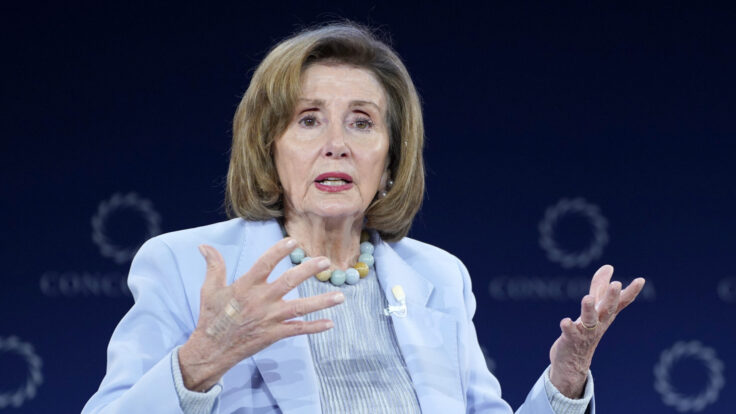
Pelosi, who lent him their credibility. The former speaker placed him on the highly coveted Intelligence Committee in 2015, defended him in 2020 against flimsy Republican accusations of an entanglement with alleged Chinese spy Fang Fang, and reappointed him to the committee in 2021. During the first impeachment of Donald Trump, Swalwell translated that position into visibility, sliding comfortably into the role of the Democrats’ go-to attack dog on
cable news. |
|
|
|
He later served as an impeachment manager in the post-January 6 trial, a role sufficiently visible for a
presidential aspirant. (Swalwell, of course, ran for the White House in 2020.) “Every time there was an opportunity for him to be exposed, he just kind of kept on going,” Arizona Sen. Ruben Gallego, Swalwell’s former best friend on the Hill, told me and a dozen reporters last week in an emotional 40-minute press gaggle in his office. “Because there were all these ways that we have kept on saying, ‘Well, if he did something, why would he be on this [Intel] committee? Why wouldn’t
someone have brought it up?’ And I think that’s what fed into it.” |
The resignations of both Swalwell and Republican Rep. Tony Gonzales, who had an affair with
a former staffer who later died by self-immolation, offer a narrow but revealing glimpse into the culture of congressional offices, where the youngest and least secure staffers sometimes become victims. Even in the best of times, these staffers are typically underpaid and overmatched—and when bad behavior occurs, they’re often too scared to speak up, or financially unable to extricate themselves from predatory power dynamics.
The #MeToo era conversation, once muted, has returned: Staffers
are weighing the culture of Capitol Hill and the risks of proximity to power. “People are thinking about #MeToo, and reflecting on that, and talking about it in their offices,” one House staffer told me. Gallego spoke of an environment that encourages blurred lines between members and their teams. “There’s an environment here that needs to improve … about members of Congress hanging out with their staff,” he told reporters. “I think that creates a problem, and I think that is an environment that
does kind of create the situation.”
Yet the problem extends beyond sexual misconduct or partying with staffers—and aides are questioning how much they put up with. Indeed, the structure of Congress itself invites dysfunction. There are 535 offices, not including committees, each operating as small, autonomous enterprises governed by the temperament of a principal who may be an egomaniac and is rarely a professional manager. Toxic and verbally abusive work environments are common. Aides
avoid certain offices, trade warnings in whispers, check databases for which bosses have the highest turnover, and endure demands at all hours.
The culture of these individual fiefdoms can vary greatly. Some members insist on constant service, calling and demanding memos at 2 a.m. or berating staffers slow to post videos on social media. Junior staffers, often assigned as drivers, become extensions of their bosses’ personal lives, forced to drive them home from late-night dinners, run errands, and absorb the anger of inebriated superiors. These patterns persist, largely unchallenged, because exposure remains remarkably rare. (If any staffers would like to talk, you can reach me on Signal at LAC.89.)
For years, such behavior has been considered the cost of entry into political life. Being a shitty boss is not illegal; campaigns can be harsher still. In the wake of #MeToo, an Instagram account called Dear White Staffers briefly disrupted that equilibrium,
providing a forum for anonymous complaints and a guidebook to which offices to avoid. It quickly became a must-read on Capitol Hill for aides, reporters, and people looking for jobs. But its relevance waned as it morphed into a left-leaning mouthpiece, and many staffers no longer have a broader community in which to share intel or vent.
Formal ways to file a complaint evolved dramatically when Congress passed reforms to address sexual harassment, transforming a process once heavily
weighted against accusers into one that offers some representation and a process meant to be less hostile. (As I reported back in 2017, it was a shockingly byzantine process.) Claims that taxpayers fund settlements have persisted in public discourse, amplified by Republicans such as Rep.
Anna Paulina Luna and Trump ally Laura Loomer in recent days, but the 2018 reforms shifted financial liability to the accused, which was a major modification. |
Of course, the improvement of a process is not the same as a healthy culture. The Office of
Congressional Conduct, which receives such complaints, reported 8,400 submissions containing information regarding allegations of misconduct or requests for information about accountability procedures in the latter half of last year alone. Yet the outcomes remain largely hidden from public view. Republican Rep. Nancy
Mace advanced legislation to disclose settlements, only to see it blocked by Republican leaders who were concerned about reputational hazards and potential retaliation against accusers. She has since issued subpoenas for the information.
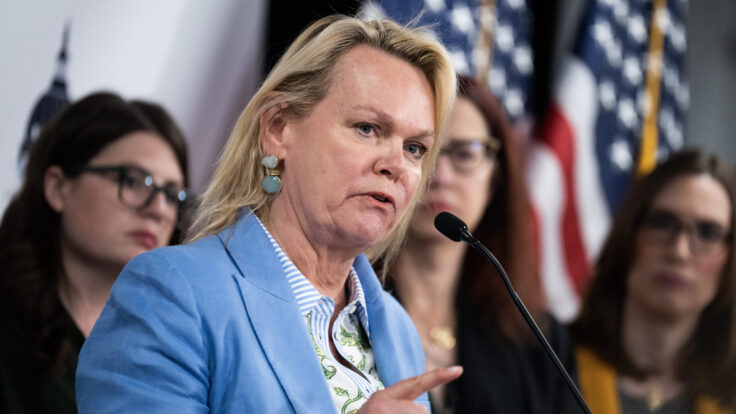
Some lawmakers continue to press for change. Luna, for one, has promised aggressive exposure of misconduct, vowing to “throw out the trash” and out members if she hears evidence of predatory behavior. Since 2022, Democratic Rep. Mary Gay
Scanlon has sought to strengthen the Congressional Accountability Act even further than the 2018 reforms—legislation that may finally gather steam after the Swalwell scandal.
Meanwhile, Rep. Teresa Leger Fernández has positioned herself as a resource for those navigating the reporting process, echoing the role once played by former Congresswoman Speier. “It’s so women feel safe. Reporting right now is not good,” Fernández told me. “There are lots of improvements
to be made.” If that doesn’t work, there’s always the internet. |
|
|
|
Join Emmy Award-winning journalist Peter Hamby, along with the team of expert journalists at Puck, as they let you in on the
conversations insiders are having across the four corners of power in America: Wall Street, Washington, Silicon Valley, and Hollywood. Presented in partnership with Audacy, new episodes publish daily, Monday through Friday. |
|
|
|
Unique and privileged insight into the private conversations taking place inside boardrooms and corner offices up and down Wall
Street, relayed by best-selling author, journalist, and former M&A senior banker William D. Cohan. |
|
|
|
Need help? Review our
FAQ page or contact us for assistance. For brand partnerships, email ads@puck.news.
You received this email because you signed up to receive emails from Puck, or as part of your Puck account associated with {{customer.email}}. To stop receiving this newsletter and/or manage all your email preferences, click here.
|
Puck is published by Heat Media LLC. 107 Greenwich St., New York, NY 10006 |
|
|
|
|