{{ 'now' | timezone: 'America/New_York' | date: '%b %d, %Y' }} |
|
|
Hi, and welcome back to Line Sheet. In today’s issue, available to Inner Circle members only
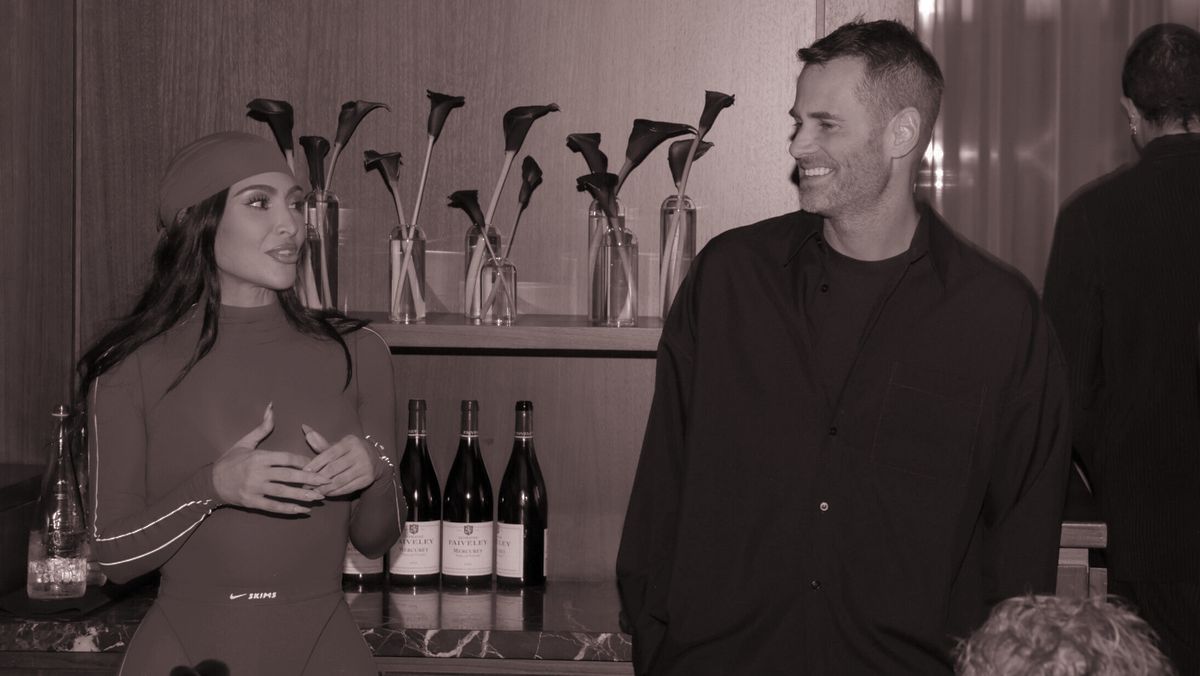
(trade up here), I open my notebook to explain the real meaning of Skims’ $225 million funding round, which values the company at $5 billion. Why did they need the money? And will this be the final cash infusion that helps breach the I.P.O.?
Elsewhere, I’m reflecting on the big ole mess at Condé Nast, sharing some critical LVMH intel, detailing Haider Ackermann’s boom time, and decoding
what a passing Cathy Horyn remark on a podcast signals to the industry.
On Fashion People: Friday’s guest is my bud W. David Marx, author of Blank Space: A Cultural History of the Twenty-First Century. We cover a lot, including fashion’s position in pop culture over the past 25 years, A Bathing Ape, China, Korea, Japan shopping culture, Supreme,
preppiness, Grape Nuts, and plenty more. Listen here and here.
And one final reminder: Puck’s Stories of the Season is taking place tomorrow in Hollywood. Come for my talk with an incomparable roster of costume designers—Ruth E.
Carter (Sinners), Kate Hawley (Frankenstein), Paul Tazewell (Wicked: For Good), Malgosia Turzanska (Hamnet)—and stay for Peter Hamby’s conversation with Elle Fanning (Sentimental Value), Jesse Plemons (Bugonia), Tessa Thompson (Hedda), and Will Arnett (Is This Thing
On?).
Scoop queen Kim Masters is on hand for a conversation with directors of a few of the year’s best documentaries. And then maestro Matt Belloni will be chatting with Jay Kelly director Noah Baumbach; star and co-writer Emily Mortimer; and casting director Nina Gold. (I would show up for that even if I wasn’t getting paid!) For the main event, Matt is also interviewing
Chloé Zhao for an episode of his podcast, The Town. If you’re an awards voter, or want to come to see what Jesse Plemons is wearing, request an invite at Fritz@puck.news.
Mentioned in this issue: Skims, Natalie Massenet, Nick
Brown, Kim Kardashian, Nike, Kanye West, Jens Grede, Rice Krispies treats, GQ Men of the Year party, Sydney Sweeney, Haider Ackermann, Canada Goose, Tom Ford, LVMH, Sidney Toledano, Bernard Arnault, Luca de Meo, VF’s new logo, and many, many more… |
Four Things You
Should Know…
|
- The
real problem with the Rice Krispies treats: I have been kind of quiet regarding the layoffs at Condé Nast—it’s just very depressing and there are a lot of threads to follow, including last night’s union rally featuring Tish James and a potluck in the office canteen on Tuesday, where a plate of Rice Krispies treats bearing “F 4,” meaning “Fired Four,” was served. (If you need additional color on this discourse, read my Fantasy Football buddy Dylan Byers’s
take on the Stan Duncan confrontation last week that resulted in the firing of the Fired Four.) Anyway, it’s a sad turn of events that is surely deeply embarrassing for everyone involved—especially the board of directors, who should be celebrating their new crop of young and promising editors, even amid necessary layoffs.
As is often the case with
Condé Nast, a lot of this comes down to lousy messaging—a remnant of the North Korea–style information vacuum that existed during the Si Newhouse reign. The communications team, led by Danielle Carrig, should have clearly and quickly messaged the obvious industrial logic for folding Teen Vogue into Vogue.com. The company wasn’t caving to the White House! (As one smart person noted, Condé publishes The New Yorker and Wired,
which are both doing tough, aggressive reporting on Trump.) The brand, beloved as it might have once been, has an unsustainable business and should have been returned to the womb many moons ago. Carrig could have simply explained to The New York Times why this was happening, presumably with some backup from U.S. Vogue editor Chloe Malle, who happens to be a Millennial and is a very reasonable custodian of the brand.
Instead, Carrig and team took
their typical approach of ignoring everything and everyone—a strategy that failed when the company revealed that Anna Wintour was stepping back months ago—and didn’t quite work out here, either. The great thing about the world we live in is that social media has made telling your own story easier than ever. Instead, Condé relinquished all control.
Sure, Carrig, Duncan, C.E.O. Roger Lynch, and the rest of the executive committee can be forgiven
for not envisioning that the termination of four rowdy employees would lead the state attorney general to barnstorm at One World Trade. But this should be a time when Lynch is enjoying the spoils of running glossy magazines: Tonight is the GQ Men of the Year party at the Chateau; Mark Guiducci’s first Vanity Fair cover launches next week. Instead, anyone who registers Lynch’s Archie Andrews mop at the party will only be thinking of this mess.
|
|
|
A MESSAGE FROM OUR SPONSOR |
The refined BMW 7 Series is all luxury. With the ability to define your design, the ultimate glamour is yet to be.
Learn more at BMWUSA.com. |
|
|
- The
great Haider comeback: Those of you attending the GQ Men of the Year party tonight might run into Haider Ackermann, who’s being honored alongside Sydney Sweeney, Noah Baumbach, Stephen Colbert, and more. Ackermann is on something of a roll. Tom Ford’s fashion business is improving under his watch—critically, but also commercially. I’m also hearing that Canada Goose is seeing the benefits of his involvement since naming him creative director last
year. (You may have spied the new campaign for offshoot Snow Goose, starring Willie Nelson, which launched yesterday.) A fancy creative director at a functional brand cannot outright fix the business, which is reliant on core production and distribution, but it can create a halo effect and momentum.
One of the more interesting things about
Ackermann’s second act: At both Tom Ford and Canada Goose, he has orchestrated incredibly high-touch press trips featuring high-profile, good-looking guests who would normally not be invited, crafting them into something of a media moment. This Sunday, he’s leading a crew—including some very famous to-be-revealed people—to Churchill, in northern Manitoba, for a Snow Goose expedition. - LVMH bits and bobs: I got a lot of feedback about Monday’s
story detailing some of the machinations at LVMH in the U.S. Back in Paris, people are still confused about what is happening at the Fashion Group, where Sidney Toledano was reinstalled as C.E.O. Everyone knows it’s not a permanent solution, but who could be headed there?
This is a conversation we’ve been having for literal years,
although I am told that things will move soon. (The choice of who goes there will likely affect other parts of the business, as there is a chance a brand C.E.O. will be moved into the role.) There also may be some changes on the executive committee next year, too, so perhaps the waiting-and-seeing portion of this is almost over.
Meanwhile, there was a report in La Lettre that Bernard Arnault talked to Kering reformer Luca de Meo about a
job in the months leading up to his Kering deal, but that some of the Arnault kids were against him joining and therefore LVMH missed out. While my high-level sourcing indicates that Arnault did indeed meet with de Meo, there was less drama than reported, if any. In the simplest terms, no LVMH job was ever offered, and given de Meo’s compensation package at Kering—which is not aligned with how LVMH C.E.O.s are paid—it’s unlikely he would have seriously entertained the opportunity anyway. - The price of fashion: Dazed Media C.E.O. Jefferson Hack recently talked to Cathy Horyn for his podcast. It’s a good conversation, even if Cathy has no idea how PVH or Calvin Klein works. (She basically argued that if they’d tried harder, Raf
Simons’ Calvin Klein could have been commercially successful. They did try really hard. The problem was that the infrastructure wasn’t in place and impossible to build. It was never going to work, as great and memorable and special as the product was.)
Anyway, one small thing Horyn said about Margiela back in the 1990s stuck with me: that the clothes were not affordable, necessarily, but they were accessible to young people. It’s something I think about a lot in the
context of the price of clothes today. People are willing to spend $2,500 on a dress or a jacket or what-have-you—in fact, they are happy to—but most cannot afford the $10,500 version. There is a real opportunity at the lower end of the true designer market for brands that have an actual point of view. The problem, of course, is there is really nowhere to sell this stuff any more.
|
And now, a few thoughts on the Skims round… |
|
|
Yes, Skims’ new $225 million capital raise, and $5 billion valuation, is a fabulous
headline. But why is the company searching for new funding on the private market in advance of a presumably forthcoming I.P.O.? Is it a sign of strength or distress? |
|
|
Yesterday, Skims announced that the company had raised $225 million in new capital at a $5 billion valuation
led by Goldman Sachs Alternatives with participation from BDT & MSD Partners, the very well-regarded investment mega-boutique started by Michael Dell and run by former Goldman guy and financial zelig Byron Trott. (Who, in our world, famously invested in both Tory Burch and The Row.)
The round represented a significant 25 percent increase in valuation over Skims’ last capital raise, in 2023, when it was marked at $4 billion. As the headlines told
the story, this was uniformly great news—good for the investors who just got in; even better for the longer-term participants, like Natalie Massenet and Nick Brown’s Imaginary; and probably great, too, for some early believers or principals who maybe took a little money off the table. |
|
|
A MESSAGE FROM OUR SPONSOR |
The refined BMW 7 Series is all luxury. With the ability to define your design, the ultimate glamour is yet to be.
Learn more at BMWUSA.com. |
|
|
On the surface, the deal made a fair amount of sense and seemed like a last-in, first-out situation designed
to improve cashflow before taking the company public. (I’m hypothesizing here given the players, but BDT might have some tasty warrants in the deal, and Goldman has surely positioned itself to underwrite a future I.P.O.) The cash is ostensibly being put to work building brick-and-mortar operations. Skims currently only operates 18 stores in the U.S. and two franchised locations in Mexico.
While its online channel was once considered an indomitable strength, we’re now far enough from Covid
to recognize that these sorts of businesses must operate on a robust hybrid model. Competitors from Victoria’s Secret to Lululemon have hundreds of storefronts in the U.S. Victoria’s Secret actually has well over 1,000 globally. Skims needs to catch up. |
Fundraising stories are a regrettable genre, partly because the terms are private, and partly
because—since most journalists are financially illiterate—they tend to fixate on the top-line numbers rather than the obligations and projections. And, perhaps not surprisingly, everyone from The New York Times to the New York Post positioned the news as a powerful indication of Skims’ position—and, ergo, its co-founder Kim Kardashian—in the business of culture.
But fundraises are based on business models and financial
projections—numbers that must be hit to defend the valuation. And so when the announcement reached my inbox, I had to wonder at least a little about the subtext of the raise. That $225 million seemed like a surprisingly small amount for a business of this size and ambition. And I was curious why this top-off was coming so quickly after one that seemed designed to send the company off into the all-time frothy public markets.
Did this round have any impact on the much-delayed debut
of the heretofore underwhelming Nike partnership? Or vice versa? Or was this a goldilocks pre-I.P.O. round that perhaps allowed the company to begin scaling physical retail despite the seemingly sluggish momentum of the Nike deal? (Yes, yes. Post-fundraising thought exercise stories can be a frustrating genre, too…)
While the company says it’s on track to hit $1 billion in annual sales in 2025, growth has slowed. That was an inevitable development, given how fast the business shot up in
just six years. There are also the more existential questions to be answered. Sold-out merkin aside, does Skims still have the juice? Will NikeSkims ever be able to compete against Alo? |
|
|
The answers, I’m told by people familiar with the strategy, are all of the above and more. Yes, Skims raised
money because they are opening stores at a rapid clip that cost $4 million to $5 million a pop. Even with an EBITDA of $100 million, it would be tight to do that without raising. On top of the capex, there are taxes, Kim’s Michael Jordan–style royalties, etcetera. (The company, according to my sources, has about $300 million in cash to play with now.) There was little secondary taken out in this round, I’m told, but Skims had previous debts, like having to pay
out Kanye West, which was expensive, so the balance sheet was cash poor. And, of course, they anticipated that an I.P.O. would have happened already, but the market has made that impossible. (Now, it makes more sense to see how the beauty launch goes and NikeSkims develops.) Finally, raising at a $5 billion valuation just two years after being valued at $4 billion—at minimal dilution—is a good piece of marketing: It quiets people like me, who are constantly
questioning Skims’ future.
In my view, it’s possible that Skims will live out another life, one where it becomes less of a lingerie or activewear company and more of a fashion brand. The big seller at the moment is loungewear. (Funny anecdote: A friend recently told me that there’s a big contingent of Vassar students—artsy kids who hate luxury and voted for Mamdani—who wear Skims like a uniform.) Anyway, I asked Bill Cohan, Puck’s financial whiz and a
former investment banker, for his thoughts. “They raised equity at a 25 percent higher valuation… hard to complain about that for a clothing company,” Bill said. “It’s not A.I.”
In recent months, the company has made a slew of name-brand hires, including Ami Colé’s Diarrha N’Diaye, in an attempt to meaningfully develop beauty, and Levi Strauss & Co. vet Dawn Vitale as chief merchandising officer. The staffing, combined with the new money,
indicates that C.E.O. Jens Grede and Kardashian are prepping for the next phase of growth—whether private or public. |
There are Rockstuds in the Devil Wears Prada 2 trailer!
[YouTube]
Sofia Coppola was honored at this year’s MoMA benefit. Everyone was wearing Chanel (which underwrote the event), including Elle Fanning, Sofia, and her kids Romy Mars (my teen queen) and Cosima Croquet. Elvis Costello performed. Sofia’s outfit was the best. Kate Young’s hair was pinned back
in a chignon with a bow clip and it looked perfect. [W magazine]
All I wanted to know is how much Condé Nast paid to refresh Vanity Fair’s logo. [Instagram]
Kering says that its plan is not to sell McQueen after all, but
instead lean into “accessible price points.” We will see! [BoF]
I like the new Givenchy campaign a lot. [Another] |
Until tomorrow,
Lauren
P.S.: We use affiliate links because we are a business. We may make
a couple bucks off them. |
|
|
Finally, a media podcast about what’s actually happening in the media—not the oversanitized, legal-and-standards-approved version you read
online. Join Dylan Byers, Puck’s veteran media reporter, and Julia Alexander, a longtime media analyst, as they sit down with TV personalities, moguls, pundits, and industry executives for raw, honest, sometimes salacious conversations about the business of media and its biggest egos. New episodes publish every Tuesday and Friday. |
|
|
Puck’s daily art market email, anchored by industry expert Marion Maneker, offers unparalleled access to the mega-auctions and galleries,
elite buyers and sellers, and the power players who run this opaque world. Wall Power also features Julie Brener Davich, a veteran of Christie’s and Sotheby’s, who provides unique insights into how the business really works. |
|
|
Need help? Review our FAQ page or contact us for assistance. For brand partnerships, email ads@puck.news. You received this email because you
signed up to receive emails from Puck, or as part of your Puck account associated with {{customer.email}}. To stop receiving this newsletter and/or manage all your email preferences, click here. |
Puck is published by Heat Media LLC. 107 Greenwich St., New York, NY 10006 |
|
|
|