 |
|
Welcome back to Dry Powder. I’m Bill Cohan.
|
|
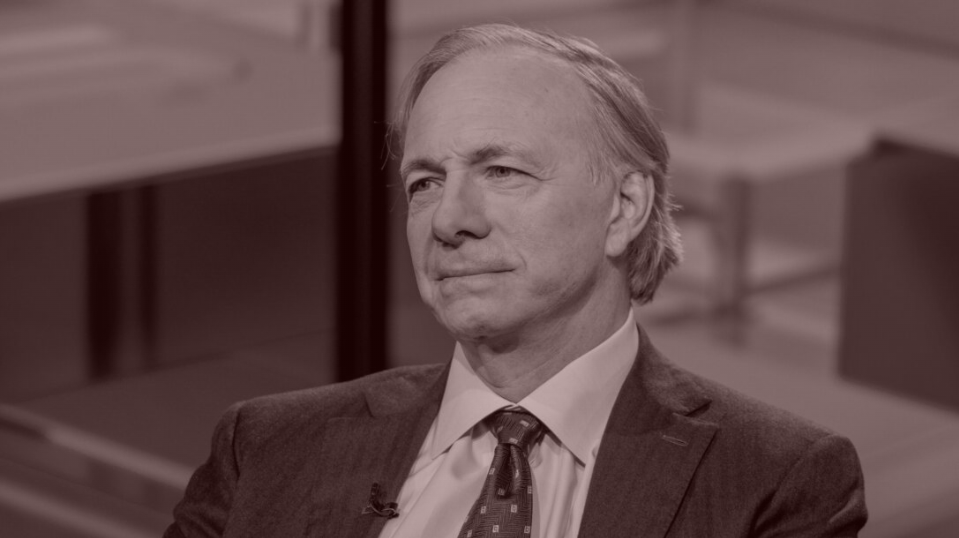
There was no way that Rob Copeland wasn’t going to catch some heat for his new book about Bridgwater, the world’s biggest hedge fund, and its unorthodox founder, Ray Dalio. In today’s issue, my conversation with Rob about the drama leading up to the publication of The Firm, his most provocative insights into the culture at Bridgewater, and much more.
|
 |
| The Shape of Bridgewater |
| A wide-ranging conversation with Rob Copeland, the author of a provocative new book about Ray Dalio and his hedge fund. |
|
|
|
| Back in March 2015, Jonathan Karp, the C.E.O. of Simon & Schuster, the behemoth book publisher that is now owned by KKR, asked me to consider “collaborating” with Ray Dalio, the founder of Bridgewater Associates, on a nascent book project about “finance and economics.” In his original correspondence, Karp noted to me that Dalio had written much of the book already, but it still needed to be “simplified” and then “augmented” with interviews with Dalio. Would I consider doing it? It was to be a six-month assignment, paying $200,000.
I was busy at the time working on what would become Four Friends, my book about four of my Andover classmates. But the opportunity to work with one of the world’s most successful hedge fund managers was certainly an alluring proposition. I told Jon that I would consider it. He sent me what Ray had written of the book, with the working title Principles—his moniker for the sort of pseudo-workplace psychobabble that he’s employed inside Bridgewater for his entire career. I have an MBA from Columbia and I spent 17 years as an M&A banker on Wall Street, but I couldn’t make heads or tails of what Dalio had written. It was written in English, but yet not quite.
I pride myself on trying to translate difficult Wall Street jargon and narratives into something that a regular person, who has not worked in the financial services industry, can both understand and enjoy. I told Jon I’d be willing to take on the assignment, but that I would need to spend many hours interviewing Dalio in order to elicit what he wanted to say in language that regular people could understand. I wasn’t trying to be difficult, but if the goal was to disseminate Ray’s philosophies of life and investing to a wider audience, then it had to be rewritten in a comprehensible manner, not just a rehash of some jargony gobbledygook that Ray was pushing internally at Bridgewater.
I explained to Jon I would do it on the conditions that Ray would make himself available for interviews, and that I needed to be paid more than Ray offered since the project required a whole lot more work. Long story short, my request was rejected. I passed on the opportunity. Dalio would work with his in-house collaborator, a nice guy named Mark Kirby, a former writer and editor at GQ.
Principles, of course, was eventually published by a division of S&S in 2017. The book became a big international bestseller, and added to Dalio’s already considerable fame by anointing him as a veritable philosopher king. It didn’t matter that the book was nearly incomprehensible. Karp’s genius was to make it look and feel like an important book from an important man. It flew off the shelves, although I seriously doubt that very many people actually read it. And if they did, fewer still could understand what Dalio was really trying to say. |
| The Other Bridgewater Book |
|
| After reading Rob Copeland’s new book, The Fund: Ray Dalio, Bridgewater Associates and the Unraveling of a Wall Street Legend, it seems like I dodged a bullet. Copeland portrays Dalio as a cruel-hearted megalomaniac who delighted in reducing his partners—to say nothing of many others who work at Bridgewater—into insecure, quivering piles of jello. He also seemed to think nothing of reducing grown men and women to tears, literally, in order to make his points about his “principles,” many of which he seemed more than happy to ignore if they were applied to him. The whole idea behind the firm has long been “radical transparency”—a safe space where everyone is encouraged to share their views on any subject without fear, favor, or reprisals—but Copeland notes that this principle rarely applies to Dalio, himself.
Indeed, the whole gestalt of Bridgewater is almost a spoof on Severance, the Apple TV+ show. At its Westport headquarters, interactions are videotaped and archived for later viewing by anyone at any time, and employees are encouraged to rate one another’s credibility across dozens of different attributes, with each employee’s score viewable by anyone else. Was this a loony tick of a fund with $100 billion in AUM, or a workplace culture hack that somehow explained its investing success?
The subtitle of The Fund includes the idea that the book would lead to the “unraveling” of Dalio. “The truth can be devastating,” Copeland told me during our chat on Sunday morning. “And for so many years, he and Bridgewater have spent millions upon millions of dollars, really papering the world with his version of reality. And this is not my version. This is what I like to call, ‘The first nonfiction book written about Ray Dalio and his Principles.’”
Rob told me he spoke with “hundreds of people,” many of whom are still working at Bridgewater, many of whom like Dalio and many of whom have “complicated feelings” about him. No doubt what has got Team Dalio’s skin crawling is how little reverence, or appreciation, Copeland has for what Dalio built at Bridgewater—while also making it seem like a totally dysfunctional workplace. “I don’t see how you can read this and really know the truth of how he has wielded and weaponized these so-called ‘Principles’” and not believe that there will be an “unraveling” of the facade that was once Bridgewater under Dalio, he told me. “This is the real, full truth of what Ray Dalio’s ‘Principles’ are, were and, to my knowledge, continue to be.” (Dalio supposedly gave up day-to-day control of the firm in January 2022, but Copeland believes he still calls the shots and can return at any moment.)
Spokespeople for Dalio and for Bridgewater declined to comment on the record. Instead, they pointed me to Dalio’s statement about the book on LinkedIn, where he referred to The Fund as a “tabloid” written “to sell books to people who like to gossip.” He wrote that Copeland has “made a career of writing distorted stories about me and Bridgewater, at first in articles and now in this book. He did this by speaking with former employees who had been dismissed, seeking out negative rumors, and bending these into false narratives. Since he had no direct contact with the events he describes, he obviously took the tidbits he got from others and made up his descriptions of what happened to suit his objective. In fact, the author states in the preface that the book is filled with made-up dialogue, and he shows in the endnotes that many statements he makes about what happened were said to be untrue by the people he describes.”
Dalio continued that Bridgewater “obviously is not and was not as he describes it. If it were, it wouldn’t have had so many happy employees who have stayed so long (about one-third have been there for over 10 years) and it wouldn’t have such great client loyalty and longevity (the average client has been with Bridgewater for 12 years). So this book is more a sign of the times when bad journalism is more a fiction than a source of truth.” There’s more, but you get the idea.
On Tuesday, the Bridgewater “executive committee” sent me a long statement about the book, which reads, in part, “Today a book about Ray Dalio and Bridgewater was published. While we don’t want to give this book more attention than it deserves, we feel compelled to state, unequivocally, that the overall narrative in this book is ridiculous and couldn’t be any further from the truth.” It goes on, too.
As for Copeland’s idea that the firm might be “unraveling,” the executive committee’s statement seeks to debunk that as well: “While we are disappointed by this book’s false and misleading depiction of our past, we could not be more energized about our future. As we envision Bridgewater’s next 50 years, we do so, building on the legacy and successes of our past as we seek to create something even better than we had before.”
Notably, Bridgewater has been upset about this book since before it was even a thing. Bridgewater got hold of Copeland’s book proposal as he was circulating it among potential publishers, he told me. Soon after getting signed up for the book, he contacted Dalio. Rob wanted to interview him, of course, but also wanted him to know the book was going to be written, whether he agreed to an interview or not. Dalio wrote back, “I know that you know that I believe that you have a long and proven track record of not trying to convey the truth but rather intentionally taking bits and pieces to write the narrative that you want to write, so I presume that is what you will do. I don’t care to argue with you about whether or not my views about you are justified. I just want to be transparent [sic] what I think and what I will do about it.”
Soon after, Bridgewater’s attorneys started knocking. First there was Orin Snyder, at Gibson Dunn. Then there was Tom Clare, at Clare Locke (who has also threatened me on numerous occasions), and then there was John Quinn, at Quinn Emanuel, who “showed up late in the game and said he was just representing Ray Dalio,” Copeland said. “So there, you’ve got three top white-collar attorneys.” Copeland shared their threatening legal letters with me. “Guys, no word of this book has been written,” he told them. “[But] you’ve already decided to go to war.” He said his publisher, St. Martin’s Press, a division of Macmillan, has stood behind him unequivocally. “It’s actually been gratifying because it’s been really scary at times,” he said. |
|
|
| Copeland and Dalio have been involved in a bizarre pas de deux for years. Once upon a time, long before he became a full-time journalist at The New York Times, Copeland applied for a job at Bridgewater. He interviewed, but he didn’t get it. (This is a point Team Dalio makes repeatedly, and Ray makes it again in his LinkedIn diatribe.) A few years later, Bridgewater reached out to Copeland to ask him to interview for a different position. Before a decision was made, Copeland took himself out of consideration. After he became a reporter, he started covering Bridgewater and other hedge funds.
Copeland has written many articles over the years about Bridgewater. Sometimes Ray would call him up and go on and on about all sorts of things, according to Copeland. Sometimes Ray would ignore him and not return his calls. Sometimes he would engage with him on articles about Bridgewater and sometimes he wouldn’t. Team Dalio seems to believe that Copeland has a “vendetta” against Dalio. At one point during the process of reporting and writing the book, Dalio offered to allow Copeland to interview him, with one condition: That Copeland put the entire interview in the book, without editing or condensing, verbatim, no matter the length. “I obviously said no,” Copeland continued. “The lawyers tried to threaten that I ‘refused’ to interview him. Obviously, Macmillan said that was a complete distortion.”
He elaborated: “It’s in Ray’s and Bridgewater’s advantage to make this about me versus him. But it’s really not. As much pressure as his hired guns have applied to me, the way that he’s acted behind closed doors to people at Bridgewater, people who work for him, people who he has real power over—he doesn’t really have power over me—the way he acts against people who he has real power over, to me, that’s really the upsetting part. I’m not a character in this book. I didn’t want to write a book where I was a character in it. I don’t come in and save the day at the last second. It’s just like, this is what powerful people do: They try to attack the messenger.”
I asked Rob what he thought was the most revealing detail in his book. He thought for a moment before saying that it was the way Dalio treated his longtime number two and protégé, Greg Jensen. Jensen, as the book conveys, was a devoted Dalio acolyte of both the man and his Principles. Jensen was hoping to succeed Dalio and kept waiting and waiting and waiting and it never really happened. Of course, even humiliation has a price on Wall Street, and people will put up with a lot, even for decades, if the compensation is high enough. I saw grown men constantly being humiliated by Felix Rohatyn and Michel David-Weill at Lazard, and yet, year after year, they would come back for more, precisely because they were so well compensated—far better compensated, in fact, than they could be doing anything else. Let’s face it, Wall Streeters are not rock stars or professional athletes. I doubt that Jensen, now a C.I.O. of the firm and a billionaire thanks to Ray, is losing sleep over it.
Copeland also marvels at how Dalio, one of America’s wealthiest men, attempts to act like a man of the people, even though he bought Copper Beech Farm, one of the most expensive homes in the country, off the coast of Connecticut, for $120 million. (It was sold in August for $139 million.) He also has a yacht with two submarines on it. And yet, the last vignette in the book features Ray and his wife arriving home, in May 2022, at J.F.K. after attending the World Economic Forum in Davos on a commercial flight. They grabbed their own heavy bags off the carousel and lugged them over to rent a “six-dollar” luggage cart.
The scene was an odd juxtaposition to the damning image Copeland paints in the rest of the book. Was he trying to leave us with a sympathetic portrait of the man? “When he didn’t have a crowd cheering him on, when it was just him alone, there might still be a shred of someone else in there,” he said. “I really did try to be fair to him. I believe that the fair portrait of the career of Ray Dalio over the past 50-odd years is a really upsetting one. But alone, at the baggage claim, with his wife, I don’t recognize that man, and neither would anyone else at Bridgewater.” |
|
|
|
| FOUR STORIES WE’RE TALKING ABOUT |
|
|
|
|
|
 |
|
|
|
Need help? Review our FAQs
page or contact
us for assistance. For brand partnerships, email ads@puck.news.
|
|
You received this email because you signed up to receive emails from Puck, or as part of your Puck account associated with . To stop receiving this newsletter and/or manage all your email preferences, click here.
|
|
Puck is published by Heat Media LLC. 227 W 17th St New York, NY 10011.
|
|
|
|