 |

|
|
Welcome back to The Best & The Brightest, I’m Tara Palmeri, taking over for Peter Hamby, who will be back in your inbox tomorrow.
I’m just returning from a trip to Palm Beach, where Robert F. Kennedy Jr. was bunking at Dr. Mehmet Oz’s $36 million beachfront estate—at least until Oz’s children came for a visit, forcing Kennedy to schlep to The Ben Hotel in West Palm Beach, where he took meetings with journalists and prospective personnel from a cabana overlooking the Intracoastal. (I know, these are strange times...)
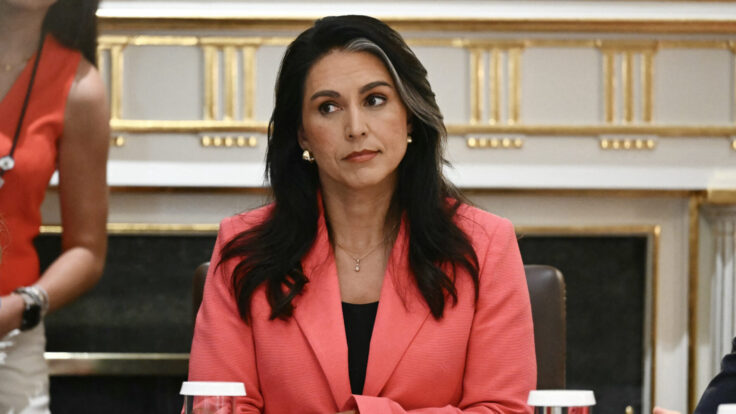
He’s since moved on to D.C. for his first round of meetings on the Hill. So far, he’s faced pushback from Senate Intel Chairman Tom Cotton—not on his nomination for Health and Human Services but on his wish to get his daughter-in-law Amaryllis Fox Kennedy installed as deputy director of the C.I.A. to get to the bottom of his uncle’s assassination. Trump reportedly nixed that idea after Cotton opposed her views on counterterrorism—specifically, her kumbaya vision for spending more time in dialogue with America’s adversaries. We’ll see if Cotton makes the same case against Tulsi Gabbard’s appointment as director of national intelligence, considering she gave a similar excuse for her secret meeting with Syria’s Bashar al-Assad after he gassed his own people…
In tonight’s issue, fresh reporting on Donald Trump’s lawsuit against the pollster Ann Selzer, who incorrectly predicted a Harris victory in Iowa. I was among the first to actually read the suit. My take, below the fold.
|
|
A MESSAGE FROM INSTAGRAM
|
|
|
Congress can help keep teens safe online today by putting parents in charge of teen app downloads.
Congress has the opportunity to establish a national standard requiring app store parental consent and age verification for teens.
This puts parents in charge of which apps teens download, making it easier for them to help keep teens safe. That's why 3 out of 4 parents agree: teens under 16 shouldn't be able to download apps without parental approval.
Tell lawmakers: support a national standard requiring app store parental consent and age verification for teens.
|
|
|
But first…
- Abby on Pelosi vs. A.O.C.: Earlier this evening, the House Democratic steering committee issued its committee endorsements, and it seems that one extremely junior member will shatter modern historical precedent and lead Democrats on a committee. That person, however, will not be Alexandria Ocasio-Cortez, but third-term Minnesota Rep. Angie Craig, who won the committee’s endorsement in her bid for the ranking Democratic slot on the House Agriculture Committee. (While these steering committee endorsements are not binding, they are usually decisive.)
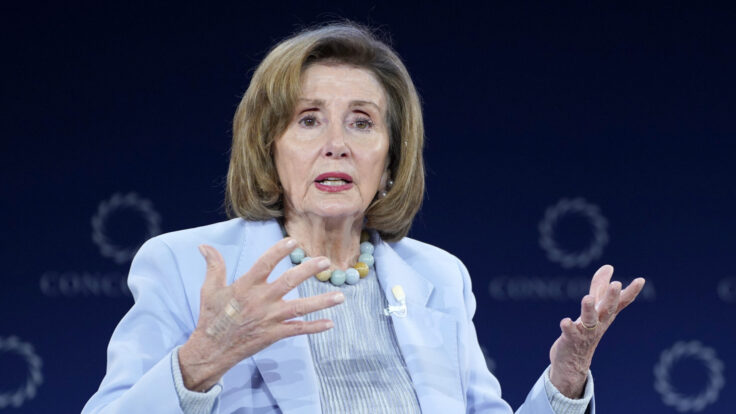
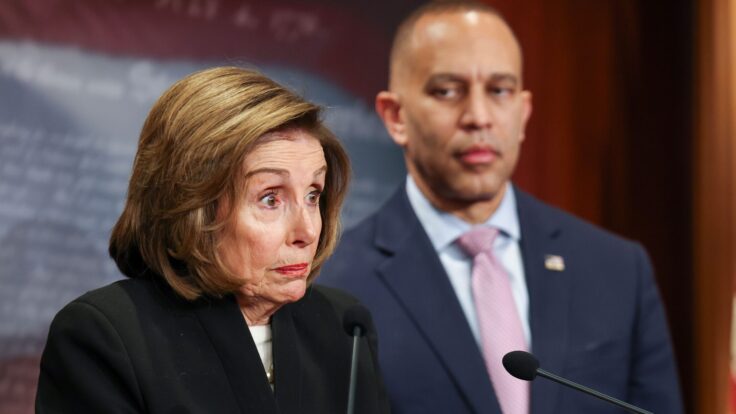
Indeed, the steering committee recommended the much more senior Gerry Connolly of Virginia over A.O.C. to lead the Democrats on the House Oversight Committee. The big behind-the-scenes intrigue is that Nancy Pelosi, who has tangled with A.O.C. in the past, was reportedly working the phones against her while recuperating from hip-replacement surgery in Germany after a fall in Luxembourg.
I’ve also heard from House Democratic insiders that this was a “unique situation,” and that, even if Craig and Connolly ultimately carry the day, the episode shouldn’t be viewed as representative of how future turf wars might play out. “[This] will be a good test to see if a rec from [steering] still means anything,” a House Democratic chief quipped to me in the aftermath. —Abby Livingston
- Grading on a curve: Staffers working for the DOGE duo, Elon Musk and Vivek Ramaswamy, have contacted some of Trump’s first-term cabinet secretaries and asked them to prepare two lists of people they served with: one for political appointees and the other for career officials. The listmakers are then to write an “A” by the names of those they believe Trump should bring back or keep, and a “B” by the names of those they think should be blacklisted or fired. Of course, civil servants (the career officials) are typically protected from political raids at agencies, but Trump has vowed to use Schedule F, an executive order that would make them fireable—and these plans for mass layoffs will almost certainly wind up before the courts.
- 🎧 Politico’s profit playbook: On this morning’s Media Monday episode of Puck’s flagship podcast, The Powers That Be, our co-founder and E.I.C. Jon Kelly joined Dylan Byers to unpack the latest big hires and the attendant implications for The Washington Post and Politico. As usual, they had a great conversation, and you can find the episode by clicking here.
- The Puck Private Conversation: If you haven’t taken the latest survey for the second iteration of The Puck Private Conversation series, powered by Orchestra, you can fill out your responses here. It should be fun, and only takes a minute or two!
|
| All right, on to the night’s big news… |
 |
| Trump’s Retribution Tour Begins |
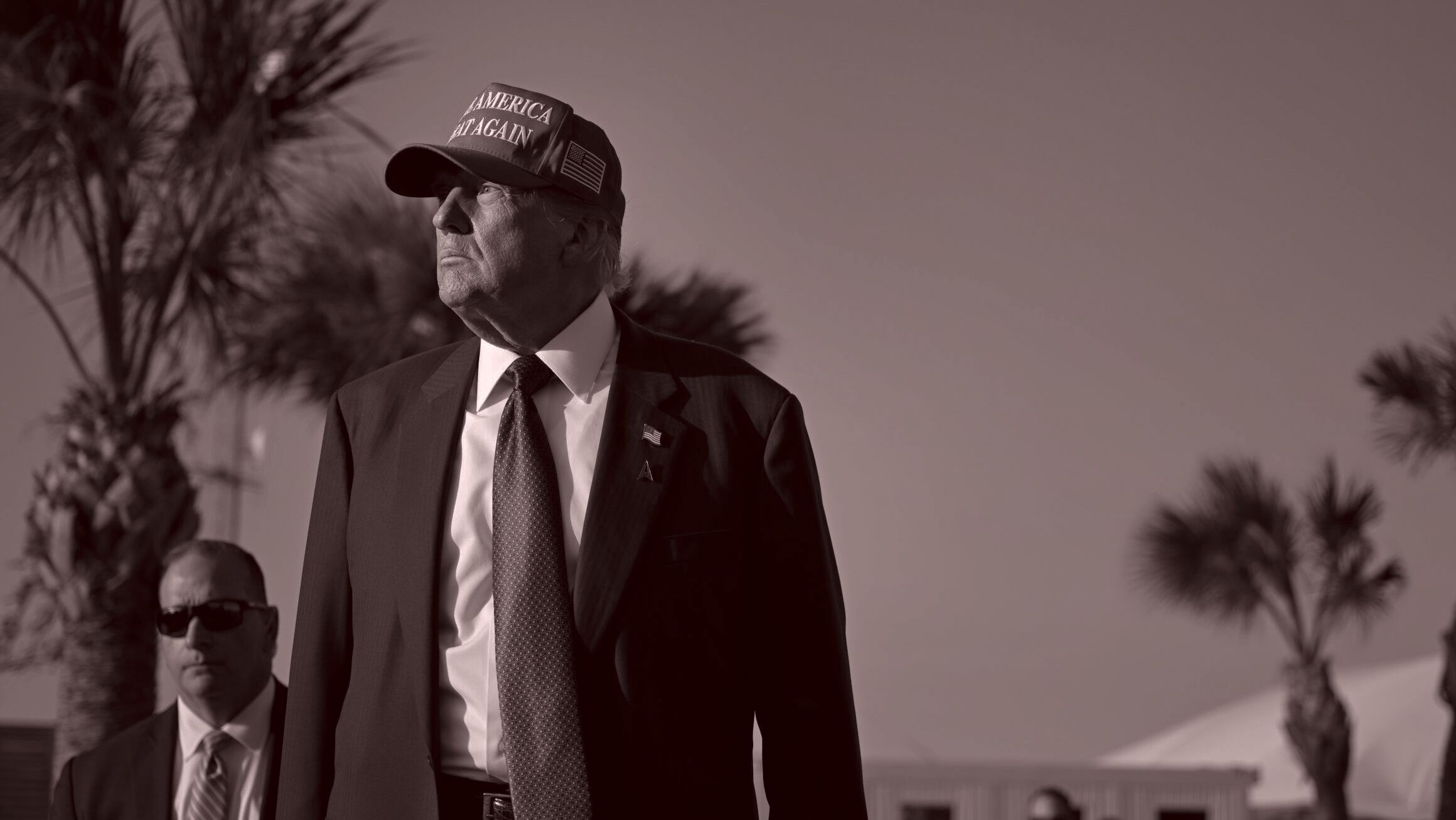
| On Monday evening, Trump sued Ann Selzer, the respected pollster who incorrectly predicted a Harris victory in Iowa. Is he looking for compensation over damages or simply firing a warning shot to the industry ahead of his next term |
|
|
|
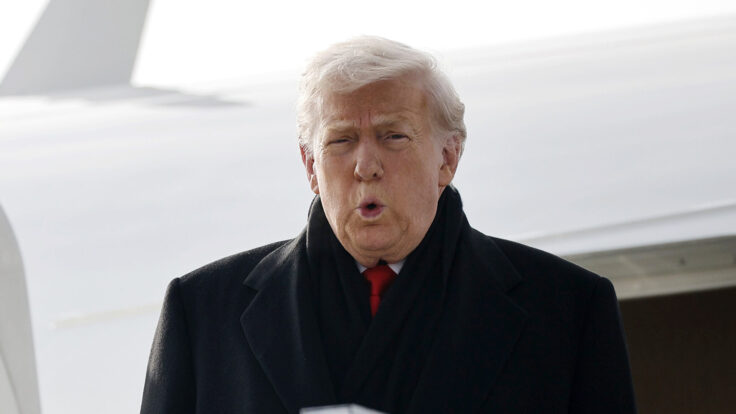
| With five weeks until his return to the White House, Donald Trump is already delivering on his promise to wage legal vendettas against political enemies and journalists, alike. On Monday night, less than 48 hours after securing a $15 million settlement from ABC News, Trump filed a lawsuit in Iowa District Court accusing the venerated pollster Ann Selzer and her polling company—as well as The Des Moines Register and its parent company, Gannett—of “brazen election interference” and consumer fraud over her November 2 poll showing Kamala Harris winning by three points in Iowa. As Trump lawyers Edward Paltzik and Des Moines-based attorney Alan R. Ostergren noted in the suit, “President Trump ultimately won Iowa by over thirteen points.”
Whether that polling error constitutes an “election-interfering fiction,” as the suit alleges, is now the question before a Polk County court. Iowa is notably in the minority of states that lacks an anti-SLAPP law, a protection that gives judges the ability to swiftly toss out frivolous attacks on free speech. But it’s still a long putt: Trump’s newest courthouse adventure leans on an extremely aggressive reading of a statute in Iowa’s consumer fraud law intended to prevent businesses from making misrepresentations to deceive purchasers. |
|
A MESSAGE FROM INSTAGRAM
|
|
|
Instagram Teen Accounts: a protected experience for teens, guided by parents
Instagram Teen Accounts are designed to address parents’ biggest concerns, providing automatic protections for who can contact their teens and the content they can see.
The impact: Built-in limits give parents more peace of mind when it comes to protecting their teens.
Learn more
|
|
|
| Selzer, of course, is widely respected among her peers. She’s spent three decades in the polling business and boasts an A+ rating from Nate Silver, who has described her status among pollsters as “near-oracular.” Indeed, Selzer’s sterling reputation was the main reason that many in Washington and the media took her startling Iowa result at least somewhat seriously. (Trump, of course, had won the state by eight points four years prior.) Even among the veteran political operators who wrote off the Harris +3 number as an outlier, the prospect that pollsters nationwide might be significantly undercounting Democratic votes fomented a temporary media narrative that Kamala’s campaign had crucial momentum heading into the final days of the race.
Two weeks after the election, Selzer announced that she would be retiring from the polling business to explore “other ventures and opportunities”—a decision she said she made last year. “Would I have liked to make this announcement after a final poll aligned with Election Day results? Of course,” she wrote in a guest essay for The Des Moines Register. “It’s ironic that it’s just the opposite.”
But Trump was still fuming over the last-minute narrative shift that the poll generated. He was also emboldened by ABC News’s capitulation in his defamation lawsuit against the network and George Stephanopoulos, who said on air that Trump had been found liable for the “rape” rather than “sexual assault” of writer E. Jean Carroll. The president-elect now appears eager to run up the score.
Ahead of filing the lawsuit Monday evening, Trump previewed his plans in an afternoon press conference. “We have to straighten out our press,” he said. “Our press is very corrupt, almost as corrupt as our elections.” Besides the now-resolved ABC News suit, Trump is also suing CBS News for $10 billion for the way it edited Bill Whitaker’s 60 Minutes interview with Harris—claiming the edited broadcast amounted to “partisan and unlawful acts of election and voter interference”—and he’s pursuing a case against the Pulitzer Prize board based on awards given to journalists from The New York Times and Washington Post who investigated his ties to Russia during the 2016 campaign.
Perhaps the most unprecedented element of the Selzer lawsuit is that it names the pollster and her agency, Selzer & Co., as co-defendants. Never before has a candidate sued a pollster for setting off a negative news cycle. Typically, if a pollster is wrong, they suffer reputationally and may lose clients, but they are rarely blamed for causing damage to a campaign. While some states have rarely enforced laws that establish standards for publicly released polls—requiring firms to publish their methodology, and so on—there is no legal requirement for a poll to be correct, whatever that means. And these days, most political news consumers are sophisticated enough to understand that polls are more impressionistic than predictive.
Selzer did not immediately respond to a request for comment. Representatives for The Des Moines Register told me they stand by their reporting and believe a lawsuit would be “without merit.” |
|
|
| Trump also faces other, more specific, legal obstacles. In the consumer fraud case he filed over the 60 Minutes interview, CBS News challenged whether a Texas court had any jurisdiction to hear the complaint since Trump won the election, and therefore the question of whether the network’s editing aided Harris could be deemed moot. Selzer will likely have a similar rejoinder. CBS News also attacked Trump’s standing to invoke a consumer law, noted the lack of any allegation about the public’s confusion, and, of course, raised First Amendment objections. Expect a similar defense from Selzer here. |
|
|
| As with Trump’s other recent and ongoing lawsuits against media organizations, the objective isn’t to win but rather to intimidate. Litigation is typically expensive for all parties, especially in high-profile cases such as those involving a former and future president, even if the suit itself is ultimately deemed to be frivolous. There is also the burden of the discovery process, which is always invasive and frequently ugly. (Indeed, it’s likely the reason ABC News settled with Trump rather than defending themselves at trial.) Already, nervousness is spreading in the industry, with media companies preparing for litigation targeting journalists, including for charges like defamation or even violations of the Espionage Act.
Of course, the Selzer lawsuit could get unpleasant for Trump, too. While the lack of an anti-SLAPP statute in Iowa means that Trump might avoid paying the defendants’ legal fees if he loses, discovery is a double-edged sword. If he proceeds with the suit, Trump may have to sit for a deposition to explain the supposed harm Selzer did to his campaign, and lawyers for the defendants will be able to subpoena his campaign, too.
And while the major criminal cases against Trump have been dismissed or postponed, he’s still playing defense in a few civil trials. He is a defendant in a libel suit over his false claim that the Central Park Five teenagers “killed a person,” as well as a case brought against him by two co-founders of Truth Social. The fact that he’s filed litigation against Selzer (and 60 Minutes… and Stephanopoulos…) could undercut his arguments that he’s too busy as president-elect to shoulder the burdens of civil litigation.
As for the broader political impact of this case, news organizations by now expect lawsuits, especially from Trump, targeting their speech, and may write it off. Less clear, however, are the consequences on the polling industry. The threat of litigation might well deter the pulse-taking of America’s electorate, particularly during Trump’s second term—and, perhaps, that’s precisely his aim.
Additional reporting by Eriq Gardner. |
|
|
|
| FOUR STORIES WE’RE TALKING ABOUT |
|
|
|

|
 |
|
|
|
Need help? Review our FAQs
page or contact
us for assistance. For brand partnerships, email ads@puck.news.
|
|
You received this email because you signed up to receive emails from Puck, or as part of your Puck account associated with . To stop receiving this newsletter and/or manage all your email preferences, click here.
|
|
Puck is published by Heat Media LLC. 227 W 17th St New York, NY 10011.
|
|
|
|