{{ 'now' | timezone: 'America/New_York' | date: '%b %d, %Y' }} |
|
|
Welcome back to Dry Powder. I’m Bill Cohan, coming to you from Boston, where I’m
hosting an event this evening with my partner Ian Krietzberg, Goldman Sachs economist Joseph Briggs, and Andrew McInnes from Genesys. We’ll be discussing how A.I. is changing finance, all from beautiful 125 High Street.
As loyal readers know, I’ve written extensively about Wall Street’s unfettered embrace of “creditor-on-creditor violence”—a recently trendy genre of restructuring that’s popped up in the capital structure of Saks,
Lionsgate, and other companies. Now it’s Optimum’s turn, and there’s a plot twist that has the cable giant waging legal battle against a syndicate of blue-chip creditors, including Apollo, Ares, Oaktree Capital, BlackRock, and JPMorgan Chase. A pretrial conference is scheduled for next month in New York’s Southern District. I’ll get into this precedent-setting, high-stakes skirmish below.
Also mentioned in this issue: Gunnar Wiedenfels, David
Ellison, Samuel Di Piazza Jr., Robert Gibbs, Patrick Drahi, Charles Tauber, Dexter Goei, John Bringardner, Jeannette Vargas, and more…
But first… |
- WBD
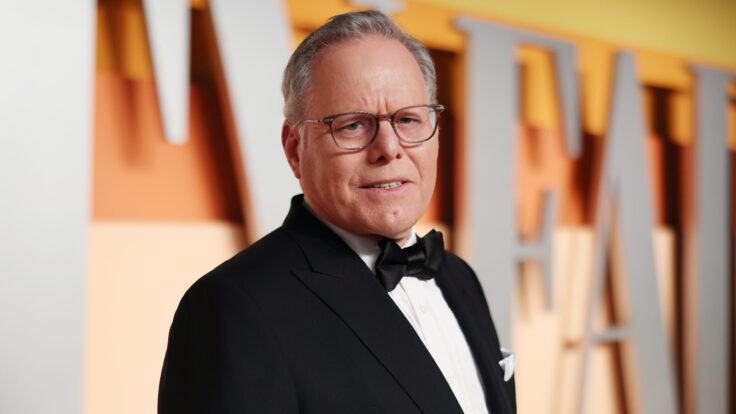
hunger games: On Monday morning, Paramount Skydance took its battle over Warner Bros. Discovery to court in Delaware, and said it would start a proxy contest to nominate a slate of new WBD directors willing to consider PSKY’s $30-a-share cash offer. The PSKY leadership also proposed an amendment to WBD’s corporate bylaws that would require shareholders to vote on the spinoff of Gunnar Wiedenfels’s Global Networks. “We do not undertake any of these actions lightly,”
David Ellison wrote in a letter to WBD shareholders on Monday.
The Delaware lawsuit, drafted by Quinn Emanuel, starts with the relatively modest request that the Delaware court force WBD to disclose more information about its valuation of the Global Networks equity stub on an expedited basis. Ellison and his partners want WBD shareholders to see the analysis the board received—presumably from WBD’s bankers at Allen & Co. and JPMorgan Chase—that led WBD
board chairman Samuel Di Piazza Jr. to say on CNBC that the stub is worth between $3 and $5 a share. For its part, PSKY is now valuing the Global Networks equity stub at $0 a share based on the recent trading of Versant, the spinoff of Comcast’s linear TV channels.
The PSKY management team also wants to know how the WBD board concluded that the Netflix offer was superior to their own. It’s a relatively narrow legal request, although Quinn Emanuel wrote in the 59-page
complaint that it reserved the right to add additional claims to the suit, “including information that the Board purports to rely on but has withheld from view,” which “will confirm what many already know: WBD stockholders should reject the recommendation of the Board and accept Paramount’s value maximizing tender offer for their shares.” Meanwhile, according to Bloomberg, Netflix is considering amending its bid to be all cash, a move that would give WBD shareholders more certainty and neuter at
least one of PSKY’s arguments.
Robert Gibbs, the head of communications at WBD, offered me this statement in response to the lawsuit: “Despite six weeks and just as many press releases from Paramount Skydance, it has yet to raise the price or address the numerous and obvious deficiencies of its offer. Instead, Paramount Skydance is seeking to distract with a meritless lawsuit and attacks on a board that has delivered an unprecedented amount of shareholder value.” For what
it’s worth, I’m not sure I fully understand PSKY’s legal strategy of ratcheting up the hostility while its tender offer, which expires January 21, has a condition precedent that the two companies enter into a merger agreement. Don’t you catch more flies with honey—or by increasing your bid?
|
|
|
A MESSAGE FROM OUR SPONSOR |
White & Case on the battle for AI
AI is reshaping global dealmaking. As companies race to secure
AI capabilities and talent, M&A activity is heating up across the US and Europe from financial services to life sciences. Read White & Case’s analysis on how AI is driving deal markets on both sides of the Atlantic. |
|
|
- A
note on Saks…: At the stroke of midnight, Saks Global filed for Chapter 11 bankruptcy protection in Houston. (More on that choice of location another time.) As faithful readers know, a restructuring was likely inevitable given the more than $4 billion of debt that Saks Global took on after financing its acquisition of Neiman Marcus Group last year with a $2.2 billion junk bond. I started writing about the risk inherent in the Saks–Neiman merger after what became known as the Valentine’s Day
Massacre, when the company decided to stretch its vendor payables from 30 days to 90 days—a sign of potential financial difficulties.
The bankruptcy lawyers will be busy: Suffice to say, there are already 32 filings on the court docket in what is pretty much looking like a freefall bankruptcy. There’s
little question that the company’s creditors will own Saks Global when it emerges from bankruptcy, supposedly later this year. There’s also little doubt that the filing will be a windfall for law firms Willkie Farr and Haynes Boone, legal counsel for the debtor, and Paul Weiss, legal counsel for the ad hoc creditors’ committee. PJT Partners is advising the debtor, and my old firm, Lazard, is advising the creditors. (Disclosure: Earlier this year, Saks sued Puck over our coverage of its financial
condition.)
|
Now on to the main event… |
|
|
Wall Street invented the coercive liability management exercise, which allows companies to
play their creditors against one another as they extract beneficial terms for themselves—a now-routinized tradition referred to as “creditor-on-creditor violence.” But now Apollo, Oaktree, BlackRock, and JPMorgan Chase are teaming up to put an end to this mess. |
|
|
About 18 months ago, in July 2024, a group of the world’s most sophisticated creditors banded together in an
unusual display of unity. The likes of Apollo, Ares, Oaktree Capital, BlackRock, and JPMorgan Chase—advised by PJT Partners and Akin Gump, no less—tried to prevent the cable company Altice USA from executing a liability management exercise. Perhaps it wasn’t as crazy as it sounded. After all, Altice had grown over a decade by taking advantage of artificially low interest rates—the byproduct of the quantitative easing era—to borrow more than $20 billion in debt. If they ever wanted to take
advantage of the flexibility in its indentures (code for an L.M.E.), the exercise would pit one creditor against the others.
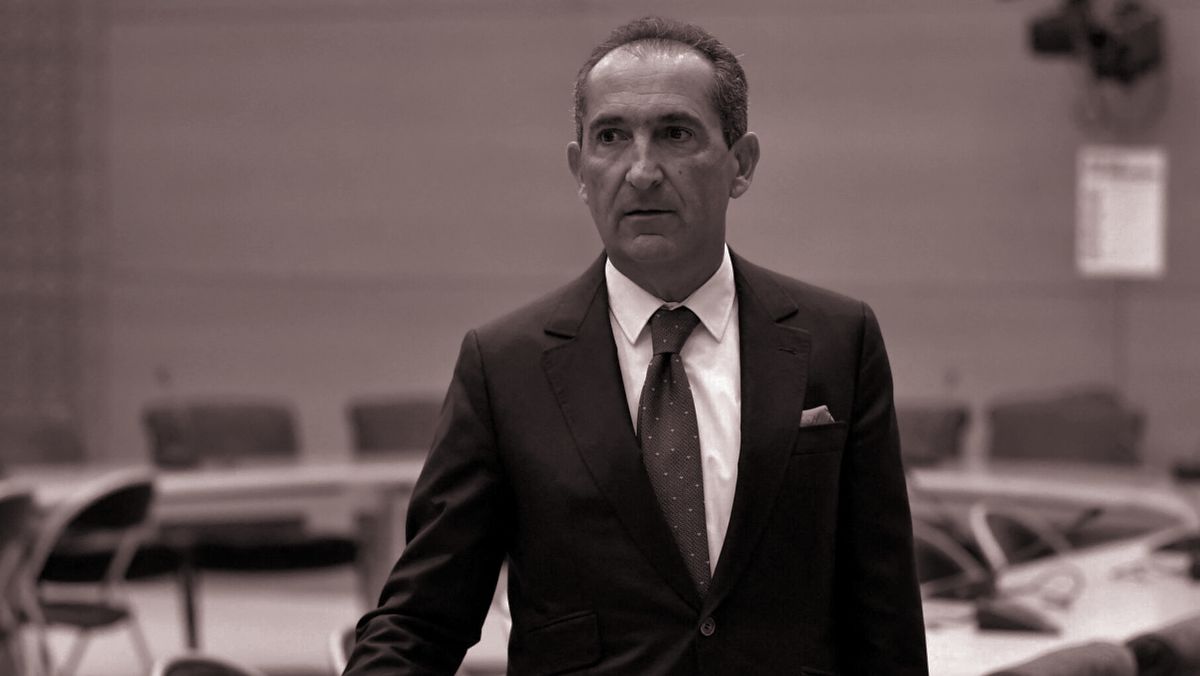
Instead of affording Altice that leverage in future debt-restructuring negotiations, this syndicate formed a cooperative. The creditors who joined the co-op represented $21.4 billion of Altice’s debt, or 99 percent of its combined bank debt, senior guaranteed notes, and senior unguaranteed notes. The company—now known as Optimum and owned by
Sotheby’s proprietor Patrick Drahi—has around $26 billion of debt, including that of various subsidiaries. So about $4 billion of the company’s debt is not part of the creditor co-op.
The formal agreement among the creditors prevents any of them from selling their debt back to Optimum, effectively blocking the company from repurchasing the debt at a market discount. The agreement also requires that creditors in each tranche of the company’s debt be treated the same, preventing
Optimum from executing the kind of coercive L.M.E. that both Saks and Lionsgate recently executed. And individual creditors are barred from both negotiating a deal directly with Optimum and selling their position to another investor—unless that investor joins the co-op and agrees to its terms. “In short, there are limits on what the company can do nonconsensually,” Charles Tauber, a partner at PJT, wrote Dexter Goei, a director of Optimum, a year ago. “The co-op
takes a coercive exchange off the table.”
Not surprisingly, Optimum did not take kindly to the formation of the co-op. As Tauber explained, it pretty much prevented the company from extracting maximum pain and suffering from its creditors, which already faced serious losses on their Optimum debt as it traded down. According to John Bringardner, the executive editor of Debtwire, the debt now trades at steep discounts to par, with the unsecured notes trading at 19 cents on
the dollar and the rest of the debt stack trading in the mid-60s on the dollar. “This has been a deeply distressed company,” Bringardner told me.
Anyway, the Optimum creditors banded together to force the company to deal with them collectively rather than picking them off individually or pitting them against one another. I suspect the creditors believe they will get a better economic outcome by presenting a united front. (Another complicating factor is that JPMorgan Chase, which is part
of the co-op, agreed in November to refinance a separate $2 billion loan to Optimum that wiped out onerous creditor-friendly covenants, pissing off the other creditors. But that’s a story for another day.) |
|
|
A MESSAGE FROM OUR SPONSOR |
White & Case: How AI Is driving deal markets
AI-focused dealmaking is gaining momentum across the
US and Europe spanning sectors as diverse as financial services and life sciences. Competition for AI capabilities and talent is intensifying as deal activity builds. Explore this White & Case article for insights into where AI dealmaking is accelerating and what it means for global M&A. |
|
|
Just before Thanksgiving, however, Optimum fought back by filing what looks like an unprecedented
antitrust lawsuit against them in the Southern District of New York, referring to the co-op as a “cartel” some 24 times in the complaint. “This antitrust case concerns a horizontal group boycott among rival creditors to freeze Optimum out of the U.S. credit market,” the company argues. According to Bringardner, “This is the fight against cooperation agreements. Cooperation agreements have exploded. Their use has exploded among creditors in just the past few years. It’s the flipside of
liability management exercises and creditor-on-creditor violence. It’s the reaction.” |
Things have certainly changed for creditors since I did my restructuring work at Lazard in the 1990s. For a
few years now, so-called “creditor-on-creditor violence” has been all the rage in Wall Street restructuring circles. By pitting one group of creditors against another, a company that needs to restructure its debt can extract benefits that might otherwise not be available—capturing the discount in the trading of a company’s debt, say, or getting creditors to pony up new money in exchange for being moved up in the capital structure. Companies can offer preferred creditors security at the expense
of those who chose not to participate in providing new capital, or who were excluded from the whole L.M.E. in the first place. And there’s nothing the losing group of creditors can do about it.
These L.M.E.s are ruthlessly coercive, but they’ve become standard practice on Wall Street largely because they are permitted—or at least not prohibited—in the current “covenant lite” era of debt indentures. Shame on the creditors for agreeing to provide money to borrowers with these
“covenant lite” indentures in the first place—that should never have happened. So in some sense, creditors are getting what they deserve by accepting the terms of the clever lawyers and bankers who put them together.
Optimum’s lawsuit will offer the latest twist in this dynamic. A pretrial conference before Judge Jeannette Vargas is scheduled for February 19. The company claims that the likes of Apollo, Ares, BlackRock, and others are among the most sophisticated
creditors and collectively control some 88 percent of the “relevant credit market,” where they would normally compete against one another to offer borrowers new leveraged loans, or to refinance the debt they already have in a company. “Those conditions should apply to Optimum today,” the complaint continues. “If Optimum’s creditors were acting in a free market, each would vie to offer Optimum access to new capital, or to entice Optimum to repurchase or exchange the creditor’s individual debt on
mutually beneficial terms.”
But, Optimum argues, the members of the co-op “orchestrated a conspiracy to squelch that competition. Their goal was as simple as it was illegal: they wanted to stop each other from dealing with Optimum in ways that might hurt their collective interests. Each creditor feared that, without collusion, its rivals might help themselves by negotiating unilaterally with Optimum to refinance their own debt.” Optimum did not mince words: “The Cooperative is a classic
illegal cartel. Through the Cooperation Agreement, competing debt investors have agreed to lock Optimum out of the credit market unless Optimum offers terms the entire Cooperative deems acceptable.”
In the complaint, Optimum’s attorneys wrote that the colloquial term “creditor-on-creditor violence” was “just a pejorative term for competition.” (Optimum’s emphasis.) And, they went on to complain, “the antitrust laws’ founding principle—that competitors should compete—does not
evaporate just because the competitors here collectively dislike it.” (A spokesperson for the creditor group declined to comment, as did both Apollo and Ares.) |
Cocktails & Trial Balloons
|
The Washington firm Kellogg Hansen crafted the complaint, even though the legal powerhouse Kirkland & Ellis
is advising Optimum on its overall debt restructuring. “We’ve been hearing for the past 18 months or so that Kirkland lawyers were floating this antitrust idea, at conferences, at happy hours, over cocktails,” Bringardner told me. “We would hear about it. They would never say it to us on the record or anything. But it was kind of out there. And most people kind of laughed, like, ‘What antitrust argument can you raise here?’”
In truth, an old-fashioned creditors’ committee operates pretty
much the same way as the co-op—it must approve any restructuring by a wide majority, either in or out of court. And it is literally composed of a company’s largest creditors, who sit around a table and negotiate a deal with the company or with the debtor in bankruptcy. No deal is possible without some serious compromise on both sides since, essentially, the vultures are fighting over a carcass. What Optimum apparently doesn’t like is that the co-op agreement prevents it from undertaking one of
these coercive L.M.E.s. I don’t blame Optimum for not liking that outcome. But at some point, it was logical to expect that creditors would fight back.
Bringardner agreed that he didn’t see much difference between an old-fashioned creditors’ committee, either in or out of bankruptcy, and the co-op. Optimum filed the lawsuit, I suggested, because the co-op was preventing Optimum from pulling off an L.M.E. “Exactly,” Bringardner replied. “The only difference is the size of the creditor
group here, and Optimum’s argument—we’ll see how this goes down in court—is that it’s such a large group, there’s nobody else they can go to in order to pull off an L.M.E. If all these creditors are working in concert, they’re blocking their options to pull off anything else.” |
|
|
Puck founding partner Matt Belloni takes you inside the business of Hollywood, using exclusive reporting and insight to explain
the backstories on everything from Marvel movies to the streaming wars. |
|
|
A professional-grade rundown on the business of sports from John Ourand, the industry’s preeminent journalist, covering the
leagues, players, agencies, media deals, and the egos fueling it all. |
|
|
Need help? Review our
FAQ page or contact us for assistance. For brand partnerships, email ads@puck.news.
You received this email because you signed up to receive emails from Puck, or as part of your Puck account associated with {{customer.email}}. To stop receiving this newsletter and/or manage all your email preferences, click here. |
Puck is published by Heat Media LLC. 107 Greenwich St., New York, NY 10006 |
|
|
|