 |
|
Happy Wednesday, I’m Bill Cohan. Welcome back to Dry Powder.
|
|
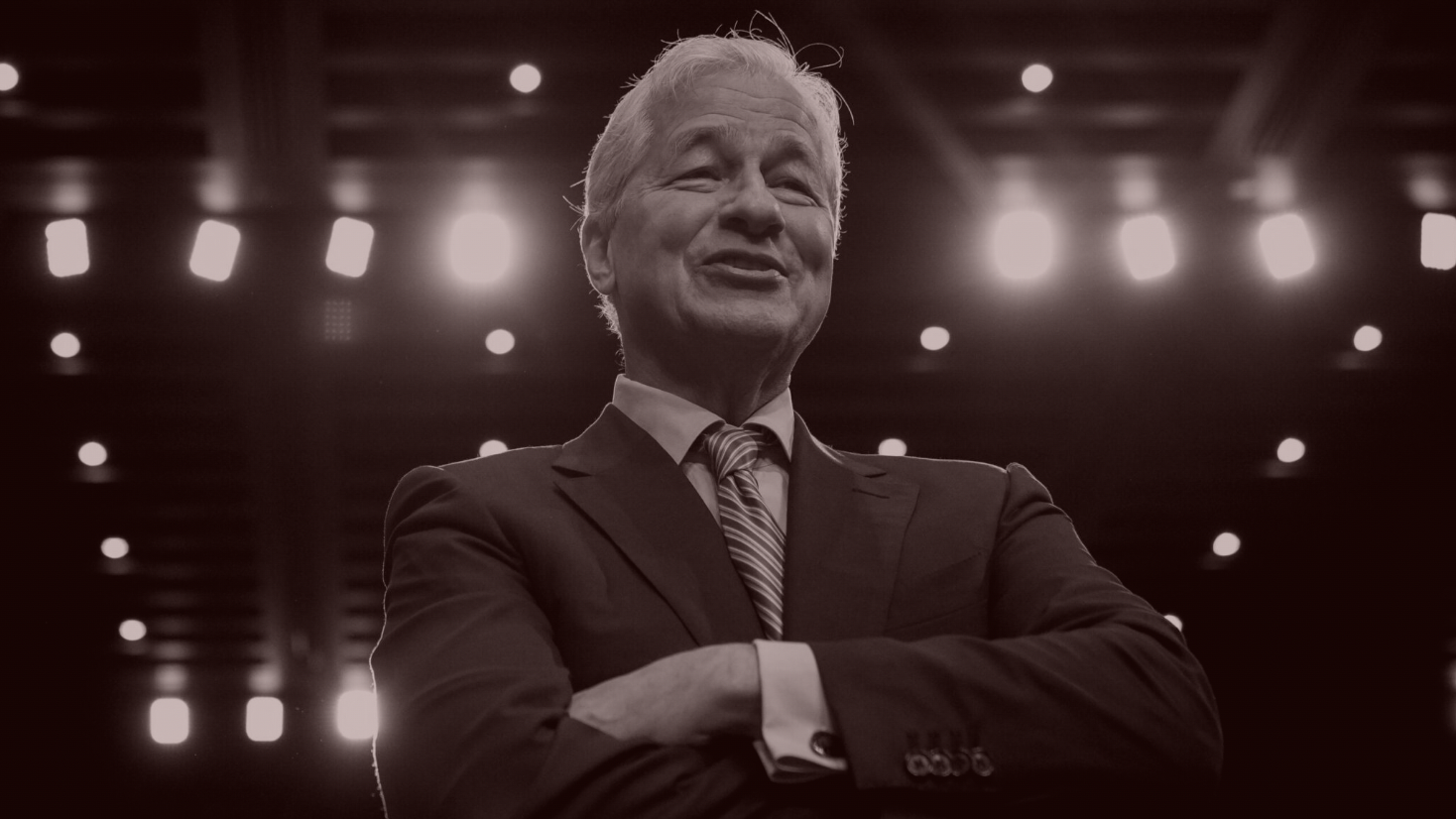
JPMorgan’s Fed-blessed acquisition of First Republic has put an ever bigger moat between the nation’s largest bank and everyone else. It has also burnished Jamie Dimon’s lustrous reputation and resume. In today’s issue, a look at how Dimon transformed JPM and became the white knight of Wall Street. But first…
- Fed Hike Winners and Losers: Maybe the 10th time will be the charm? As expected, the Federal Reserve raised interest rates 25 basis points this afternoon, bringing the Fed Funds rate to a 16-year high of between 5 percent and 5.25 percent. As always, there will be winners and losers. The Winners are savers and investors in the bond market, who are both finally able to get rewarded for either saving their money or investing in debt securities. Other likely winners are big banks, like JPMorgan Chase, that don’t really want deposits and offer their depositors 1 basis point on their checking accounts. Their cost of money is still utterly close to zero and they can lend it out at wide spreads. Ka-ching!
The losers are most borrowers, who now will be paying much higher rates for the money they were getting for nearly free between 2009 and 2022. Other big losers will be the foolish among us who invested in bonds and other debt securities at the top of the market. That payback is a bitch. But they are getting what they deserve by buying bonds that failed to yield an amount commensurate with the risk being taken.
|
 |
| Droppin’ Dimons |
| A brief history of how Jamie Dimon and JPM became the saviors of Wall Street. |
|
|
|
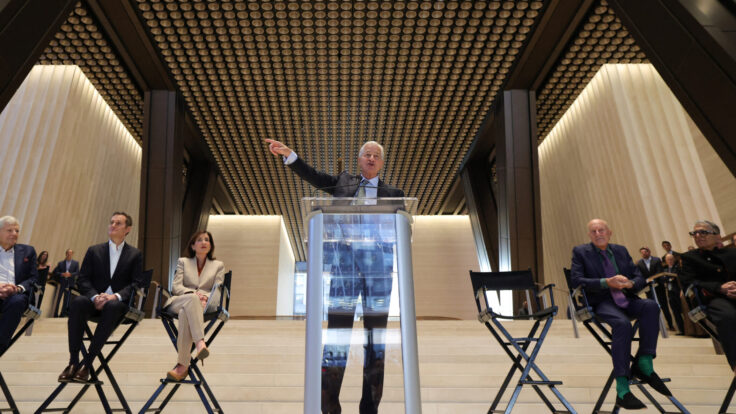
| On Monday, the Federal Reserve offered its blessing for the latest JPMorgan financial rescue—in this case, the acquisition of First Republic, with an assist from the FDIC. Federal regulators waved a rule about the concentration of bank deposits in one institution and allowed JPMorgan Chase to get even bigger. “Goliath is winning,” the Wells Fargo banking analyst Mike Mayo told me on Monday afternoon.
Under the terms of the deal, JPM is buying substantially all of the assets and certain liabilities of First Republic from the FDIC, which had taken over the bank a few hours earlier. In return for a payment of $10.6 billion to the FDIC, JPM assumed some $173 billion of First Republic loans plus another $30 billion of securities and further assumed $92 billion of First Republic’s deposits.
It’s a sweet deal, cut by a fabulous dealmaker, extending a growing moat around the nation’s largest bank. JPM, of course, was not assuming First Republic’s subordinated debt or its preferred stock and was not buying First Republic’s equity, which will now disappear, worthless, down from a value of $40 billion in November 2021. JPM will also get a $50 billion fixed-rate funding facility from the FDIC, which the bank said would help manage the wind-down of the assets and liabilities of First Republic. The First Republic bank branches will now be Chase branches, and likely will be turned into wealth management offices for the bank. Dimon is predicting, conservatively, that First Republic will add $500 million in net income to JPM’s bottom line.
Considering JPMorgan Chase made $48 billion net income in 2021 and $38 billion in net income in a softer 2022, the addition of First Republic is not material, no matter how you slice it. But, of course, it does add to Jamie’s resume and to his lustrous reputation. “We are happy that our financial strength and capabilities enabled us to participate in a process involving multiple bidders that has resulted in a rapid and orderly resolution without the use of the systemic risk exceptions,” JPM’s chief financial officer, Jeremy Barnum, told Wall Street analysts. |
| St. Jamie of Lower Park Ave |
|
| It also extends the ongoing narrative of Dimon as the white knight of Wall Street, the savior of last resort, the ultimate financial patriot. In March 2008, with an assist from the Federal Reserve and the Treasury, J.P. Morgan Chase rescued Bear Stearns from a certain bankruptcy. It paid at first $2 a share for Bear’s equity, soon revised to $10 a share (for historically mysterious reasons… One day, Jamie, maybe over a drink…). The Fed took $30 billion of Bear’s assets that Jamie didn’t want. As part of the deal for Bear, JPM assumed Bear’s debt and most of its liabilities, since it had purchased Bear’s equity. It also got Bear’s new headquarters at 383 Madison Avenue, across the street from JPM’s headquarters at 270 Park Avenue. (The JPM executives are now housed at 383 Madison while a new roughly $3 billion JPM headquarters rises at 270 Park.) Much to Jamie’s consternation, JPM spent years, and billions more dollars, paying for Bear’s mistakes. He vowed not to make that error again.
In September 2008, however, Jamie came to the rescue of another big bank, Washington Mutual, then (and still) the largest bank failure in American history. With an assist from the FDIC this time, J.P. Morgan Chase bought what it wanted out of the Washington Mutual carcass and left behind the rest. In the ensuing populist outcry about big banks getting bigger and more powerful came the reregulation of Wall Street in the form of the so-called Dodd-Frank law. One of the consequences of the Dodd-Frank law was that the Federal Reserve, Wall Street’s new prudential regulator, would have to approve any big bank mergers, particularly among the SIFI banks, those deemed by the Fed to be Systemically Important Financial Institutions. No surprise, Jamie’s bank was the top SIFI.
Jamie’s ability to pull off three of the largest bank rescues in history, including of the top two largest ever—Washington Mutual and First Republic—got me thinking about his place in the history of Wall Street. It’s something several of the research analysts wondered about on the Monday morning conference call, too. And without being hyperbolic, it seems to me, the historical comparison that makes the most sense is with J.P. Morgan, the man himself, one of the founders of what is now Jamie’s JPMorgan Chase. |
|
|
| Financial crises are not Wall Street inventions. They are inventions of human nature. There were financial panics in 1819, in 1857, 1873, 1884, and 1893, to name a few. According to the historian John Kenneth Galbraith, these “panics” occurred “roughly with the time it took people to forget the last disaster” and to start reengaging in the same typically human behavior once again. Sounds about right.
It was the Panic of 1893, though, that gave us the idea of J.P. Morgan riding to the rescue on his white horse. The event touched off a serious economic crisis in America. Some 660,000 people lost their jobs at a time when the country had around 63 million people. Meanwhile J. P. Morgan, the banker, was busy with the reorganization of any number of failed railroads, pondering how putting them on a safer financial footing would restore jobs and give the economy a much-needed boost. He was also “keeping a watchful eye” on the gold supply of the U.S. Treasury as a continuous stream of Americans succeeded in depleting the gold reserves in exchange for their paper money.
Such was Morgan’s power and prestige that he was able not only to move markets but also to bend the federal government to his will. The rescue that he devised in 1895 for the federal gold supply was a template that he would use again during and after the Panic of 1907 and would lead to the creation, in 1913, of the Federal Reserve System, which remains the nation’s lender of last resort. Morgan worked behind the scenes with government leaders in Congress and the Treasury to craft a gold-backed bond offering that would restore confidence in the nation’s financial markets. His ability to raise capital when it was most needed had made solving the crisis possible. It would not be the last time.
Morgan received his share of accolades for devising a plan that avoided a further meltdown of the nation’s financial markets, and more than his share of public condemnation. The late nineteenth century was also a populist moment in American history, and the thought that the government had somehow colluded with the most powerful Wall Street bankers to solve a problem—from which they profited, although by much less than was popularly believed—was too much for people to stomach. Of course, the alternative—doing nothing and letting America default on its debts—would likely have been far worse than the private bond offering that Morgan devised. But that’s not the kind of argument that wins much popular support.
Because of the continuous turmoil of boom and bust cycles during the late nineteenth and early twentieth centuries, there was a belief that a more tightly structured, centralized financial system should be put in place. After all, the financial savior J. P. Morgan would not live forever. Nor, as the nation’s financial system grew alongside its economy, could one man be expected to rescue it time and time again. So, in November 1910, the Rhode Island senator Nelson Aldrich invited a select group of politicians and bankers to the exclusive Jekyll Island Club, off the coast of Georgia—Morgan had to arrange for permission to use the club—to discuss the idea of creating a central bank.
The secret meeting included both Henry Davison, who by then was a senior partner at J.P. Morgan & Co., and Benjamin Strong, who was then at Bankers Trust, an affiliate of J.P. Morgan & Co. (and soon to be the first president of the Federal Reserve Bank of New York). Paul Warburg, another well-known banker of the era, was there, too. In order to avoid public consternation over the fact that powerful bankers and economists were working intimately with Senator Aldrich to create the nation’s most powerful bank, the group devised using duck hunting as a ruse. On Aldrich’s private railroad car, heading south, they addressed one another using first names only. Such was the concern about a leak that Davison and another banker, Frank Vanderlip, referred to each other as Orville and Wilbur, as in the Wright brothers.
During the next two weeks, instead of duck hunting, the bankers and the senator conceived a system of twelve regional Federal Reserve banks, with a central governing board composed not of politicians but of bankers, or men and women appointed by bankers. Their plan was meant to institutionalize what Morgan had done in the wake of both the 1893 and the 1907 crises. The new central bank would not only become the nation’s lender of last resort but also strive to keep the financial system from overheating in the first place. Or as a future Federal Reserve chairman, William McChesney Martin—the longest-serving Fed chair—once quipped, his job was to “take away the punch bowl just when the party gets going.” |
| Glass Steagall Sliding Doors |
|
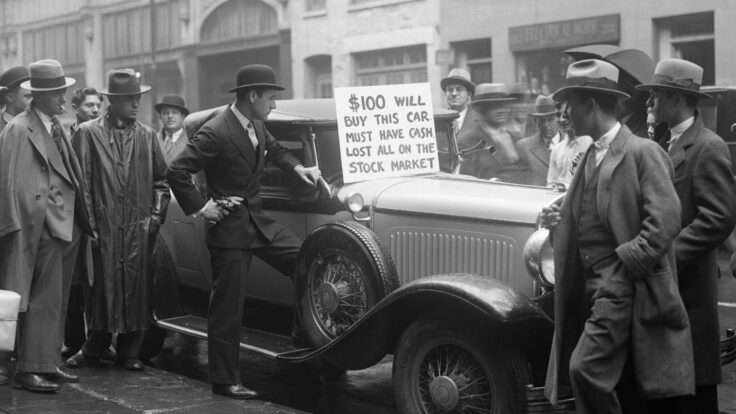
| The stock market Crash of 1929, and the financial crisis that ensued, along with the Great Depression, upended the calculus once again. The so-called Glass Steagall Act required the separation of investment banking from commercial banking, thereby forcing banks to choose whether they would be commercial or investment banks. The idea that bank deposits would be used to enable risky investment activities was outlawed.
But it was really a law designed to dilute the unmatched power of J.P. Morgan & Co., which was one of only two banks that engaged in both investment banking and commercial banking under one roof. As a result of Glass-Steagall, J.P. Morgan & Co. chose commercial banking; its investment bankers moved across the street and formed Morgan Stanley. (The other bank that split itself up was Bank of Boston, which stayed in commercial banking, giving birth to First Boston, the investment bank that later was bought by Credit Suisse, which is now part of UBS because of Credit Suisse’s own recent crisis.)
For the next 70 years or so, the Glass-Steagall Act put J.P. Morgan & Co. out of the business of rescuing other failed banks. By design you could say, it was no longer the financial powerhouse it once was, and was no longer in a position to act as a lone savior. But the repeal of Glass-Steagall in 1999 paved the way for the resurrection of J.P. Morgan & Co. At the time, bank mergers were all the rage. All through the summer of 2000, those of us at 60 Wall Street were bracing ourselves for the long-rumored combination of JP Morgan and Goldman Sachs, as well as the purge of overlapping bankers that would have inevitably resulted.
But it didn’t happen. Instead, in September 2000 came the news that Chase and J.P. Morgan & Co. were merging, creating J.P. Morgan Chase & Co. But that combination of two big banks more or less limped along, under the leadership of William Harrison, until Harrison pulled off his wisest move as the C.E.O. of the combined firm: He spent roughly $60 billion in JPM stock to buy Bank One Corporation, then the sixth-largest bank in the United States, based in Chicago. The C.E.O. of Bank One, of course, was Jamie Dimon. After the JPM-Bank One merger closed, in July 2004, Jamie Dimon became the chief executive of the new company. The first bank that Jamie had to rescue, it turned out, was the one he had just joined as C.E.O. |
|
|
| The JPM that Jamie took over was still pretty much a mess, thanks to the warring factions inside the merged company. But Jamie soon whipped the various strands of the bank’s DNA into shape—everything from the old Chase and J.P. Morgan banks, to the new Bank One, to Hambrecht & Quist and the Beacon Group and then Flemings, et al. I still don’t know how Jamie was able to get everyone to start rowing together in the same direction. But he did, much to his credit. Under Jamie’s leadership, the combined company became a Wall Street powerhouse. It was deja vu, all over again. The new J.P. Morgan Chase & Co. matched the power and prestige of the old J.P. Morgan & Co. from a century earlier—only on steroids. With a market cap of some $400 billion, it is by far the nation’s biggest bank.
And so, under the leadership of Jamie Dimon, like the eponymous J. P. Morgan before him, the Wall Street bank leapt back into the noblesse oblige of rescuing failing financial institutions. It had, after all, a “fortress balance sheet” that could be used to absorb other distressed institutions and that was in no danger itself, at least according to Dimon.
But will this be the end of the so-called regional banking crisis? That’s a question being hotly debated on Wall Street. “This part of the crisis is over,” Dimon said on the Monday call with the analysts. He then added quickly, “That does not mean that down the road—with [interest] rates going way up, [commercial] real estate, recession—that’s a whole different issue. But for now, let's just take a deep breath.” He said he thought the “mini-crisis” was over and had been limited to the regional banks with lots of uninsured deposits “and money that could move very quickly.” He concluded, “I think that’s over. Obviously, there are always future issues. But I think that’s over.”
When I spoke with Mike Mayo, at Wells Fargo, I asked if he agreed with Jamie that the regional banking crisis appears to be over. “This is the last big domino to fall,” he said. He said he thought the First Republic saga was less about the good deal that J.P. Morgan Chase got, and more about “resolving” the “last big issue” after the March failure of Silicon Valley Bank. “It doesn’t mean that there aren’t other issues out there,” he cautioned, like a depressed commercial real estate market and a possible recession. “But as far as the seven-week frenzy, that chapter seems to be closed with this resolution. So, as much as this is about JPMorgan, and Jamie Dimon, willingness and ability to shore up the financial system while also helping JPMorgan shareholders, it’s also about moving past the aftershocks of Silicon Valley Bank.”
Mayo reiterated that “Goliath is winning” but is relatively assured that things are going to calm down now. “You had three of the 30 largest banks fail,” he said. “And I don’t see any more of the top 30 banks failing anytime soon. They've all reported their deposits. They’ve all reported their earnings. Regulators are on the scene that much more.”
Mayo said there would still be banking stress, and earnings revisions in the banking sector and lower stock prices. “My only call here is that there’s not going to be any more banks in the S&P 500 that fail anytime soon… But that doesn't mean there aren’t smaller banks out there that could have problems, or that there aren’t asset/liability mismatches in the banking industry, or that commercial real estate can’t zing earnings and capital. Those risks are out there, but they’re just not immediate.” |
| The View from Beverly Hills |
|
| Meanwhile, out at the Milken Institute conference, in Beverly Hills, where many bigtime hedge fund and alternative asset managers have gathered to pay their annual homage to the onetime junk-bond king, Michael Milken, the mood seems far gloomier. Maybe because they are closer to other flailing regional banks, such as PacWest Bancorp, based in Los Angeles, and Western Alliance Bancorporation, based in Phoenix. A day after JPM rescued First Republic, PacWest’s stock price fell 26 percent and is down 70 percent so far this year. Western Alliance’s stock fell 19 percent on Tuesday and is down 62 percent for the year.
Speaking to CNBC from the Milken conference, Marc Rowan, the C.E.O. of Apollo Global Management, the alternative asset management behemoth, said he thought we were only through “phase one” of the crisis. Said Rowan, astutely: “I think this first part of the crisis was totally foreseeable: Mark-to-market losses on Treasuries? Knowable. Deposit structure? Knowable. The thing that I always find of interest is ‘What didn’t we know?’ What we didn’t know is that $42 billion can leave the banking system in four hours without a line.”
The takeaway, Rowan continued, is a series of questions that investors need to ask themselves: “What is the business of regional banking going forward? If you pay more for your deposits, if you have increased costs, from operations and from regulation, and all of a sudden you don’t know about the stickiness of your deposits? Are you in the loan business anymore? Do you need to remake your business entirely?”
“I don’t think we’re going to find out this year,” he concluded. “But I do think the business of banking, particularly regional banking, is going to change.” |
|
|
|
| FOUR STORIES WE’RE TALKING ABOUT |
|
|
|
|
|
 |
|
|
|
Need help? Review our FAQs
page or contact
us for assistance. For brand partnerships, email ads@puck.news.
|
|
|
|
Puck is published by Heat Media LLC. 227 W 17th St New York, NY 10011.
|
|
|
|