 |
|
Happy Wednesday. I’m Bill Cohan.
|
|
Welcome back to Dry Powder. At the end of last month, FTX C.E.O. John J. Ray filed his second interim report on the remarkable collapse of the crypto exchange. Today, a close reading of yet another stunning document detailing S.B.F.’s alleged criminal financial machinations—and those of his attorney, Daniel Friedberg.
|
 |
| The S.B.F. Legal Colonoscopy, Part 2 |
| In his second interim report on the FTX disaster, interim C.E.O. and financial catastrophe auditor to the stars John J. Ray describes a Bosch painting of stunning criminal machinations by Sam Bankman-Fried and his principal internal attorney, Daniel Friedberg. Herewith, a Talmudic reading... |
|
|
|
| While we await the trial of the century—scheduled for October, if it happens at all—we have at least one man’s view about what Sam Bankman-Fried is alleged to have done. John J. Ray’s second interim report, filed at the tail end of June to the FTX independent directors and in the Delaware bankruptcy court, is a doozy. And yet it artfully delineates the true legal headaches that S.B.F. faces as he remains cooped up in his parents’ Palo Alto ranch house.
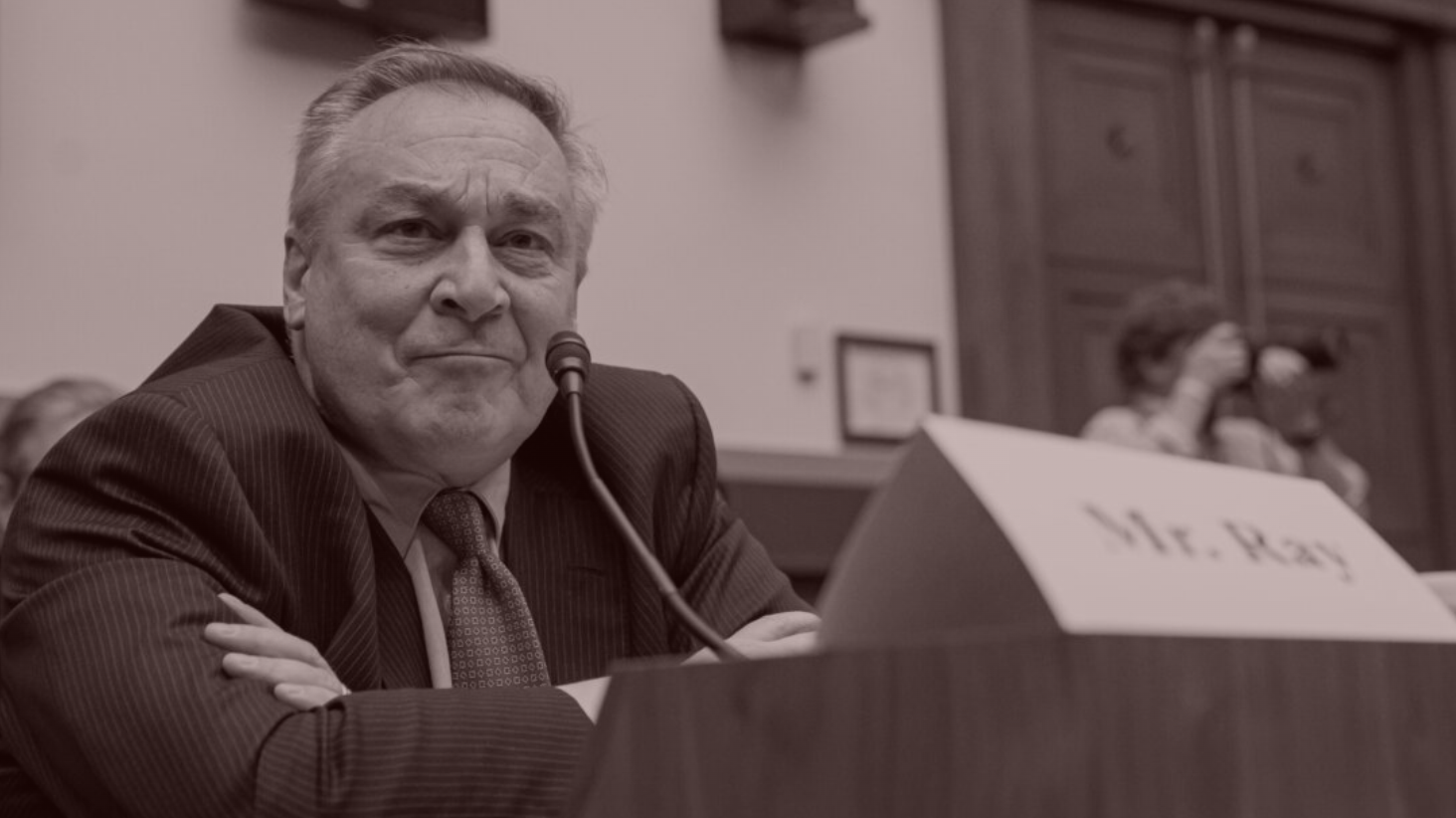
Ray, of course, is FTX’s C.E.O., having replaced S.B.F. at the time of the bankruptcy filing last November. In his latest report, titled The Commingling and Misuse of Customer Deposits at FTX.com, Ray lays blame squarely at the feet of both S.B.F. and the company’s former principal internal attorney, Daniel Friedberg, whom FTX is now suing for fraud. Ray’s report claims that some $8.7 billion of cash and stablecoins that customers deposited were “misappropriated.” He writes that the “image” that FTX and S.B.F. “sought to portray” as the “customer-focused leader of the digital age” was a “mirage.” And here’s the money shot: From its “inception,” Ray alleges, FTX “commingled customer deposits and corporate funds, and misused them with abandon.” (S.B.F. has maintained his innocence.)
Ray writes that S.B.F. and other top FTX executives used their customers’ money for “speculative trading, venture investments and the purchase of luxury properties,” in the Bahamas, as well as for charitable and political donations “designed to enhance their own power and influence.” According to Ray, the commingling and the misuse of funds did not happen by accident, or mistake. “Commingling and misuse occurred at their direction, and by their design,” he writes. This, of course, is what the government will have to try to prove at S.B.F.’s trial. |
|
|
| Ray spends a fair amount of energy underscoring S.B.F.’s alleged hypocrisy. In fact, he seems incredulous about the apparently false sanctimony of S.B.F.’s public claims—to Congress, on Twitter, in interviews—that FTX separated and protected customer assets, and that it professed to be alone among crypto companies in caring, first and foremost, about its customers. Ray pointed to S.B.F.’s February 9, 2022 testimony to a U.S. Senate subcommittee, where he laid out for the senators how FTX would be protecting its customers, including by “maintaining adequate liquid resources to ensure the platform can return the customer’s assets upon request,” and the publication of FTX’s “key principles,” which were supposedly also designed to protect customer’s assets.
And then there were S.B.F.’s Twitter pronouncements: On August 9, 2021, he tweeted, “as always, our users’ funds and safety come first. We will always allow withdrawals…” On June 22, 2022, he tweeted, “Backstopping customer assets should always be primary. Everything else is secondary.” And then, four days before FTX filed for bankruptcy, he tweeted, “We have a long history of safeguarding client assets, and that remains true today.” As Ray noted, that tweet has since been deleted from S.B.F.’s Twitter account; none of it, according to Ray, was true.
Ray’s report also makes it clear that S.B.F. knew that he was pulling a fast one when he set up FTX’s banking relationships in the U.S. “Especially in 2017, if you named your company like ‘We Do Cryptocurrency Bitcoin Arbitrage Multinational Stuff,’ no one’s going to give you a bank account,” S.B.F. said in a June 2021 interview, cited in Ray’s report. “. . .[T]hey’re just going to be like . . . we’ve been warned about companies with this name. You know, you’re going to have to go through the enhanced [due diligence] process. And I don’t want to bother with that right now; it’s almost lunchtime. . . . But everyone wants to serve a research institute.”
According to Ray, S.B.F. used his hedge fund Alameda Research’s banking relationships—“everyone wants to serve a research institute”—and funneled money sent to FTX through to Alameda “to evade bank restrictions,” he writes. He adds that “...The FTX Group made no meaningful distinction between customer funds and Alameda funds” and FTX used Alameda’s “existing bank accounts to receive customer deposits and fund customer withdrawals for the FTX.com exchange.” In 2020 alone, Ray alleges, he found that one Alameda bank account received $250 million from FTX customers directly, another $250 million from Alameda’s trading counterparties, and another $4 billion from other Alameda accounts, funded in part from customer accounts.
When one of Alameda’s banks questioned FTX executives about Alameda’s wiring activities, and then started rejecting some of those wires because of references to FTX, the crypto exchange, “[r]ather than tell the truth to the bank—i.e. that it not only intended to, but had in fact been using the Alameda account for FTX.com customer transactions for nearly a year—the FTX Group lied,” Ray alleges in the report. “Specifically, at the direction of a senior FTX Group executive, an Alameda employee falsely responded that ‘customers occasionally confuse FTX and Alameda’ but that ‘all incoming/outgoing wires are to settle trades with Alameda Research.’” |
|
|
| Ray notes that despite S.B.F.’s public demeanor as a pro-crypto regulation evangelist, he appeared to be an active corner-cutter. When it looked like Hong Kong, where he and FTX were based, was going to regulate crypto in an unfavorable way, he picked up and moved his company to the Bahamas, a country “in which they faced less regulatory risk,” Ray writes. He further alleges that, in July 2021, former FTX attorney Daniel Friedberg offered a Bahamian lawyer, who was a former government official, a $1 million “bonus” to obtain a needed “business license” for FTX in 10 weeks. “The attorney obtained the license less than six weeks later,” Ray writes.
Ray also alleges that Friedberg “actively facilitated and covered up” the commingling of customer and corporate funds, and allowed “false information to be conveyed to customers, banks, auditors, investors and other third parties.” Ray cites one example of how Friedberg fired an attorney who worked for him—after only three months on the job—because he started asking questions about the commingling of funds between FTX.com and Alameda. “The attorney began asking questions about this practice, as he understood that Alameda was a proprietary trading firm that was not involved in handling exchange customer funds, and that it did not have a license to act as a money services business,” Ray writes.
Friedberg summoned the junior attorney to a meeting with him on a Saturday. At the meeting, Ray alleges, Friedberg fired the attorney. “The attorney confronted [Friedberg] about the serious operational and control deficiencies he had identified in his short time at the FTX Group,” Ray writes. “The attorney also expressed disbelief that [Friedberg] had never told him that Alameda had issues with respect to acting as an unlicensed money services business. [Friedberg] provided no substantive response to any of these points.” The terminated attorney later emailed Friedberg to say he “was still reeling from being summarily fired on Saturday after raising the concerns we discussed.” He urged Friedberg to come clean, “to tell the whole truth,” and to contact an outside law firm to conduct a thorough investigation of the improper relationships between FTX and Alameda. “There is no evidence that [Friedberg] raised these matters with anyone outside the FTX Group,” Ray writes.
Ray also alleges that Friedberg and S.B.F. created “sham agreements” that “purported to legitimize certain improper transfers” and facilitated the commingling of funds between FTX and Alameda. Between January and April 2021, Friedberg allegedly “drafted and backdated”—by two years—a “sham intercompany agreement” to give to an external auditor hired to prepare an audited financial statement of FTX Trading Ltd. in connection with the filing of an I.P.O. registration statement. Friedberg also allegedly asked an outside law firm to prepare a “cash management agreement” that would explain why Alameda was holding FTX cash “for the benefit of FTX customers” and that the agreement would state that FTX “gets first dibs on Alameda’s cash.” But, Ray alleges, Friedberg knew that Alameda “never transferred and had no intention of transferring customer deposits to FTX ‘as quickly as commercially possible,’ or in fact, at all.” The outside auditor prepared an audited financial statement of FTX Trading that “inaccurately and misleadingly characterized” FTX’s relationship with Alameda, Ray wrote.
Although the I.P.O. of FTX Trading never occurred, S.B.F. and other FTX executives used the “false and misleading” audited financial statements in January 2022—a few weeks after I interviewed S.B.F. for my upcoming crypto documentary—with potential investors to raise $400 million in Series C financing, at a $32 billion valuation, a financing that made S.B.F. the richest person in the world under 30 years old.
For his part, Friedberg could not be reached for comment. But “a person close to Friedberg ” told the Wall Street Journal that the lawyer is cooperating with authorities investigating FTX, and did not know about the commingling of funds between Alameda and FTX. This person also asserted that the payment of $1 million to the attorney in the Bahamas was for his aboveboard work getting the license, and that while he did fire the relatively new FTX attorney, it was not because he was a whistleblower but rather for other reasons. |
|
|
| Ray’s report also mines S.B.F.’s multi-million-dollar political and charitable donations, as well as his venture capital investments and his real-estate investments in the Bahamas—all allegedly made with money siphoned off from FTX to Alameda. Ray notes that S.B.F. and his other senior executives took “loans” from FTX, which weren’t paid back, and used them to make more than $100 million in political donations. More than $20 million went from FTX to Guardians Against Pandemics, which was founded and operated by his brother, Gabe, and another $300,000 went from S.B.F.’s FTX Foundation to a writer for “a book about how to figure out what humans’ utility function is (are).” Ray also shares the example of how S.B.F. used commingled funds to make investments totaling $475 million in Modulo Capital, a cryptocurrency hedge fund started by two of S.B.F.’s “associates.” (In May 2023, Modulo returned $407 million of the money to the FTX estate and relinquished claims on another $56 million of assets held on the FTX exchange.)
And then there was the real estate spree in the Bahamas. According to Ray, S.B.F. and FTX spent more than $243 million on real estate in and around Nassau. In sum, S.B.F. bought some 29 residential properties in the Bahamas and another six or so commercial properties, including the $30 million, six-bedroom, 11,500-square foot apartment in the Albany, a luxurious apartment building in Nassau where the FTX senior executives lived together. It was known as the Orchid Penthouse.
Obviously, Ray is not a prosecutor. He is the C.E.O. of a bankrupt estate trying to recover as many assets as he possibly can to provide some sort of modest recovery for FTX customers and creditors. He appears to be working hard to do that, although such work does not come cheaply, as the various expense reports of the professionals involved in the bankruptcy make clear. (I suspect, meanwhile, that the investors in FTX—the various hedge funds and venture capital firms that fell hard for S.B.F.—are out of luck in terms of recovery and will write their investment down to zero, if they haven’t already.) I have to assume, also, that Ray’s detailed reports—two so far—are not going unnoticed, or unread, by the Securities and Exchange Commission or the prosecutors in the Southern District of New York and will no doubt inform the case the federal prosecutors are going to make against S.B.F. at his October trial, assuming that still happens. Ray’s work, in many ways, seems almost designed to become part of their playbook. |
|
|
|
| FOUR STORIES WE’RE TALKING ABOUT |
 |
| History Boys |
| On an unsanctioned act of “diplomacy.” |
| JULIA IOFFE |
|
 |
|
 |
| Kering vs. LVMH |
| The battle for mindshare in the era of big luxury. |
| LAUREN SHERMAN |
|
 |
|
|
|
|
|
 |
|
|
|
Need help? Review our FAQs
page or contact
us for assistance. For brand partnerships, email ads@puck.news.
|
|
You received this email because you signed up to receive emails from Puck, or as part of your Puck account associated with . To stop receiving this newsletter and/or manage all your email preferences, click here.
|
|
Puck is published by Heat Media LLC. 227 W 17th St New York, NY 10011.
|
|
|
|