 |
|
Welcome back to The Stratosphere.
|
|
Greetings from Washington, where I’m shuttling over to the Kimpton for the Gala for American Statecraft, being thrown by the well-connected Saurabh Sharma. The keynote speaker is none other than David Sacks, perhaps second only to Elon as the dominant personality in the backlash to Silicon Valley liberalism. It should be an interesting night.
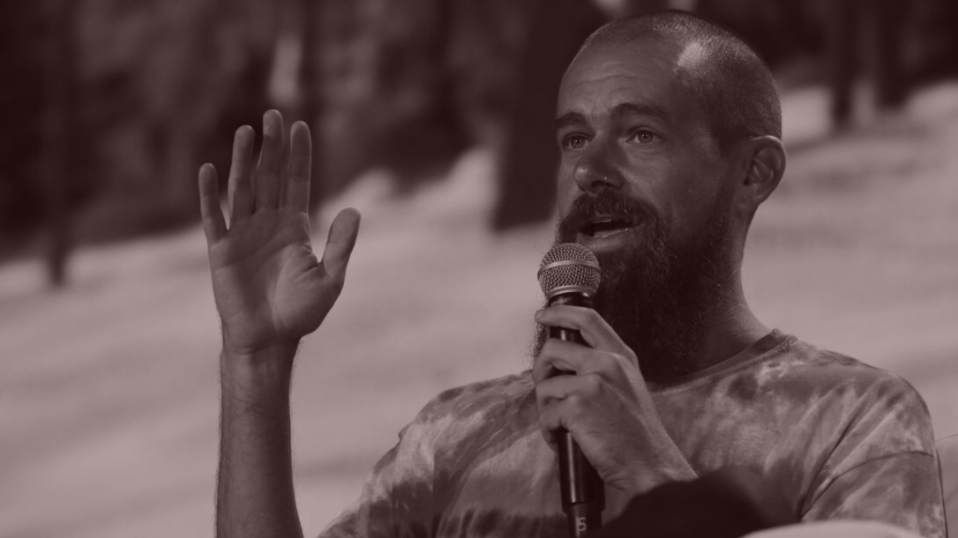
In today’s edition, a few scoops that pull back the curtain on the love lost between Jack Dorsey and Robert F. Kennedy Jr. Kennedy campaign allies believed they were on the cusp of landing a $5 million donation from Jack (in Bitcoin, natch). Then Dorsey, as he is wont to do, vanished. Was Jack to blame, or was it Jack’s board?
|
 |
| The Rise and Fall of Jack and Bobby |
| The bizarre and totally unsurprising story of how Jack Dorsey’s advocacy for Robert F. Kennedy Jr. unnerved some members of the Block board. |
|
|
|
| In the summer of 2023, Jack Dorsey was deathly bored, stupendously rich, and spending way too much time listening to podcasts featuring fringe presidential aspirant Robert F. Kennedy Jr. Dorsey, who had recently opted to keep his $1 billion stake in Elon Musk’s Twitter, was nominally the C.E.O. of Block, his payments company that he had renamed from Square as a way to explore his passion for Bitcoin. But his emerging enthusiasm was presidential politics—in particular, supporting a pro-crypto candidate like R.F.K. At one point, he planned to make a donation to Kennedy’s super PAC on the order of $5 million… in Bitcoin.
Jack’s support for such a controversial figure, after years of disinterest in campaigns, has alarmed people who have worked for him and ostensibly oversee him. “He’s very interested in politics, but he stays an arms length away from it,” said a person who has done political stuff alongside him. Historically, his personal interests have leaned more toward “wellness”—from intermittent fasts to the Myanmar silent meditation retreats to the morning cold plunges. People who know him don’t think he is anti-vax, per se, but Kennedy’s cultivation of the wellness community appeals to him.
Of course, the real political rabbit hole for Dorsey has been cryptocurrency, a cause that has attracted all manner of techno-libertarians and iconoclasts. Kennedy, sensing political opportunity, made an early pitch to the crypto zealots and has continued to make “decentralization” part of his campaign, including during his presentation to the California Libertarian Party convention. Last week, he hosted a fundraiser at a major ETH conference in Denver after delivering the keynote speech. And Jack, who appeared at Bitcoin Atlantis last week in Madeira, sporting a Satoshi T-shirt and a Nostr hat, is all about Bitcoin these days. He believes R.F.K. has legitimized it as a currency, and seems to feel an almost moral imperative to support the candidate.
Last summer, Jack and Bobby had a private lunch in California, I’m told. Around the same time, Dorsey also had multiple conversations over six weeks with representatives of a pro-Kennedy political action committee called Common Sense. Dorsey wanted to donate about $5 million to the group in Bitcoin to make a point about it being a legitimate currency. Alas, the group discovered that there were tax issues with accepting crypto, and so the idea was curtailed to just some of the money being donated on the blockchain. By early August, the group believed that they were within a day or two of getting the money. Attorneys were in touch. Wire instructions were shared. Stories were already beginning to get placed. And then Jack vanished.
That would have been welcome news at Block. The board of directors, composed of a dozen elder statesmen of finance, technology, and politics, didn’t share Dorsey’s enthusiasm, and his endorsement of R.F.K. even briefly came up at a board meeting that summer. Kennedy, several board members worried privately, was exactly the type of candidate—a raging vaccine-denier who once mused that Covid had been “ethnically targeted” to be less harmful to Jewish and Chinese people—that a public financial services company should have absolutely nothing to do with. And yet, there was Jack, tweeting incessantly about Kennedy, spending hours on podcasts with the likes of vaccine skeptic Russell Brand.
The foundation was laid for considerable boardroom agita, according to multiple sources on both sides. Jack, the controlling shareholder of Block, could essentially do whatever he wanted with the company, and felt he had a right to do so. The board, which includes heavy-hitters like Roelof Botha and Mary Meeker, has famously given Dorsey a long leash for almost 15 years, letting him run two public companies at once and even letting him acquire Tidal, the streaming service run by his friend Jay-Z (with whom he watched the Super Bowl the other week in the same Satoshi shirt). Jack was even able to get Jay on the board.
Soon, however, cracks began to appear in the boardroom. Over the next several months, the two board members with the strongest ties to the Democratic establishment—Larry Summers, the ubiquitous Harvard man and former Treasury secretary, and Darren Walker, the charismatic and just-as-ubiquitous head of the Ford Foundation—resigned before the conclusion of their terms. Their departures were for different reasons and had very different contexts, but it is also true that both were unnerved by what they were seeing that summer in Jack.
The departures of Summers and Walker over the last six months have been much-discussed in Block circles. Summers’ appointment to the board in 2011 was considered big news, at the time, and a sign of the company’s maturity. He was genuinely involved with Block, too—one person described him interviewing candidates for even mid-level jobs. But Summers, a leading critic of antisemitism in American life, was greatly concerned by Jack’s support of Kennedy, according to people he spoke with privately. He even caught some public flak, himself: When Summers was busy working to oust Claudine Gay, his successor at Harvard, for not taking a firm enough stand against antisemitism, the New York Post ran a blurb noting the alleged hypocrisy given Summers’ support for Jack, who in turn supported R.F.K. (Summers left in February—he was no doubt tired from 13 years of service on the board, and his departure came just after he joined the board of OpenAI.)
Walker, for his part, had been one of the more visible board members internally, especially among underrepresented people at the company. A hyper-connected man among the Wall Street elite, he had joined the board in 2020 precisely because he thought banking access for the poor was a worthy cause. Dorsey has alleged to others that Walker stepped down because of his support for R.F.K. There are plenty of reasons why someone might choose to leave a board, but it’s notable that Walker, a member of the powerful audit committee, didn’t even wait for the end of his term to step down after just three years. |
|
|
| Jack, seemingly interested in politics for the first time in his life, has spent the last year navigating these hairy dynamics—which, perhaps compared to the bizarre and machination-filled years of Early Twitter (the Ev reign, the Bill Campbell of it all) might seem quaint. And Dorsey may have even learned a few lessons about board management from his youthful days. In the end, he never made any contribution to R.F.K. Instead, Dorsey has told people that he felt he was on thin ice with the board, and had to suppress his political ambitions in the spirit of public company politics and bipartisan bonhomie. (Dorsey didn’t return requests for comments this week. A company spokesperson declined to comment on behalf of the board.)
Of course, the Block board wasn’t the only corpus embarrassed by Dorsey’s political awakening. As I reported last summer, Jack was facing precisely the same pressure from his employees. At an all-hands meeting that June, he was asked by a skeptical employee whether Kennedy was “in line with Block’s mission of economic empowerment” and how Dorsey could “reconcile that against his track record of conspiracy theories.”
Dorsey responded: “I’m not sure what he’ll do for the country that’s in line with our own mission of economic empowerment,” chewing it over as if he had been asked the question for the first time. “I’ve spent a lot of time listening to all the candidates and on podcasts and what they’ve written and what they’ve shared in a number of Q&As. And the thing I’ve been most impressed with R.F.K. Jr. is how strong he is against regulatory capture and industry’s ability to guide regulators.”
But it was the second part of his answer that raised eyebrows internally. “As it pertains to conspiracy theories, I don’t know,” Dorsey said during the meeting. “I haven’t paid a lot of attention to that part. I’m more concerned with the policies and the ideas and the fight that someone brings to actually change things. And I’m cautiously optimistic, especially relative to all other candidates that we’ve seen, which is kind of a super unfortunate, weak field at the moment.” Ever since then, I’m told, Block employees have been somewhat on edge, checking dutifully every time there are new F.E.C. filings to see whether Jack had finally pulled the trigger on some harebrained donation that they’ll have to defend to their progressive colleagues.
Dorsey seems wary, too. He not only held off on giving money to R.F.K. but also cooled his social media fervor for the candidate on X, where he rarely posts nowadays, and also on Nostr, his decentralized social media platform of choice, where he posts about Kennedy only occasionally. Most importantly, Jack currently isn’t giving interviews—not to Brand, not to Breaking Points host Saagar Enjeti, and not to me—about R.F.K. “He was all about it four months ago. Almost in a manic way. And has totally gone quiet about it in recent times,” said one Block insider who has hoped that Jack would let it go. A donation to Bobby, this person added, has “been an internal worry for a long time.”
Some people close to the company credit the board for having curtailed this activity. But it’s also true that Jack has other things on his mind these days. The Block stock, which skyrocketed during Covid, has fallen dramatically over the past few years, and is now trading at the same level as it was in 2019. Block is also facing potential legal action from multiple government agencies following whistleblower allegations regarding Block’s Cash App. (Regulators are probing whether a lack of due diligence may have left the door open to terrorism funding and money laundering, among other things.) The company recently laid off 10 percent of its workforce, or about 1,000 employees. Jack, a famously hands-off C.E.O., has promised to return to day-to-day management as part of an attempt to right the ship. He also recently lost his brother.
But with his board down to 10 members, Jack also has fewer people to tell him no. And the Kennedy campaign—actively soliciting money from “heterodox” tech billionaires, especially now that it’s clear we’re headed for a Trump vs. Biden rematch—could be persuasive. Dorsey would be an incredible white whale for the R.F.K. operation, especially after the exit of Sheila Creal, the campaign’s finance director. But they also need a strategy to woo other Dorseys. After all, if they can’t get Jack to donate, can they get anyone? |
|
|
|
| FOUR STORIES WE’RE TALKING ABOUT |
|
|
|
|
|
 |
|
|
|
Need help? Review our FAQs
page or contact
us for assistance. For brand partnerships, email ads@puck.news.
|
|
You received this email because you signed up to receive emails from Puck, or as part of your Puck account associated with . To stop receiving this newsletter and/or manage all your email preferences, click here.
|
|
Puck is published by Heat Media LLC. 227 W 17th St New York, NY 10011.
|
|
|
|