 |
|
Hey there, Teddy here.
|
|
Thanks as always for following and supporting Puck. If you have a friend who would like to be added to this list, they can sign up here and they’ll receive the next edition.
Also, one of my new colleagues here at Puck, Eriq Gardner, has a new private email list for folks who want the backstory on America’s legal system. For folks who are in Silicon Valley, you’ll enjoy his first edition centered on the legal imbroglios that Elon Musk seems to always find himself in. Sign up here—his writing is free for the first few weeks.
A new column comes your way below the fold, but first, a few pieces of candy from around town:
- San Francisco venture capitalist and Democratic power broker Ron Conway is officially supporting the recall of the city’s progressive D.A., Chesa Boudin, according to a confidential email he sent to associates a few months back that was passed my way. “Like me, I know you have deeply lamented the direction of San Francisco, from crime, to the conditions of the streets, to the deteriorating situation with the City's public schools,” he wrote around the holidays, an email first reported by the Chronicle. “Chesa Boudin's failure as District Attorney has made San Francisco a more dangerous place to live and work.” Conway’s attention is no longer as squared on local issues as it was a decade ago, but he remains a powerful voice for a tech community that often looks to him for guidance. Conway is asking his network to support the recall and a super PAC, Neighbors for a Better San Francisco, that is spending big against Chesa.
- Second Gentleman Doug Emhoff is coming to the Bay Area for a pair of Democratic National Committee fundraisers, according to invites I’ve seen. The hosts for the April 21 events are a mix of old and new money. The billionaire Swig family is stewarding the festivities in San Francisco, while David Rusenko—the founder of Square-owned Weebly, and someone who is increasingly engaging in Democratic politics—and his wife have dibs across the bay in Larkspur.
- Peter Thiel and allied operatives are indeed helping to seed a new G.O.P. donor group called the Rockbridge Network, as first reported by the Times. But I’d caution that, from folks I talk with, this is still a pretty nascent, aspirational effort—plus, a $30 million fundraising goal is relatively small, all things considered. This ain’t the Koch network, at least not yet. Meanwhile, time is running out for some of the Republican candidates Thiel has sponsored—the Senate primary for J.D. Vance in Ohio is in just three weeks, and Vance remains mired in the middle of the pack. Does he have another Thiel check coming?
- Speaking of big political money, readers know I am obsessed with the political machinations of Sam Bankman-Fried, the trenta-billionaire crypto king who is remaking Democratic and pandemic politics in his image. A first test—can he buy a congressional seat for a heretofore totally unknown, effective-altruist buddy? This story may not be on your radar, but the super PAC run by one of S.B.F.’s top political advisers (and funded heavily by S.B.F. himself) has spent a staggering $6 million on behalf of Carrick Flynn, an otherwise unknown newcomer running for Congress in Oregon. So much so that Democratic competitors are now going after S.B.F. by saying, among other things, “a tax-dodging billionaire in the Bahamas has no place in Oregon politics.” Welcome to primary politics, Sam!
|
| SPONSORED BY FACEBOOK |
 |
|
|
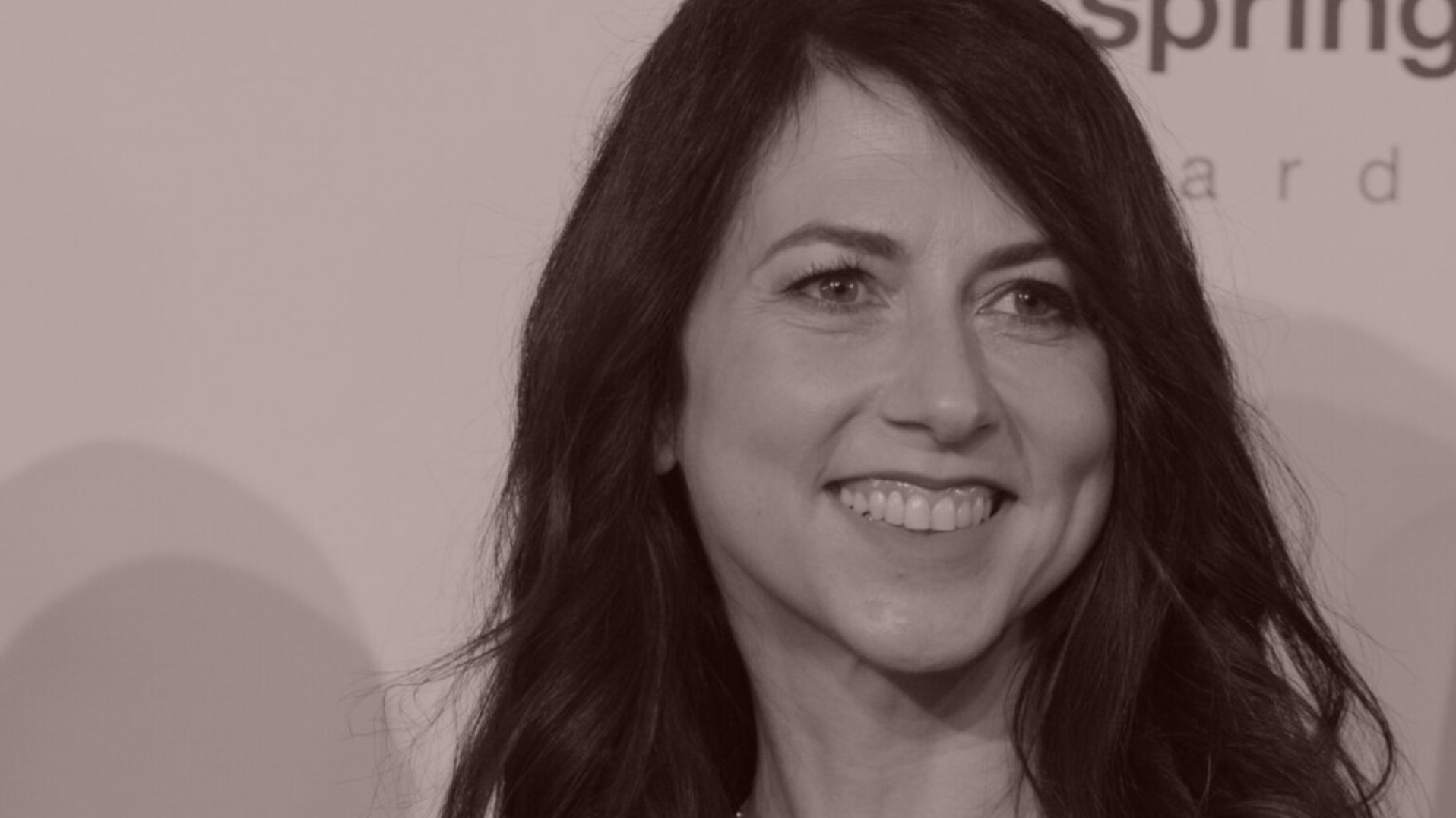 |
| The Right’s MacKenzie Scott Problem |
| After decades of G.O.P. dark-money supremacy, the arrival of liberal mega-billionaires like Scott and Zuckerberg is fueling a MAGA-inspired woke backlash that threatens the institution of philanthropy itself. |
|
|
|
Conservatives have traditionally had a fondness for the corporate elite, trusting in the likes of Jack Welch, Charles Koch, and the rest of the Reaganite overclass to govern the country’s affairs and steer civic life. Philanthropy, for generations, was core to that invisible hand, rooted in their widely held belief that Wall Street could better allocate America’s resources than Washington. The prevailing wisdom across the American right was to unshackle the mega-donor class, within reason—incentivizing them to send their billions to tax-exempt institutions, and allowing them to make larger political contributions, too, often without disclosure. Largely conservative institutions from neighborhood churches to Americans For Prosperity reaped the windfalls.
The arrival on the political scene of the likes of Reid Hoffman, Laurene Powell Jobs, Melinda French Gates, Mark Zuckerberg, and most recently, MacKenzie Scott, has changed the game. This crew, along with a dozen other liberal billionaires, have ideological instincts that skew more to the Democracy Alliance than the Chamber of Commerce. And they have established their own rival philanthropic program that in some ways outpaces the right. Conservatives may still love the rich in principle, but in practice they now believe that they are losing the money wars. Among the ten wealthiest people in America today, all but one made their fortune in Silicon Valley, and almost all of them are Democrats. For some on the right, this new cohort represents an almost existential threat: A financial-political-cultural cabal that melds do-gooder charity with D.E.I. activism to advance a pro-immigration, pro-gay rights, pro-woke political agenda under the guise of nonpartisanship.
That was the argument that was en vogue, anyway, during my visit last week to Orlando, where I circulated among the conservative money establishment at a conference hosted by the center-right consulting firm American Philanthropic. The get-together drew various luminaries of the compassionate-conservative set, with Ben Sasse delivering a party-line-toeing keynote about the importance of virtue and charity in small towns, close-knit families and churches and Rotary Clubs, et cetera. But beneath the surface, there was something else afoot—rumblings in conservative philanthropy of more elemental resentments toward the ruling class. The message: The aristocracy—left or right—is an oppressive regime that needs to be dethroned.
At one panel, former National Review publisher Jack Fowler asked if the right was “aiding and abetting” the liberal destruction of America by prioritizing the freedom of donors above all else—after all, it is liberal donors who are expressing a hell of a lot of freedom these days. Longtime conservative leader Heather Higgins, an activist on the boards of several establishment G.O.P. nonprofits, questioned whether there should be so-called perpetual foundations that exist after the death of their benefactor—a bedrock belief of the American right for decades—because those foundations give long-ago dead people too much power. If Anand Giridharadas showed up and started proselytizing for a wealth tax to a rapturous ovation, I would not have batted an eye.
|
| ADVERTISEMENT |
 |
Privacy Checkup helps you stay informed and empowered on Facebook
We want privacy to be as easy as possible for you. That's why we built the Privacy Checkup, so you can:
- Strengthen your account security
- Learn about your privacy settings and how your information is used
- Control who sees what you post
Learn more about our safety efforts. |
|
|
This sort of sentiment is familiar on the left, if you’re the sort of person who subscribes to Anand’s Substack or Elizabeth Warren’s Twitter feed. But it is still fresh on the right, where there is now a growing group of conservatives who don’t want to expand the role of charity at all, but rather to defang it, depoliticize it, and defund it. Some conservative activists I spoke with at the event described themselves as practically relieved to finally talk candidly about philanthropy as a government subsidy.
Yes, these arguments have become increasingly self-serving, now that Democrats have learned to beat Republicans at their own dark-money games. But the backlash is now in the conservative zeitgeist. I first took note of it last fall when J.D. Vance, the Hillbilly Elegy author and venture capitalist turned populist Senate candidate, began speaking vociferously about unwinding legal protections for cherished nonprofit institutions. “Foundations operate as tax shelters for the ultra wealthy,” Vance wrote in Newsweek. “It is against this backdrop that I proposed we tax the assets of these foundations, and shrink their size over time. Most fundamentally, it's the fair thing to do. It's preposterous that my middle-class aunt pays a higher tax rate than the $41 billion Harvard endowment.” The rhetoric has become a common refrain for Tucker Carlson, too—going after privileged kids and their Ivy League endowments is too easy.
To say that this heterodox critique is dominant in the conservative intelligentsia isn’t quite right. But it is certainly surging, especially after Zuckerberg and Priscilla Chan spent hundreds of millions of dollars during the 2020 election to bolster pandemic-hit election offices—a personal philanthropic effort that Republicans believe had the effect of turning out more Democratic voters. Several G.O.P. governors have since signed laws forbidding “ZuckerBucks”-style private financing of election administration; just last week, Trump allies premiered a new movie on the subject at Mar-a-Lago. Lawmakers like Lindsey Graham have expanded their target list to inveigh against Arabella Advisors, a philanthropy consultancy that the right sees as the hidden hand behind the Democrats’ dark-money machine. Even the conspiracy theories about Bill Gates implanting microchips via Covid vaccines are rooted in a new language on the right about philanthropists’ disproportionate power.
Nobody made the last point, of course, in Orlando. But there was a similar fear that Republican policies promoting wealth inequality, private philanthropy, and money-as-speech, have been perverted by the very people they hoped to put down. Conservatives are beginning to wonder whether, by being so maximally pro-donor, they might have dug their own political grave.
|
| ADVERTISEMENT |
 |
|
|
There are a few factors that help to explain this sea change, as my fellow attendees pointed out. Red-state America was shocked by the 2016 Wounded Warriors scandal, when news emerged that the celebrated veterans charity was something of a sham, and especially by the ZuckerBucks saga, which one leader at the conference told me made him “question the premise” of philanthropy to begin with. But there are three larger meta-themes in our culture that I want to highlight—none of which are going away anytime soon.
The most obvious change, of course, is the rise of post-Trumpian populism on the right, and a newfound skepticism of systems that protect and uplift the ultra-rich. The question of whether these billionaires should be some kind of protected class mirrors the fissures in Republican circles over MAGA economics. Yes, many conservatives are coming at this debate from a cultural, not a class war, perspective. But the result is largely the same: An end to the love affair between the Republican Party and Big Business. Elites everywhere are in the G.O.P. firing line, and mega-philanthropy is an elite outgrowth of the whole rotten system.
The second explanation, as you’d expect to hear at a conservative conference, is “wokeness.” There have always been progressive foundations and liberal billionaires like George Soros and Peter Lewis, but today’s Democratic mega-donors are increasingly unsatisfied with funding anti-hunger programs—they want to elect mayors; they don’t want to launch after-school programs—and they want to reimagine American education. Their political aspirations are often cloaked in the language of “philanthropy,” making a mockery of a tax code that is supposed to distinguish between do-gooder charity work and straight-up political advocacy.
Meanwhile, America’s most valuable corporations (and their urban, highly educated employees) have moved leftward, too. To defend philanthropy in this context, conservatives feel, is also to defend MacKenzie Scott’s social-justice crusades, Reid Hoffman’s anti-Trump television ads and the entire Disney-Apple-JPMorgan “woke” agenda. How could the right defend their benefactors without defending the left’s?
Finally, as several people pointed out to me, there are simply the absolutely astonishing sums that these liberal billionaires have accumulated, allowing the Silicon Valley class to spend so much more than they could have decades ago. This is not the 1980s anymore—the Democrats have their own mega-donors who are not afraid of partisan warfare and know how to run a dark-money group, or to push ideological news, or to run a tax-exempt “voter-education” drive.
I’m not sure where all of this ends, but I suspect this is just the beginning. There were rumblings in Orlando about whether conservatives should fight to strip away the charitable deduction for mega-donors, the sort of move that would divide a G.O.P. establishment that still worships Grover Norquist. Not even Warren or A.O.C. are talking about that. But every aspect of American life has become part of some ugly culture war over the last five years, and so it should be no surprise that now even charity—charity!—has become another flashpoint in the right’s post-Trump battle back to political power.
|
|
|
|
| FOUR STORIES WE'RE TALKING ABOUT |
 |
| The Depp-Heard Saga |
| One of the ugliest defamation battles in Hollywood history goes to trial this week, live on TV. What does Johnny Depp have left to lose? |
| MATTHEW BELLONI |
|
 |
| Life and Death in Kyiv |
| The atrocities in Bucha sent the world reeling. For Zelensky’s inner circle, it's led to a powerful new conviction. |
| JULIA IOFFE |
|
 |
| HBO's Dirty Secret |
| Parrot Analytics' Julia Alexander breaks down HBO's streaming success with Peter. Plus, Puck's Teddy Schleifer on Mackenzie Scott. |
| PETER HAMBY |
|
 |
| O'Donnell's CBS Deal |
| After plenty of rumors to the contrary, Norah O’Donnell is staying home, and set up to finally become the Peter Jennings of CBS. |
| DYLAN BYERS |
|
|
|

|
|
|
You received this message because you signed up to receive emails from Puck.
Was this email forwarded to you?
Sign up for Puck here
Sent to
{{customer.email}}
Unsubscribe
Interested in exploring our newsletter offerings?
Manage your preferences
.
Puck is published by Heat Media LLC.
64 Bank Street
New York, NY 10014
For support, just reply to this e-mail.
For brand partnerships, email ads@puck.news |
|
|