 |
|
Hello, and welcome back to The Best & the Brightest, your daily Washington newsletter from Tara Palmeri, Tina Nguyen, and myself. We will also occasionally feature a dispatch from our very own Peter Hamby, who also hosts our daily podcast, The Powers That Be. You can listen to it here, and you can subscribe to TBTB here—but you’ve already done that, right?
One quick programming note. Yesterday’s email inadvertently included the subject line from a previous send. If you didn’t read Tara’s fantastic piece on Jeff Zients, the court politics of the Bob Bauer-Anita Dunn marriage, and other Bidenworld kremlinology, please do so here.
|
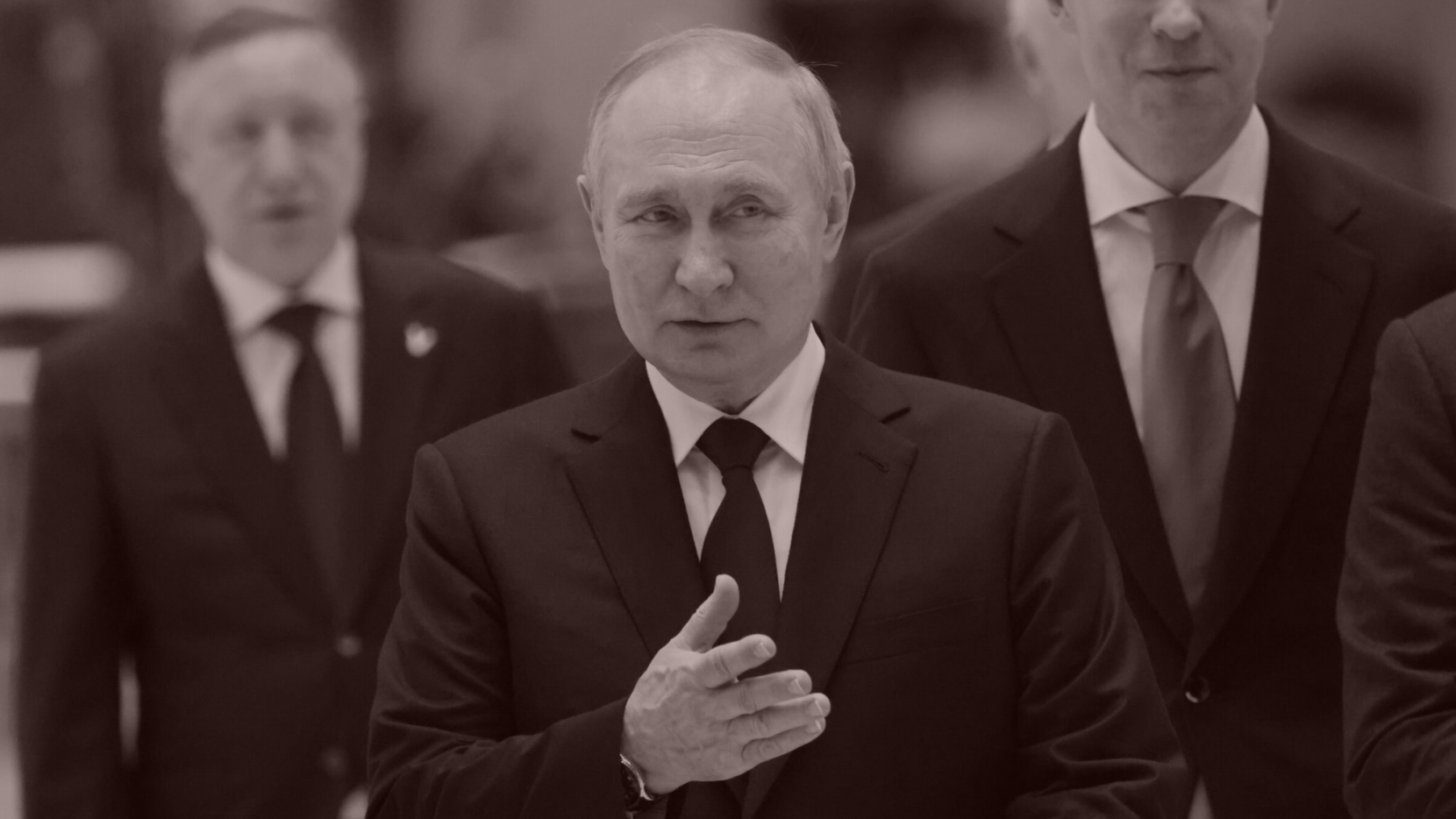 |
| The Putin Super Power Myth |
| Putin destroyed in a year an energy business that took three generations to build. As it turns out, Russia needed Europe far more than Europe needed Russia. |
|
|
|
| Last November, Russia put out an ad, one of many media-trolling fantasies, that depicted the struggles of a young British woman, trying to scrape together enough electricity in her freezing home in the freezing British countryside to power her phone long enough to go on a dating app and meet a Russian man, cozy in his warm flat in Moscow, heated and lit by Russian gas. When she finally manages to get there—apparently, she had a far easier time getting a visa than I ever did—she finds a toasty apartment crowded with other European women, all there for this Russian man and his access to Russian energy.
It was the Kremlin’s prophecy of what they were sure the winter of 2023 would bring to Europe: a brutal reckoning for their support of Ukraine and betrayal of their energy overlord, Russia.
It turned out, it was mostly hubris. A warm winter, low energy prices, and Europe’s rapid turn away from Russian energy have revealed that the balance of power wasn’t quite as durable as the Kremlin had predicted. Moreover, the now nearly two-month G7 and E.U. price cap on seaborne exports of Russian oil has produced surprising results, further cutting into the Kremlin’s energy dominance of the West. (To recap: It was a measure designed by the Biden administration to simultaneously incentivize Russia, one of the world’s largest oil producers, to both keep pumping oil so as to not create an energy crisis at a moment when the world was in an inflationary spiral all while preventing the Kremlin from manipulating prices to fund its ruthless invasion of Ukraine.)
When the policy was first floated, late last spring, it seemed internally contradictory: why would a country cooperate with a scheme like this, producing oil at prices that were designed to keep it from profiting off of what is under its soil? Moreover, how would such a price cap even be enforced? And who would enforce it? And what would the price cap be?
Well, after much negotiation and haggling—the price cap was set at $60 per barrel for Russia’s unique Urals crude—the measure was rolled out on December 5. The mechanism was that companies from G7 or E.U. countries (plus Australia) were forbidden from providing services—like insurance, say, or marketing, or logistics—to any entity selling Russian crude or oil from a Russian tanker, or from one leaving a Russian port, unless they abide by the price cap.
Vladimir Putin immediately slammed the measure, saying that Russia would never sell to any country or company that cooperated. But given the sheer economic magnitude of the G7 plus the E.U., and the vagueness of the punishment, as well as falling energy prices this winter, the price cap has so far been successful, largely to everyone’s surprise. “It’s worked much better than would have been expected,” Daniel Yergin, the world’s preeminent expert on Russian oil and author of The New Map: Energy, Climate, and the Clash of Nations, told me. “What was originally a topic for an economics graduate seminar has turned into a rather clever piece of statecraft.” |
| “There Were Some Shenanigans” |
|
| How is it working? For starters, it’s worth noting that the price for Brent, which is the ubiquitous, standard crude, and the price for Urals, the type of crude coming out of Russia, never differed all that much in the Before Times. The difference, or spread, was usually something like $3 to $4. But after Putin decided to invade Ukraine and the West slapped Russia with some pretty forceful sanctions, Russian oil became a far more risky commodity to trade. There were reports of it selling for a steep discount and, if you play around with this graph, you can see the massive divergence in price between Brent and Urals open up on February 21, 2022, three days before Russian tanks rolled over the border.
The price cap had the effect of institutionalizing the spread in order to cut Russia off from its economic lifeline. Russia, after all, pegs its annual federal budget to a price per barrel. (More on that in a bit.) At this writing, Brent is selling for about $86 per barrel, while Urals is selling beneath the price cap, though, according to Yergin, it’s been fluctuating around the high thirties to low forties—we think.
The problem is that, before the war and before the price cap, the price of Urals crude, which was sold in such a narrow contracts market, was determined by a couple of agencies, like Platz or Argus Petroleum, who called buyers and sellers and asked them the price. “In normal times it was fine,” said one analyst with a leading investment bank who’s been covering Russia for years. “There were some shenanigans and some people trying to increase the price, but, overall, the system worked. But now that you have a price cap, you have absolutely no incentive for the buyer or seller to give the real price. The buyer doesn’t want to become part of sanctions. The seller is keen to report a lower price so he can keep some proceeds offshore and pay lower taxes to the Kremlin.” The analyst went on: “When you read that Urals is selling for $40 a barrel, I would suspect the real price is higher and the difference is kept somewhere offshore. But the bottom line is we have no idea what the real price of the Urals contracts is.”
Still, both because of the price cap and the lower oil prices caused by a global recession, the discount on Russian crude is real. By the Kremlin’s own estimates, it has fluctuated between 24 and 38 percent in the first few weeks of the price cap’s introduction. In part that is because Europe, Russia’s biggest market, is no longer buying any Russian seaborne oil. (Pipeline oil, which is how much of eastern Europe gets its oil, is still exempt.) According to Bloomberg, which has been following these developments closely, there are now, really, only three main purchasers of Russian seaborne crude: Turkey, China, and India. “There are not that many places where Russia can sell its crude anymore,” Yergin told me. “It’s made people more cautious in dealing with Russian oil. There’s enough ambiguity about violating the price cap, that people will continue being very cautious.”
Russia has tried to get around various sanctions by amassing a shadow fleet of 200 or so ships, but that’s still not enough to cover all the oil it used to export. To do that, Russia would need three to four years to build enough ships to carry all its oil, and that’s if money were no object. But, of course, it is an issue, largely on account of decreasing oil revenues and higher wartime spending. Moreover, ships going from Russia to Europe is one thing. Ships going from Russia to China or India is a whole other thing, and the distance adds cost and allows the buyer to ask for an even bigger discount. “It’s now distressed oil,” said Yergin. |
|
|
| For 2023, Russia has pegged its budget to Urals selling at $70 per barrel, $10 above the price cap, and far above what it has been selling for in the last two months. This has been cutting into the Kremlin’s revenues, which in part draws on taxing oil exports (though it is moving away from taxing production in 2023).
By one estimate, tax revenues on oil and gas production in December 2022 fell by 41 percent, year over year. (Revenues from oil exports in that same period fell by a third.) According to another report, the Russian government is losing 160 million euros per day because of the price cap. (According to this same report, Russia will lose another 120 million euros a day when the European embargo on refined Russian petroleum products, like diesel, goes into effect on February 5.) Some watchers, as well as the more hawkish members of the European alliance, argue that the price cap is too high to truly bring down the Russian economy. “Nobody is really on their knees yet, on either side, because both sides are so tied to each other and to global energy markets,” says Alex Kliment, an analyst with the Eurasia Group. “Both sides are circling each other but unwilling to administer the death blow. Because the death blow to the other guy really hurts you, too.” Still, the price cap can be adjusted downwards now that it’s clear it works. For now, though, even the Kremlin has had to publicly acknowledge that, because of the cap, revenues from oil are down.
In the meantime, the costs to the Russian budget have never been higher. Russia is waging a massive and expensive land war all while increasing social subsidies to soldiers and their families, as well to people sinking into poverty as prices rise with Russia’s economic isolation. For the first time in a long time, Russia’s economy is running at a deficit. In 2022, the deficit was nearly $50 billion, or 2.3 percent of its G.D.P. In 2023, the Kremlin is planning on a similar deficit—and that’s if Urals stays at $70 and Russia hits its oil production targets, a very big if. Which is why even the Russian finance minister said he expects the 2023 deficit to be even bigger than expected. |
|
|
| Among the many massive miscalculations Putin made in the runup to his invasion of Ukraine—that the Ukrainians wouldn’t resist, that the West wouldn’t punish him, that the Biden administration was too weak—perhaps paramount was the notion that Europe would never survive a winter without Russian oil and gas. Russia, the message was, had Europe by the balls.
Yet, almost a year into the war, the energy stranglehold Russia thought it had on Europe is more of an awkward side-hug. After all, economies adapt. Before the war, Germany got nearly two-thirds of its gas from Russia and was getting ready to launch the Nord Stream II pipeline. Now, the country gets exactly zero percent of its gas from Russia. (And gas, points out Yergin, is far less fungible than oil. “You can’t put in a pipeline on a ship,” he explained. Next winter, Yergin speculated, when, unlike the fall of 2022, nobody will be putting Russian gas in storage, “Putin is going to be left with stranded gas.”)
Russia spent three generations building a business out of selling energy to Europe that Putin destroyed in a year. And it turned out that Russia needed Europe far more than Europe needed Russia. Putin believed that vast oil and gas fields gave Russia irrevocable superpower status, and that using it as a cudgel on his clients would never backfire. “He has certainly overplayed his hand,” said Yergin. “He went into this quite confident that Russia was an energy superpower and that this in and of itself gave it enormous political power. That was an overestimate. I think Russia will remain an energy supplier but it will never be an energy superpower again. It has lost its credibility as a supplier. People will never want to rely on Russia again. I think he squandered the geopolitical power that came from Russia’s energy position.”
Added Yergin, “People start wars and then they don’t turn out the way they thought they would.” |
|
|
| That’s all for tonight, friends. Stay tuned for tomorrow’s Best and the Brightest, featuring Tina. Until then, you know the drill.
Julia |
|
|
|
| FOUR STORIES WE’RE TALKING ABOUT |
 |
|
 |
|
 |
| FTX’s Pseudo-Revival |
| Notes on FTX’s bankruptcy drama, Goldman’s layoffs, and James Gorman’s succession plan. |
| WILLIAM D. COHAN |
|
 |
|
|
|

|
 |
|
|
|
Need help? Review our FAQs
page or contact
us for assistance. For brand partnerships, email ads@puck.news.
|
|
|
|
Puck is published by Heat Media LLC. 227 W 17th St New York, NY 10011.
|
|
|
|