 |
|
Hello, and welcome back to The Best & The Brightest, foreign policy edition. I hope you all enjoyed your Fourth of July holiday.
The last couple of days have brought a flurry of terrible news and just one hopeful nugget. On Monday, the young Ukrainian writer and poet Victoria Amelina died from the wounds she sustained when a Russian Iskander missile hit a packed pizzeria in the Ukrainian frontline town of Kramatorsk. Amelina, whose writing was wildly popular in Ukraine, had turned to documenting Russian war crimes after the full-scale Russian invasion. She had been in Kramatorsk with a delegation of writers from Colombia.
Then on Tuesday, Russian investigative journalist Elena Milashina was ambushed in Chechnya. The assailants shaved her head, doused her with brilliant green antiseptic dye, kicked and hit her with a baton, and broke her fingers after she refused to unlock her phone. At one point, she said, the men tried to cut off one of her fingers so that they could use the fingerprint to get into her iPhone. Luckily, Milashina, though very concussed, escaped with her fingers and her life intact. Amelina, who was just 37 and had a young child, was not so lucky.
There was, however, a glimmer of light from an unlikely source yesterday. Kremlin spokesman Dmitry Peskov said that the Kremlin and the White House had been in touch about a possible prisoner swap involving Wall Street Journal reporter Evan Gershkovich, who has been in prison in Moscow for some three months on bogus charges of espionage. Peskov made clear that the negotiations had to “continue in complete silence;” still, the fact that the Kremlin copped to any negotiations at all is perhaps a good sign. (Remember, for a while, the Kremlin didn’t even want to talk.)
Now let’s go back to last week’s Prigozhin putsch. But first…
|
| The Capitol Hill Cafeteria Report |
|
| An utterly indispensable, high-minded, and, yes, occasionally dishy readout of what our lawmakers are really legislating behind closed doors.
By Abby Livingston
- Better Off Ted: Rep. Colin Allred, a Dallas Democrat challenging Ted Cruz, raised an astonishing $6.2 million in his first partial quarter as a Senate candidate. Add the $2.4 million sitting in his old House campaign account, and Allred’s got some $8.6 million cash on hand. For context, Allred raised almost three times what Beto O’Rourke did at this point in the 2018 cycle—and Allred launched his campaign later in the quarter. The Cruz campaign, which has yet to release its numbers, had about $3.3 million in cash on hand at the end of March.
Republicans I talk to are generally calm about Cruz’s reelection chances: this is a presidential year, and operatives find it hard to imagine how Trump likely carries Texas but Cruz falls short. An observant G.O.P. fundraiser who is not involved in the race pointed out that part of Allred’s haul may be due to an increase in F.E.C. donation limits—the commission upped the threshold from $2,700 in 2018 to $3,300 this cycle. Even so, the operative seemed somewhat disturbed, texting, “But still.” Cruz’s last campaign filing showed an extremely high burn rate during his out-of-cycle years: He has raised $34 million over the last several years for his 2024 reelection and spent $31 million.
- Schiff’s Censure Bonus: Meanwhile, as just about everyone on the Hill predicted two weeks ago, Adam Schiff posted a similarly stunning quarter, raising $8.1 million. He can probably thank Republicans, who turned him into a martyr by voting to censure him on the House floor over his role as lead investigator in Trump’s first impeachment. This adds to Schiff’s $25 million war chest he had prior to this quarter. His two closest rivals in the California Senate primary were Katie Porter, who reported $9 million in cash on hand in March, and Barbara Lee, who reported about $1.1 million in cash on hand.
|
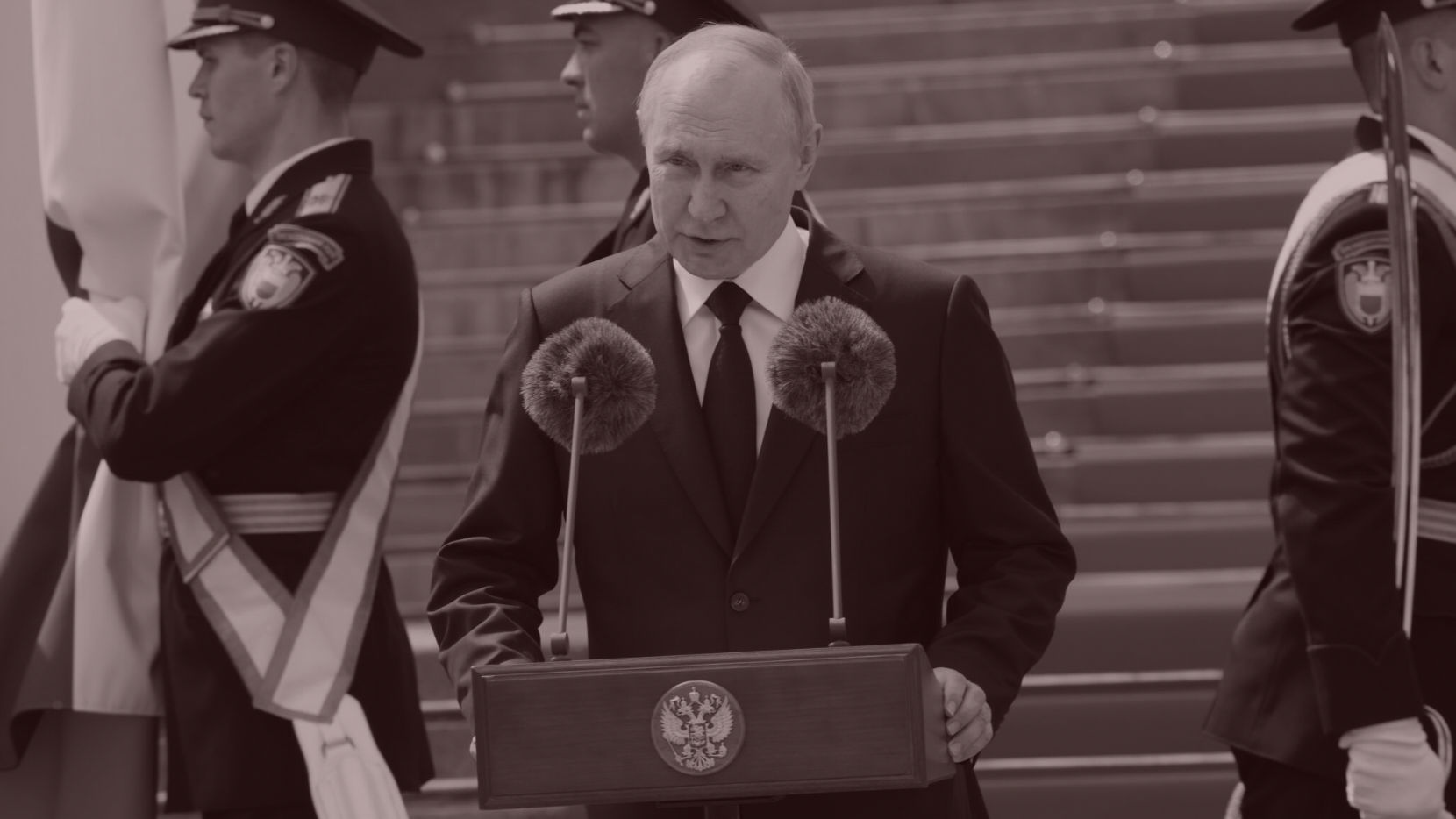 |
| Putin’s Post-Prigozhin Clean Up |
| Despite Western media assertions that the half-coup heard round the world was a sign of instability, my sources around Moscow and the Kremlin tell me that Putin is once again in full control. But questions linger about a future purge and missed warning signs. |
|
|
|
| It’s been a week and a half since Yevgeny Prigozhin rose up in mutiny and marched on the Russian capital, abruptly turned around, and, allegedly, retired to Belarus. Ever since, the Russian capital has been just fine, actually. “The parks are full, the restaurants are full,” one well-connected Moscow source told me, using the now universal Moscow shorthand for normalcy. “People look relaxed. I know five drones tried to attack Moscow, but I only found out from the news. Maybe if there had been significant losses and destruction it would’ve been different.” Then again, the source said, “What else can you expect from the enemy in times of war?”
Over the last couple of days, I spoke to a number of people in Moscow, members of the Russian elite who revolve around and depend on the Kremlin, to gauge what things were like in the capital a fortnight after the barbarians were convincingly headed for their very gates. They had all been a little rattled on the day of the attempted coup: The source above said the government had sent a handful of soldiers to guard their apartment building on June 24. “It was a big, dramatic event that could’ve had very serious consequences,” they said, “and many of us had to think about our own personal and emergent security. But it passed. It lasted literally a few hours.”
And then it was over. “Moscow feels totally calm,” a former Kremlin advisor said. “Yes, Dr. Frankenstein’s monster got a little out of control, but the people who created him know how to control him. I don’t see an existential threat. I just don’t.” In fact, Andrei Soldatov, who, along with his partner Irina Borogan, reports closely on the Russian security services, told me that from their conversations with sources inside the country, they have a clear sense that “Putin has regained control.” |
|
|
| It’s not quite that simple, of course. Beneath the calm surface, things are clearly happening. Sergey Surovikin, the general with whom Prigozhin apparently became close during Russia’s Syrian intervention, hasn’t been heard from since the mutiny. The New York Times, citing U.S. intelligence, wrote a few days after Prigozhin’s march toward Moscow that Surovikin had known about his plans in advance and perhaps did something to aid him. (This was, according to a former C.I.A. source, a possible leak to sow chaos in the Kremlin. “It would be malpractice not to,” they told me.)
Now, rumors are swirling about Surovikin’s whereabouts. Two people told me they’ve heard that he’s under house arrest, but couldn’t confirm it. Olga Romanova, who runs the NGO Russia Behind Bars, reported that a postcard her organization had sent to Moscow’s notorious Lefortovo prison, addressed to Surovikin, had been collected. “This is in no way proof that Surovikin was in Lefortovo this morning,” Romanova wrote on Tuesday, posting a photo of the electronic confirmation of the postcard’s receipt. “It is proof that a postcard in his name was taken from there.” The well-connected Moscow source told me they heard that Surovikin “is being investigated” but couldn’t confirm it. “But the idea that there are a lot of questions for Surovikin, that you can take as an established fact.”
After Putin publicly announced that Wagner was wholly funded by the Russian state, contradicting years of his own denials, Kremlin propaganda quickly picked up the new line, floating bigger and bigger amounts of money that Prigozhin’s Wagner took from government coffers. People in Moscow and Russia watchers believe this is a sign that the Kremlin is laying the groundwork for opening criminal financial cases against Prigozhin, should he again prove uncooperative. It also helps to provide an easy explanation for why Prigozhin’s businesses are steadily being expropriated.
And there is talk about where Prigozhin, wherever he is now, ends up. Belarus, after all, is not exactly a safe place to stay. Having turned the country into its satellite, the Kremlin could easily reach over the porous border and do what it wants with him. Apparently, the expectation in Moscow is that Prigozhin, to whom Putin seems genuinely grateful for his contributions on the battlefield, may be allowed to decamp to his outpost in the Central African Republic.
There is also talk in Moscow of a coming purge, of which Surovikin and his fired deputy are merely the first to fall. But people don’t seem to be too worried: few among the elites seem to think the bell is tolling for them. “The talk of purges is only about cleaning out the army, not the FSB,” Soldatov said. “But they’re the ones that failed. It’s not the army that is responsible for political stability inside Russia! That’s the FSO [Russia’s Secret Service that is also Putin’s praetorian guard] and Rosgvardia,” the Russian National Guard. “Where were they?”
According to Russian writer Mikhail Zygar, who is still in close touch with sources around the Kremlin, “there is a very elevated mood.” The expectation in Putin’s court is that any purge would go after those close to Prigozhin, and not them. “They’re expecting that some kind of fringe people will be cleaned out, those who had gathered too much weight in the Kremlin apparatus in the last year, people who weren’t one of theirs, the ones they thought were idiots and ghouls.”
“Maybe Prigozhin had some people who sympathized with him, but I haven’t met any,” one source close to the Kremlin told me. “He was a bloodthirsty freak. And he made money on some kind of relationship, not any kind of talent.” When I pointed out that this could be said of pretty much everyone close to Putin, the source demurred and tried a different tack. “Yes, there’s a lot of people like this in Moscow, but he started getting into a very particular and bloody business. Not all people who love money would be willing to touch this. Then when people started seeing him do really cruel things, then he lost even more sympathy.” |
|
|
| When Prigozhin’s men marched on Moscow, the source close to the Kremlin said, “no one thought Prigozhin had a chance.” Still, the source conceded, “it wasn’t very pleasant because you could see that no one would make any decisions. The ham-fistedness of the government made quite an impression. The level of management leaves much to be desired, to put it mildly.”
And even as the Kremlin propaganda machine is working overtime to make Putin appear firmly at the wheel, people close to him are asking questions about how, exactly, the situation with Prigozhin was allowed to spin so far out of control. “Everyone knows that this very easily could have not happened,” the source close to the Kremlin said of Prigozhin’s “mutiny,” now the favored term in Moscow. “It was all happening gradually, in front of everyone’s eyes. He made a monkey of the Defense Minister for months and no one told him to shut up. He was slowly going insane in public. And because everyone’s brainless and disorganized, nothing happened.”
“People warned Putin for several months,” Zygar told me. Over the weekend, he reported that, on the day of the mutiny, Putin was on his friend Yuri Kovalchuk’s yacht at St. Petersburg’s Scarlet Sails festival. “I think, in part, he didn’t fully understand what happened,” Zygar explained when I asked him why Putin went to the festival as Prigozhin’s men were barreling down on the capital. “And you don’t want to show the other guys that you shit the bed. Plus, Kovalchuk built a new boat. You have to go see it!” And Putin wasn’t the only one, Zygar pointed out. So confident were Putin’s buddies that Prigozhin would never take Moscow, that they all left for St. Petersburg on the afternoon of June 24—not out of cowardice, but out of hubris. “No one waited for the denouement,” Zygar said. “They had a plan to go drinking [in St. Petersburg], and they stuck to it.”
“Everyone who comes to see him and brings him his little folders, were telling him that Prigozhin is cooking something up, that he’s going to do something,” Zygar said, referring to the folders of information that Putin relies on because he notoriously does not use a phone or the internet. “But he thought Prigozhin wouldn’t decide to go for it, that everything is under control, and that he’s a loyal person.” For the last few months, as Zygar reported, Putin had been ignoring Prigozhin and refusing to speak to him. In the highly personalized regime that Putin has built, that sort of ostracism—short of being arrested and parted from your assets—is the most obvious sign of disfavor. “Before this, punishing someone with the cold shoulder was enough to control them,” Zygar explained. “He hadn’t spoken to Prigozhin in the last three months, and everything was fine, right?”
The fact that Putin so clearly misread Prigozhin, that he so underestimated his former chef and so overestimated his own power, has led to quite a bit of frustration and disillusionment among the elites. “People were a little stunned by the level of mismanagement and indifference,” the source close to the Kremlin said. After Putin let Prigozhin get out of control, the FSB, the National Guard, the F.S.O., all the siloviki of the massive repressive organism that the Kremlin has invested so much money in—well, they didn’t do much of anything. They kind of just melted away. “The fact that the siloviki decided not to participate in this feud between Putin and his person, in retrospect, it looks like it was the right decision not to get involved,” Soldatov said. “‘Don’t get in the middle’ is a lesson that everyone learned [on June 24th]. That passivity is very dangerous to Putin. If three guys went on national television and said ‘Putin is ill and recuperating in Sochi,’ would anyone react? Would anyone do anything?”
“Everyone understood that the Kremlin was ineffective, but that it was that ineffective?” said the source close to the Kremlin. “No one knew that.” |
| The Elites & Putin: A Sanctions-Era Marriage |
|
| On July 2, Prigozhin’s private driver arrived at a government building in St. Petersburg and, having been granted the power of attorney, picked up what Russian authorities had seized during their search of the Wagner general’s headquarters during the mutiny. Returned were some 10 billion rubles in cash (about $111 million), a few hundred thousand dollars, and five bars of gold bullion. Prigozhin, meanwhile, was reported to be in Moscow for some meetings.
In the meantime, the Kremlin announced a 10.5 percent pay raise for soldiers and siloviki and new polling suggested that, while Russians kept a careful eye on the events of June 24, their support for Putin went up and Prigozhin’s cratered. More importantly, 59 percent of those polled predicted that everything would go back to how it was on June 23, before Prigozhin’s “march of fairness.”
This can only feed the impression among the elites that, whatever it was that happened, it is now basically over and they can go back to living on their cushy, isolated slopes of an active volcano. Everything is back to normal, or as close to it as possible during a war and unprecedented Western sanctions. “This chapter is closed,” said the well-connected Moscow source.
It was something I heard over and over again over the last few days: it’s over, at least for now. If anything, the mutiny gave people a good scare and served as a reminder that, for all their problems with him, Putin was as good as they were going to get. “People suddenly saw bottom and what they saw, they really didn’t like,” said the well-connected Moscow source. “It was a useful reminder of the danger of instability. It was a useful reminder for me personally that the demands of a war against the collective West are not for naught.”
No one I spoke to thought there was any risk of another coup attempt any time soon. “No way!” said Zygar. “There’s no one left!” Said Soldatov, “Unfortunately, that’s wishful thinking.” The source close to the Kremlin told me that he could only see Putin being weakened if people voted against him in 2024. Given how the Kremlin runs elections, however, any displeasure is highly unlikely to be revealed in the ballot tallies. “Everyone is focused on solving everyday, tactical problems,” the source said. “No one’s thinking strategically about what they want things to look like in five years.” As for the possibility of another rebellion, or an attempt at toppling Putin, “I don’t see it, honestly,” the source continued. “If the Kremlin keeps doing stupid things, making mistakes, pushing everyone to the edge, maybe, but this seems very far away.”
After all, whatever frustrations and disillusionment the elites may have experienced on June 24, what exactly were they going to do about it? “The consequences are emotional rather than practical,” said the source close to the Kremlin. “The thing is that, thanks to the wonderful Western sanctions, this so-called Russian elite is now totally dependent on Putin. Before, they tried to be international, they tried to get out from under Russian risk, but the West said that you’re no one here and you have to go back to Russia. As a result, Putin’s power has unquestionably been strengthened. And, mind you, this is now a very harsh regime. They separate a child from their parent for an anti-war drawing, they send people to jail for 25 years for speaking out against the war and Putin. We don’t send people to jail for murder for that long! People all see that. Everyone’s on a short leash from the Kremlin. They see that the state is incompetent, but what can they do with it? The emotions are there but there’s nothing to do with them. There’s no exit.”
In all my conversations over the last few days, I kept remembering something Carnegie’s Tatiana Stanovaya told me about the mentality of Kremlin apparatchiks. “They are not free people,” Stanovaya told me on the anniversary of Putin’s full-scale invasion of Ukraine. And because these people living in and working for an authoritarian regime don’t think they have the power to change anything, they tend to practice strategic ignorance. “Why think about tomorrow?” Stanovaya said of the mindset. “Why torture yourself? They didn’t use a nuclear bomb and end the world today? Great. That means today was a good day.”
It is difficult for Americans, who demand that life get better and better, to understand Russians, whose only demand is that it not get too catastrophically bad, too fast. Not only that, but Russians, in part thanks to constant reminders from the state, are steeped in the traumas and horrors unleashed by the Revolution of 1917 and the chaos after 1991. Something that sends Americans into the streets or to the ballot box makes Russians try to adjust, to figure out some sneaky way to get by. “Putin is extremely not stupid,” said Soldatov. “The fact that he refers to 1917, that’s not an accident. There’s a real sense that if Russia loses the war, the whole country will fall apart. It’s trauma inherited from 1917 and 1991. People have a real sense of the fragility of the country, of an apocalypse that they have to escape at all costs. It cements them. And from that, you have this acceptance of repressions and purges. Because if the alternative is 1917, then anything is acceptable to prevent it.”
As if echoing that statement, the source close to the Kremlin told me they don’t see what could bring Putin down. “Look, millions of people died of hunger in the last century and what, did the regime collapse?” they said. “No! And since then, they’ve figured out all kinds of new technology to produce grub. So there won’t be famine, and everything else we can survive. The regime will just be harsher but continue to exist somehow.” They laughed and added, “People are adaptable creatures, what can I say.” |
|
|
| That’s all from me for this week, friends. Be sure to tune into our podcast tomorrow to hear some more thoughts on this topic, and I’ll see you back here next week. Until then, good night, tomorrow will be worse.
Julia |
|
|
|
| FOUR STORIES WE’RE TALKING ABOUT |
|
|
|

|
 |
|
|
|
Need help? Review our FAQs
page or contact
us for assistance. For brand partnerships, email ads@puck.news.
|
|
You received this email because you signed up to receive emails from Puck, or as part of your Puck account associated with . To stop receiving this newsletter and/or manage all your email preferences, click here.
|
|
Puck is published by Heat Media LLC. 227 W 17th St New York, NY 10011.
|
|
|
|