 |
|
Happy Sunday, welcome back to Dry Powder.
|
|
In tonight’s issue, some fresh number crunching on David Ellison’s pursuit of National Amusements. Plus notes on Jamie Dimon’s boffo quarter and two exit ramps for Bill Ackman as he expands his war against B.I. to include Axel and KKR.
But first…
The Bayo Question…: BlackRock, the asset-management behemoth, did a big deal last week to acquire Global Infrastructure Partners, a buyout firm focused on, duh, infrastructure, for $12.5 billion. The co-founder of G.I.P. is Adebayo Ogunlesi, the former Credit Suisse investment banker who also happens to be the lead independent director on the board of Goldman Sachs. As I have written, Ogunlesi is a staunch supporter of David Solomon, the Goldman C.E.O. But when BlackRock’s deal for G.I.P. closes in either the second or third quarter of this year, Ogunlesi will join the board of directors at BlackRock and will leave the Goldman board. That raises the specter of the need for a new, independent lead director at Goldman.
Who will that be? Inquiring minds would like to know. Someone already on the Goldman board, such as Kimberley Harris, a former Davis Polk partner who now works for Comcast as the general counsel at NBCU? Or perhaps Ellen Cullman, the former C.E.O. of DuPont? Or will David nominate someone new to the board and elevate that person to independent lead director? I haven’t a clue. But this certainly looks like an interesting opportunity for David to secure his support among his bosses, in case that remains an issue these days.
Now, on to regularly scheduled programming…
|
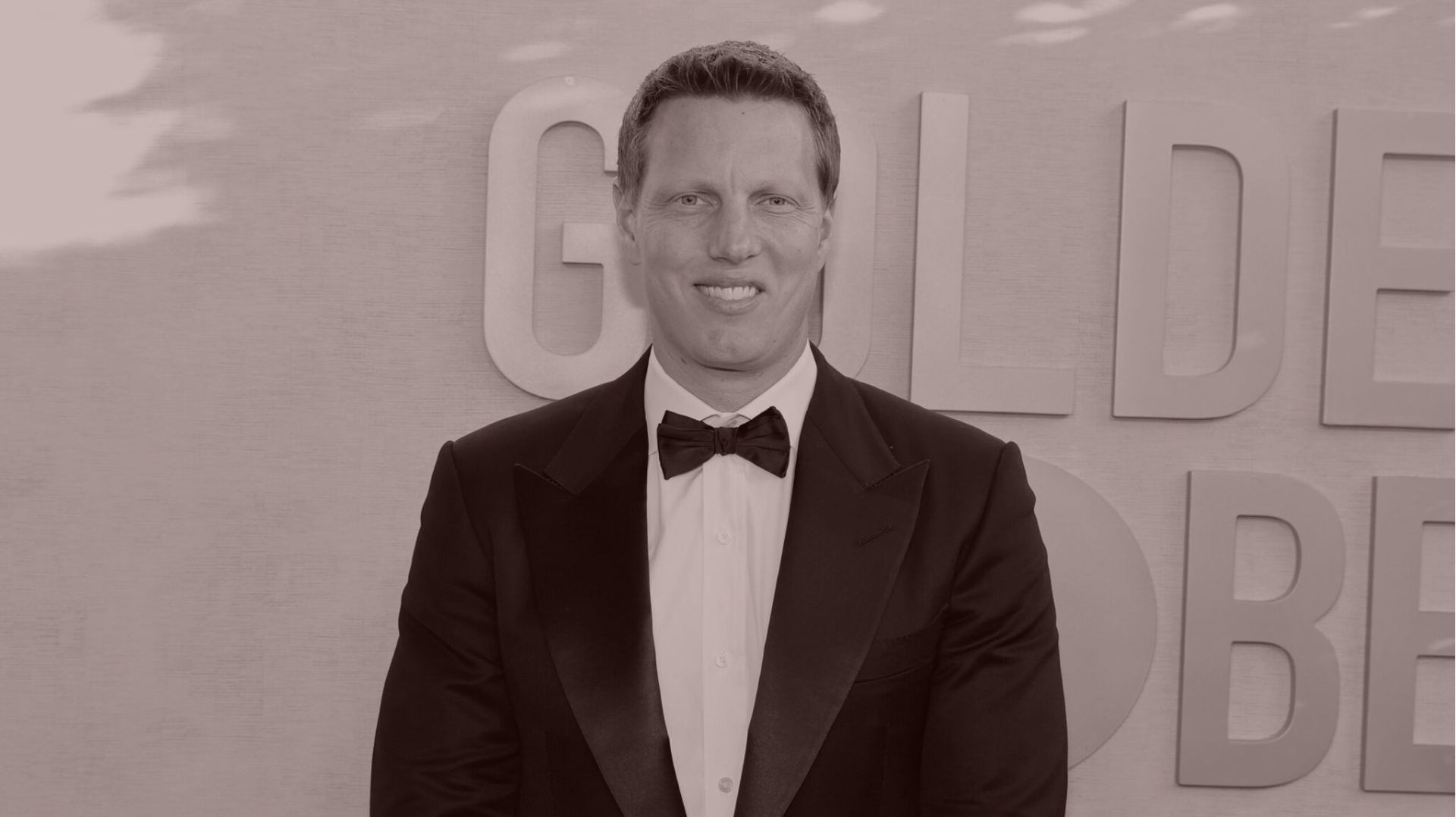 |
| Ellison’s Redstone Gambit & Ackman’s Endgame |
| News and notes on the stories percolating with the Dune Road crowd: David Ellison’s pursuit of National Amusements, Jamie’s boffo number, and Bill Ackman’s relentless crusade against KKR and Axel Springer. |
|
|
|
| Last week, The Wall Street Journal reported, and my partner Matt Belloni advanced, the fact that David Ellison is looking to move forward on an acquisition of National Amusements Inc., the Redstones’ heirloom that controls Paramount Global. Ostensibly, Ellison is pursuing NAI as a less expensive workaround to get his hands on Paramount Global in order to combine the Paramount studio with his Skydance production company. The news struck me, both as a former M&A banker and longtime scholar of the Redstones and their businesses, as fraught. After all, buying NAI may seem clever, but it’s also rife with innumerable headaches.
Shari Redstone’s 10 percent or so economic stake in Paramount Global, which is housed at National Amusements, is worth about $900 million these days. (Since Matt first reported that Skydance was interested in futzing around with Paramount and the stock shot up 14 percent, it has since dropped more than 20 percent.) Regardless, Redstone and her bankers will argue, correctly, that NAI is worth much more since it conveys the control of about 80 percent of Paramount Global voting stock.
What do you pay for something that’s selling in the market for $900 million, but also bestows absolute authority over a corporation with a market capitalization of $23 billion? It’s a question designed to titillate ambitious M&A bankers—especially since the entity is private and also has a bunch of money-losing movie theaters, a near-term loan payment, and something like another $1 billion of debt plus $125 million of preferred owed to Shari’s M&A adviser, BDT & MSD Partners. (Byron Trott, the BDT of that equation, is reportedly advising Shari on the sale process.)
There are probably any number of conversations happening right now on the topic of valuation, and I wouldn’t be surprised if some degree of sentimentality gets baked into the price. Once upon a time, Sumner Redstone was worth around $5 billion; now, the family fortune is a fraction of that, at least on paper. But anything close to a $5 billion valuation for NAI seems absurd at this point. I’ve publicly floated the notion of a $2 billion price, which also seems high since it wouldn’t just convey the family’s economic stake and the voting control in Paramount Global but also the aforementioned NAI liabilities and the not-insignificant risk that Paramount Global’s $11.2 billion of senior notes would be due and payable as soon as a financial buyer gets control of NAI.
Even if Larry Ellison, David Ellison’s mega-mega-wealthy father, personally guarantees the senior notes with his $122 billion fortune, other persnickety problems still persist. For instance, if Ellison fils buys NAI for, effectively, $3.125 billion (its equity and debt), what’s going to happen to the Paramount Global stock? This is not investment advice, but it sure seems likely that it will drop precipitously since it is largely being propped up by takeover speculation—an outcome you would think would seriously infuriate its largest shareholder, Warren Buffett.
The Oracle, who bought the stock at around $30 per share (it’s now around $13 per share), won’t be the least bit happy that Ellison bought control of Paramount Global without also paying a premium to all shareholders, including himself and Mario Gabelli, another major and long-suffering Paramount shareholder. Ellison’s NAI workaround may seem shrewd at $3.125 billion, but he should expect serious shareholder lawsuits to result from the expected fall in Paramount’s stock after NAI gets sold. That won’t be fun. (Again, not investment advice…)
And, alas, if Ellison’s real goal is to acquire the Paramount studio, he’ll likely have to buy Paramount Global anyway—effectively buying the company twice. He may think if he controls the voting shares of Paramount Global he can just sell himself the Paramount studio, but that kind of self-dealing is seriously frowned upon at publicly traded companies, regulated by the Securities and Exchange Commission. It wouldn’t be impossible, of course. He’d have to make a very big offer for the studio, and then set up an independent committee of the Paramount board of directors to evaluate it and likely do a market check—by trying to solicit other potential offers—and in the end, the special committee could still just decide not to sell it to him or to anyone else (as happened once before, as I previously recounted) and there won’t be much David could do about that decision.
So, David, if it’s the movie studio you really want, then why bother with National Amusements at all? Indeed, this scenario would create several other obvious derivative headaches. What will Ellison and his financiers do with the other non-studio assets? If they want to sell them after somehow getting control of Paramount Global, there will be a major capital gains tax bite for offloading CBS, BET, Comedy Central, etcetera, even if buyers can be found for them—a big if.
I’m surprised that Ellison’s camp is not considering other options. I might suggest a page from the Brian Roberts Book of M&A Wisdom and make a public offer for what he really wants—the studio—and forget everything else. As I noted recently, in 2001, Roberts made a successful $72 billion bid for AT&T Broadband, the cable subsidiary of AT&T. Roberts put so much pressure on the AT&T board to sell the subsidiary to him at a high price, even though it wasn’t for sale, that AT&T had to capitulate and make the deal. Ellison might do the same thing for the Paramount studio.
This is a good time to do that, too, for two reasons. The New York Post recently reported that NAI may struggle to make a $37.5 million loan payment, this March, to Wells Fargo. If Shari doesn’t make that payment, she would put National Amusements at risk of a bankruptcy filing. (That may seem unlikely at the moment, I know, but it’s possible.) Shortly thereafter, however, is Paramount’s annual shareholders meeting in May. Given the burdens of the loan payment, and the pressures on the stock, shareholders might be tempted by a bid for the studio and put pressure on Shari et al. to sell it.
Either way, the deal heat seems unnecessary. Absent any other serious bidders, time is Ellison’s friend here. He should think more creatively about his options and not just plow ahead and buy NAI, especially since his father—and his vast fortune—has joined the team. |
|
|
| JPMorgan Chase just recorded its most profitable year ever: $50 billion in net income! Jamie Dimon’s bank is now approaching a market value of $500 billion—a modest valuation of 10x earnings—and its stock is up nearly 23 percent in the past year. (By the way, if JPMorgan Chase were trading at Apple’s P/E multiple, it would be valued at $1.5 trillion, not $500 billion. Just saying…)
A few years ago, when JPMorgan Chase was earning about $40 billion a year in net income, Jamie told me that roughly 80 percent of annual net income at the bank was pretty much secured. The only variables were from businesses such as investment banking and trading, which are more volatile and unpredictable, as well as from the loan book, the value of which can fluctuate based on the overall economy. In other words, Jamie has built a beautiful money-printing machine.
I can’t tell you what an extraordinary change this is from when I was at JPMorgan Chase, in the early 2000s, when Bill Harrison was running the place. I won’t run him down because he is a U.N.C. graduate. But let’s just say he made only two good decisions during his time atop the bank: The first was in 2000, when he engineered the merger between Chase and JPMorgan. And the much better second one, of course, was when he bought Chicago’s Bank One for $58 billion, in 2004. Jamie was running Bank One then, and Harrison was smart enough to know not only that he needed Dimon, but that he needed to leave early and let Jamie run the entire place.
Jamie’s problem now is that he’s in no hurry to go anywhere, and it’s not the slightest bit clear who his successor will be—or if anyone else can run the place as successfully as he has. It may be a machine at this point, but that doesn’t mean it’s a machine that can run itself. It benefits immeasurably from a leader like Jamie Dimon running it and inspiring the troops. No wonder the JPMorgan Chase board doesn’t want him leaving anytime soon, after nearly 20 years at the helm. Dimon is 67 years young. Maybe he leaves by 70, maybe he doesn’t. My bet is he doesn’t leave by then, unless health issues crop up again. He is literally the J.P. Morgan of his generation, the most powerful and astute banker of his time. |
|
|
| As I wrote last Sunday, there’s no way that the Bill Ackman that I know will give up this fight against Axel Springer, Business Insider, and KKR over the pieces accusing his wife, Neri Oxman, of plagiarism. Not without some clear face-saving measure for Oxman, anyway. If he doesn’t do it when he’s on an activist jihad for Pershing Square, why in the world would he do it when it involves his wife, to whom he is utterly devoted? This is personal, on steroids.
Nor will Henry Kravis or Mathias Döpfner concede to Ackman now that he has taken the rather extraordinary step of revealing his communications with them and then naming, and attempting to shame, them on Twitter/X. No one likes that tactic, especially fellow billionaires. Let’s not forget here that Ackman may have a fortune of around $4 billion these days, but Kravis has a fortune of around $13 billion—he’s older than Bill and has been playing this game longer—and Döpfner has a net worth estimated at around $1.2 billion. None of them are going to back down. In fact, earlier today, Business Insider’s newish C.E.O. Barbara Peng sent a note to the company that emphatically stood behind the stories. In response, Ackman tweeted that Business Insider and Axel Springer’s “liability just goes up and up and up.”
My best guess is that, at this point, we are heading for litigation, the cost of which is peanuts for these guys. Ackman will be more than happy to have his crack legal team turn his Twix posts into a complaint, and Kravis et al. will counter. These kinds of lawsuits are time-consuming and debilitating, I know, but thanks to New York State’s anti-SLAPP laws and the First Amendment, they are hard for plaintiffs to win —unless the egregiousness is on the level of what Fox News did during the 2020 elections to both Dominion Voting Systems and Smartmatic.
Sure, the Business Insider headlines may have been inflammatory, specifically by claiming that Neri admitted to “plagiarism” when she actually just apologized for citation “errors.” But it’s also not clear that the content of the two stories about her Ph.D. thesis was maliciously presented, rather than merely a factual accounting of her use of Wikipedia without attribution, even if that wasn’t required by the M.I.T. handbook at the time. (I hasten to add that this is just a view of an outsider looking in. I don’t have access to the internal communications at Business Insider. Discovery proved devastating for Fox in the Dominion case, leading to the nearly $800 million settlement.) Whether the use of the word “plagiarism” is defaming in this context may have to be decided by the courts, which are generally more sympathetic and supportive of journalists, as painful as that may be for Ackman. Also, Neri is a public figure, making the bar to prove defamation even higher.
It’s in everyone’s interest here to avoid a lawsuit, but sometimes the big egos get in the way of rational solutions. As Bill told Andrew Ross Sorkin on Friday when asked if he plans to file a lawsuit against Business Insider and Axel Springer, which he claimed had made itself “a recourse party” to a potential lawsuit: “I hope we don’t end up there.” I doubt it will happen, but perhaps the best path out of this debacle would be for Business Insider to make a few adjustments to its headlines about Neri’s alleged concessions to “plagiarism,” which obviously are not true—she did not concede that point—and are seriously misleading. Ackman can claim a victory of sorts, and the articles can be placed atop the garbage heap of history, where they probably belong, and we can all move on to more important things.
Of course, the fact that Bill has made such a huge stink about defending his wife on Twix, and on CNBC, means that millions more people now know about the allegations against Neri than ever would have been the case without his public campaign. It’s also safe to say that had Bill not been leading the charge against both Claudine Gay, at Harvard, and Sally Kornbluth, at M.I.T., then Neri’s 2010 dissertation would have never become the subject of page one reporting. So, to some extent, Bill brought this on himself. It reminds me a bit of the blind spot Bill had for the Herbalife short squeeze that cost him and his investors $1 billion. Though, it is now abundantly clear, this crusade means more to him than any financial play, as he also told Sorkin on Friday. |
|
|
|
| FOUR STORIES WE’RE TALKING ABOUT |
 |
|
 |
|
 |
|
 |
| Ack, Man |
| On Bill Ackman’s very public crusade against B.I., Axel Springer, and KKR. |
| DYLAN BYERS |
|
|
|
|
|
 |
|
|
|
Need help? Review our FAQs
page or contact
us for assistance. For brand partnerships, email ads@puck.news.
|
|
You received this email because you signed up to receive emails from Puck, or as part of your Puck account associated with . To stop receiving this newsletter and/or manage all your email preferences, click here.
|
|
Puck is published by Heat Media LLC. 227 W 17th St New York, NY 10011.
|
|
|
|