{{ 'now' | timezone: 'America/New_York' | date: '%b %d, %Y' }} |
|
|
|
Welcome back to Dry Powder. I’m Bill Cohan.
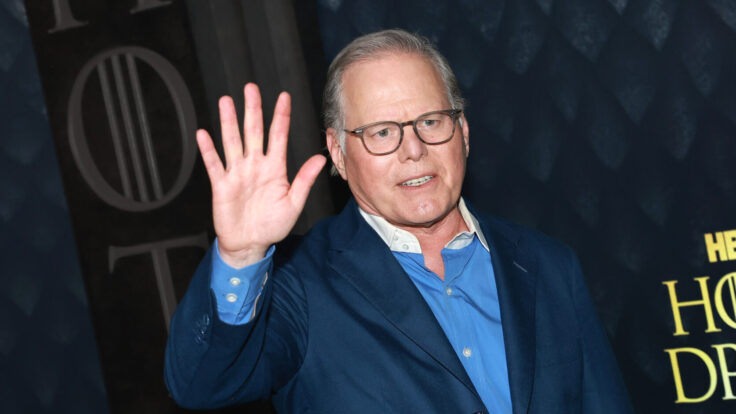
Even as David
Zaslav’s Warner Bros. Discovery sale is being etched into the M&A history books, more details about the deal keep being revealed—including the eleventh-hour apparition of a mysterious Singaporean bidder, fresh details on the Zaz–Ellison pas de deux, and some intriguing new language in the proxy that suggests how the Warners board is safeguarding its C.E.O. against any post-hostile tax consequences.
Also mentioned in this issue: Larry Ellison, Ted Sarandos, Reed Hastings, Jay Clayton, Sam Bankman-Fried, Donald Trump, Joseph Bankman, Michael Smerconish, Barbara Fried, Lewis Kaplan, Joe Biden, Bernie Madoff, and many more…
But first… |
- The
S.B.F. chronicles continue!: We have another installment in the never-ending saga of Sam Bankman-Fried’s tripartite effort to get a new trial, a successful appeal of his conviction, and/or a pardon from Donald Trump. On March 21, his parents, Barbara Fried and Joseph Bankman, made a rare joint
appearance on Michael Smerconish’s CNN Saturday morning show. By my count, it was the couple’s first appearance together on national TV to discuss their son’s fate.
The money quotes came toward the end of the conversation: Barbara, who has started a Substack and sent letters on her son’s behalf to Judge Lewis Kaplan, said that “Sam’s prosecution was essentially political. The Biden administration had decided to destroy crypto. You know,
strangle the baby in the crib, if I can use that horrible metaphor. … They quite deliberately tried to sabotage the industry behind the scenes and prevent efforts to legalize it, license it, regulate it.”
Placing the blame on Biden seemed to be another not-so-subtle appeal to Trump for a pardon. The evidence is actually quite thin that the White House tried to kill the crypto industry—in fact, crypto thrived during the previous administration. Bitcoin, in particular, was around $35,000 at
the start of Biden’s term and more than $100,000 by its end.
Joe chimed in with a similar argument. “This is a case of vindictiveness and political ambition gone wild to get such an extraordinary, extreme, extreme sentence,” he said, referring to the 25 years that Sam will sit behind bars after his conviction for fraud and conspiracy over the collapse of FTX. “It’s shocking, although anyone who sat through the trial and saw, frankly, the contempt the judge had for our son wouldn’t have
been that surprised.” When Smerconish asked whether Sam was the “crypto version” of Bernie Madoff, Joe responded, “Bernie Madoff had a Ponzi scheme. Sam built billion-dollar businesses in a new field and was a pioneer for doing so. … Sam’s a legitimate businessman.”
Meanwhile, Jay Clayton, the U.S. attorney for the Southern District of New York, and his associates have sent a letter to Judge Kaplan supporting Barbara’s request to give Sam more time to
respond to the government’s recent objection to a new trial. But Clayton also questioned the origins of a recent letter that Sam sent to Judge Kaplan. The letter purported to be sent via FedEx from Terminal Island, where Sam was recently imprisoned. (He’s now in Lompoc.) But the U.S. Attorney’s office pointed out that the FedEx package appeared to originate in either Palo Alto or Menlo Park, where Sam’s parents live. Nit-picking, maybe, but it does suggest that the prosecutors are focused on
making sure Sam does not succeed in getting a new trial.
|
Now back to the Ellisons… |
|
|
|
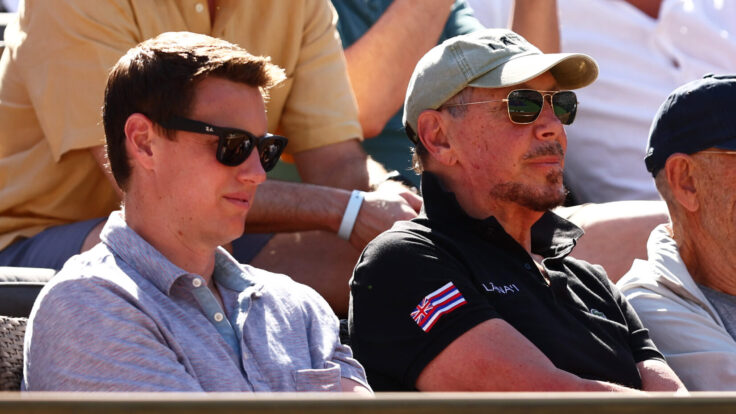
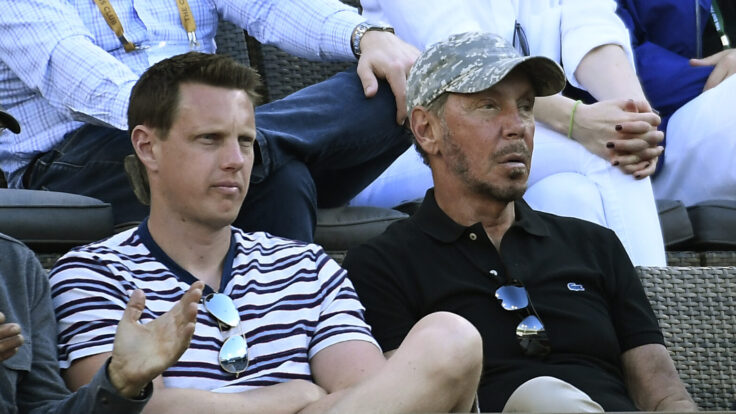
Just as Paramount was finalizing its offer to steal WBD from Netflix, a mysterious
Singaporean company suddenly offered to top both bids with $32.50 per share. Was the whole thing a fraud? |
|
|
|
Paramount’s takeover of Warner Bros. Discovery is proving to be one of those deals that just keeps on giving.
Now it turns out that back in February, about a week before David Ellison and David Zaslav announced their merger, a mysterious Singaporean entity called Nobelis Capital, Pte., Ltd., appeared out of nowhere with a $32.50-per-share, all-cash bid for all of WBD. From the jump, there were red flags: The Nobelis bid “did not include any evidence of equity or debt financing, nor a definitive transaction agreement,” according to a revised WBD proxy filed on March 16. What’s
more, nobody on Wall Street seemed to have heard of them. And when WBD took the time to try to figure out if they were legit, it came up empty too. “We assumed it wasn’t real based on several factors,” a WBD spokesman told me, before pointing to the recently filed proxy statement.
The proposal claimed that Nobelis had deposited $7.5 billion in a JPMorgan Chase escrow account “to cover the regulatory termination fee” and another $10 billion into an HSBC escrow account to cover the $2.6
billion Netflix breakup fee, among other expenses. WBD’s advisors proceeded to investigate the legitimacy of Nobelis—but, according to the proxy, “were unable to verify that Nobelis owned or controlled any material assets, and could not find the purported deposit at J.P. Morgan.” The investment banker that Nobelis claimed to be working with told WBD he had no knowledge of the company and was not involved with its purported bid. Naturally, WBD took “no further action” with regard to the Nobelis
proposal.
Whatever its origins, the curveball from the Far East had arrived at the very peak of Warners deal heat, on February 18—just after Netflix had signed the waiver agreement that gave PSKY until midnight on February 23 to try to negotiate a “superior” deal. During that time, according to the revised proxy statement, a flurry of activity took place. Debevoise, on behalf of WBD, sent PSKY a letter outlining the “key issues” that the Ellisons would need to address—including the
requirement that Larry put up even more equity at closing if the banks providing the debt financing threatened to walk away. Naturally, all of these documents were also sent to Netflix, presumably so Ted and Reed could follow along.
On the evening of February 21, David Ellison called David Zaslav and told him that PSKY would send over revised drafts of a merger agreement which, Ellison claimed, “met substantially all of the concerns
raised by WBD.” The new PSKY proposal upped the consideration to $31 a share in cash and increased the regulatory termination fee payable to WBD to $7 billion, among other things. Over the next two days, PSKY and WBD advisors went back and forth on revisions. But when the WBD brain trust met on February 23, just before the midnight deadline to make a decision, the board decided not to take any action beyond authorizing its advisors to keep the discussions alive.
Shouldn’t that have been
it for PSKY? Apparently not. The very next day, the WBD board met again, and after hearing all the improvements that PSKY had made, determined that their revised bid might reasonably result in a “superior proposal” after all. If they didn’t at least discuss PSKY’s counter, they might be in breach of their fiduciary duties. The board quickly authorized Zaz to call David Ellison to see if he could sweeten the deal. Meanwhile, Debevoise let Netflix know that the WBD board was seeking a more open
relationship.
In the end, Zaz wasn’t able to get more money—as Ellison correctly pointed out, $31 a share was “full and fair value”—especially given that Netflix hadn’t raised its bid. On February 26, Cravath placed into escrow signed execution pages for all the various documents, implying that PSKY was ready to go. And a few hours later, the WBD board approved the revised PSKY bid—giving Netflix one last chance to renegotiate. But by this point, Netflix had clearly decided it was out.
Enough was enough for Ted and Reed. All that was left was for PSKY to pay Netflix its $2.8 billion breakup fee. The very next day, WBD signed the documents sealing the deal, and a new Hollywood was born.
Meanwhile, Nobelis Capital hadn’t gone away. On March 8, the company (or whatever it is) sent a letter to WBD threatening legal action unless WBD entered into a “settlement framework” with Nobelis within 48 hours. This framework, Nobelis argued, would require WBD to disclose the Nobelis
bid, give Nobelis access to certain financial information, and—wait for it—pay Nobelis a termination fee equal to 3.5 percent of the deal. The chutzpah didn’t end there. Nobelis also requested compensation for whatever fees it had ostensibly racked up when placing $10 billion into the HSBC account, if such an account even existed.
So far, of course, no lawsuit has been forthcoming. “WBD took no further action with respect to the Nobelis communication, and WBD has received no
further communication from Nobelis as of the date of this proxy statement,” WBD noted on March 16. Alas, not just anyone gets to become a breakup-fee billionaire. Although you’ve got to give Nobelis points for trying. |
Meanwhile, the latest proxy statement also provides new details on the Zaslav golden parachute. We all know
now that Zaz could receive as much as $887 million—or so the headlines have read, without digging deeper—when the sale of WBD to PSKY closes. The bulk of that—$517 million, according to the proxy—comes from the vesting of Zaz’s stock and option agreements. But a new provision was added on March 10 that is very, how shall we say, executive friendly.
The provision appears designed to help Zaz avoid feeling any pain resulting from WBD’s decision to switch teams from Netflix to PSKY.
Because the PSKY deal is expected to close later this year, much sooner than the Netflix deal would have closed, Zaz is apparently facing a potential excise tax on the $517 million. As a result, WBD has estimated that it will have to pay another $335 million—it could be a lot less in the end—to cover the excise taxes plus the taxes on the benefit of paying his excise taxes. That’s where the $335 million estimate comes from. That money isn’t going to go to Zaz personally, but it
does allow him to not have to be penalized by the excise tax. Instead, a new “tax reimbursement agreement” with the WBD board, signed March 10, will allow WBD to make Zaz whole on the potential excise tax.
Those tax reimbursement payments, by the way, also represent a taxable income benefit to Zaz. So the $335 million includes another income tax reimbursement to Zaz for that first tax reimbursement on the excise taxes. (Yes, it’s circular.)
The payment could end up being
much less, however. For instance, according to the proxy, if the PSKY deal were to close in 2027 instead of this year, WBD would not expect to reimburse Zaz because it believes he would not incur the tax. In any case, the estimate of the tax reimbursement is complicated—it’s based on a 20 percent excise tax rate and an estimated effective tax rate of 54.126 percent for Zaz—but the idea behind it is simple. The point is to make Zaz indifferent to the tax, as if it hadn’t happened or wasn’t paid,
at least by him. I guess that means he gets his $517 million free of the 20 percent excise tax. He would still be responsible for state and federal income taxes, plus any capital gains taxes based on the payout. (The I.R.S. comes for us all eventually…)
These kinds of arrangements were pretty common in executive pay packages once upon a time, especially for executives involved in mergers. But nowadays they are considered outdated and overly generous. In the trade, for those playing along
at home, it’s called a “280G tax gross-up,” referring to a section of the tax code that discusses the excise tax. A more typical arrangement these days would be for Zaz to pay the excise tax himself, or for WBD to reduce the payout to reduce the excise tax, or reclassify some of the payment as compensation rather than stock and option payouts. But I can see why the board and WBD’s tax advisors went this way after it was clear that WBD was going with PSKY as opposed to staying with the Netflix
deal, which definitely would not close until 2027, if ever.
Of course, since PSKY is buying WBD, the cost of all this will be borne by the shareholders of the combined PSKY/WBD. So, I think we can safely say this is for Larry’s account, too. “Factors that our compensation committee considered included that the cost of the arrangement would be borne by the surviving corporation after the merger, the view of the outside tax advisors that David was unlikely to have such
exposure in a Netflix transaction due to anticipated closing timing and other factors, and David’s commitment to cooperate with reasonable requests to mitigate his exposure to the excise tax,” a WBD spokesman explained to me. Got that? |
|
|
|
Puck sports correspondent John Ourand and a rotating cast of industry insiders take you inside the executive suites and owners
boxes where the decisions that shape the entire sports business are made. You’ll hear interviews with players, network execs, and everyone in between. The Varsity is an extension of John’s private email for Puck by the same name. New episodes publish every Wednesday and Sunday. |
|
|
|
Puck’s daily political newsletter from Washington on what’s really happening in this town, from the White House to the Pentagon
to Capitol Hill, K Street, and the campaign trail. |
|
|
|
Need help? Review our
FAQ page or contact us for assistance. For brand partnerships, email ads@puck.news.
You received this email because you signed up to receive emails from Puck, or as part of your Puck account associated with {{customer.email}}. To stop receiving this newsletter and/or manage all your email preferences, click here. |
Puck is published by Heat Media LLC. 107 Greenwich St., New York, NY 10006 |
|
|
|
|