{{ 'now' | timezone: 'America/New_York' | date: '%b %d, %Y' }} |
|
|
Welcome back to The Hidden Layer. I’m Ian Krietzberg.
In today’s issue,
I’m scrutinizing the bull case for OpenAI, the industry’s biggest player and a company that—at least by private valuation—is worth more than ExxonMobil. Sam Altman’s business sets billions of dollars on fire every year. Will OpenAI survive its build-out to actually realize some profit? Is the industry’s Cassandra, Gary Marcus, correct in saying that we’re witnessing the rise of another WeWork? Give this piece a read, hit reply to this email, and let me know your
thoughts.
Finally, a reminder that you can still get a 20 percent discount on an annual membership to Puck, courtesy of our fourth anniversary sale. The deal ends soon, so don’t wait. (Besides, you can probably expense it.)
Also mentioned in this issue: Microsoft, Nvidia, Cohere, Tejas Dessai, John Chambers, Sarah Friar, and many more…
Let’s get into it… |
- Chat
goes to Germany: Yesterday, OpenAI unveiled what it’s calling “OpenAI for Germany,” an initiative that will bring the company’s tech to government workers in Deutschland. The pitch should sound familiar: The technology will help “employees … spend more time on people, not paperwork.” OpenAI said the rollout, scheduled for 2026, will follow strict security standards.
Nevertheless, questions abound: It’s not clear how the German government intends to use the platform, or what use cases it will disallow entirely. The company will partner with the German firm SAP SE and Microsoft to make it happen, and SAP plans to expand its chip count to 4,000 G.P.U.s to handle the added A.I. workloads. (Man, it must be nice to be Nvidia.)
|
|
|
A MESSAGE FROM OUR SPONSOR |
EFFORTLESSLY ADAPTED
Responsive handling. Connected convenience. Enter the next phase of sporting luxury with the
Range Rover Sport.
EXPLORE |
|
|
- A.I.
vs. A.I.: In a report on Wednesday, Microsoft’s threat intelligence team shared that it recently detected and shut down a phishing campaign that probably used A.I.-generated code to navigate around security measures. Despite the campaign’s “unique” obfuscation tactics, the team downplayed the sophistication of the
attack, basically saying that, synthetic or otherwise, code is just code. The team added that its A.I. and machine learning systems are trained to recognize traits consistent with cyberattacks, regardless of the code’s origin.
Perhaps more interestingly, the team also noted that A.I.-powered attacks end up leaving additional breadcrumbs for watchful security engineers and algorithms to find. In this case, verbose and redundant naming and code—two major pitfalls of A.I. coding
tools—were a giveaway that something wasn’t quite right. Since 2023, attacks like these have become more common as bad actors have increasingly availed themselves of A.I. tools to penetrate systems using smaller teams.
|
The enterprise A.I. firm Cohere
announced on Wednesday that it had secured an additional $100 million, rounding out a $500 million funding round it completed in August. The company is now valued at roughly $7 billion. The round included an investment from Nvidia, a fact almost as funny as it is unsurprising.
And now for the main event… |
|
|
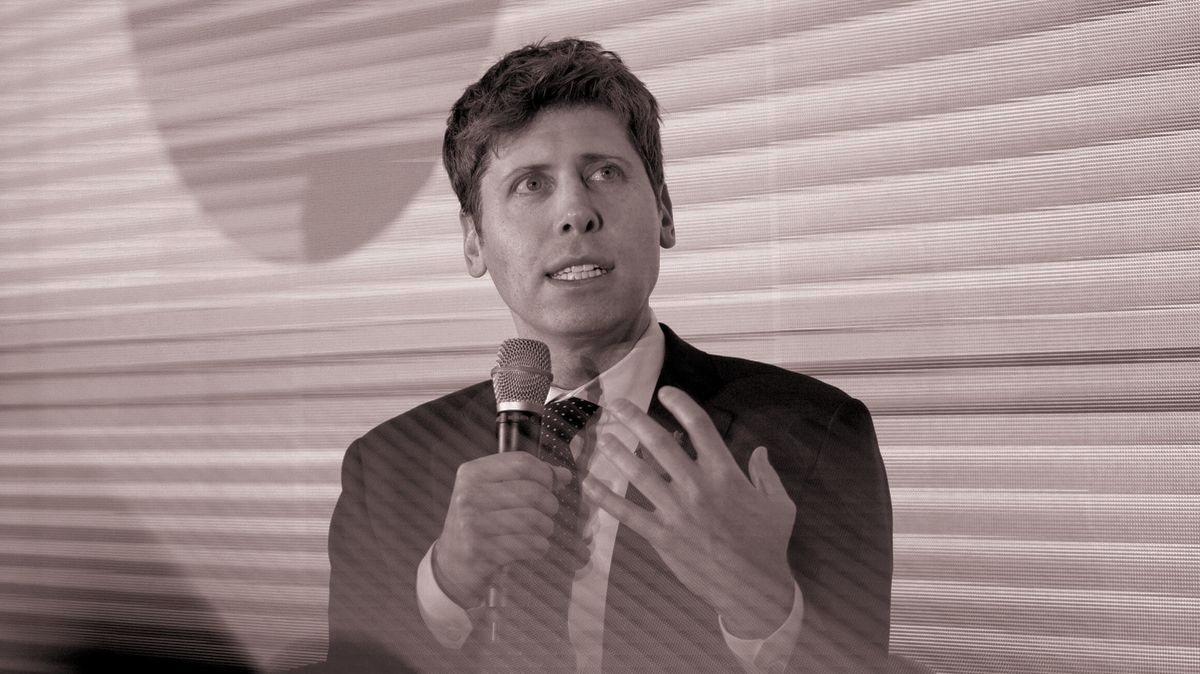
Sam Altman’s company, which is valued at half a trillion dollars, will earn around $13
billion in revenue this year and likely burn through $100 billion by the end of the decade. Here’s why that makes sense, at least according to Global X’s Tejas Dessai. |
|
|
In 1998, John Chambers, the former president and C.E.O. of Cisco,
declared that “with internet leaders and government working hand in hand, America can look to a bright horizon filled with hope.” At the time, Cisco’s stock was trading at an all-time high; a few years later, it collapsed in the crash that vanquished the dot-com bubble. Chambers’s comments embodied the utopian optimism
that defined the early days of the internet, and the same mood permeates these yawning days of artificial intelligence. In fact, the language used by industry leaders to describe the promise of A.I. might be even more extreme. If we’re to believe OpenAI C.E.O. Sam Altman, “access to A.I. will be a fundamental driver of the economy, and maybe eventually something we consider a fundamental human right.”
Since co-founding OpenAI in November 2015, Altman has never shied away
from grandiose claims, and seems to genuinely believe the technology will unlock the kind of magic usually reserved for science fiction. On Tuesday, he wrote that the growth of the industry “has been astonishing,” and posited that A.I. could cure cancer or provide customized tutoring to every student on Earth if it were powered by another 10 gigawatts of compute. It was an essentially
baseless assertion, and yet it’s Altman’s line amid OpenAI’s flurry of commitments to spend unfathomable amounts of other people’s money on more data centers to power its technology.
The latest head-spinning announcement came Monday, in the form of a letter of intent
between Nvidia and OpenAI to develop a minimum of 10 gigawatts of data center capacity—a partnership that comes alongside the chipmaker’s $100 billion investment in OpenAI. (The money will be delivered on a progressive basis as each data center is erected.) A few weeks earlier, cloud giant Oracle entered into an agreement with OpenAI to develop about 4.5 gigawatts of data center capacity. And on Tuesday, OpenAI
announced plans for five new U.S. data center sites, bringing its expected capacity for the Trump-approved “Stargate” project to 7 gigawatts—an investment of more than $400 billion over the next three years. It all rounds up to a minimum of 17 gigawatts worth of planned data centers—basically 17 nuclear power plants—representing close to a trillion dollars in
spend, according to CNBC. (OpenAI didn’t return a request for comment about how it intends to power all these new data centers.) Finally, this morning, OpenAI expanded its agreement
with CoreWeave by $6.5 billion, bringing the total size of CoreWeave’s OpenAI contract to $22 billion. |
|
|
A MESSAGE FROM OUR SPONSOR |
EFFORTLESSLY ADAPTED
Responsive handling. Connected convenience. Enter the next phase of sporting luxury with the
Range Rover Sport.
EXPLORE |
|
|
It’s unclear how OpenAI plans to finance its infrastructure play, but it’s likely that debt will play a role
given the mind-boggling costs involved. (Of course, debt also largely financed the fiber build-out during the rise of the internet, and its increasingly prominent role in the A.I. build-out has some investors nervous.) Meanwhile, the company itself, which was last valued at $500 billion, is expected to make about $13
billion in revenue in 2025—and lose well over $100 billion through the end of the decade. But Altman isn’t worried. As he said yesterday: “This is what it takes to deliver A.I.” |
Obviously, I’m a skeptic. So I called up Tejas Dessai, the director of thematic research at
Global X, whose largest A.I. exchange-traded fund has about $5 billion in A.U.M., so he could explain why this situation won’t end in disaster. In short, Dessai believes the companies’ astronomical valuations make sense, the cash burn is reasonable, and the costs associated with the infrastructure build-out—which OpenAI, as a first mover in the space, will need to frontload—are both necessary and possible to recoup. “We’ve seen unreal and unprecedented adoption momentum from ChatGPT, as well as
other services from OpenAI,” he told me.
Dessai continued: “This type of growth—we didn’t see this from Uber, or WeWork, or any of the previous tech cycles in the past. That’s number one. Number two, it is monetizable growth.” It’s worth noting, though, that, as of June, OpenAI had about 500 million weekly active users,
about 3 million of whom were paying. Now, the company claims to have around 700 million weekly active users, although how it measures “active users” isn’t clear.
Anyway, I wondered how Dessai viewed Nvidia’s investments, and whether OpenAI’s revenue should be able to cover its infrastructure build-out. “That’s one way to look at it,” he said. But then he echoed OpenAI C.F.O. Sarah Friar’s
view that Nvidia is attempting to unlock the next level of innovation for the A.I. industry, and that OpenAI is the best vehicle for achieving that goal. He contended that this isn’t a historical anomaly, and that Nvidia was merely “trying to solidify their position in that vertical value chain.”
Dessai didn’t seem bothered
by the fact that Nvidia’s chips seem to either die or depreciate at a somewhat accelerated rate due to their
heavy, 24/7 workloads, or Nvidia’s frenzied pace of next-generation releases. But he argued that even if the infrastructure isn’t permanent, the product is. Aging chips don’t become worthless, he said, adding that developers could use older chips to run models rather than train them.
I asked Dessai whether his expectation that things will work out for OpenAI—and the rest of the A.I. players—was at least partially based on an
assumption that artificial general intelligence is achievable and imminent, and will somehow be priceless. “I think the company has a reasonable shot at a sustainable business model even if they continue to do what they’re doing here,” Dessai said. He argued that preexisting subscription-based companies aren’t a good comparison, given that Netflix’s addressable market is only touching
entertainment spend.
OpenAI, he told me, touches a little bit of everything. “When you have a total addressable market that is expanding at an exponential rate, it’s very hard to say that the business models have matured or that they’re flat,” he said. “It’s unlike any previous tech cycle in the sense that we’re not only talking about exchanging information anymore—it’s about acting on that information, and those actions produce more information. That’s an exponential loop. It’s
very hard to come up with a negative case that says, This company is going to miss a step and fall back.”
Needless to say, both Dessai’s point of view and mine are speculative. It’s possible that OpenAI’s soaring, mind-blowing revenues will never materialize. They also might come in even higher than projected. OpenAI is ostensibly attempting to build artificial general intelligence, which it defines as “A.I. systems that are generally smarter than humans,” and which many
researchers have dismissed as more fiction than science. But the mythology around that effort has proven to be quite powerful. Indeed, SoftBank cited it as the literal “rationale” behind its decision to invest up to $40 billion in OpenAI—a number that looks downright meager when compared to their accruing infrastructure costs. Back in April, SoftBank declared its “mission to realize
Artificial Super Intelligence for the advancement of humanity. Recognizing OpenAI as the partner closest to achieving A.G.I., a key milestone on the path to A.S.I., SBG has positioned OpenAI as its most important partner.” |
That’s all for today. I’ll see you next week.
Ian |
|
|
Join Puck’s chief political columnist, John Heilemann, as he roams the corridors of power and influence in America on this
twice-weekly interview show, taking you beyond the headlines with the people who shape our culture: icons and up-and-comers, incumbents and insurgents, moguls and machers in the overlapping worlds of politics, entertainment, tech, business, sports, media, and beyond. The conversations are rich and revealing, unrehearsed and unexpected… and reliably impolitic. A Puck-Audacy joint, new episodes drop every Wednesday and Friday. |
|
|
Puck’s daily political newsletter from Washington on what’s really happening in this town, from the White House to the Pentagon
to Capitol Hill, K Street, and the campaign trail. |
|
|
Need help? Review our FAQ page or contact us for assistance. For brand partnerships, email ads@puck.news. You received this email because you signed up to receive emails from Puck, or as part of your Puck account associated with {{customer.email}}. To stop receiving this newsletter and/or manage all your email preferences, click here. |
Puck is published by Heat Media LLC. 107 Greenwich St, New York, NY 10006 |
|
|
|