{{ 'now' | timezone: 'America/New_York' | date: '%b %d, %Y' }} |
|
|
|
Welcome back to Wall Power, Inner Circle edition. I’m Marion Maneker.
The New Museum reopens this weekend with a dramatic expansion that doubles the size of its exhibition space. For director Lisa Phillips, it’s a career-capping moment—she’ll be leaving the museum as they search for a new director. In the meantime, I spoke to Massimiliano Gioni, the museum’s artistic director, about what the future holds. On our way there, the Ivan Aivazovsky market is quietly raging, and Rachel Rose has a
new show reimagining an Old Masters genre.
Also mentioned in this issue: Flora Yukhnovich, Lucas Arruda, Virginia Woolf, Vladimir Putin, Marcia Tucker, Francis Bacon, Alberto Giacometti, and more… |
|
|
|
A MESSAGE FROM OUR SPONSOR |
|
|
|
One for the money, two for the show… |
-
Rachel Rose at Rest: I first saw a piece from Rachel Rose’s new body of work at Frieze Los Angeles, among a clutch of visitors in the Gladstone booth. We were gathered around a small green painting that appeared, at first glance, to be a blurred abstract, but I didn’t get a good look until I stopped by Rose’s show at Gladstone’s 64th Street gallery—where it became
clear there’s much more to the work than that.
Titled The Rest, the exhibition comprises 13 equally sized small works inspired by the recurring Old Masters subject The Flight Into Egypt, which usually depicts the “holy family” in a bucolic setting. But in Rose’s versions, we’re seeing the Virgin Mary’s point of view at different times of the day. Reminiscent of the Old Masters–inspired abstract work of Flora Yukhnovich and the small but exquisitely
detailed landscapes of Lucas Arruda, the paintings mix long, blurred brush strokes, shimmering with their own internal, ethereal light, with detailed depictions of flora and clouds punctuating the canvases. The combination is darkly soothing, and the time sequence suggests an evolving story. Despite their size, the images are also cinematic—which shouldn’t be a surprise because, in addition to her work as a painter, Rose is a filmmaker. (She is also a member of the Rose
family real estate dynasty.) The Last Day, her reimagination of Virginia Woolf’s Mrs Dalloway, was filmed in late 2024 and will be released soon. - An eye for Aivazovsky: I had not thought much about the great Russian maritime painter Ivan Aivazovsky since the market for Russian art collapsed after Vladimir Putin’s first invasion of Ukraine. But Aivazovsky’s mastery of
seascapes gives his work international appeal well beyond collectors of Russian art. I was reminded of all of this when Bonhams sent me a notice that the artist’s View of Capri, from 1899, will be auctioned at Bonhams Cornette de Saint Cyr on April 26. Estimated at €250,000, the painting depicts two figures resting on a beach in the morning sun, next
to a mooring ball tethered to a small boat in the teal blue water. A quick look at ARTDAI’s database shows that the Aivazovsky market has been very active recently. In December, an 1865 painting sold for nearly $1.3 million, and another made a bit more than that in November. But those sales pale in comparison to that of The Survivors, an 1878 work that was estimated at $2.6 million in late November but sold for $5.5 million.
|
|
|
|
On the eve of the downtown museum’s long-awaited rebirth, its artistic director
explains the value and opportunity in its physical expansion and renewed mission to address the urgent questions of today. |
|
|
|
Big change has come to the New Museum, the groundbreaking non-collecting downtown museum founded by
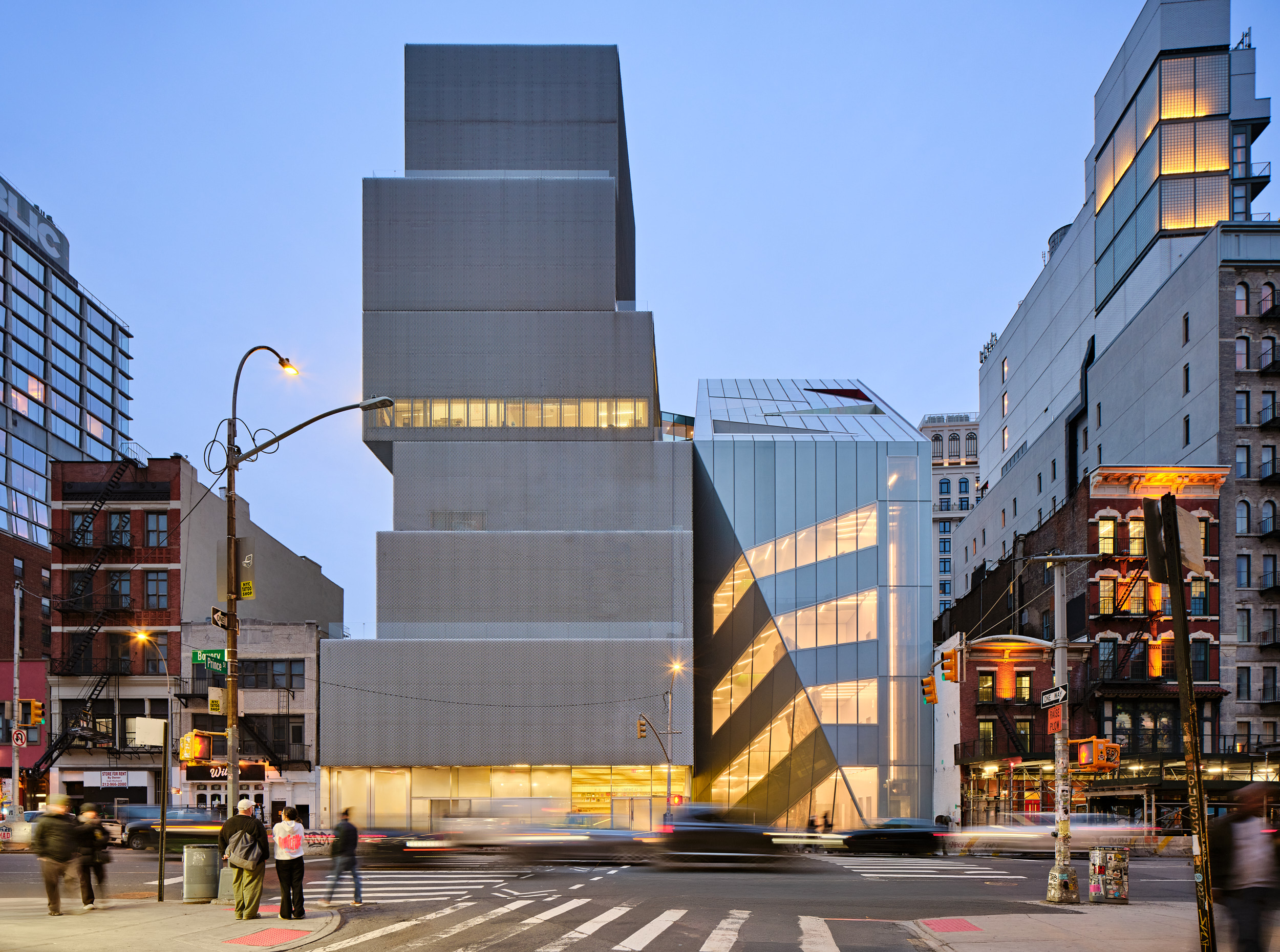
Marcia Tucker in 1977 as a home for new art and new ideas. Earlier this year, the institution announced that long-serving director Lisa Phillips would step down after 27 years. Among her many initiatives, Phillips built the museum’s architecturally significant first building on the Bowery. She also led the fundraising and construction of its expansion, designed by Shohei Shigematsu of OMA, which opens this weekend. |
|
|
|
A MESSAGE FROM OUR SPONSOR |
|
|
|
To get a better sense of how the new building fits into the future of the New Museum, I spoke to
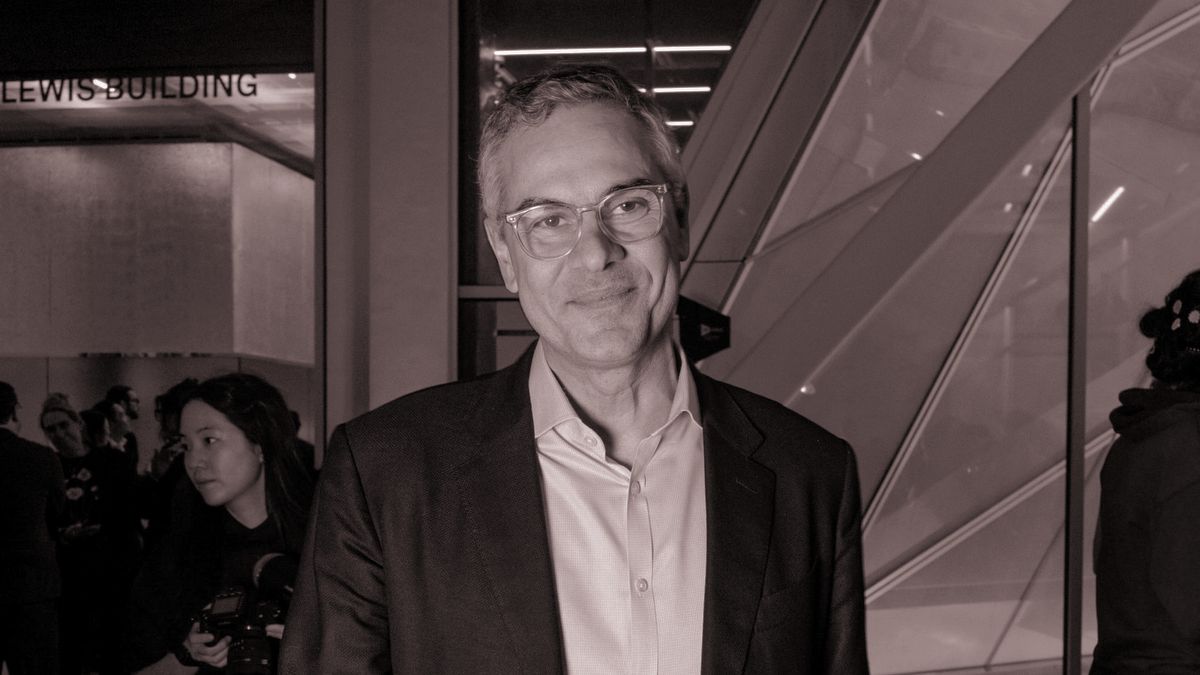
Massimiliano Gioni, the museum’s Edlis Neeson artistic director, who has been with the institution for 20 years (and curated the 55th Venice Biennale in 2013). We discussed what he plans to do with double the exhibition and gallery space, why the new building is less “introverted” than the old one, and the New Museum’s determination not to be about “art for art’s sake.” As usual, this conversation has been lightly edited and condensed for clarity. |
Marion Maneker: I’d love for you to start by explaining
the scope of the expanded New Museum—the size of the new building, the problems it solves, etcetera.
Massimiliano Gioni: The new building doubles our footprint, with about 60,000 additional square feet of exhibition space. It also doubles our footprint in galleries, with an additional 12,000 square feet. Then there’s the additional space for our education initiative and for NEW INC [what the museum
calls a “cultural incubator”].
From an architectural point of view, a big emphasis was put on improving the vertical circulation across the two buildings. From the outside, it appears to be two separate buildings, and they certainly are, but on the inside, they’re seamlessly integrated in the sense that the floors align and the ceilings are in the same materials. That allows us
the freedom to close or open galleries across the two floors, which gives us maximum flexibility. As you progress to the top, you find more space for what we call the discursive platforms of the museum—things that are less exhibition-oriented. It’s very modern, very forward-looking. But it also has a great relationship to the original.
The verticality was both the strength and weakness of the original building.
Depending on the
exhibition, each floor can be fully or partially connected, or disconnected altogether. The new atrium stairs become the main axis to move vertically and provide a more dramatic navigational tool throughout the building. From an engineering point of view, it gives you views that are quite engaging on downtown, SoHo, and the Bowery. That’s something that OMA emphasized early on. They thought the original building was somewhat introverted—this one has a dialogue with the outside. |
Photo: Jason Keen/Courtesy of New Museum |
Does the new building’s flexibility change your approach to the
programming?
It’s obviously a quantitative change, because we are doubling the galleries. We will continue to do what we do: Because we’re a non-collecting institution, we are a museum that focuses on the production of new works. We have built a network of international partners with whom we are producing works. In this inaugural round of exhibits, we have 24 new productions, some of them quite ambitious. All of them are co-produced with
partners. And what makes it special is that when we produce works, we don’t acquire them, so they remain with the artists. So we’ll continue to do that, and now have the scale to do it at a more significant level.
Another specialty of ours is, we often give both local and international artists their first American show, and certainly their first New York show. And because we have a wider variety of spaces, we can do that for emerging artists and also established artists, who, for all the
wrong reasons, are maybe not well-known yet in New York City. |
|
|
|
The third house specialty is thematic shows, particularly ones that address urgent questions of
today. Historically, the New Museum is where we look to art as a tool to understand the world outside the museum walls. Of course, we definitely love art, but it’s never been an “art for art’s sake” type of space. It’s a place where, through art, we look at politics, changes in society, and so on. So the semantic group shows have remained, and will continue, at a much larger scale, to be central to what we do. |
Surviving
the Tech Revolution
|
Can you talk about the opening
exhibition?
It’s called New Humans. In a nutshell: It’s a show that looks at the shifting definition of the human under the pressure of new technologies. It’s very much an exhibition about the kind of technological upheaval that we are going through. One of the premises of the show is to identify a kind of symmetry between the 1920s and today—a symmetry based on the fact that there was also an explosion of new media at the beginning of
the 20th century. The underlying assumption is that by looking at a similar phenomenon that occurs throughout history, we can be reassured that we’ve been there before and have survived—sometimes at a terrible cost—even the most technological transformations. It’s very brainy and very complex, but it’s also quite immediate.
In this first show, we decided to combine historical and contemporary works in a way that I hope will be exciting for young artists. As we have an inflation of
exhibition spaces, it happens less and less that a young artist can be exhibited next to Francis Bacon or Giacometti. There is an intergenerational and international dialogue that I think defines the exhibitions we make.
I assume the continuing shows will sort of follow the same path you described of introducing new artists to America. So, essentially, the new building doesn’t change the fundamental view you have as a museum
curator?
No, no, no. I think it will be a strong change—a change that is quantitative, but to such a scale that it becomes qualitative, too. It doesn’t change our ethos. It doesn’t change our approach to art. It doesn’t change the notion that art is embedded in social life. The museum is less a place of contemplation, and more a place of interrogation and questioning and participation in the urgent questions of today.
Your long-serving director is taking a
well-deserved bow out after opening the museum. Do you have any thoughts on the future of the museum, whoever’s the director?
I cannot and will not comment. But there’s a search happening, and it’s for the board to decide. |
That’s all for today. See you back here on Friday.
M |
|
|
|
Puck founding partner Matt Belloni takes you inside the business of Hollywood, using exclusive reporting and insight
to explain the backstories on everything from Marvel movies to the streaming wars. |
|
|
|
Ace media reporter Dylan Byers brings readers into the C-suite as he chronicles the biggest stories in the industry:
the future of cable news in the streaming era, the transformation of legacy publishers, the tech giants remaking the market, and all the egos involved. |
|
|
|
Need help? Review our
FAQ page or contact us for assistance. For brand partnerships, email ads@puck.news.
You received this email because you signed up to receive emails from Puck, or as part of your Puck account associated with {{customer.email}}. To stop receiving this newsletter and/or manage all your email preferences, click here. |
Puck is published by Heat Media LLC. 107 Greenwich St., New York, NY 10006 |
|
|
|
|