{{ 'now' | timezone: 'America/New_York' | date: '%b %d, %Y' }} |
|
|
|
Welcome back to The Varsity. I’m in D.C., where reverberations from last week’s
White House summit on college sports are still being felt.
Just today, SEC commissioner Greg Sankey vented his frustration with the status quo during an appearance on Paul Finebaum’s show. Sankey said he still hopes to work with other conferences and schools, but stressed that the SEC would be able to set its own eligibility and transfer rules, apart
from the NCAA, if it needs to. “In the Southeastern Conference, we’re prepared,” he said.
Julia Alexander has more on the White House summit below. Plus, Netflix’s podcasting strategy, why Jake Paul might be the most interesting man in sports, and more. For the main event, Julia handicaps the companies that are best positioned to buy local streaming rights from the NBA—a package that should be ready by next season.
As always, Julia’s work is
available only to Inner Circle subscribers, so click here to upgrade.
Also mentioned in this issue: Adam Silver, Jay Marine, Neal Mohan, Christian Oestlien, Justin Connolly, Jimmy Pitaro, Matt Strauss, Shay Segev, Roger
Goodell, Dante Moore, Charlie Baker, Ron DeSantis, Arch Manning, Johnny Manziel, Mike Tyson, Anthony Joshua, Gina Carano , Bill Simmons, Ryen Russillo, Dan “Big Cat” Katz, and many more…
Take it away, Julia… |
Stat of the Week: 42 Percent
|
One big, longtime worry for streamers has been whether sports fans will get overwhelmed by having
to search for games across so many services. New data from Hub Research suggests the answer is… complicated. The NFL, which has rights deals with everyone from Netflix to YouTube, ranks as the most frustrating league to follow: 42 percent of fans say streaming has made it harder for them to watch; only 19 percent claim it’s easier these days. MLB ranks as the second-most-frustrating league to consume (35 percent vs. 18 percent), and the NHL is third (28 percent vs. 21
percent).
Meanwhile, UFC, Premier League, and MLS fans say streaming has made access easier—surely music to David Ellison and Eddy Cue’s ears. Are these meaningful business red flags, or the hunger cries of Boomers, annoying Gen Xers, and older Millennials still looking for MSG on the dial when all of this information can be found by ChatGPT in eight seconds? You be the judge: Ratings methodology debates aside, the NFL just had a record-breaking
year. The question now is: How much more fragmented will things get after the next round of rights negotiations? |
- Trump’s N.I.L. interference play: There’s a lot that should be keeping President Trump busy these days. Yet he found time to host a roundtable at the White House on Friday to address his growing concern about the state of college athletics—in particular the loosening of rules around name, image, and likeness (N.I.L.) rights, and how it impacts the entire college system. He argued that “the amount of money being spent and lost by otherwise very successful schools is
astounding,” and complained, like so many others, about “seven-year freshmen” and the fact that students are staying in college instead of entering the NFL draft. (That last part might have been related to Oregon’s Dante Moore staying in school to avoid playing for the New York Jets, but can you blame him?)
The roundtable was reportedly attended by NCAA president Charlie Baker, Florida Governor Ron DeSantis, and Nick
Saban, among others. Notably, there weren’t any student athletes, themselves, in the room. But if Trump is going to focus his attention anywhere, it should be on the transfer portal—not simply on how much a player like Arch Manning can earn. If we learned anything from the Johnny Manziel era, not allowing players to collect N.I.L. earnings will just result in seedier under-the-table deals. Once the genie is out of the bottle, well, you know… - The new boxing king: It’s strange to type these words, but Jake Paul has a growing claim to the title of Most Interesting Man in the World… of Sports. His boxing numbers for Netflix have been impressive: More than 100 million viewers tuned in to watch him fight Mike Tyson in November 2024, and his December bout with Anthony Joshua drew about 33 million viewers—more than half of whom came from
outside the United States. Most Valuable Promotions, Paul’s boxing promotion company, recently announced that it was bringing Ronda Rousey and Gina Carano together for the first time to headline Netflix’s inaugural octagon-style cage match.
Now, Paul is expanding his operations. He just announced the launch of “MVPW”—a “new global platform for women’s boxing,” per the company’s press release—and signed a multiyear deal with ESPN, which runs through 2028, to promote
female boxers in a series of Friday night fights. This dovetails with ESPN’s push to invest more in women’s sports, including using the Sunday space once held for MLB to showcase women’s basketball, soccer, lacrosse, and other sports.
Who knows, maybe Paul will go down as one of the most supportive entrepreneurs in women’s sports, too. We’ve come a long way from the “It’s Everyday, Bro” YouTube star of a decade ago. - A “clippers” dilemma: Over
the past few years, video podcasts have become a growing part of nearly every platform’s content ecosystem. So far, YouTube is leading the way: Viewers streamed more than 700 million hours of podcasts in October, per the company, up from 400 million in the same month the year prior. But Netflix has tried to claw back some of that viewership by signing deals with mega-popular sports podcasters like Bill Simmons, Ryen Russillo,
and Dan “Big Cat” Katz as the platform leans into more sports content, and, as a result, their shows are no longer available to stream on YouTube.
One of the most effective marketing mechanisms for these shows is “clipping”—or making shortform teases of an episode’s most enticing material and distributing them across the social web. But according to a
Bloomberg report, Netflix’s new deals are so exclusive that they’ve complicated their new signees’ efforts to post clips on YouTube, a reliable wellspring of audience engagement. This could prove to be a particular problem for Netflix, which doesn’t have its own built-in discovery system that targets users’
interests. I’d guess that the Netflix business affairs department eventually eases the limitation and hires teams to specifically help with clipping their shows for other platforms.
|
|
|
|
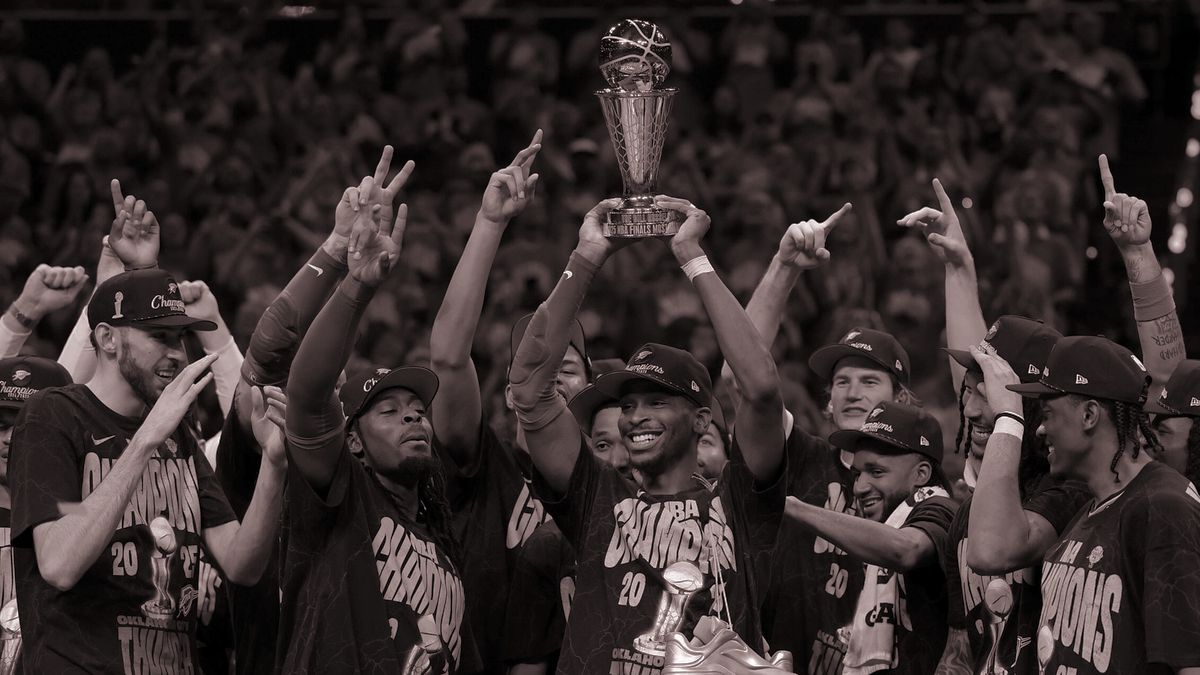
As regional sports networks collapse, Adam Silver may be sitting on the
streaming industry’s most coveted new package—and Amazon, Google, and a host of hungry newcomers all want in. |
|
|
|
In the sports world, distribution power is once again the coin of the realm—which means, among
other things, that content bundles are back. To wit: ESPN is distributing MLB’s out-of-network games this season, Amazon is all in on League Pass following its new deal with the NBA, and even Comcast is repositioning Peacock as a potential aggregator in this new streaming era rather than relying solely on the NFL season and the latest kids’ movie to keep the machine humming.
Now, as my pal John Ourand first
reported last month, Adam Silver and the NBA may start shopping a national “local” streaming package for a number of teams whose regional sports networks are collapsing—a product that could fetch billions in rights fees. It would mark the first time a package of in-market rights has been made available as a streaming add-on, but there are signs that audiences
are interested in this kind of R.S.N. replacement. Last year, according to Playfly Insights, about 15 percent of the NBA’s local broadcast audience watched through streaming apps—a small number, sure, but one that was in the single digits not too long ago. Meanwhile, a separate report from Hub Entertainment Research found that 34 percent of NBA fans said streaming had made it somewhat or much easier to find games, 43 percent found no difference, while 23 percent said it made things more
difficult.
So, who are the frontrunners in the race for the NBA’s recovered local rights? There are several important dynamics at play, including how to deal with local ad inventory (an important and elusive piece of the puzzle for streamers), complicated by the regional sports network structure. But it’s a challenge that Google and Amazon would relish. Other ambitious potential bidders that are hungry for active and stable fanbases, like DAZN and ESPN Unlimited, may also lunge at the
opportunity to become the gateway for tens of millions of fans across the country. Who should Silver choose? |
Jay Marine’s team at Amazon may have the most to gain. Not long after
acquiring MGM for a tidy $8.5 billion in 2022, the streamer has all but abandoned its premium content ambitions and pivoted toward sports and aggregation. Amazon has positioned itself as the go-to marketplace for streaming add-ons, and a package of local game rights sitting alongside (or folded into) League Pass makes obvious strategic sense for both Marine and Silver.
There are also big opportunities in terms of advertising revenue. Per Adweek, a recent Amazon report
found that customers who streamed multiple sports on Prime Video spent 12 percent more and “placed 17 percent more orders on Amazon.” At the same time, Amazon’s push into connected TV ad tech has been remarkable. The more hours that viewers spend streaming on connected TVs, and the more they opt into ad tiers (nearly half of all new streaming customers do, per Antenna), the more Amazon profits—regardless of what users are watching.
As the company noted in October, League Pass marks the
first time Amazon is offering a “100 percent programmatic sports offering with substantial scale.” Over the past couple of years, Amazon has also struck deals with Roku, Disney+, ESPN, Hulu, and Netflix to let advertisers programmatically buy inventory across those platforms through Amazon’s hub. All of that data, and all of those brand relationships, make Amazon the likely frontrunner. |
But don’t discount Google’s interest in the right package at the right price. A collection of local
sports rights serving audiences around the country—and a fatter slice of local ad inventory amid the mass migration from linear TV to connected TVs—is certainly an intriguing proposition for YouTube C.E.O. Neal Mohan.
After all, this year, nearly 20 percent of all local TV ad spend will be allocated to connected TVs—and YouTube is already projected to be one of the biggest beneficiaries, potentially capturing nearly 12 percent of total CTV ad revenues (roughly
$9.2 billion) in 2026, according to eMarketer. This tracks with YouTube’s continued encroachment on TV sets: It commands roughly 12.5 percent of all connected TV viewing time in the U.S., which is up two percentage points year over year, per Nielsen.
But ad revenue is only part of the equation. Christian Oestlien, YouTube’s head of its subscription business, and Justin Connolly, its head of sports, have seen an opening to disrupt most of the linear
distribution infrastructure as the cable system continues to crumble, which requires exclusive, high-demand events like NFL games, curated packages (like the skinny bundles), and even options like a nationalized local rights package for the NBA. |
While surveying their respective fiefdoms, ESPN’s Jimmy Pitaro and NBCU’s
Matt Strauss seem to have reached the same conclusion: There are only so many league rights packages capable of moving the subscriber needle. Broadly speaking, both executives have focused on establishing themselves as entry points into that programming rather than their exclusive home. Pitaro has said publicly that he wants ESPN to be the central hub connecting viewers to games that the network doesn’t actually air.
In any case, the biggest hurdle facing both ESPN and
Peacock is technology. The companies that thrive during the next generation in streaming will rely on advanced infrastructure, and while everyone has grand tech ambitions, few have the culture, talent, and capital to execute them—and Disney and Comcast are far behind their multitrillion-market-cap peers. Anyway, given ESPN’s deal with MLB, Pitaro might pass on this bundle to focus on MLB’s analogous package, which is rumored for 2028. But Comcast, with its cable distribution network,
could be a dark horse—especially given its new, $2 billion-a-year commitment to the NBA. |
DAZN’s Shay Segev has made no secret of his interest in consolidating these
diminishing local sports rights as part of a larger play to become a major force in the U.S. sports market. Last year, DAZN signed a deal to sublicense 38 Spanish-language UEFA Champions League games—on top of spending $1 billion (backed by Saudi money) to become FIFA’s official World Cup global broadcast partner. But the most aggressive move came with the collapse of Main Street Sports, home to local rights for 13 of the NBA’s 30 teams.
As Ourand has reported over recent months, DAZN
came in hard last December with a significant cash investment in Main Street Sports Group, hoping to integrate the FanDuel Sports Network streamer with DAZN and secure an immediate foothold. That deal ultimately fell apart—which worked to Silver’s advantage in assembling enough teams to make a nationalized local streaming hub worthwhile for prospective buyers.
Nevertheless, Segev has the financial firepower to persuade Silver to fragment his rights further and bring a new streamer into
the mix. Ultimately, though, DAZN is a relatively small player—and the NBA is hardly in growth mode. It’s not the NFL, and Silver’s priority after securing $77 billion just a few years ago may be keeping core local fans happy by putting games on accessible platforms they already use, rather than chasing the highest bidder—if that bidder turns out to be DAZN.
Regardless, it looks as though the NBA may be headed for another windfall—right under the wire. As everyone knows, NFL commissioner
Roger Goodell is preparing to extract new deals from his partners, one by one. NBA local rights might seem like a steal by comparison. |
Thanks, Julia. See you all on Thursday.
John |
|
|
|
Puck sports correspondent John Ourand and a rotating cast of industry insiders take you inside the executive suites
and owners boxes where the decisions that shape the entire sports business are made. You’ll hear interviews with players, network execs, and everyone in between. The Varsity is an extension of John’s private email for Puck by the same name. New episodes publish every Wednesday and Sunday. |
|
|
|
Ace media reporter Dylan Byers brings readers into the C-suite as he chronicles the biggest stories in the industry:
the future of cable news in the streaming era, the transformation of legacy publishers, the tech giants remaking the market, and all the egos involved. |
|
|
|
Need help? Review our
FAQ page or contact us for assistance. For brand partnerships, email ads@puck.news.
You received this email because you signed up to receive emails from Puck, or as part of your Puck account associated with {{customer.email}}. To stop receiving this newsletter and/or manage all your email preferences, click here. |
Puck is published by Heat Media LLC. 107 Greenwich St., New York, NY 10006 |
|
|
|
|