 |
|
Welcome back to Dry Powder. I’m Bill Cohan.
|
|
Tonight, my evolving thinking on the hypothetical NBCU-WBD merger chatter, plus another emerging deal target for Zaz: the remaining Murdoch entertainment assets, an opportunity being floated by Michael Nathanson. An intriguing consolation prize, to be sure. My analysis, below the fold.
But first, here’s my colleague Eriq Gardner, Puck’s resident legal expert, with a bit more on Bill Ackman’s legal threats…
- Ackman’s defamation drama: Like many, I've been closely monitoring the intensifying clash between Ackman and Business Insider over the publication’s articles alleging that his wife, former M.I.T. professor Neri Oxman, plagiarized in her 2010 dissertation. Ackman is now hinting at an imminent lawsuit, but I share the deep skepticism of those questioning whether the billionaire’s better half can convincingly prove falsity, given her acknowledged lapses in citation, a problem whose extent appears to be growing by the day. A defamation case in a New York court would also likely face challenges without a demonstration of actual malice, despite Ackman’s suspect contention that his wife is a private figure who need only show negligence.
However, those dismissing Ackman’s legal maneuverability might be underrating the Pershing Square founder’s capacity to exert legal pressure. While New York boasts a robust anti-SLAPP law designed to dismiss frivolous cases, it’s worth noting that B.I. is owned by the German publishing conglomerate Axel Springer. If I were Mathias Döpfner, I might be more apprehensive about German defamation law, where the burden of proof rests on the defendant to demonstrate truth (as opposed to the plaintiff proving falsehood), and where insults can lead to fines and even imprisonment. While there are American laws designed to counter libel tourism, the complexity of this situation should not be underestimated. —Eriq Gardner
|
 |
| The Murdochs in M&A Land |
| Bankers and analysts are getting worked up about new deal heat surrounding the usual suspects: Paramount, WBD, and Comcast. But an interesting idea is percolating on Wall Street regarding the fate of another couple entities: the remaining, winnowed Murdoch assets. |
|
|
|
| Consolidation season, after many false fits and starts, finally seems to be descending upon the mighty stewards of legacy media. Already, Bob Iger is ingesting Hulu, and Shari Redstone is ready to throw in the towel on her control of Paramount Global, hoping someone will come along to buy either National Amusements, the family holding company, or Paramount Global itself. Both potential Redstone exit scenarios are big-time long shots, at least in the current configuration, as my friend Rich Greenfield, the highly regarded media analyst at LightShed Partners, texted me on Sunday evening. “All the deal talk is vapor,” he wrote. “No one is dumb enough to buy Paramount right now.”
I couldn’t agree more with Rich. There isn’t going to be a near-term sale of either NAI or Paramount Global for all the many reasons shared during the past few months: a regulatory headache for any strategic buyer; the risk that a financial buyer would have to immediately pay off Paramount’s $11.2 billion of senior notes upon a change of control; the losses in the streaming business; the withering of linear TV, despite the long tail of CBS; the increasing irrelevance of cable; and, of course, the company’s $14 billion of net debt.
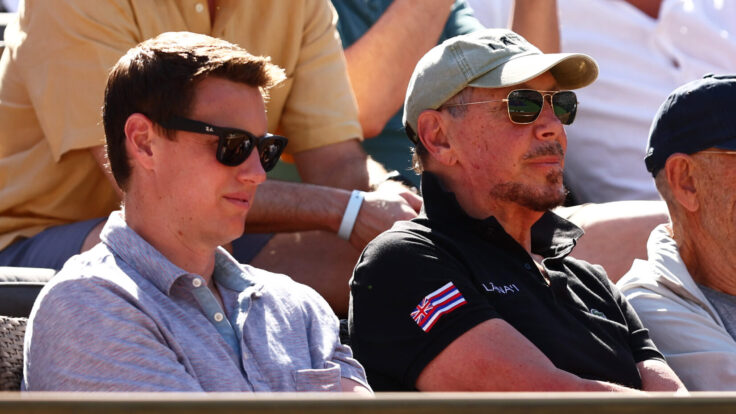
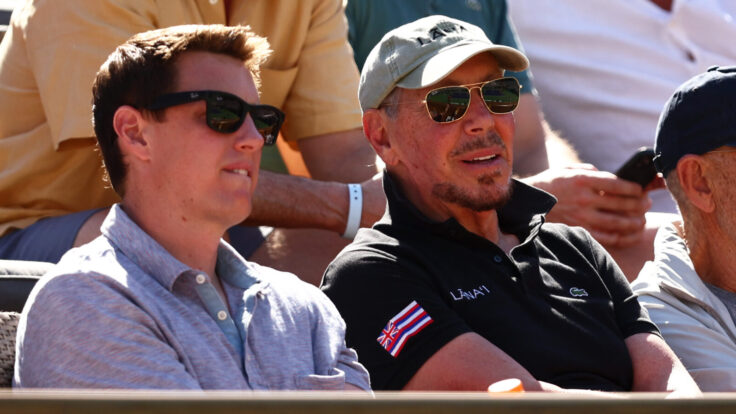
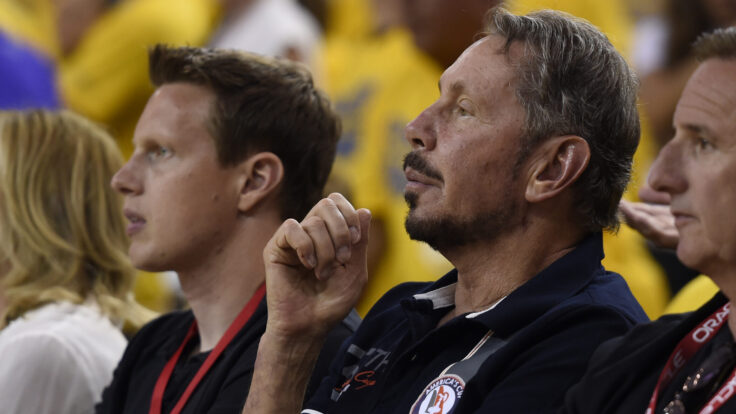
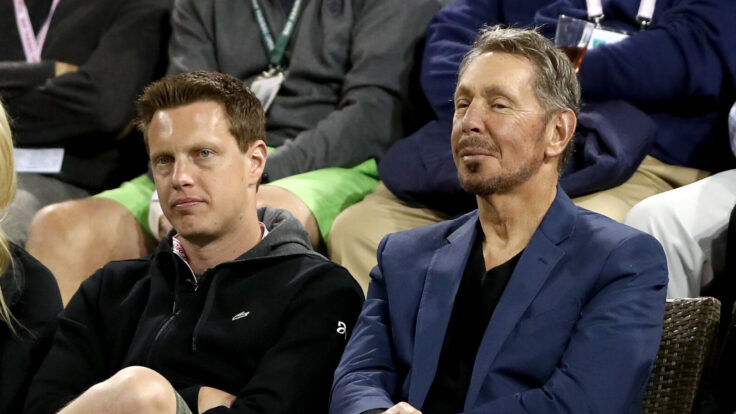
David Ellison, his father Larry, and RedBird Capital’s Gerry Cardinale can go ahead and kick some tires, but if they really just want Shari’s film studio, that’s what they should bid for, rather than risk guaranteeing the debt, pissing off Warren Buffett, Paramount’s largest shareholder, and enduring the tax consequences and banker fees associated with running a veritable Redstone estate sale. (This is not investment advice, but a deal for the studio could follow the playbook of Brian Roberts’ $72 billion takeover of AT&T Broadband, in 2001, which I helped architect in my previous life as a banker.)
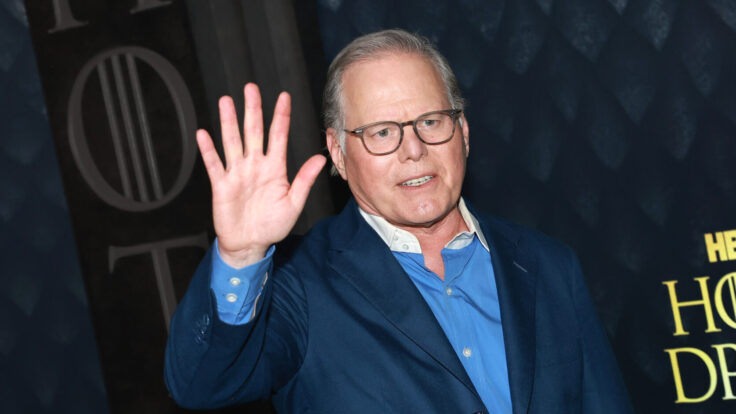
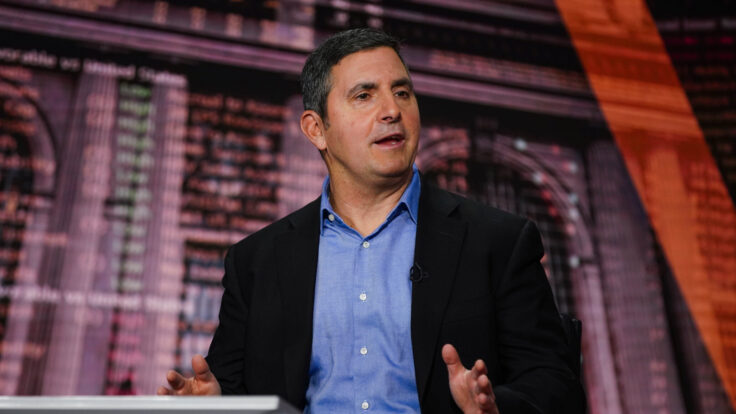
The Ellison tire-kicking is set against the chatter—which, of course, I have helped foment—about a potential deal between David Zaslav’s Warner Bros. Discovery and Roberts’ Comcast. This hypothetical arrangement would combine WBD and Comcast’s NBCU into a separate, publicly traded company. On paper, anyway, this one makes a ton of sense, even if it would require plenty of ego management. Both Zaz and Roberts presumably realize that the only way to compete against Disney and Netflix—to say nothing of Apple, Amazon, Microsoft, Meta, and Google—requires uniting to cut costs and make their streaming businesses profitable in the long run.
In the real world, industrial logic aside, the deal is not without challenges. First of all, of course, no deal can happen until after April, when WBD’s two-year Reverse Morris Trust waiting period expires. That leaves three months or so for Brian and David to discuss whether something can be worked out. And they’ve got a lot to talk about, like how to value NBCU sufficiently to ensure that Comcast controls the combined company, as I am sure is a requirement on the Philadelphia side. Comcast would need to own at least 51 percent of the combined NBCU/WBD, in the end, for any deal to happen.
That would mean that both of WBD’s big and sophisticated shareholders, John Malone and the Newhouse family, would have to be on board for owning a minority stake in a Roberts-controlled company. That sounds reasonable to me, given Comcast’s track record over the decades and the fact that they relinquished control in order for the smaller Discovery to merge with AT&T’s WarnerMedia assets. But there are big egos involved here, and who knows what feathers will be ruffled in such a deal when it comes to ownership.
Which leads to the second big issue Zaz and Brian have to discuss: Who would run the combined NBCU/WBD. Of course Zaz would want to run it, and Malone and Steve Newhouse may insist on that, too, given that they gave up voting control of Discovery to get the WarnerMedia deal done. That would require Roberts to swallow hard, considering that Zaz isn’t his favorite person these days. But Zaz is 64—his birthday was Monday; HB David—and even if the deal gets announced this summer, it’ll take at least a year for it to close. Give him his perch for a year or so, post-closing, with Zaz reporting up to Mike Cavanagh, and all will be just fine. This can work if the egos are kept in check. |
|
|
| Does Zaz have a backup plan percolating? Many surmised this when Axios reported that he and Paramount C.E.O. Bob Bakish got together a few weeks ago. But let’s turn to the other alternative fantasy deal making the rounds on Wall Street these days: a combination of WBD and the non-Fox News Fox Corp. assets.
I’m told this is the brainchild of Michael Nathanson, the media analyst and co-founder of Wall Street research shop MoffettNathanson. He declined to share his thinking with me, but from my Wall Street sources I’ve been able to glean the gist of the idea, which seems compelling enough. So, let’s call it a consolation prize for Zaz if he, Roberts, and Malone can’t work out a better deal.
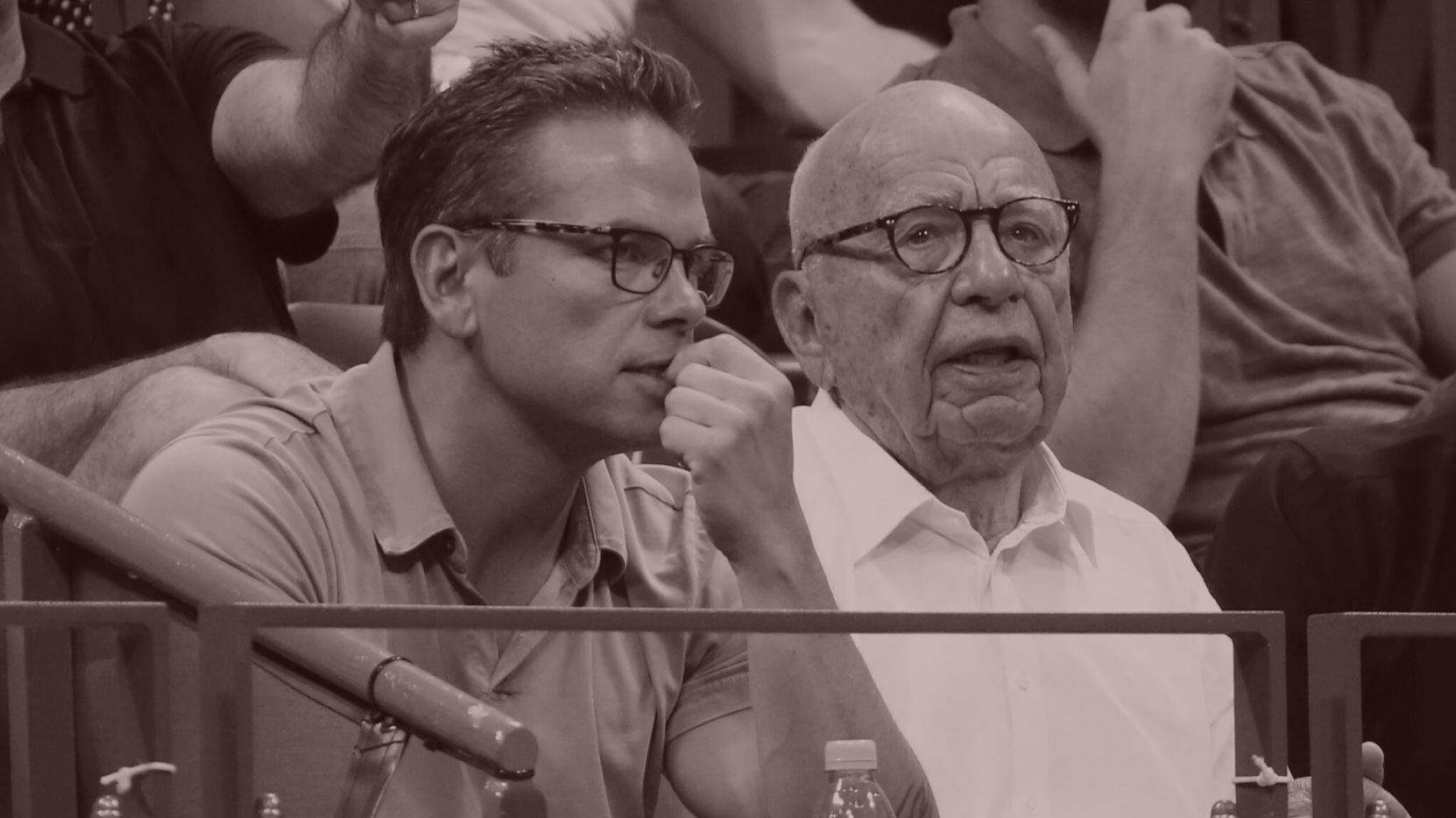
Here’s how it would work: We know from a failed merger attempt a year or so ago that the Murdochs wanted to combine their paterfamilias’ Fox Corporation (the assets of Fox that were not sold to Disney, in 2019, including Fox News, Fox Business, Fox Sports, Fox Entertainment, a group of Fox-affiliated local television stations, and Tubi—an impressive and fast-growing ad-supported streaming service) with his News Corporation (Dow Jones, which owns The Wall Street Journal; HarperCollins; the New York Post, etcetera) and make one big, happy, Murdoch-family enterprise. On paper, the assets are basically equally weighted—Fox Corp. has a market value of $14.5 billion while News Corp. is slightly below, depending on trading, at $14 billion. But it turned out the non-Murdoch shareholders of News Corp. didn’t like the deal, so Rupert, who controls about 40 percent of the voting shares in each company, decided to scuttle the merger discussions.
Nathanson seems quite bullish on Fox Corp. “Fox has deftly maneuvered through the tumult of the linear Pay TV ecosystem these past several years leaving it well positioned to rise above the intense headwinds most of its competitors will be forced to face head on,” he wrote in November. “The fact that Fox has already renewed its next set of affiliate fee deals quietly without even threats of a blackout suggests to us the company’s asset mix and business model is on the right track for continued growth.” Nathanson’s idea here is that Fox Corp. would first move Fox News, and presumably Fox Business, under News Corp. Then the rump of what’s left—Fox Sports, Fox Entertainment, and Tubi—would make their way over to Zaz at WBD.
Alas, it’s somewhat difficult to reverse engineer a precise income statement for these two collections of assets. According to Fox Corp.’s S.E.C. filings, the Fox “television” division—including its 29 local television stations, Tubi, Fox News, Fox Business, and probably a variety of other things—generated revenue of $8.7 billion in fiscal 2023, and EBITDA of $1 billion. (Got to give props to Fox for not using the lame “adjusted EBITDA” approach.) Meanwhile, Fox’s “cable network programming” division, which “produces and licenses news and sports content” for digital distribution, generated $6 billion in revenue and $2.5 billion in EBITDA.
It’s also not clear to me which lucky corporation—News Corp. or WBD—would end up with Fox Corp.’s $7 billion in debt. I suspect the best way to get this consolation prize deal done would be to sell Zaz the non-Fox News, non-Fox Business, and non-Fox local television assets out of Fox Corp.—sort of along the same lines of how Disney bought the Hollywood assets it wanted from Murdoch and left behind what it didn’t want—and then merge what’s left into News Corp., along with the Fox Corp. debt. After all, while Zaz has reliably proven that he could pay down WBD’s total debt, he certainly doesn’t want much more. |
|
|
| With the stipulation that this combination is not likely to be the first choice for Zaz, it would certainly help the Murdochs accomplish their goal, at long last, of combining Fox Corp. and News Corp., thus putting all their eggs into one family basket, not unlike what Shari Redstone did when she combined CBS and Viacom into Paramount Global. (Nota bene, Rupert, that didn’t work out too well for Shari.) It would also make it possible for the Murdochs to cut costs—they don’t need to be running and managing two public companies—and to focus on the news business they seem to love. It would probably also make life a little easier for Lachlan to be the C.E.O. of one larger company rather than two smaller companies, especially from his perch in Sydney.
For Zaz, picking up the Fox Sports and Fox Entertainment assets, without the Fox Corp. debt, would give WBD more heft in live sports, which Zaz seems to love, and in content production, a core strength of WBD, without having to worry about what regulators would say about trying to combine CNN with another news organization. Tubi would also help evolve the Max service, adding a top-of-funnel discovery tool and facilitating its entry into the AVOD game. Nathanson has written twice about this idea in the past month or so, I’m told, and my Wall Street sources think the idea has industrial logic and would be good for all three companies’ shareholders.
Others aren’t so sure. Greenfield, for one, thinks the idea of adding more linear TV and costly live sports to WBD would be “a death sentence,” causing him to joke “#goodluckzas” [sic], but also that it would be “brilliant” for Murdoch, if Zaz would go for it. It’s not likely to happen, of course, but sometimes it’s fun to watch and see if it does. |
|
|
|
| FOUR STORIES WE’RE TALKING ABOUT |
|
|
|
|
|
 |
|
|
|
Need help? Review our FAQs
page or contact
us for assistance. For brand partnerships, email ads@puck.news.
|
|
You received this email because you signed up to receive emails from Puck, or as part of your Puck account associated with . To stop receiving this newsletter and/or manage all your email preferences, click here.
|
|
Puck is published by Heat Media LLC. 227 W 17th St New York, NY 10011.
|
|
|
|