{{ 'now' | timezone: 'America/New_York' | date: '%b %d, %Y' }} |
|
|
Hello, and welcome back to The Best & The Brightest, your daily political dispatch from Puck. The
wonderful Leigh Ann is off today, back tomorrow, so it’s foreign policy Wednesday and I’m your host, Julia Ioffe.
Tonight, a strike carrier group, anchored by the U.S.S. Gerald Ford (the largest aircraft carrier in the world), is ready to go in the Caribbean, and Trump has signed
off on covert action inside Venezuela. But what is the plan, really? Is there one? John Bolton offers his psychoanalysis of the president. |
|
|
A MESSAGE FROM OUR SPONSOR |
The AI for problem solvers When you're tracking the real story behind the headlines—connecting dots across policy and personalities—Claude helps you understand the patterns that matter.
Anthropic built Claude on a simple principle: AI should be a force for human progress. That means creating an AI system that's straightforward to use—a partner to help you think through complexity rather than racing past it. No quick takes, no surface-level analysis.
Just deeper thinking.
With every update, Claude gets smarter, more useful, and more balanced. Try Claude for free and see why problem solvers and independent thinkers around the world are choosing Claude. Learn more |
|
|
- The
B.F.F. Awards: The Ben Franklin Fellowship, the conservative group trying to do for the American diplomatic corps what the Federalist Society did for the American judiciary, just announced their brand-new diplomatic awards. The prizes, which were developed in collaboration with the State Department, include the Ben Franklin National Interest Award, which comes with
$10,000, for the foreign service officer who displays the most “creative diplomacy … in the face of foreign competition or hostile multilateral organizations.” (Emphasis mine.)
Other awards are similarly political in nature. There’s the Dwight Eisenhower Removal Cooperation Award ($2,500), bestowed upon “the officer whose creative diplomacy best facilitated the return of illegally present foreign nationals from the United States to their home countries.” (Recall our
reporting about how American diplomats are being press-ganged into helping the Trump administration with mass deportations.) Then there’s the Thomas Jefferson Free Speech Award, also $2,500, for the diplomat who “best exposed or hindered efforts of foreign governments or international actors, particularly online, to censor the free
expression of Americans.” And, my personal favorite, the $2,500 Martin Luther King Jr. Meritocracy Award, given to “the officer whose creative work best advanced the standard of meritocracy in State Department practices of hiring, assignments, and promotions.” Get it?
Some Staties fear these prizes will supplant the official and time-honored awards the department has given for meritorious service—and which are key for promotions up the ranks. Others noted that nominations are to be sent
to the B.F.F.’s inbox at Proton Mail. Sending details of a diplomat’s work, which may very well be classified, to an outside, non-State email address is a big no-no. Just ask Hillary Clinton. (The State Department did not respond to a request for comment.) - “Things happen”: While meeting with Saudi Crown Prince Mohammed bin Salman at the White House yesterday, President Trump was asked about Jamal
Khashoggi—the Saudi dissident, Washington Post journalist, and U.S. green card holder whose brutal 2018 murder, according to the U.S. intelligence community, was committed with M.B.S.’s knowledge. Nevertheless, Trump stood up for his friend and fellow lover of gilded opulence. “You’re mentioning someone that was extremely controversial,” he shot back at ABC’s
Mary Bruce, who posed the question. “A lot of people didn’t like that gentleman that you’re talking about. Whether you like him or didn’t like him, things happen. But [M.B.S.] knew nothing about it. You don’t have to embarrass our guest.”
By this point, it should not exactly be surprising to hear Trump side with a foreign dictator over a dismembered American permanent resident and journalist. I understood this to be a tacit policy as soon as Trump was
sworn in: Should anything happen to an American journalist at the hands of a strongman that Trump admires—Vladimir Putin, say, or M.B.S.—don’t assume that this administration will go to bat for them as Biden did for Evan Gershkovich. Yesterday, Trump confirmed that he would not have our backs. “The playbook is set,” said Karen Attiah, Khashoggi’s former editor at the Post. “If you want to kill journalists, be a
‘security partner’ to the U.S., dump a bunch of cash, and wait seven years.” (The White House did not respond to a request for comment.)
|
|
|
The president’s saber-rattling in the Caribbean reflects his instinct for both political
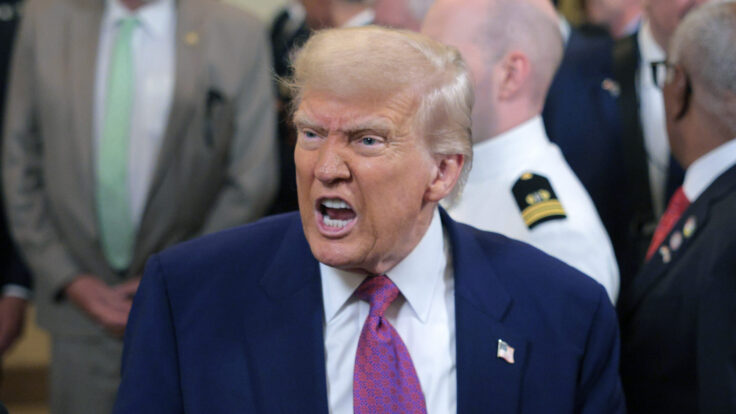
theater and indecisiveness, as well as the competing advisors in his ear. In fact, Trump’s plan for Venezuela may be a mystery even to himself. “I think he thinks about what will make him look tough, but he doesn’t think much beyond that,” said John Bolton. “He never does.” |
|
|
Once again, all of Washington—and the country and the world—wait and speculate: Will he or won’t he? Over the
summer, we wondered whether Donald Trump would strike Iran. (He did.) Four months later, we’re back waiting on this man, who ran as the “president of peace,” to decide whether he’ll strike Venezuela. Trump has already ordered alleged narcotrafficking boats to be blown out of the water. Now he has publicly authorized covert C.I.A. action
inside Venezuela, deployed Reaper drones and F-35s to Puerto Rico, and moved a carrier strike group into the region.
In the cases of both Iran and Venezuela, regime change has not been an overt or even primary goal, at least for Trump. “I tried to get him to do it a lot, but he didn’t want to do it,” Trump’s erstwhile national security advisor and regime-change aficionado John Bolton told me. “He said earlier, with Iran, that he doesn’t seek regime change. But once he’s
in it, it becomes about, what does he think he can get credit for?” Likewise in Venezuela, Bolton said, Trump is mostly focused on the appearance of strength. “I think he thinks about what will make him look tough, but he doesn’t think much beyond that,” Bolton went on. “He never does.” |
|
|
A MESSAGE FROM OUR SPONSOR |
|
|
This, of course, leaves Trump wide open to the influences of people who do think beyond political
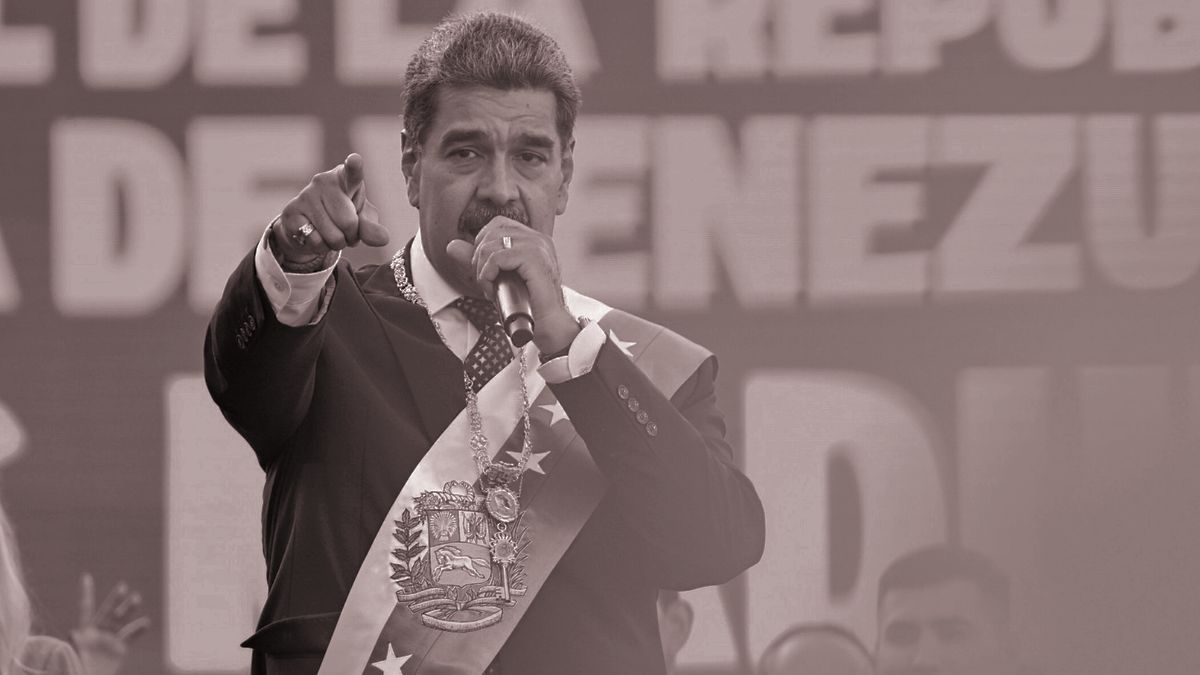
theater. Secretary of State Marco Rubio, still moonlighting as the president’s national security advisor, has long wanted to oust left-wing Venezuelan dictator Nicolás Maduro—Rubio is the son of Cuban refugees from another left-wing dictatorship—and is reportedly driving much of the process.
Neither State nor the
White House responded to repeated requests for comment on Rubio’s role or the administration’s Venezuela policy more broadly. Nor did Bolton have the latest dish; in fact, he’s being prosecuted by the Trump D.O.J. for allegedly mishandling classified documents. But he’s been around the players long enough to understand how they think. “When I talked to him and he was in the Senate, Rubio was a strong supporter of overthrowing Maduro,” Bolton told me. “But they don’t have a functioning N.S.C.
process. Instead, you’re in Trumpworld, where the last person who talks to him has the most influence.”
And so far, it’s not really clear what Trump wants. The messages coming out of the White House are a jumble: Officials say the point is to fight narcotrafficking, and also claim the regime itself is the main narcotrafficker via the “Cartel de los Soles.” But the Cartel de los Soles is not an actual cartel. Rather, it’s the
derisive moniker that Venezuelan journalists have given the corrupt Maduro regime, whose security forces are indeed reportedly in bed with narcotraffickers. Trump says he’s open to talking to
Maduro, but has also made clear that he wants him out—probably. The carrier strike group is in the region because, in the president’s words, “it’s gotta be somewhere, it’s a big one”—and it’s also there to pressure Maduro to leave power peacefully. And so on.
Bolton characterized the administration’s policy as a “muddle”
of ideas. “It’s a little bit of an anti-narcotics strategy, a little bit of an anti-migration strategy. Rubio may have in his mind what he wants to do, but that’s not what’s happening.” As for what Trump could be contemplating? “I think he doesn’t know, either,” Bolton said. “If you look at different comments he’s made, I think it’s really swirling in his head and he doesn’t know what to do.” |
The campaign to oust Maduro, which began with a failed attempt during Trump’s first presidency, fits neatly
into the administration’s broader project of supporting right-wing parties all over the world, from AfD in Germany to Viktor Orbán’s regime in Hungary. Trump’s sympathies are especially clear in Latin America, where his administration has levied 50 percent tariffs
against Brazil for the alleged “intimidation, harassment, censorship, and prosecution” of right-wing former president Jair Bolsonaro and thousands of his supporters. It has also sanctioned the chief justice of the Brazilian supreme court for convicting Bolsonaro over his January 6th–like attempt to overturn his 2022 election loss.
Meanwhile, Trump hosted Javier Milei, the ultra-libertarian,
cosplaying president of Argentina, at the White House. He also promised the country $20 billion in economic aid if Milei’s party prevailed in the country’s midterm elections. (They did.) The administration has
gone after the left-wing president of Colombia, Gustavo Petro, and thrown its support behind the new centrist president of Bolivia, Rodrigo Paz. (Christopher Landau, the State Department’s number two, led a U.S. delegation to Paz’s
inauguration.) |
|
|
But the pressure campaign on Maduro is, so far, not having the intended effect. “You haven’t seen any
high-level defections or fracturing in the regime,” said one former senior defense official who specializes in the Western Hemisphere. “This has proven to be a pretty remarkably cohesive regime.” The Trump administration, this source explained, wants to display a credible military threat to force Maduro to leave peacefully, but they don’t want to have to actually make good on it. The result is “a game of chicken, because Maduro is unlikely to leave unless he’s somehow forced to do so, and then
that puts the Trump administration in a position of either having to go ahead with further escalation or finding some other off-ramp.”
So, will he or won’t he? Military buildups are a little like Chekhov’s gun: If you bring it out in Act I, it has to go off before the end of the play. On the other hand, launching military action could be politically costly, especially if it leads to American casualties. Decapitating an autocratic regime also risks creating a failed state,
à la Iraq or Libya—this time in America’s backyard. Experts believe the Venezuelan opposition, led by Nobel Peace Prize winner María Corina Machado, is strong enough to fill any power vacuum. But Venezuela itself lacks many of the democratic institutions it would need.
On yet another hand, Trump’s base—and his vice president and many of his national security appointees—are
vehemently against foreign adventures and especially regime change, scarred as they are by Iraq and Afghanistan. Trump campaigned as an isolationist, which should give him some leeway to take his finger off the trigger.
If this all turns out to be some elaborate bluff, Bolton believes that Trump can bend the political narrative to his will.
“He’ll find something to declare victory about,” he said, speculating that Trump could get Maduro to make a meaningless concession like, say, formally agreeing not to empty Venezuelan prisons and mental institutions into the United States—which Trump has claimed is happening despite scarce evidence. “He could then say, See? I forced him into it!” Bolton mused. “Trump is very good at finding victory where nobody else does.” |
That’s all from me for this week, folks. I’ll see you back here next Wednesday, ahead of the
Thanksgiving holiday. In the meantime, good night. Tomorrow will be worse.
Julia |
|
|
Join Emmy Award-winning journalist Peter Hamby, along with the team of expert journalists at Puck, as they let you in on the
conversations insiders are having across the four corners of power in America: Wall Street, Washington, Silicon Valley, and Hollywood. Presented in partnership with Audacy, new episodes publish daily, Monday through Friday. |
|
|
Unique and privileged insight into the private conversations taking place inside boardrooms and corner offices up and down Wall
Street, relayed by best-selling author, journalist, and former M&A senior banker William D. Cohan. |
|
|
Need help? Review our
FAQ page or contact us for assistance. For brand partnerships, email ads@puck.news.
You received this email because you signed up to receive emails from Puck, or as part of your Puck account associated with {{customer.email}}. To stop receiving this newsletter and/or manage all your email preferences, click here.
|
Puck is published by Heat Media LLC. 107 Greenwich St., New York, NY 10006 |
|
|
|