 |
|
Happy Sunday, and welcome back to Dry Powder.
|
|
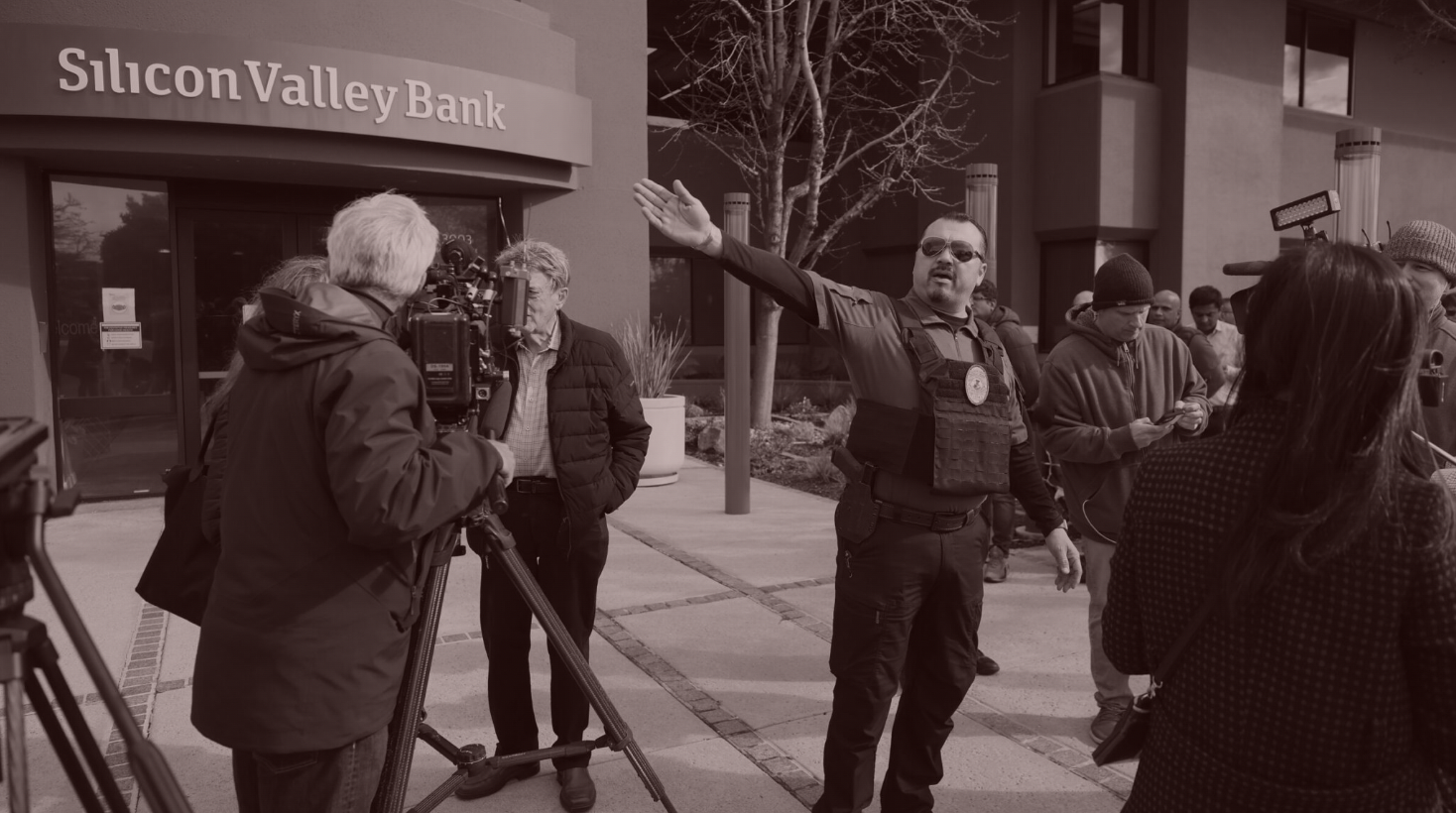
The SVB collapse was the fastest bank failure on record, basically 24 hours from start to finish. But in the days leading into it, a bicoastal drama unfolded as desperation began to overwhelm the bank. Today, the story behind the story, based on conversations with various bankers, traders, and dealmakers.
Also, a note that there will be no Dry Powder this Wednesday while I’m traveling in Argentina. Recommendations are welcome—just reply to this note. I’ll return next Sunday to try to make sense of the next phase of this already infamous and still unfolding fiasco.
Bill
|
 |
| The Last Days of SVB |
| A double-Goldman scramble, a “wall-cross,” an equity book that wasn’t, a Moody’s downgrade crisis, and a board mulligan: the real story about what went down during the final days of Silicon Valley Bank. |
|
|
|
| The beginning of the end of Silicon Valley Bank commenced on Friday, March 3, when the Goldman Sachs bond trading desk got an interesting inbound call: SVB, the venerable central nervous system of the tech industry, was seeking its assistance to negotiate the purchase, as a principal, of a $24 billion chunk of SVB’s portfolio of Treasury securities and mortgage-backed securities. The bonds were part of the investment portfolio that SVB had decided to sell in order to meet an unexpected rush of withdrawals from its uninsured depositors, such as venture-capital firms and their portfolio companies.
Goldman is Goldman—the firm handles deals like this all the time, and well. The opportunity this time was fairly straightforward. Goldman would buy the portfolio at a significant discount and then sell the bonds over the course of the following weeks, providing SVB with liquidity while Goldman sought to arbitrage the spread. Working through the weekend, Goldman’s traders would have to value each of the bonds separately, taking into account their duration, their interest rates and their credit profile, among other things, including what Goldman thought each bond would fetch in the increasingly volatile market.
But the SVB deal was slightly unusual in a couple of ways. Not only was the SVB bond portfolio huge, it was also complicated, comprising some 291 different CUSIPs, or individual bonds, at low interest rates, bought at the top of the market. Goldman divided the 291 bonds into seven different segments and analyzed them in these buckets. And then there was another difference, but one that may not have been so readily apparent on this Friday: serious time pressure.
And so began one of the longest weeks in the recent history of the financial markets. This account is based on public filings and my conversations with various bankers, traders, and dealmakers. |
|
|
| Beginning Sunday, March 5 and into Monday, March 6, Goldman had a back-and-forth with SVB about what it was willing to pay for the $24 billion of bonds. It was a delicate process. Interest rates had moved up dramatically since SVB bought the bonds, driving down their value, and there was still plenty of volatility in the debt markets on a daily basis.
Both SVB and Goldman knew the portfolio would not be purchased at par. It was just a question of how big the discount would be, so that SVB believed it was getting a fair price for the portfolio and Goldman thought it was buying the portfolio at a price where it could make money. The Goldman bond trading desk only knew that a client of the firm had a portfolio to sell and wanted the best execution it could get; the Goldman traders did not know that SVB’s very existence was at stake.
Finally, the two sides agreed that Goldman would buy the $24 billion SVB bond portfolio for $21.45 billion, or 89.4 cents on the dollar. On Wednesday, March 8, the Goldman traders got the go-ahead from SVB for the deal. At the same time that Goldman got the $24 billion face amount of bonds, SVB got Goldman’s $21.45 billion in cash. Then the Goldman trading desk immediately started to reduce the risk of owning the portfolio by hedging the interest-rate risk and the duration risk. On Thursday, March 9, Goldman started selling the portfolio to its clients.
Of course, it turned out, the beginning of the beginning of the end of SVB had begun a week earlier. At the same time that the Goldman bond-trading desk was buying, on the other side of the wall that divides the private side of Goldman (the investment bank) from the public side (the principal traders), the firm’s equity capital markets team, led by Erich Bluhm, was busy trying to underwrite a $2.25 billion equity deal for SVB. That process, as far as Goldman knew, began on February 28, when Moody’s, the rating agency of which Warren Buffett is the largest shareholder with nearly a 14 percent stake, informed SVB that it was considering lowering the ratings on SVB’s debt by two notches, a big move down, because of growing concern about fleeing uninsured deposits. Moody’s told SVB it was going to its internal credit committee on March 2.
The call from Moody’s sent the SVB management team swirling, and they called Goldman to talk about doing a new equity deal. Goldman had previously done two equity deals for SVB, one in August 2021, for around $1 billion, priced at $564 a share, and another in March 2021, for more than $1 billion, priced at $500 a share. At this point, the SVB stock was trading around $270 a share. |
|
|
| The SVB management team flew to New York City on Thursday, March 2 to meet with Moody’s. The meeting went well enough that the SVB management believed the two-notch downgrade was off the table and that Moody’s would downgrade the bank only one notch. But by Saturday morning, March 4, SVB got the news from Moody’s that it was back to thinking about a two-notch downgrade. Worse, Moody’s told SVB that it would be announcing its decision about the downgrade early in the following week.
The SVB management team got spun up again. Over the weekend, SVB was on Zoom calls with both sides of Goldman—trying to figure out how much of its investment portfolio to offload and how much new equity to raise and how to do it. Every time the conversation turned to selling the portfolio, the Goldman investment bankers working on the equity deal got returned to the Zoom waiting room, cut off from the conversation.
With time short to try to get a new equity deal done, the Goldman bankers proposed doing a “wall cross,” Wall Street-speak for bringing select potential investors into a deal early and in effect pre-selling it to them, but only after they have agreed they won’t trade on the non-public information that they were about to be privy to—i.e., that SVB wanted to sell equity. It’s a way to fill out an order book in advance of a deal going live, sort of along the lines of how Harvard pre-raises a bunch of money quietly before it announces a new capital campaign. Both maneuvers are all about building momentum. One institution that signed up for the equity offering relatively quickly—to the tune of $500 million—was General Atlantic, the private equity firm run by Bill Ford. Ford had a long standing relationship with SVB and wanted to help out. That was a good start, but another $1.75 billion was still needed.
And then a new problem cropped up: the SVB management team needed to redo its 2023 financial projections for the bank. What the bank had told investors at the Bank of America conference in mid-February was no longer operative. Not only was SVB’s first quarter going to be bad, but the whole year was going to be worse than SVB had previously told investors. The management team worked all weekend to recut the bank’s projections and present the new model to the SVB board of directors.
Goldman’s hope was that the SVB board would sign off on the new projections on Monday and then Goldman could start doing the “wall cross” on the morning of Tuesday, March 7, and build the book on Tuesday and Wednesday. If all went according to SVB’s plan, at around the same time it announced the $2 billion-plus loss on the sale of the investment portfolio, Goldman’s investment bankers would be able to say that the equity deal to fill the hole was also happening. In other words, a complicated behind-the-scenes series of financial challenges would go through the car wash and come out clean and sparkly. If everything worked according to the plan, there would be no need for people to panic. |
|
|
| Alas, that did not happen. The SVB board rejected the management’s re-cut projections. Management was told to go back to the drawing board and try again. So Monday was lost. The new financial model was not ready until Tuesday, March 7. Meanwhile, Goldman decided it could no longer execute the “wall cross” because it was no longer able to tell potential investors when it would be able to share with them the new projections. Goldman couldn’t call up, say, Fidelity, and invite them to do a “wall cross” without knowing precisely when the new projections would be available and how the offering would play out.
Then there was Moody’s and its coming downgrade. Perhaps SVB should have begged Moody’s to hold off until the outlines of the equity deal could come into clearer focus. A week more time would probably have done the trick. But Moody’s told SVB on Tuesday that, come hell or high water, it was going to make its announcement about the downgrade somewhere between the afternoon of Wednesday March 8 and the afternoon of Thursday March 9.
Goldman added the uncertainty about Moody’s downgrade of SVB to the offering documents and to the investor presentation for the offering, both of which were filed with the Securities and Exchange Commission (and can still be viewed on the S.E.C.’s website). “We have been in dialogue with Moody’s,” the bank wrote in the offering materials, “who we understand are in the process of considering potential ratings actions with respect to SVB, which could include a negative outlook, a downgrade of one or potential two notches and/or placing our ratings on review for such a downgrade.”
Goldman decided to launch the offering naked, with just the $500 million commitment from General Atlantic. Goldman told SVB the deal would now be priced lower than they had previously considered possible, given the rumors circulating in the marketplace and SVB’s falling stock price. It was unchartered territory: SVB and Goldman were trying to solve a liquidity crisis with an equity offering. SVB didn’t love hearing the news that the stock would be sold at a serious discount to $270 a share, but it realized its options were diminishing, and fast.
Recent events had painted SVB into a corner. In the end, the SVB management appeared more afraid of a double downgrade from Moody’s than issuing equity at a previously unfathomably low price. When the equity deal discussion started, SVB’s market value was around $16 billion, so a $2 billion equity deal was not unreasonable. On Thursday March 9, as rumors swirled around the bank and the uninsured depositors started heading to the exit, SVB’s stock fell by more than half, to $106 per share. |
|
|
| After the market closed on Thursday, March 9, SVB announced it was going to do the equity deal and that it had sold its $24 billion investment portfolio (to Goldman) at a loss of around $2.5 billion. On the news, in the aftermarket, the SVB stock fell about 5 percent. Goldman started building the equity book. Orders were coming in from hedge funds with no order limits and from long-only funds. Lots of investors were dialing into the investor conference call to hear the story. The stock was hanging in. Goldman thought it would be able to get the deal done, incredibly.
But then, at around the same time, Silvergate Bank, the crypto institution, announced that it was winding down its operations (in large part thanks to the forensic work of my friend MarcCohodes, the short-seller). That’s all it took to kill the SVB equity deal. The Twitterverse went wild on the Silvergate news. The SVB stock started plummeting and didn’t stop until aftermarket trading on Thursday halted at 8 p.m. That evening, Moody’s downgraded SVB one notch but kept the stock on watch, with a negative outlook. It was a small, Pyrrhic victory for SVB, but it came too late to do much good. S&P also came out with its downgrade on Thursday, too. Somehow, in the midst of the rumors and the downgrades and the Silvergate news, Goldman had assembled a decent book of demand for SVB’s stock at $95 a share.
But SVB couldn’t accept the deal and Goldman couldn’t offer it to SVB. SVB was required to do a form of “bring down” opinion for investors, telling them essentially that nothing had changed materially in the company’s financial or operating position since it had agreed to do the deal. The problem was that since the deal had been launched on Wednesday, some $45 billion of deposits had fled the bank in 24 hours. There was a serious material change in SVB’s financial condition. SVB couldn’t price the deal and the bank knew it. Goldman couldn’t even offer the money to SVB, despite—again, miraculously—having an order book filled at $95 a share that included some big mutual funds. The message was communicated between Goldman’s lawyers and the bank’s lawyers: The equity deal was dead. On Friday, March 10, the FDIC put the bank into receivership. A week later, on March 17, SVB filed for bankruptcy. |
|
|
| It was the second largest bank failure in history and one likely caused by the fact that SVB’s super-sophisticated and wealthy uninsured depositors decided to pull their money out of the bank in 24 hours. The bank run was, of course, exacerbated by the fact that the bank’s management had invested the deposits in long-duration Treasuries and mortgage-backed securities at the top of the market and had compounded that mistake by failing to hedge the interest rate risk. Twitter rumors didn’t help either, nor did the fact that deposits could be moved quickly on a smartphone. It was the fastest bank failure on record, basically 24 hours from start to finish.
It was also yet another example of how Goldman can be everything, everywhere all at once on Wall Street. The New York Times has reported that Goldman made, or will make, more than $100 million in profit on the trade. I had previously been told by someone knowledgeable that Goldman was sitting on a profit of more than $200 million on the trade with SVB.
But these numbers—more than $100 million or more than $200 million in profit—have people inside Goldman scratching their heads. At the moment, I’m reliably told, Goldman has only sold around half of the portfolio of bonds it bought from SVB and it may be as long as six weeks before Goldman has sold down the full portfolio and is able to determine what its profit will be, if any. I’m told that if Goldman makes $50 million in profit at the end of the sale process, it will be fortunate and that it probably paid too much for the bonds, given the volatility that resulted in the debt markets after SVB and then Signature Bank collapsed and Credit Suisse almost did. Still, not bad for a few weeks’ work. |
|
|
|
| FOUR STORIES WE’RE TALKING ABOUT |
 |
|
 |
|
 |
| Netflix Plot Twist |
| On the economic Catch-22 pricing Netflix out of major films. |
| MATTHEW BELLONI |
|
 |
|
|
|
|
|
 |
|
|
|
Need help? Review our FAQs
page or contact
us for assistance. For brand partnerships, email ads@puck.news.
|
|
|
|
Puck is published by Heat Media LLC. 227 W 17th St New York, NY 10011.
|
|
|
|