{{ 'now' | timezone: 'America/New_York' | date: '%b %d, %Y' }} |
|
|
|
Hello, and welcome back to The Best & The Brightest. I’m Leigh Ann Caldwell. A
very happy birthday to my mom.
Sen. Markwayne Mullin’s confirmation hearing to become D.H.S. secretary isn’t expected until next week, but he’s already acting the part. The gaffe-prone, filterless, always-willing-to-chat-to-the-media senator from Oklahoma has suddenly gone mum, telling reporters this week, “I have to send all the questions I get to the White House now.” He’s also being trailed around the Hill by two plainclothes security agents. Mullin will be
missed.
Meanwhile, I have some news and notes about the latest chatter on Capitol Hill, and on K Street, including about Katie Miller’s unexpectedly pro-solar tweets, and why Democrats are mostly silent on the Paramount purchase of Warner Bros. Discovery.
Mentioned in this issue: Madison Sheahan, Marcy Kaptur, Luke Thompson, John Cornyn, Ken Paxton, John
Thune, Katie Miller, Stephen Miller, Elon Musk, Sam Altman, David Ellison, David Zaslav, Pam Bondi, Elizabeth Warren, Cory Booker, Sam Liccardo, and more… |
|
|
|
Instagram Teen Accounts: Automatic protections for teens
Instagram Teen Accounts have built-in protections for who can contact teens and the content they can see. Now, content settings are inspired by 13+ movie ratings, with a stricter setting available for parents who prefer extra controls. Nearly 95% of parents say Instagram Teen Accounts help safeguard their teens. We will continue adding features to help protect
teens online. Learn more |
|
|
|
- Noem’s
D.H.S. candy bowl: The grift perpetuated by Kristi Noem and her closest confidants at the Department of Homeland Security is already well-documented. Now Madison Sheahan, a 29-year-old former top Noem aide and deputy ICE director who resigned in January to run for Congress, is facing allegations about her own stewardship of taxpayer dollars. And they’re coming from the orbit of none other than Vice President J.D. Vance.
Sheahan is
seeking to unseat Democratic Rep. Marcy Kaptur in Ohio’s 9th district, a prime pickup opportunity for Republicans in a tough midterm year. She’s raising respectable money in a Republican primary, but Luke Thompson, one of Vance’s top political advisors, has circulated a Washington Examiner story that blames Sheahan for wasting millions
in D.H.S. funds on ICE vehicles that agents reportedly don’t want to use because they are prominently emblazoned with the organization’s name and logo. “Bold move to run,” Thompson told me in a text message, adding that he believes Noem is setting Sheahan up to take the fall for the $220 million border ad scandal. (Sheahan could not be reached for comment.) A scandal-plagued Republican might have trouble against a Democrat who continuously defies the odds in a district that Trump won by 11
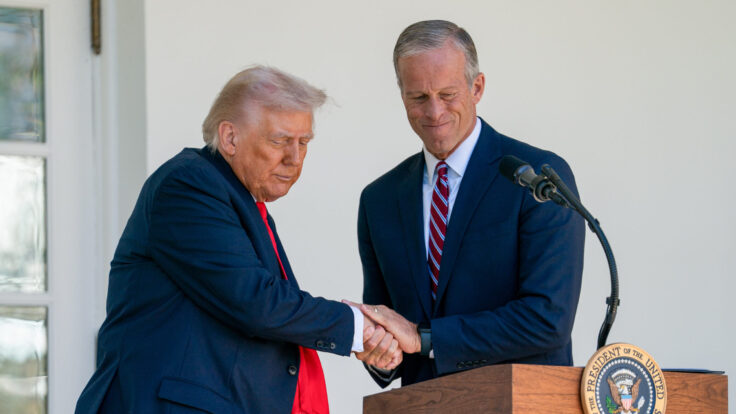
points in 2024. Plus, the stench of Noem’s D.H.S. and its controversial enforcement tactics might be too toxic for voters. The White House reportedly told House Republicans this week at their retreat to avoid talking about mass deportations ahead of the midterms. - The growing SAVE drama: The new conservative litmus test is whether Republicans are willing to alter the filibuster to pass the SAVE America Act through the Senate. Sen. John
Cornyn, a longtime defender of the filibuster, now says he’s fine with changing it. In a performative New York Post op-ed, Cornyn claimed that Democrats’ “recklessness and radicalism” changed his mind. (Never mind that Democrats have not actually blocked the bill, which hasn’t even been brought to the
floor.)
Cornyn, of course, is seeking Trump’s endorsement in his primary runoff against Texas Attorney General Ken Paxton—which the president hinted was imminent last week, though he has yet to deliver. Paxton, for his part, has publicly defied Trump’s call for the non-endorsee to drop out, saying he’ll stay in the race regardless unless the Senate passes the SAVE America Act. It’s a perfectly constructed, and possibly inescapable, political trap built
around the number one issue currently animating far-right activists: preventing noncitizens from voting (which almost never happens and is already illegal).
Meanwhile, online activists are deploying familiar tactics to pressure the media. They have targeted Punchbowl, publishing the company’s go-to-market commercial materials and framing its business model as a pay-to-play scheme—all because they
reported Senate Majority Leader John Thune’s remarks that he doesn’t have the votes to pass the SAVE Act or change the filibuster, and most recently, that paid influencers were among those pushing him to change the filibuster rule. So now influencers are deploying the age-old tactic of attacking the messenger.
|
|
|
|
Renewable energy industry types are wondering why Stephen Miller’s wife seems to have
developed a sudden interest in their field. Not that they’re complaining. |
|
|
|
Katie Miller, the podcaster and wife of Stephen Miller, is a prolific
presence on social media. As a self-described natalist, she typically posts about the declining U.S. birth rate; defends Elon Musk, her former full-time boss; or slams his rivals, like Sam Altman at OpenAI and the Anthropic guys. But over the past month, she’s added a new subject to her repertoire: the benefits of solar energy. In that period, Miller has published nearly a dozen
posts promoting solar development—often highlighting China’s expansive build-out while arguing that U.S. investment in solar is fundamentally a national security issue.
That activity has prompted chatter among the renewable energy industry and those adjacent to it. Executives, congressional staffers whose bosses work on energy policy, and advocacy
groups are all asking the same question: Who, if anyone, is funding this seemingly newfound interest? Plenty are quietly relieved or even thrilled that someone thought to do so. Renewable energy, after all, has had a tough year. |
|
|
|
Instagram Teen Accounts: Automatic protections for teens
Instagram Teen Accounts have built-in protections for who can contact teens and the content they can see. Now, content settings are inspired by 13+ movie ratings, with a stricter setting available for parents who prefer extra controls. Nearly 95% of parents say Instagram Teen Accounts help safeguard their teens. We will continue adding features to help protect
teens online. Learn more |
|
|
|
In the first year of Trump II, for instance, Republicans ended Biden-era tax credits for
renewables, while the White House has railed against solar and wind as unreliable. Meanwhile, the president signed an executive order calling on the Interior Department to “end preferential treatment” for wind and solar, while the Department of Energy dissolved its renewable division. Nearly every project in the department’s pipeline stalled and developers bailed.
And yet solar may suddenly be having a moment. Miller insists that she is not being paid for her posts. “I do not have a paid
partnership” with the American Clean Power Association, the largest clean energy trade group, she told me, echoing the same thing she said in a statement to Politico. Miller did work full-time for Musk during the administration’s early months, however, and several of his companies are heavily invested in solar power and battery
storage.
Regardless of the motive, many in the industry don’t hate it. “We have to try new creative things rather than let this administration drive the narrative with their baseless attacks on solar and wind,” one Senate staffer working on renewable issues told me. Around the same time Miller began tweeting about solar, meanwhile, major industry groups had started trying to use MAGA to appeal to MAGA. First Solar, a U.S. solar manufacturing company, hired Trump’s polling firm, Fabrizio,
Lee & Associates, to poll Republicans on their views on the industry. (Conveniently, they found that a majority of Republicans support solar energy, and that figure jumped to 71 percent if the panels are made in the U.S.) Also this year, American Clean Power, an industry group, created American Energy First, a
pro-renewable group that promotes affordable energy, national security, and other buzzwords. They’ve hired Kellyanne Conway to conduct polling, which also found that Republicans like solar.
The list goes on: The Washington Reporter, a new conservative media organization
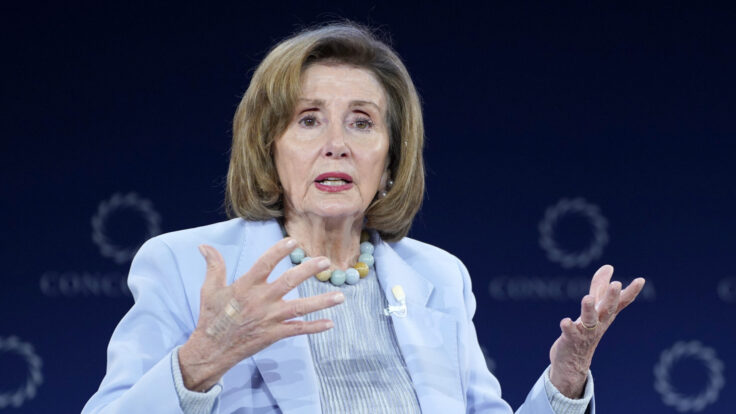
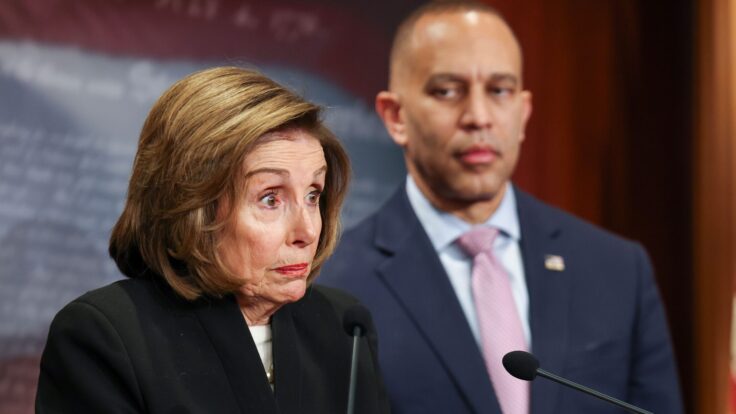
with a Hill audience, posted an opinion piece this month calling on Republicans to support solar “even if—in the past—it was a goal of the left.” Newt Gingrich, a green energy flip-flopper who once starred in an ad about climate change with Nancy Pelosi (but later called it “the dumbest single thing I’ve done”), published an
opinion piece in The Daily Caller ahead of Trump’s State of the Union, calling solar a key piece of an “energy abundance”
strategy. The Solar Energy Industries Association shared it on their Facebook page. Perhaps there’s a secret donor funding this? But no one I’ve talked to can say.
Clean energy advocates have also started playing in elections, albeit in a more sinister way than many expected. As I reported last week, a political group funded by clean energy
executives and investors, including Ripple co-founder Chris Larson, spent nearly a million dollars to undermine Rep. Chip Roy’s bid to become Texas attorney general. The effort helped push him to a runoff. The group now plans to intervene in other Republican primaries to defeat candidates hostile to clean energy.
Advocates argue the strategy may be working—pointing to what they perceive as a “softening” in the administration’s rhetoric on
solar. The Interior Department has slightly loosened its draconian permitting process for solar projects, raising hopes that some stalled initiatives may begin moving forward. Meanwhile, negotiations between the White House and Democrats over broader permitting reform have resumed. Perhaps the shift reflects the industry’s attempt to speak MAGA and nudge the administration to at least crack open the door. Or perhaps White House officials are recognizing that kneecapping a major source of
power—at a moment when electricity demand has risen for the first time in two decades, driven in large part by A.I. data centers, and as the war in Iran threatens to destabilize the oil industry—was not the best idea. But most advocates don’t expect a renewed push for wind, since Trump’s hatred for wind turbines ruining his golf course views runs so deep. |
|
|
|
If you’re wondering where Congress has been as Paramount Skydance moves to purchase Warner Bros.
Discovery, you’re not alone—some members are wondering the same thing. A small group of Democrats has begun raising alarms about the proposed merger, accusing the administration of putting a finger on the scales through political favoritism, while warning about monopoly concerns, foreign influence in a key American industry, and the consolidation of two major media conglomerates. Indeed, it’s hardly a secret that the conquering Ellison family has been working the Trump
administration refs since they first acquired Paramount from the Redstone family back in August—hiring Bari Weiss, re-centering CBS News, overpaying for the UFC, etcetera. And yes, there is a syndicate of Middle Eastern sovereign wealth funds that will likely help finance the deal before all is said and done.
Behind the scenes, some Democrats on Capitol Hill are frustrated that their party hasn’t spoken out more forcefully. “Democrats feel like we’re
living in a world of everything, everywhere, all at once, and it’s hard to respond to how many different ways the Trump administration is corrupt,” Sen. Elizabeth Warren, one of the most outspoken critics of the deal, told me. “Breaking our economy, killing American citizens in the street, and starting a war with Iran. Even so, the level of corruption, and the impact on an important industry that helps shape our stories about ourselves, and the possibility of foreign influence
should alarm everyone in Washington.”
Warren, along with Sens. Richard Blumenthal and Cory Booker—the top Democrat on the Judiciary subcommittee overseeing antitrust—have issued letters raising concerns. Meanwhile, California Rep. Sam Liccardo has launched an aggressive letter-writing campaign to David Ellison, the C.E.O. of PSKY; David Zaslav, the C.E.O. of Warner Bros. Discovery; and
A.G. Pam Bondi. Liccardo’s questions focus on foreign investment in the transaction, and why Netflix dropped out of the WBD bidding war just hours after a reported meeting with Bondi. (Ellison, Zaslav, and Bondi have not responded to the inquiries.) Only a handful of Democrats have signed the letters so far. (Disclosure: Through a recent transaction, Zaslav is a de minimis investor in Puck; RedBird, the Ellisons’ financial partner in PSKY, is a minority shareholder.)
But momentum seems to be picking up now that the deal has progressed. Another letter expressing concern about the deal’s antitrust implications is expected in the coming days, and as of press time, 13 House members and two senators have signed on, according to a person familiar.
In practical terms, Democrats have limited leverage. Out of power in Congress, they lack the ability to halt the deal outright. Instead, they have begun laying the groundwork for potential oversight should they
regain control of Congress in November. Booker and several colleagues have already demanded that Ellison preserve all records relating to the merger. An aide to Jamie Raskin, the ranking member of the House Judiciary Committee, told me that Paramount–Warner Bros. is “definitely” something Democrats will investigate if they return to the majority.
Still, with a long list of potential probes already competing for attention, it’s far from certain this deal will make the cut.
For now, Warner Bros. Discovery and Paramount appear more focused on closing the deal than on the possibility of future congressional scrutiny. |
|
|
|
Join Emmy Award-winning journalist Peter Hamby, along with the team of expert journalists at Puck, as they let you in on the
conversations insiders are having across the four corners of power in America: Wall Street, Washington, Silicon Valley, and Hollywood. Presented in partnership with Audacy, new episodes publish daily, Monday through Friday. |
|
|
|
Unique and privileged insight into the private conversations taking place inside boardrooms and corner offices up and down Wall
Street, relayed by best-selling author, journalist, and former M&A senior banker William D. Cohan. |
|
|
|
Need help? Review our
FAQ page or contact us for assistance. For brand partnerships, email ads@puck.news.
You received this email because you signed up to receive emails from Puck, or as part of your Puck account associated with {{customer.email}}. To stop receiving this newsletter and/or manage all your email preferences, click here.
|
Puck is published by Heat Media LLC. 107 Greenwich St., New York, NY 10006 |
|
|
|
|