Hello, and welcome back to The Best & The Brightest. I’m Leigh Ann Caldwell with
you on this eventful, news-filled ride today.
Below, some news and notes about the Democratic Party, where the tide may be turning from the septua- and octogenarians to a younger, more relatable generation of leadership. The past two days have offered two proof points: Zohran Mamdani easily won New York City’s Democratic mayoral primary (please read my partner Bill Cohan’s excellent analysis of the new beta-blocker shortage on Wall Street), and Rep. Robert Garcia outflanked his more senior, more experienced colleagues to win the ranking member spot on the House Oversight Committee. I’ll explore what this means for the party’s future.
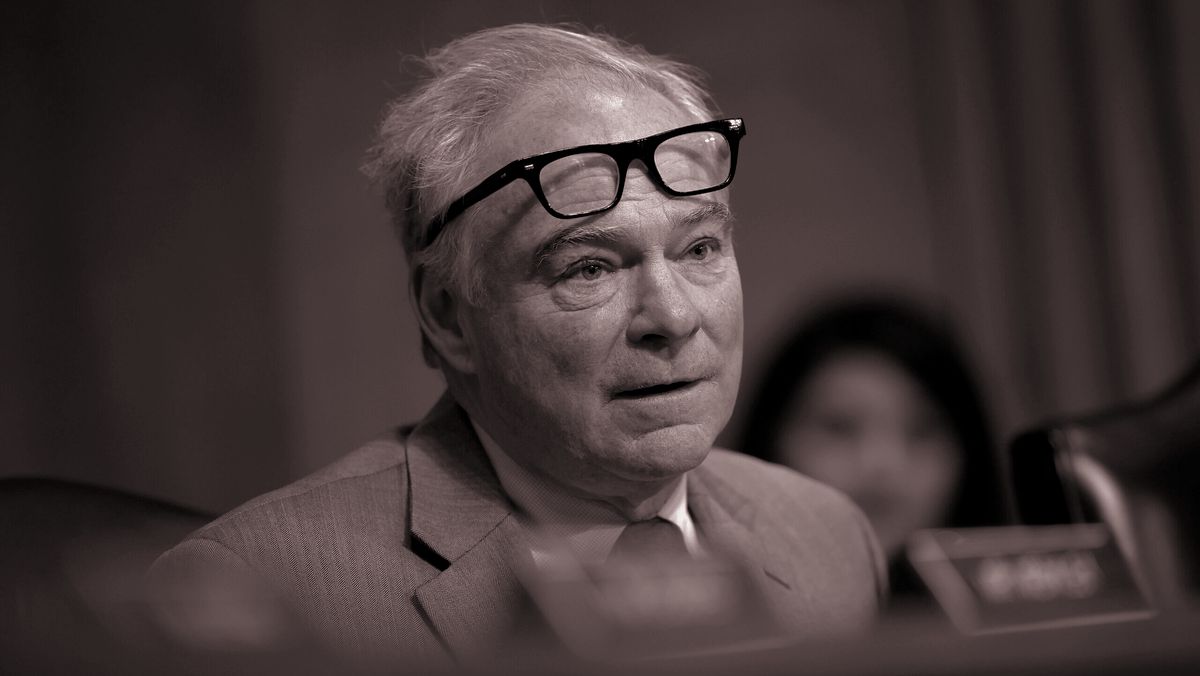
Plus, I sat down with Sen. Tim Kaine, the Virginia Democrat who has challenged presidents past and present, Democrat and Republican,
about their war-making authority. This week, he’s forcing a vote in the Senate on Trump’s actions in Iran. We chatted about Democrats’ inconsistency on the war powers issue, and why he thinks he can get the support of Republicans.
But first…
|
- Purloining
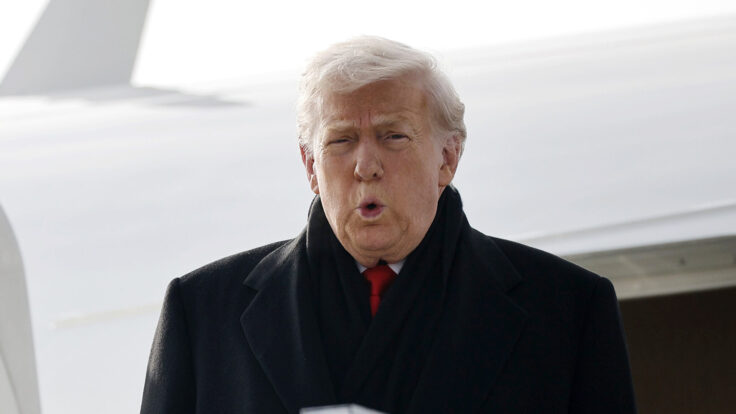
the purse: The constitutional clash I’ve been anticipating is almost here. The Washington Post reports that the administration plans to refuse to spend some of the money Congress has allocated, ignoring the Impoundment Control Act that Congress passed in 1974, after President Richard Nixon similarly tried to ignore
congressional appropriations. The Trump administration, per the paper, is planning to “defer roughly 200” accounts at various agencies whose funds are slotted to be spent by the end of the fiscal year on September 30.
Almost from day one, the administration has been laying the groundwork for a clash over Congress’s power of the purse, canceling contracts and eliminating government programs. Russell Vought, Trump’s budget chair and a chief advocate of expansive
presidential authority, has said that the Impoundment Act is unconstitutional, even though the Supreme Court has never ruled on the question. (The court has, however, ruled that a presidential line-item veto, which allows the president to pick and choose which items in a funding bill he can veto, is unconstitutional.)
If the Trump administration moves forward with the reported plan, it will be a major test for House Speaker Mike Johnson, who is reliant on Trump’s
support for his own success, and has repeatedly sided with the administration over Congress on issues of tariffs, war, and spending. It’s unlikely he wants to burnish a legacy as the speaker who helped a president make Congress obsolete. But we’re about to find out.
|
|
|
A MESSAGE FROM OUR SPONSOR
|
Medicaid funding cuts hurt everyone, resulting in closed hospitals and crowded emergency rooms.
|
|
|
- The
Senate’s BBBattle: Senate Republicans are struggling for consensus on their tax and spending cut bill, which Trump wants passed by July Fourth. Medicaid continues to be one of the biggest hang-ups, as some senators—especially those facing challenging reelections, like Sens. Susan Collins and Thom Tillis—worry about the size of cuts to the program. The Senate is discussing a special fund for hospitals to offset some of those cuts, but that obviously costs
money, and Republicans are trying to limit spending. We’re now in the crucial period during which Senate Majority Leader John Thune has to make enough changes to the bill to satisfy the various factions—a delicate balance for legislation that’s unlikely to give Republicans a political boost regardless.
- Call him daddy: NATO leaders have apparently discovered the very open secret to placating Trump: stroke his ego. On Tuesday in
the Netherlands, NATO Secretary General Mark Rutte joked about Trump’s pre-summit comment that Israel and Iran have been fighting so long “they don’t know what the fuck they’re doing,” saying that “daddy has to sometimes use strong language” to stop children from fighting in the schoolyard.
The epithet seemed to land well. Afterward, Trump gave his most forceful defense of NATO yet, saying that he would support Article V, the mutual defense clause, if the member nations
were attacked. “I left here saying, ‘These people really love their countries. It’s not a rip-off.’ And we are here to help them protect their country,” Trump said. NATO countries agreed to increase their defense spending to 5 percent of G.D.P. by 2035; getting the allies to spend more on their own defense has been a major priority for the
president since his first term.
|
|
|
As Dems struggle to unify on whether Trump should have attacked Iran, they’re lining up to
criticize how he did it—without congressional approval or input. Senator Tim Kaine discusses his latest resolution to claw back congressional war powers, and why he feels it’s more important than ever.
|
|
|
Several days after President Donald Trump ordered an attack on three of Iran’s nuclear
sites, and with debate still raging over how effective those strikes actually were, Democrats are finding a rare moment of unity. Not over whether Trump should have done it in the first place—most think no, some think yes, and others have stayed quiet. Instead, they’re rallying around the notion that Trump has usurped Congress’s authority to declare war.
Clearly, the party’s sudden zeal for congressional war powers didn’t assert itself during Democratic administrations—when, for
example, Obama bombed Libya or Clinton bombed Bosnia. But Sen. Tim Kaine, a Virginia Democrat, has been one of the party’s more consistent voices on the issue since being elected to the Senate in 2012. Now, he’s leading yet another effort—his fourth—to rein in the president’s ability to wage war unilaterally, this time with a
resolution to “direct the removal of United States Armed Forces from hostilities against the Islamic Republic of Iran that have not been authorized by Congress.”
The Senate will take up the measure later this week, and Kaine told me during an interview in his office yesterday that “the volatility of President Trump, and what he’s done, should make some people think we’ve got to be the adults in the room.”
|
|
|
A MESSAGE FROM OUR SPONSOR
|
Decisions made in the halls of Congress have devastating impacts on the halls of local hospitals.
|
|
|
In the meantime, of course, Trump has declared a ceasefire among the U.S., Iran, and Israel, which so far
seems to be holding. But Kaine argues the vote on his measure is even more critical now, because the administration is not keeping Congress informed about the justification for the strikes, nor about their impact. Axios reported that the Trump administration plans to limit information-sharing with Congress even further, after the leak of an
initial intelligence assessment that cast doubt on Trump’s claim of having “obliterated” Iran’s nuclear program.
The administration has already delayed classified briefings for members. Senate Democratic leader Chuck Schumer said that, in lieu of sending knowledgeable briefers—such as Gen.
Dan Caine, the chairman of the Joint Chiefs of Staff—the administration is planning to dispatch a less experienced but more loyal lieutenant: Secretary of Defense Pete Hegseth.
In any case, Kaine feels that Trump’s reluctance to keep all of Congress informed has made his conduct even more egregious than that of previous presidents who have not sought authorization from the Hill. “While Congresses of both parties for decades, if not centuries, have often
abdicated [their war-making powers], and presidents of both parties have overreached, this is a different thing,” Kaine told me.
And while Kaine has been the most outspoken opponent, he’s not the only Democrat who has been consistent that Congress needs to check the president on matters of war. Colorado Rep. Jason Crow, the Iraq and Afghanistan vet, told me that the administration still hasn’t explained what imminent threat Iran posed that would absolve the administration
of having to at least notify Congress under the War Powers Act. Meanwhile, other members of Congress have said that intelligence shows Iran had a stockpile of uranium enriched to 60 percent, but not the 90 percent necessary for a nuclear weapon. “This president has proven he’s willing to skirt the Constitution to do whatever he wants to do with the use of our military, and it’s inappropriate,” Crow said. “He’s done it once, and he’s going to do it again. I’m pretty confident about
that.”
This isn’t the first time Kaine has tangled with this president over strikes on Iran. In 2020, Trump successfully took out a top commander of the country’s Islamic Revolutionary Guard Corps, Qassem Soleimani, in a drone strike while the general was visiting Iraq, and contemplated wider-scale attacks on Iran itself. At the time, Kaine offered a similar resolution, which passed both houses, though the Senate failed to override Trump’s veto. Still, Kaine argues that
bipartisan support for his measure played a role in Trump’s decision not to hit the Islamic Republic directly. “We noticed that he clearly backed off all this stuff on Iran in the last year or so of his administration,” Kaine said.
Kaine’s current resolution may not simply unite Democrats—all of whom, save for Sen. John Fetterman, are expected to support it—it’s also likely to bring a handful of Republicans on board. Indeed, seven of the eight G.O.P.
senators who voted for Kaine’s 2020 resolution are still in office, including Sen. Rand Paul, who has been the staunchest defender of congressional power and is likely to support it. Others include Lisa Murkowski and Susan Collins, who have also proven willing to go against Trump this term. The remainder are Sens. Bill Cassidy, Mike Lee, Jerry Moran, and Todd Young.
|
|
|
Nonetheless, Kaine’s resolution—or the similar one introduced by House members—is expected to die in the
other chamber. House Speaker Mike Johnson is a constitutional law scholar who now embraces an expansive view of presidential authority, and has argued that the War Powers Act, which sought to claw back some of Congress’s war-making authority from the president in 1973, is “unconstitutional.” The Supreme Court hasn’t ruled on the constitutional question, mostly because Congress has rarely tried to enforce its Article I, Section 8 power to declare war. “What sort of
self-respecting legislative leader would say, Take power away from the legislature, Mr. President?” Kaine asked. Lots of them, apparently.
|
If war powers are suddenly a unifying issue for Democrats, the party is certainly less clear about what to
make of 33-year-old Zohran Mamdani’s victory in yesterday’s New York City Democratic mayoral primary. Following the House Dems’ election of the youngish Rep. Robert Garcia over more experienced members as ranking member of the influential House Oversight Committee, this is the second time in two days that the party has hinted that it’s starting to move past the septua- and octogenarian leaders of yesteryear.
With Mamdani’s victory, voters rejected former
Gov. Andrew Cuomo, a longtime establishment fixture in the state with all the baggage that entails and then some. One way of reading Mamdani’s victory is that Democratic primary voters were serious about wanting a new, charismatic, and relatable candidate—one who is relentlessly focused on cost-of-living
issues.
But that’s not the only way to read it. Mamdani is a member of the Democratic Socialists of America, the same group that bred Alexandria Ocasio-Cortez before unendorsing her last year. His uber-progressive proposals—rent freezes, city-owned grocery stores, free city bus transportation, and hiking taxes on the rich—have spooked some Democrats, who worry he might become the far-left face of the party to the detriment of the centrists in tough
congressional districts. Democratic Rep. Laura Gillen, who flipped a swingy Long Island district last cycle, denounced Mamdani as “too extreme to lead New York.” Meanwhile, the center-left group Third Way cautioned Democrats against embracing Mamdani’s platform as a path to victory in the midterms.
Wall Street, meanwhile, is apparently
freaking out about Mamdani, and Democrats with ties to wealthy elites will be questioned about their support of the Gen Z advocate. Of course, Republicans are attacking Mamdani with zeal, calling him a communist, and declaring him an antisemite for comments criticizing Israel and for his refusal to condemn the
phrase “Globalize the Intifada.” Prominent MAGA figures have already gone so far as to invoke the terror of 9/11 in decrying Mamdani’s potential to become the city’s first Muslim mayor. But Jesse Ferguson, a Democratic strategist, told me that Democrats need to “emulate the phenomenon of being an agent of change against the status quo.”
Ideology doesn’t matter anymore, he noted, arguing that voters don’t trust the system, and that Democrats can’t defend the system if they want to be successful. That was the key to Mamdani’s appeal, Ferguson said—and to Trump’s, too, for what it’s worth.
|
|
|
Unique and privileged insight into the private conversations taking place inside boardrooms and corner offices up and down Wall
Street, relayed by best-selling author, journalist, and former M&A senior banker William D. Cohan.
|
|
|
Join Emmy Award-winning journalist Peter Hamby, along with the team of expert journalists at Puck, as they let you in on the
conversations insiders are having across the four corners of power in America: Wall Street, Washington, Silicon Valley, and Hollywood. Presented in partnership with Audacy, new episodes publish daily, Monday through Friday.
|
|
|
Need help? Review our FAQ page or contact us for assistance. For brand partnerships, email ads@puck.news.
You received this email because you signed up to receive emails from Puck, or as part of your Puck account associated with . To stop receiving this newsletter and/or manage all your email preferences,
click here.
|
Puck is published by Heat Media LLC. 107 Greenwich St, New York, NY 10006
|
|
|
|



_01JY75NY2T5QA676ZF7VT30N67.png "Coalition to Strengthen America's Healthcare")
_01JY75P0TDPHGP5PE4ASQHTYN2.png "Coalition to Strengthen America's Healthcare")