• Washington
  • Wall Street
  • A.I.
  • Hollywood
  • Media
  • Fashion
  • Sports
  • Art
  • Join Puck Newsletters What is puck? Authors Podcasts Gift Puck Careers Events
  • Join Puck

    Directly Supporting Authors

    A new economic model in which writers are also partners in the business.

    Personalized Subscriptions

    Customize your settings to receive the newsletters you want from the authors you follow.

    Stay in the Know

    Connect directly with Puck talent through email and exclusive events.

  • What is puck? Newsletters Authors Podcasts Events Gift Puck Careers
Happy Sunday, welcome back to Dry Powder. Sure, Jamie Dimon might be the most talented banker of his generation, but succession is complicated for even the most gifted Wall Street executives. In today’s issue, how to interpret last week’s shuffling of JPMorgan brass, why David Ellison’s pursuit of National Amusements Inc. still doesn’t add up, and the head-scratching inanity behind Elon’s public lobbying for more ownership of Tesla.
 ‌ ‌ ‌ ‌ ‌ ‌ ‌ ‌ ‌ ‌ ‌ ‌ ‌ ‌ ‌ ‌ ‌ ‌ ‌  ‌ ‌ ‌ ‌ ‌ ‌ ‌ ‌ ‌ ‌ ‌ ‌ ‌ ‌ ‌ ‌ ‌ ‌ ‌  ‌ ‌ ‌ ‌ ‌ ‌ ‌ ‌ ‌ ‌ ‌ ‌ ‌ ‌ ‌ ‌ ‌ ‌ ‌  ‌ ‌ ‌ ‌ ‌ ‌ ‌ ‌ ‌ ‌ ‌ ‌ ‌ ‌ ‌ ‌ ‌ ‌ ‌  ‌ ‌ ‌ ‌ ‌ ‌ ‌ ‌ ‌ ‌ ‌ ‌ ‌ ‌ ‌ ‌ ‌ ‌ ‌  ‌ ‌ ‌ ‌ ‌ ‌ ‌ ‌ ‌ ‌ ‌ ‌ ‌ ‌ ‌ ‌ ‌ ‌ ‌  ‌ ‌ ‌ ‌ ‌ ‌ ‌ ‌ ‌ ‌ ‌ ‌ ‌ ‌ ‌ ‌ ‌ ‌ ‌  ‌ ‌ ‌ ‌ ‌ ‌ ‌ ‌ ‌ ‌ ‌ ‌ ‌ ‌ ‌ ‌ ‌ ‌ ‌  ‌ ‌ ‌ ‌ ‌ ‌ ‌ ‌ ‌ ‌ ‌ ‌ ‌ ‌ ‌ ‌ ‌ ‌ ‌  ‌ ‌ ‌ ‌ ‌ ‌ ‌ ‌ ‌ ‌ ‌ ‌ ‌ ‌ ‌ ‌ ‌ ‌ ‌ 
Dry Powder

Happy Sunday, welcome back to Dry Powder.

Sure, Jamie Dimon might be the most talented banker of his generation, but succession is complicated for even the most gifted Wall Street executives. In today’s issue, how to interpret last week’s shuffling of JPMorgan brass, why David Ellison’s pursuit of National Amusements Inc. still doesn’t add up, and the head-scratching inanity behind Elon’s public lobbying for more ownership of Tesla.

The Jamie Switcheroo & Ellison’s Wishful Thinking
News and notes on the most topical items among the Sebonack crowd: Jamie’s executive shuffle, M&A activity at Paramount, and Elon’s stock rant.
WILLIAM D. COHAN WILLIAM D. COHAN
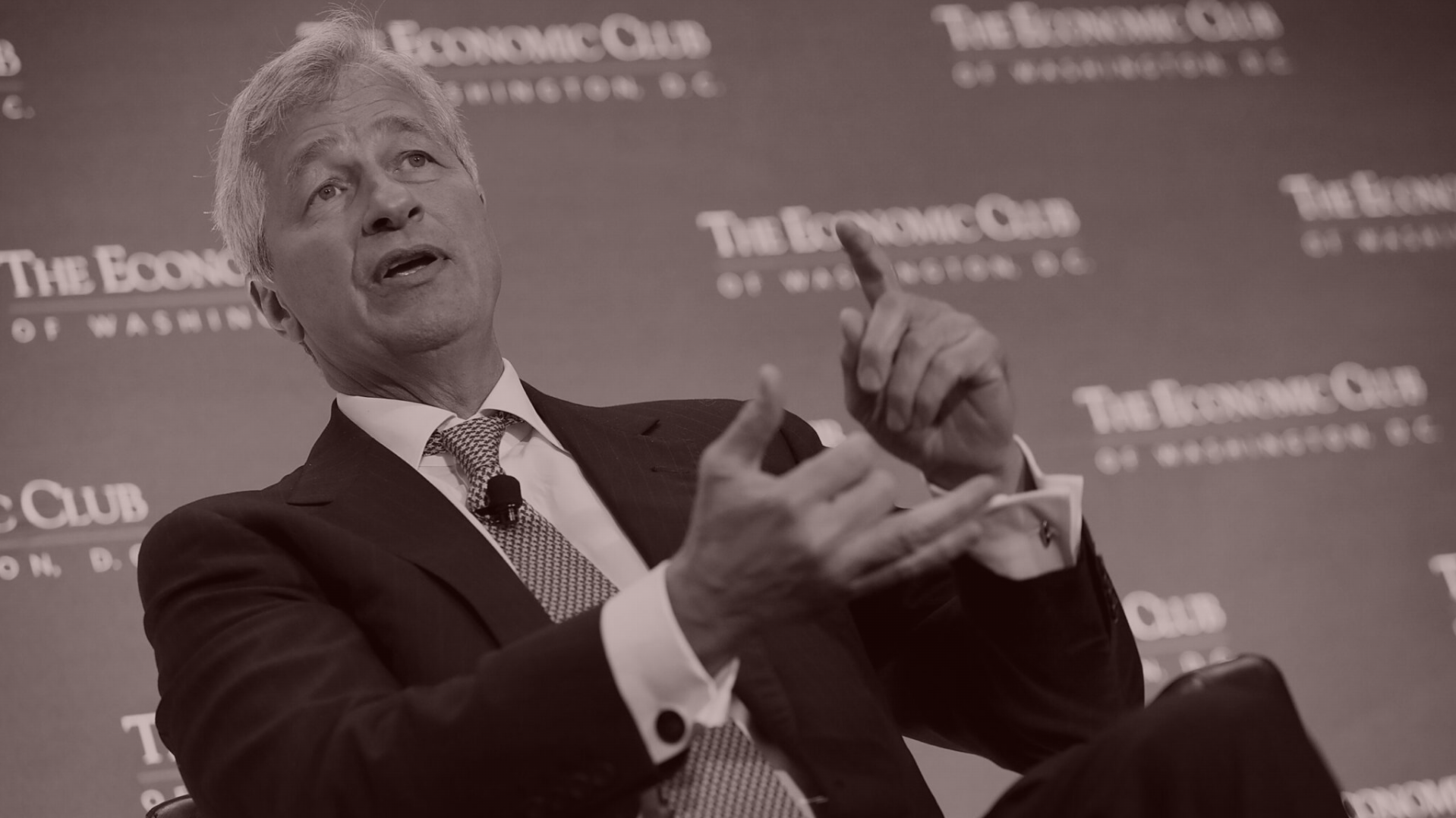
It’s no secret that JPMorgan Chase, our biggest and most profitable bank, is struggling with the question of succession. When you are looking to replace a guy like Jamie Dimon, the greatest banker of his generation, you don’t want to make a mistake. Before Dimon got to JPMorgan Chase, in 2005, the place was essentially a mess—a mishmash of poorly integrated mergers and cultures, under the leadership of the elegant but flawed Bill Harrison. (Loyal readers will recall, of course, that I was there and remember those days well.) Harrison’s best decision as C.E.O. was acqui-hiring Jamie via the Bank One deal, and then promptly getting out of the way so that he could run the place.

That was a brilliant masterstroke, and one that Jamie is having a tough time replicating. Not that Dimon is planning to go anywhere soon. He’s a healthy 67 years old and the bank is running on all cylinders, having just produced a record profit of $50 billion in 2023—the most money any financial institution has made in one year, ever. With a market value in excess of $500 billion, Jamie’s bank is a powerhouse. Jamie himself has become a billionaire, thanks to his stewardship and his board’s understandable generosity, which persists to this day. (If he sticks around until 2026, he gets another $50 million retention bonus just for doing his job) Not since Jimmy Cayne, at Bear Stearns in its heyday, has a non-founder on Wall Street been worth $1 billion or more in his bank’s stock.

So Jamie isn’t going anywhere soon, certainly until he’s logged a few years in the corner office of his yet-to-be-completed, $5 billion, quarter-mile-high headquarters at 270 Park, and especially now that any hopes he may have harbored of becoming Biden’s Treasury secretary were probably dashed by his affirmative comments about Trump in Davos. (Of course, there’s no way Jamie would work for Trump, or at least I can’t imagine that happening.)

Still, Jamie has to make it look like he’s focused on finding a successor. I think that’s the genesis of his decision last week to play musical chairs with his direct reports. He’s essentially moved the co-head of the consumer bank to be co-head of the investment bank. A lot of ink spilled for basically nothing. It’s the old GE trick: Shuffle executives around from one position to the next under the guise of “testing them out” or “giving them a different experience to see how they do.”

Recall, of course, that Jamie did not have experience as a banker or a trader or credit card guru before he became C.E.O. He learned how to run a global bank by sitting at the knee of Sandy Weill while he built Citigroup into the most dominant force on Wall Street. After their inevitable falling out, Jamie eventually took the reins of First Chicago, a.k.a. Bank One, before Harrison engineered that acquisition to get Jamie. In other words, for all the job rotating that Jamie is doing to possibly identify a successor, that’s not how he got the job, and his own bias might further delay the ostensible bake-off.

Nevertheless, I suspect that Jamie’s number two Daniel Pinto, who was not part of this shuffle, is the clear successor in the near term. But his age, 61, apparently precludes him from being Jamie’s long-term successor, even though I think he’s the best and most obvious choice. The two most-discussed candidates to succeed Jamie are Marianne Lake, 54, who now gets sole possession of JPMorgan Chase’s consumer and community bank, and Jennifer Piepszak, 53, who used to run the consumer bank with Lake. She now will be co-head of the firm’s commercial and investment bank with Troy Rohrbaugh, also 53, who has been global head of markets, a.k.a trading. Both Lake and Piepszak have also had a spin as the bank’s chief financial officer. It obviously must have been difficult for Lake and Piepszak to run the consumer and community bank together while simultaneously competing to succeed Jamie. I suspect this challenge is what led to shifting Piepszak over to the commercial and investment bank, to give her a separate perch from which to shine. But it’ll be hard for someone who hasn’t been an investment banker to run an investment bank, unless she is a truly gifted leader, like Dimon.

And perhaps that is the point here. I surmise JPMorgan Chase is no closer to solving its succession problem after this game of musical chairs than it was before, especially since Jamie has zero reason to turn down a $50 million thank-you card in 2026. Who knows who will still be in any of the top seats at the bank by then. But Jamie has at least adroitly bought himself that time—you know, to wait and see.

David vs. Goliath
So Bloomberg is reporting that David Ellison has made a “preliminary” offer to buy National Amusements Inc., the Redstone family holding company that controls 77 percent of the voting stock of Paramount Global—ostensibly so that he can combine the legendary Paramount studio with his own studio, Skydance. Beyond that, of course, almost nothing about this rumored deal makes sense to me.

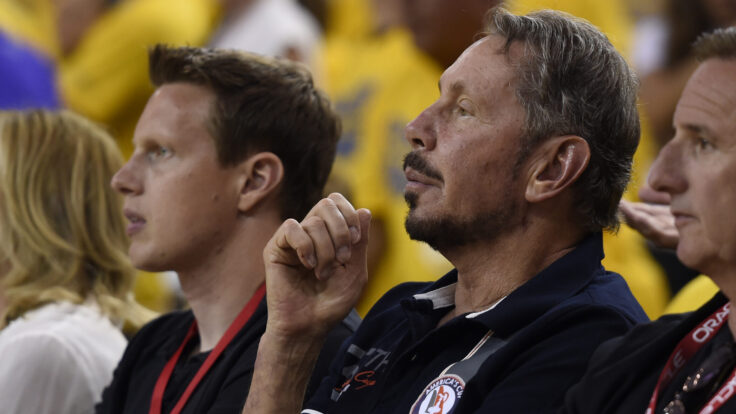
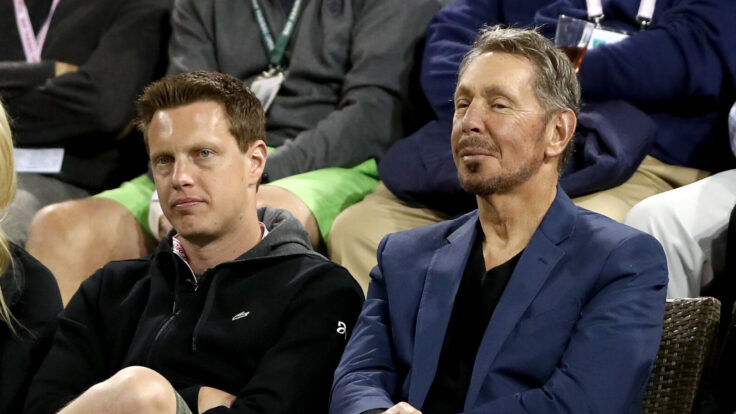
Why, after all, would Ellison want all the non-studio assets of NAI, such as the sagging New England movie theaters; the debt (around $500 million these days); the preferred stock ($125 million) owed to Shari’s M&A adviser, Byron Trott; or the grab-bag of beleaguered assets at Paramount Global, such as CBS, the local television stations, Paramount+, BET, Showtime, etcetera. The greatest risk, of course, is Paramount’s $11.2 billion of senior debt that becomes payable upon a change of control, assuming a credit downgrade. But, by this point, we have to assume that Larry Ellison’s fortune would backstop those liabilities.

Then there are the other headaches that the younger Ellison’s bankers and lawyers have surely advised him about, such as risks to the transfer of the CBS broadcast license to the Ellisons in a Biden administration, given Larry Ellison’s major financial support for Republican candidates. Lastly, but most importantly, this sort of deal chaos will create a completely predictable domino game of management shuffles, layoffs, second-guessing, anger, and confusion in a very public and uniquely relationships-based industry. If the Ellisons think that David Zaslav has had a long year reorganizing Warner Bros. Discovery into a modern, lean, debt-servicing, streaming-first entertainment company, well, good luck to them. People will always be happy to take their money, but there will be blood in the water.

As I’ve written before, the Ellisons’ more natural path would be going full Brian Roberts and making a very public bid for the part of the asset that they want—the Paramount studio—and ensuring it is an offer that Shari cannot refuse. Their team of bankers and lawyers and other advisers can float that offer publicly, with details about financing and structure.

If they make the offer in the weeks leading up to the Paramount Global annual meeting (it was May 8 last year), Shari and the board she controls will have to seriously consider selling the studio at a “full” and “fair” price. (Roberts, of course, used this strategy to pressure the AT&T board to sell him AT&T Broadband.) I think it’s a tactic that can work and won’t require the Ellisons to pay off or guarantee the $11.2 billion in senior notes or buy the parts of Paramount Global they don’t want. Though I am sure their investment bankers are enthused about the prospect of all this ridiculous buying and selling.

The only other possibility, I suppose, is that once they have NAI, and replace the Paramount board with their own people (and replace the Paramount executive team with their own people), they could then ask their loyal board to find some independent directors, if they exist, to consider an arm’s-length, fully shopped bid for the movie studio. There would be shareholder lawsuits up the wazoo and a whole lot of negative press and, likely, the wrath of Warren Buffett and Mario Gabelli, two of the largest economic shareholders in Paramount. This is not investment advice, but I hope Gerry Cardinale is telling the Ellisons how foolish such a gambit would all be.

And Now, Elon…
Elon Musk’s latest rant demanding more financial incentives and rewards to continue developing A.I. products at Tesla reminds me of that old Chris Rock bit about asking for credit for what you’re supposed to do. Why should he get a whole new stock option package in exchange for pursuing a business opportunity that he should be pursuing anyway? Isn’t it enough incentive to own 22 percent of Tesla on a fully diluted basis? Why does he need to own 25 percent of the voting control of Tesla to get the company deeper into A.I. and robotics? And isn’t it disqualifying—even a fireable offense—that he would threaten to take that work to a new company?

In any event, the idea went over like a lead balloon with Tesla investors. On Thursday, the Tesla stock tanked 12 percent (it is now down 26 percent so far this year). Were investors worried that he had lost his mind, or just that his company had a lousy fourth quarter, and the prospects for this year also seem sour? Perhaps the Elon-iest bit of this silly theater is that he could have easily handled all this privately, like practically every other C.E.O., and made a request to his very sympathetic board. Instead, of course, he complained publicly on Twix to his 129 million followers: “I see a path to creating an artificial intelligence and robotics juggernaut of truly immense capability and power, and my concern would be - I don't wanna control it but if i have so little influence over the company at that stage, that I could sort of be opted out by some sort of shareholder advisory firm.”

Friends, your guess is as good as mine. But with 22 percent of the fully diluted voting stock of Tesla and a net worth of around $220 billion, I really don’t see how anyone could push him out of Tesla and get control of his artificial intelligence or robotics juggernaut. I don’t see how an activist investor could do it, let alone a “shareholder advisory firm,” which just makes recommendations to other shareholders and usually has no skin in the game, let alone enough skin to somehow dislodge him from Tesla, or “opt him out,” whatever that means. But the markets value stability, and perhaps that is why the stock spiraled down last week. (As always, this is not investment advice.) Anyway, I will return to this saga as it continues…

FOUR STORIES WE’RE TALKING ABOUT
Zucker’s Vassal Revolt
On the brewing controversy over Jeff Zucker’s Telegraph pursuit.
DYLAN BYERS
Age of Impressionism
What’s working—and not working—in fashion marketing.
LAUREN SHERMAN
Hit and Ronna
Hit and Ronna
A close look Trump’s R.N.C. arm twist.
TARA PALMERI
Trump Donor Migration
Charting the flow of post-New Hampshire political giving.
TEDDY SCHLEIFER
Puck
Facebook Twitter Instagram LinkedIn

Need help? Review our FAQs
page
or contact
us
for assistance. For brand partnerships, email ads@puck.news.

You received this email because you signed up to receive emails from Puck, or as part of your Puck account associated with . To stop receiving this newsletter and/or manage all your email preferences, click here.

Puck is published by Heat Media LLC. 227 W 17th St New York, NY 10011.

SEE THE ARCHIVES

SHARE
Try Puck for free

Sign up today to join the inside conversation at the nexus of Wall Street, Washington, A.I., Hollywood, and more.

Already a member? Log In


  • Daily articles and breaking news
  • Personal emails directly from our authors
  • Gift subscriber-only stories to friends & family
  • Unlimited access to archives

  • Exclusive bonus days of select newsletters
  • Exclusive access to Puck merch
  • Early bird access to new editorial and product features
  • Invitations to private conference calls with Puck authors

Exclusive to Inner Circle only


Latest Articles from Wall Street

Geoffroy van Raemdonck
William D. Cohan • January 28, 2024
The Saks Financial Colonoscopy
Amid a torrent of bankruptcy filings, a blunt declaration by Saks Global’s newly appointed chief restructuring officer lays out precisely what went wrong and when, and who got screwed hardest—plus which risk-hungry investors are likely to call the shots moving forward. As it turns out, the company’s capital structure became “unsustainable” almost immediately after its $2.7 billion acquisition of Neiman Marcus Group in December 2024.
David Ellison
William D. Cohan • January 28, 2024
The Ellison Way of Parenting
David Ellison’s latest schemes to wrest Warner Bros. from Netflix have proved insufficient after his previous negotiating tactics ran up the price. Meanwhile, he’s losing the respect of the WBD guys across the table. But will his dad come to the rescue with another, say, $10 billion to bail him out?
Patrick Drahi
William D. Cohan • January 28, 2024
A History of Creditor-on-Creditor Violence
Wall Street invented the coercive liability management exercise, which allows companies to play their creditors against one another as they extract beneficial terms for themselves—a now-routinized tradition referred to as “creditor-on-creditor violence.” But now Apollo, Oaktree, BlackRock, and JPMorgan Chase are teaming up to put an end to this mess.


Larry Ellison, David Ellison
William D. Cohan • January 28, 2024
The Zaz–Ellison Dagger Contest
Warner Bros. Discovery’s most recent S.E.C. filing reveals the latest battle lines between the company and its hostile suitor. In particular, the document evinces a deep distrust of Paramount Skydance’s proposed deal financing, recasting the $108 billion all-cash offer as an $87 billion L.B.O. that could fall apart before closing.
David Zaslav
William D. Cohan • January 28, 2024
What Is Zaz TV Really Worth?
The battle for Warner Bros. Discovery is increasingly coming down to how Netflix and Paramount Skydance value the declining TV assets (and CNN) that David Zaslav is determined to separate from the Warners mothership. Versant, which just started trading on Nasdaq this week, may provide the answer.
greg abel
William D. Cohan • January 28, 2024
Make Berkshire Hathaway Great Again?
Greg Abel, the handpicked successor to Warren Buffett, faces one of the most exalted and daunting jobs in finance: determining what to do with the staggering $358 billion bequeathed to him by the most legendary investor of his generation. Herewith, three proposals for what Abel should buy with all that cash.


David Ellison, Larry Ellison
William D. Cohan • January 28, 2024
Zaz Is From Mars, the Ellisons Are From Venus
Murmurs from sources close to the Warner Bros. Discovery deal illuminate the latest machinations surrounding the Paramount-Netflix showdown—and where this thing is headed.


Get access to this story

Enter your email for a free preview of Puck’s full offering, including exclusive articles, private emails from authors, and more.

Verify your email and sign in by clicking the link we just sent.

Already a member? Log In


Start 14 Day Free Trial for Unlimited Access Instead →


Latest Articles from Wall Street

Larry Ellison
William D. Cohan • January 28, 2024
“Larry Didn’t Show Up, and David Got Ahead of His Skis”
Everything you wanted to know about the Warner Bros. Discovery board’s doubts with the Ellisons’ bid (but were afraid to ask) is revealed in its 14D-9 filing—a mother lode of alleged Paramount missteps, from squabbles over consent provisions and breakup fee reimbursements to junior lien debt and the financial capacity of the world’s fifth-richest man.
larry ellison david ellison
William D. Cohan • January 28, 2024
Ellison Irrevocable Trust Issues
Despite their numerous bids for all of WBD, a rift has opened between the principals at Paramount Skydance and the board and advisors of their target company—at least for now. Can money heal all wounds?
larry ellison david ellison
William D. Cohan • January 28, 2024
The Ellisons at the Gates
Paramount has raised the stakes in its hostile bid for Warner Bros. Discovery, and may yet go higher. Now Netflix must decide how much it wants to venture into junk credit-rating territory, or play games with its stock, to secure the prize.


Larry Ellison, David Ellison
William D. Cohan • January 28, 2024
Netflix’s $83B Math & The Ellison Hostile Meter
A talmudic reading of the mishegas following the $83 billion Netflix-WBD deal: Zaz’s personal economics; the likelihood that this turns hostile; the unusual consortium of banks underwriting the deal; the value of the Gunnar stub; regulatory open questions; the $5.8 billion breakup fee; and more.
Leon Black
William D. Cohan • January 28, 2024
The Epstein Monologues
The recently released, one-sided correspondence between Jeffrey Epstein and Leon Black illustrates a discourse between a hustler and a billionaire with too much money and too little time on his hands. So why couldn’t Black get rid of him sooner?
Mike Mayo
William D. Cohan • January 28, 2024
Wall Street Enters the “Cockroach” Wars
The multitrillion-dollar growth of private credit is fueling an acrimonious debate on Wall Street over whether this surging shadow market is the future of finance or the seed corn of the next crisis. Is Rowan right? Or Dimon? Or Gundlach? As Mike Mayo put it, someone is wrong.


david zaslav
William D. Cohan • January 28, 2024
Zaz the World Turns
News, notes, and palace intrigues from all sides of what might become the largest M&A deal of the year: the three-way tussle for David Zaslav’s Warner Bros. Discovery.
Get access to this story

Enter your email to get access to one article and free previews of our private emails from Puck authors and editors.

OR

Already a Member? Sign in


Latest Articles from Wall Street

wall street 1929
William D. Cohan • January 28, 2024
The Spirit of ’29
Financial history doesn’t repeat itself, but it does often rhyme. Amid a speculative frenzy, deregulation, trade wars, and a handful of megacaps propping up the markets, some of Wall Street’s brightest minds wonder whether 2026 might resemble 1929.
Marc Rowan
William D. Cohan • January 28, 2024
Street Credit
A recent string of bankruptcies and defaults suggests some challenges in the seemingly indomitable private credit market. And yet, according to some O.G.s, things have never been better. Apollo’s Marc Rowan lays bare the risks and rewards.
David Ellison
William D. Cohan • January 28, 2024
Ellisonology 101
In his first earnings call as C.E.O. of Paramount Skydance, David Ellison offered a masterclass in corporate optimism, promising “synergies” and artfully dodging questions about a possible Warner Bros. Discovery takeover. Alas, the time to act is here.


Michael Bloomberg
William D. Cohan • January 28, 2024
What Does Bloomberg Want for Bloomberg L.P.?
A modest proposal for how New York’s $100 billion man could bequeath his namesake, and its monumental profits in perpetuity.
Jim Chanos
William D. Cohan • January 28, 2024
The Mag Seven Itch
The market is notching record highs for the so-called Magnificent Seven—or should that be Mag 10?—but a subterranean counternarrative is forming as once-secure food and consumer staples crater, and cracks emerge in the $3 trillion private-credit boom.
Brian Roberts
William D. Cohan • January 28, 2024
The Brian Roberts–WBD Bull Case
A new analyst note highlights a heightened sense around Wall Street that Comcast co-C.E.O. Brian Roberts doesn’t merely want WBD, but also truly needs the company—and has a real shot at the asset.


Jamie Dimon
William D. Cohan • January 28, 2024
Jamie’s Castle in the Sky
Dimon’s $3 billion (or maybe as much as $5 billion, really) new headquarters is the physical embodiment of his fortress balance sheet and a metaphor for our fractional banking system. But the seeming permanence of its bronze facade shouldn’t fool old Wall Street hands, who know nothing is forever.


  • Terms
  • Privacy
  • Contact
  • FAQ
  • Careers
© 2026 Heat Media All rights reserved.
Create an account

Already a member? Log In

CREATE AN ACCOUNT with Google
OR YOUR EMAIL

OR

Use Email & Password Instead

USE EMAIL & PASSWORD
Password strength:

OR

Use Another Sign-Up Method

Become a member

All of the insider knowledge from our top tier authors, in your inbox.

Create an account

Already a member? Log In

Verify your email!

You should receive a link to log in at .

I DID NOT RECEIVE A LINK

Didn't get an email? Check your spam folder and confirm the spelling of your email, and try again. If you continue to have trouble, reach out to fritz@puck.news.

CREATE AN ACCOUNT with Google
CREATE AN ACCOUNT with Apple
OR USE EMAIL & PASSWORD
Password strength:

OR
Log In

Not a member yet? Sign up today

Log in with Google
Log in with Google
Log in with Apple
Log in with Apple
OR USE EMAIL & PASSWORD
Don't have a password or need to reset it?

OR
Verify Account

Verify your email!

You should receive a link to log in at .

I DID NOT RECEIVE A LINK

Didn't get an email? Check your spam folder and confirm the spelling of your email, and try again. If you continue to have trouble, reach out to fritz@puck.news.

YOUR EMAIL

Use a different sign in option instead

Member Exclusive

Get access to this story

Create a free account to preview Puck’s full offering, including exclusive articles, private emails from authors, and more.

Already a member? Sign in

Free article unlocked!

You are logged into a free account as unknown@example.com

ENJOY 1 FREE ARTICLE EACH MONTH

Subscribe today to join the inside conversation at the nexus of Wall Street, Washington, A.I., Hollywood, and more.

START 14-DAY FREE TRIAL

  • Daily articles and breaking news
  • Personal emails directly from our authors
  • Gift subscriber-only stories to friends & family
  • Unlimited access to archives
  • Bookmark articles to create a Reading List
  • Quarterly calls with industry experts from the power corners we cover