 |
|
Happy Sunday, and welcome back to Dry Powder.
|
|
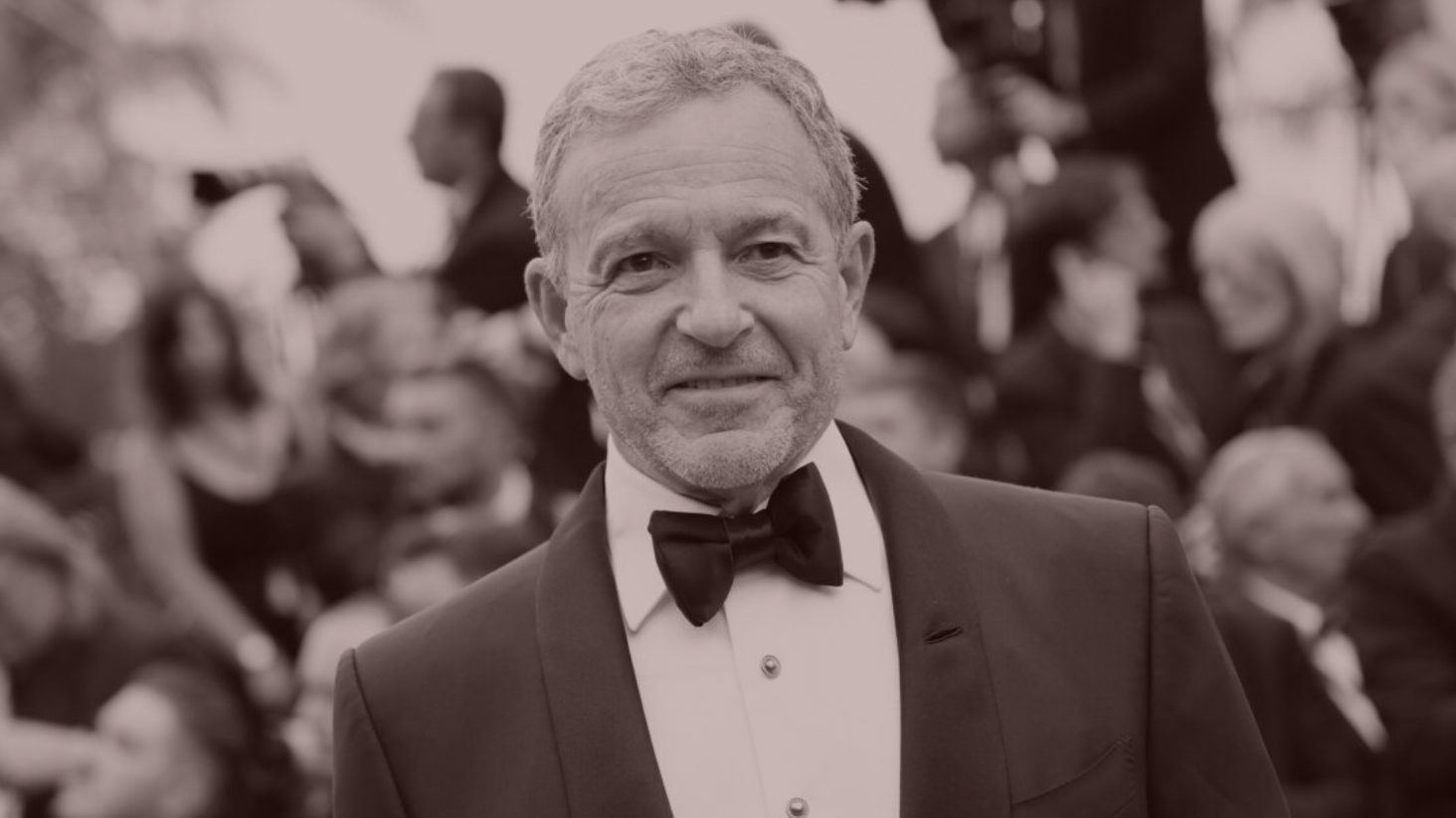
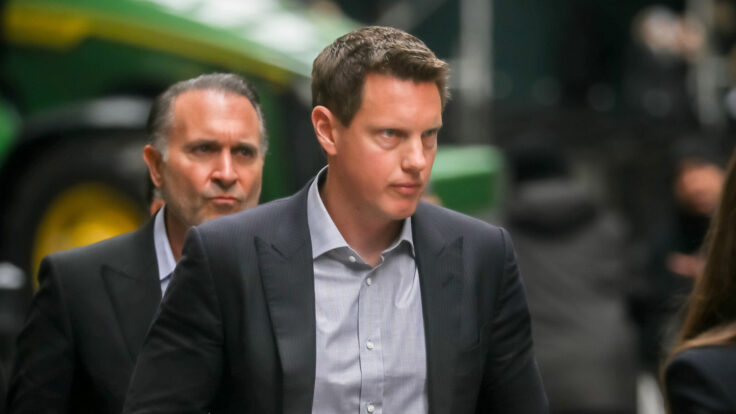
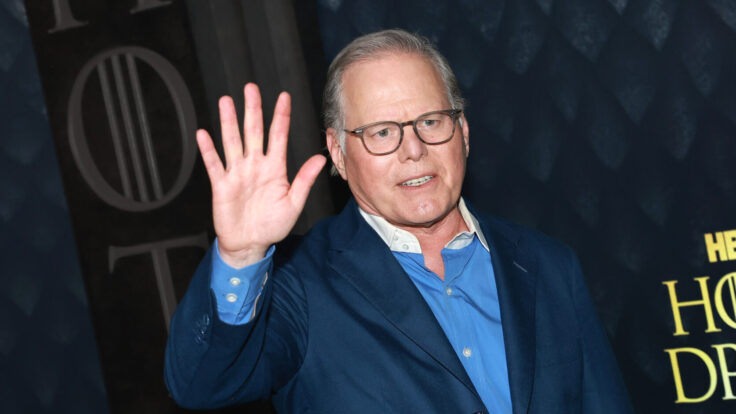
Brian Roberts and Bob Iger have been exchanging punches for years over the future of Hulu, and at last, the saga appears to be winding its way to some kind of end. In today’s issue, a close look at the ways in which their chess match might resolve itself, the latest on Carl Icahn’s proxy battle with Illumina, and my thoughts on the supposed debt ceiling deal.
|
|
|
| The Wall Street Journal had an interesting piece this week, detailing Brian Roberts and Bob Iger’s multiyear battle over their joint custody of Hulu—an uneasy marriage, as Jessica Toonkel and Amol Sharma put it, that Disney and Comcast are working to bring to an end. Among their disputes is an arbitration case over why Disney, Hulu’s majority owner, never expanded the streamer outside the U.S.
The decades-long competition between Roberts and Iger is less of blood feud, as I see it, than it is an elaborate negotiation between two titans of the media industry who have been punching and counter-punching for years. After years of M&A deals—a Wall Street banker’s dream of course—the market value of both companies is surprisingly similar. Comcast, at $165 billion, is slightly larger this week than Disney, at $162 billion. Disney’s stock has been flat in 2023, despite the heralded return of Iger as C.E.O. It’s been a better year, in Philadelphia, where the Comcast stock is up 11 percent year-to-date. It’s also fairly remarkable after the decades of deals, how similar Disney and Comcast are, asset-wise. They both have a shrinking linear TV business (Disney has ABC, Comcast has NBC); money-losing streaming businesses (Disney+ and Peacock); large movie studios (although Disney’s is far larger and more diverse); and large theme park businesses that are helping to keep the rest of the company afloat financially.
There are differences, too, of course. Comcast has a massive cable business—the pipes to our homes—while Disney has a cruise-ship business. Disney, no doubt, is probably more than a little pleased not to have the Sky Group, the struggling British media and telecom company that Comcast bought in 2018 for $39 billion, after outbidding Rupert Murdoch and Fox. I also suppose that Disney would like to solve its ESPN problem. (It’s trying by suggesting it will create a separate, direct-to-consumer ESPN streaming service; as I wrote last week, I think that’s going to be tough to pull off.)
And now the two companies are in a bit of a face-off over Hulu, of which Disney owns two-thirds and Comcast owns the other third. The two sides have already agreed that 100 percent of Hulu will be valued at a minimum price of $27.5 billion. Comcast would like Hulu to be valued higher than that, of course, so that its one-third stake will yield more than the minimum $9 billion. Iger will want to just pay the minimum $9 billion or so, assuming that Disney is the buyer of the Comcast stake as opposed to Comcast being the buyer of the Disney stake. All indications are that Iger has decided to own the third of Hulu he doesn’t own and he has already started talking about combining Hulu with Disney+. Roberts has said that Disney buying Comcast’s stake in Hulu is the “majority case.” If the two sides are far apart on the valuation, then a third party will be hired to determine the valuation. (What a great assignment that would be for an M&A banker!)
For the sake of argument, let’s say Iger and Roberts end up agreeing Hulu is worth $30 billion. That means Comcast’s stake is worth $10 billion. Disney could literally write a $10 billion check, I suppose, although that would bring the company’s net-debt load back to $45 billion, nothing to worry about per se with EBITDA of $12.6 billion in 2022, or 3.5x debt to EBITDA. But I think something more creative might be afoot: a swap of Disney’s 80 percent stake in ESPN for Comcast’s stake in Hulu. That would turn the proverbial tables for sure. Disney would get rid of the ESPN headaches—losing about 1 million subscribers a quarter is probably no fun—and relieve it of the experiment of trying to see if people might actually pay for an ESPN streaming service (as opposed to ESPN+, which does not have the same content as ESPN) and finally get it out of the business of sports and sports broadcasting, which really has nothing to do with the rest of the company’s businesses. Comcast would also have to true-up the value of the 80 percent stake in ESPN, presumably with cash that Disney could then use to pay down the debt that’s still lingering from its acquisition of Fox, for which it had to overpay, thanks to Roberts and Comcast bidding up the price.
I don’t know what the value of 80 percent of ESPN is worth these days; Disney does not break out the ESPN financials. I have seen estimates of $40 billion to $50 billion. These seem dated to me. Let’s be generous, for the sake of argument, and say it’s worth $30 billion, making 80 percent of ESPN worth $24 billion. That means Roberts would have to come up with $14 billion in cash for that 80 percent stake plus Comcast’s stake in Hulu. I could see that happening. After all, we know Brian likes sports and sports broadcasting. Comcast owns the Golf Channel, USA Networks as well as Comcast Spectacor, which owns and operates the Wells Fargo Center arena and complex as well as a portfolio of professional sports teams that includes the National Hockey League’s Philadelphia Flyers, the Overwatch League’s Philadelphia Fusion, the National Lacrosse League’s Philadelphia Wings, and the Maine Mariners of the East Coast Hockey League. Comcast Spectacor also holds strategic interest in several partner companies spanning the sports and entertainment landscape, including Spectra, Learfield, XFINITY Live! Philadelphia, and N3rd Street Gamers.
In other words, ESPN would fit right in down there in Philadelphia, or at least is something worth thinking about. All of which of course is just a prelude to the inevitable combination of NBCU with WBD, so there’s that to look forward to, too. A series of fantasies that only an investment banker—and Brian Roberts—could love. |
| Carl Icahn’s Unholy Grail |
|
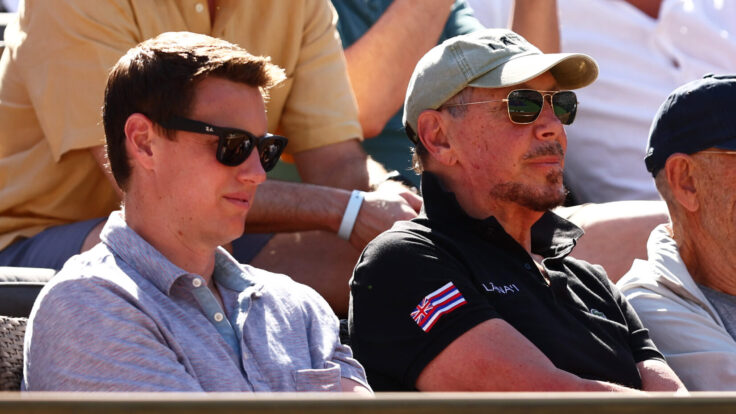
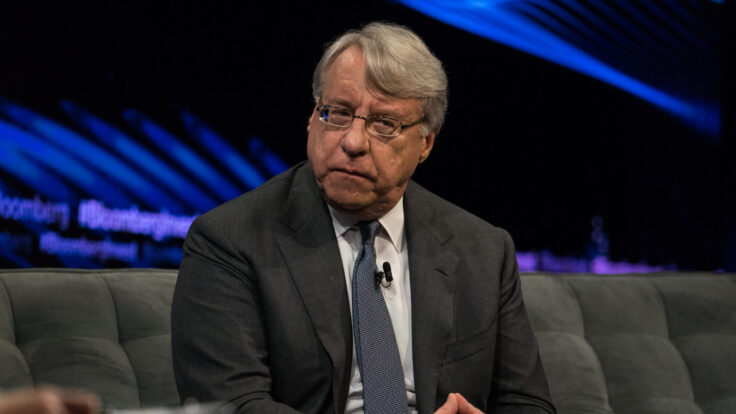
| It appears to be a draw for now between our buddy Carl Icahn and Illumina, the $30 billion biotech giant, in which Carl had been involved in a proxy fight to get three seats on the board and change the trajectory of the company. Well, on Thursday Icahn got enough support from shareholders to oust the chairman of the board, and to install one of his three nominees, although he failed to convince enough shareholders to vote out Illumina C.E.O. Francis deSouza (who also sits on the board of Disney).
Frankly, I haven’t understood Carl’s goal with Illumina. It certainly isn’t paying off for him as a money maker. The stock is basically flat since Carl announced, on March 13, that he had bought 2.2 million Illumina shares, worth roughly $425 million, or 1.4 percent of the company’s stock, and that he would be starting a proxy fight. And now he has failed to accomplish his full mission by only winning one of the three Illumina board seats he sought. I’m not sure how far that one seat will get him, and I suspect at some point he will slink off to focus on his more existential problems at Icahn Enterprises, his publicly traded investment company that, ironically, has become the focus of a short-seller attack from Hindenburg Research.
Carl’s beef with deSouza largely pertains to the Illumina C.E.O.’s decision to spin-off Grail, the cancer-testing business that Illumina started and nurtured. A few years later, Illumina decided to buy Grail back for “a staggering $8 billion,” according to Carl, giving its outside investors (including Bill Gates and Jeff Bezos) a windfall of “a staggering $5.3 billion.” The rich get richer. Then, according to Carl, Illumina had to take a writedown on the Grail purchase of nearly $4 billion, “suggesting” that de Souza and his team “vastly overpaid” when buying it back. “That would be enough to make anyone upset!” Carl continued in his March 13 letter. But, wait there’s more. After both U.S. and European regulators told Illumina that they intended to block the acquisition of Grail, and that the E.U. actually did “prohibit” Illumina from buying Grail—for reasons that make zero sense, I might add, because Grail does no business in Europe and had obviously once upon a time owned Grail without anyone objecting—deSouza made the unusual decision to close the Grail deal anyway and keep it as a separate entity in case ultimately Illumina was forced to sell or to spin-off Grail, which is one of things Carl wanted deSouza to do.
That’s about when I had a conversation with deSouza, as he was making the rounds of the financial press to explain why he had decided to stick his finger in the eye of the E.U. regulators and to close the Grail deal over their objections. Back then, in September 2021, deSouza told me he knew that closing the Grail deal without the regulatory approvals was a risk, but it was one he decided to take because he wanted to accelerate the roll-out of the cancer tests and to accelerate the process by which the test will one day be reimbursable to users. “This is one of those rare cases where you get better outcomes and lower costs,” he told me. “Our hope is that this deal does get a review, a full review, and that we do get approvals. Then we just move as fast as we can to make this test available around the world, and make it reimbursed and accessible around the world.” He continued: “The potential of this to save lives is so enormous that we felt that we have a moral obligation to make sure we did everything we could to make sure this deal got a full and fair review.”
The hard-hearted Icahn was not the least bit swayed by deSouza’s moral imperative. He was motivated solely by the dollars and cents of it all. And, not surprisingly, on that score, Carl has made several persuasive arguments. Chief among them is the fact that since deSouza closed the Grail deal without regulatory approval, it’s been a financial disaster.
According to Carl, since Illumina re-acquired Grail, Illumina’s stock has lost $50 billion of its market value and now is worth $30 billion, a fall of 62 percent. He also points out that Illumina may have to pay a fine to the E.U. of $458 million for its aggressive tactics; that it has been forced to incur annual costs of $800 million to operate Grail but without getting any of the benefits of that ownership since it has been held as a separate entity; and that it may have to pay taxes of as much as $1.75 billion if Illumina is forced to sell Grail in the end. “Incredibly, these were all risks that your team of geniuses knew or should have known prior to inking the deal and yet they plowed ahead anyway!” Carl wrote in his folksy style. “To your utter disbelief and dismay, the management team and board of directors do not apologize for their actions, but rather press ahead and vow to use your money [Carl’s emphasis] to appeal every decision of the European regulators until the end of time—no matter how much money you lose.”
If it were up to him, he continued, “The management team and board of directors that created this mess would be fired immediately and a thorough investigation would be conducted to ascertain whether they engaged in gross negligence (or even worse). Illumina’s share price performance, and the $50 billion of value destruction that has occurred since the Grail deal was closed, clearly shows that shareholders have lost faith in Illumina’s management team and board of directors. Yet these individuals suffer no consequences or remorse. The members of Illumina’s management team and board of directors collectively own less than 0.1% of the company’s stock yet they feel entitled to take these reckless actions with our money [again, Carl’s emphasis].”
As a result of Thursday’s proxy vote, John Thompson, the chairman of the Illumina board will depart in favor of Carl’s nominee, Andrew Teno, a portfolio manager at Icahn Capital. Thompson, the former C.E.O. of Symantec, was also once the Chairman of the Board of Microsoft. Teno is just a young money manager. He spent two years at Gleacher Partners, as a M&A banker, before switching to private equity. He joined Icahn in 2020. He will be one of nine Illumina board members. “Illumina thanks shareholders for their continued support of the company, which remains committed to its mission of improving human health by unlocking the power of the genome,” the company wrote in a statement. (I pinged deSouza after the results of the proxy contest to see if he wanted to chat with me, as he had nearly two years earlier, and to see what, if anything, he had to say about Carl’s offensive. He did not reply.)
Meanwhile, if Carl were smart, he’d turn his attention back to his own shop, Icahn Enterprises, which has been in a quasi death spiral since Hindenburg Research, the short seller, took aim at Carl back on May 1. Since then Carl’s stock is down 62 percent and he personally has lost more than half of his wealth, although he’s still worth around $9 billion. (He told the Financial Times recently that he has more billions stashed away, outside of his publicly traded company, which seems logical.)
We even got the added benefit of Bill Ackman, Carl’s longtime nemesis, dancing on Carl’s grave on Wednesday in a lengthy Twitter essay about why Carl’s company is facing serious trouble. Bill correctly pointed out that Carl should be worried about the large margin loans he took out, using the now-spiraling Icahn Enterprises stock as collateral. Ackman noted that because of the rapid decline in the value of the Icahn Enterprises stock, Carl has “more than” 65 percent of his holdings posted as collateral. “Further declines over the last several days will likely require additional postings,” Bill wrote on Twitter. “...Icahn’s margin lender(s) must be extremely concerned with the situation, particularly in light of the recent involvement of the [Justice Department], which will also likely be investigating the lenders’ involvement in the situation.” He then quoted one of Carl’s favorite Wall Street proverbs: “If you want a friend, get a dog,” and then added, “Over his storied career, Icahn has made many enemies. I don’t know that he has any real friends. He could use one here.” Ackman and Icahn have been going at each other for years, of course, culminating in their battle over Herbalife, which Icahn won after engineering a patented short squeeze against Aclman. Bill lost nearly $1 billion on his Herbalife short, thanks to Carl.
Sometimes karma (Ackman’s word) is a bitch. On Thursday, the same day as Carl won the one seat on the Illumina board, the stock of Icahn Enterprises was down another 18 percent. Couldn’t happen to a nicer guy. |
| We Need to Talk About Kevin |
|
| It appears that President Biden and House leader Kevin McCarthy have reached a deal to raise the debt ceiling, Washington’s ridiculous biennial budget negotiation cum hostage-taking event, which has become a way for the Republicans—supposedly the party of fiscal responsibility (OK, that is now a joke)—to use the threat of crashing the financial system to extract a few tedious political gains. Whether a majority of the House of Representatives will bless the deal remains to be seen on Wednesday, so we’re not out of the woods yet.
On the one hand, you have to respect the tactic of threatening to use financial weapons of mass destruction to get what a small group of insane Republican lawmakers want to accomplish. On the other hand, the very definition of insanity is doing the same thing over and over again and expecting a different outcome. We are a debtor nation, one of the most indebted countries in the world, with a national debt of $31.5 trillion and counting, thanks to a bipartisan combination of Trump-era tax cuts (thanks to the two ex-Goldmanites Gary Cohn and Steve Mnuchin for that) and pandemic-era spending. Still, G.D.P. for 2022 was nearly $25.5 trillion. That gives the U.S. a leverage ratio of 1.23x—far less than your typical leveraged buyout, but enough for Republicans to raise a stink about spending and debt ceilings, at least when one of them isn’t in the White House.
So maybe we’ll dodge the bullet this time, though not before the yield on Treasury bills that mature between June 6 and June 15 surged to around 6 percent, while the yield on the two-year Treasury is 4.5 percent. Talk about an inverted yield-curve. Certainly there was enough concern about what the idiot Republicans in Washington might do or not do that Fitch, the ratings agency, threatened to downgrade America’s AAA credit rating. Call it a self-inflicted wound or an own goal, or immense stupidity, but the political machinations on this topic are beyond comprehension. If we keep playing Russian roulette, eventually we’ll lose.
Let’s be clear: We have the money to pay our debts as they become due. The country is not bankrupt. Yes, our national debt has gotten out of hand, and yes, Mr. and Mrs. Modern Monetary Theory, the debt and deficits do matter and yes, we would be well-served by paying down our debt and reducing our annual deficits even further. No, we are not as indebted as Japan, which has a debt-to-G.D.P. ratio of some 225 percent, or twice the debt-to-G.D.P. ratio that we have.
All of which is to say that while our national debt has exploded, far outpacing the growth in our G.D.P., what’s being debated in Washington now—while MAGA Republicans have their fingers on the nuclear button—is akin to a technical default in a minor covenant in a loan document. It’s as if Microsoft or Johnson & Johnson—the only two companies in the S&P 500 with a AAA credit rating—had agreed to keep their debt-to-EBITDA ratio below 1.5x and then found that the ratio had increased to 1.6x, and were forced by their creditors into bankruptcy as a result. In the corporate world, that would never happen, of course. A solution would be worked out, quietly, well in advance, and probably no one would even know about it and the leverage ratio would be adjusted. Frankly, it’s almost an absurd scenario, because it's so implausible.
But in Washington these idiotic things do happen because there is, somehow, the very concept of a debt ceiling—Denmark is the only other country with anything comparable—and because there is political hay to be made by a small group of narcissistic, power hungry Republicans who derive some sort of perverse pleasure from threatening to bring down our nation’s economy and its hard-won reputation for fiscal probity.
The game of nuclear chicken has to stop. Taking our economy hostage in this way is an act of perfidy. Any deal that is reached this weekend should include provisions to eliminate the concept of the “debt ceiling” as well as provisions that will require the debt and deficit to be reduced, by whatever means necessary, including spending cuts and raising taxes, particularly on the wealthy and corporations. And then, come November, the moronic Republicans in Congress who think this is a whole lot of fun should be voted out of office. |
|
|
|
| FOUR STORIES WE’RE TALKING ABOUT |
 |
| DeSantis-Sacks ’24 |
| Charting the PayPal Mafia scion’s ascendency through the G.O.P. |
| TEDDY SCHLEIFER |
|
 |
|
 |
| Bezos at Sea |
| A conversation encircling the latest mediaworld plotlines. |
| DYLAN BYERS |
|
 |
| Netflixonomics |
| A close look at the putative success of the streamer’s ad tier. |
| JULIA ALEXANDER |
|
|
|
|
|
 |
|
|
|
Need help? Review our FAQs
page or contact
us for assistance. For brand partnerships, email ads@puck.news.
|
|
|
|
Puck is published by Heat Media LLC. 227 W 17th St New York, NY 10011.
|
|
|
|