{{ 'now' | timezone: 'America/New_York' | date: '%b %d, %Y' }} |
|
|
Hello and welcome back to The Best & The Brightest. I’m Leigh Ann
Caldwell.
This morning, I joined Meet the Press, where we talked about the M.T.G.–Donald Trump divorce, this week’s Epstein vote, and the healthcare quagmire in which Republicans are now trapped—much of which I explore below.
Republicans were able to get the government open without making any policy concessions, but now they find themselves in the very difficult position of having to at least try to address healthcare costs. On top of it, they are running headlong into a vote on Epstein, which Speaker Johnson—along with Trump, obviously—has been desperately trying to avoid.
Also, this week, I’ll host the next Puck Power Breakfast, presented by the American Petroleum
Institute. Rep. Brett Guthrie, chairman of the House Energy and Commerce Committee, will join me to discuss the latest in energy policy, which is essential to the A.I. race. Stay tuned for a full report later this week. |
|
|
A MESSAGE FROM OUR SPONSOR |
The AI for problem solvers When you're tracking the real story behind the headlines—connecting dots across policy and personalities—Claude helps you understand the patterns that matter.
Anthropic built Claude on a simple principle: AI should be a force for human progress. That means creating an AI system that's straightforward to use—a partner to help you think through complexity rather than racing past it. No quick takes, no
surface-level analysis. Just deeper thinking.
With every update, Claude gets smarter, more useful, and more balanced. Try Claude for free and see why problem solvers and independent thinkers around the world are choosing Claude. Learn
more |
|
|
- Trump’s signature snafu: During his executive order signings in the Oval Office, Trump rarely misses an opportunity to note that he doesn’t use an autopen—a dig at President Biden, who Republicans allege was too mentally incapacitated to sign paperwork himself. Of course, the autopen is ubiquitous in
Washington, as everyone knows, but that hasn’t stopped House Republicans from investigating Biden’s alleged use of the device, calling it the “biggest political scandal in American history.” Indeed, Trump recently declared, without any
evident authority, that Biden’s pardons are “hereby declared void, vacant, and of no further force or effect” because of his use of the autopen. (In a somewhat more lighthearted jab at his predecessor, Trump framed a picture of an autopen in lieu of Biden’s portrait in his new presidential “Walk of Fame.”)
And yet, Trump himself is now facing questions about whether he used an autopen for his last batch of pardons, issued on November 7, which included Darryl
Strawberry, Michael McMahon, Troy Lake, Robert Henry Harshbarger Jr., Cade Cothren, Michelino Sunseri, and Glen Casada. On November 12, political commentator Brian Krassenstein noted on X that the signatures on the paperwork uploaded to the D.O.J.’s Office of Pardons website were uncannily uniform. The fact that every signature looked exactly the same, Krassenstein alleged, proved Trump had also used an autopen, which—according to Trump’s own position—would make the pardons void.
The following day, the signatures on four of the pardons—for McMahon, Strawberry, Harshbarger, and Casada—visibly changed compared to the signatures that were logged by an internet archiving service. (The archive doesn’t have the original pardon documents
for Cunseri and Lake. The signature for Cothren’s pardon remained the same.) You can check out the originals here and the new ones here.
The White House
denies using an autopen, and the Justice Department blamed the snafu on a technical issue. “President Trump signed seven pardons by hand and D.O.J. posted those same seven pardons with seven unique signatures to our website,” said Justice spokesperson Chad Gilmartin. “The website was updated after a technical error where one of the signatures President Trump personally signed was mistakenly uploaded multiple times due to staffing issues caused by the Democrat shutdown.” White
House spokesperson Abigail Jackson added: “President Trump signed each one of these pardons by hand as he does with all pardons. The media should spend their time investigating Joe Biden’s countless auto-penned pardons, not covering a non-story.” - Filibuster bluster?: Sen. John Barrasso seems to be offering some wiggle room on the future of the filibuster. On this morning’s episode of Meet the
Press, the Republican whip didn’t definitively say that eliminating the filibuster was out of the question. “President Trump makes a compelling argument,” Barrasso said, referring to Trump’s public efforts to pressure Republicans into eliminating the 60-vote threshold to advance legislation in the Senate. After being pressed, he said, “I support the filibuster, as do, I believe, a majority of Republicans in the Senate. So I expect it’s going to continue to be here.” Not exactly a
ringing endorsement. Perhaps he was speaking to an audience of one. Or maybe he knows that if Trump pushes hard enough, Senate Republicans will fold.
|
|
|
The week ahead is likely to be the hardest for Republicans this session, with a
lose-lose proposition on the Epstein vote: Cross Trump, or alienate the base? And then there’s the healthcare conversation they’d much rather avoid… |
|
|
As Congress begins its first full week in session since September, G.O.P.
solidarity will face its toughest challenge to date. Republicans stayed mostly united during the government shutdown (and on most issues before that, too), rebuffing offers to negotiate with Democrats over policy and largely refraining from criticizing their leadership’s management of the situation. But that was the easy part. This week, they’ll be forced to reckon with two high-stakes issues they’ve been dodging for months: a vote on the Jeffrey Epstein saga,
and perhaps even more debilitating for the party, a debate on healthcare.
Indeed, Congress will be consumed with both this week, and probably for the foreseeable future. As their losses in this year’s elections made clear, voters may not be buying what Republicans are selling. How they handle these two issues could have a lasting impact on the party’s political fortunes in next year’s midterms and exacerbate a rift in the MAGA coalition that’s been growing wider by the day. |
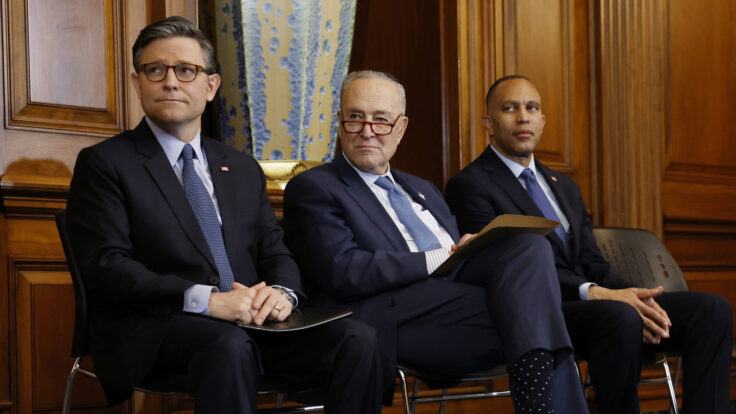
After delaying the vote for months, Speaker Mike Johnson now says he will no
longer postpone the inevitable and bring up the Epstein transparency discharge petition this week. The measure, which already received the requisite 218 signatures to come to the floor, will almost certainly pass. The real question is how many Republicans will vote for it. There will be at least four, of course—Reps. Thomas Massie, Lauren Boebert, Marjorie Taylor Greene, and Nancy Mace, who all joined Democrats in supporting the
discharge petition. But a much larger number appear to be testing the waters as well. I’m told by Republican sources that up to four dozen or more Republicans could ultimately vote to release the files, wagering that it’s better to anger the president than to alienate their voters. This is one issue that both the G.O.P. base and suburban women are watching closely. |
|
|
A MESSAGE FROM OUR SPONSOR |
|
|
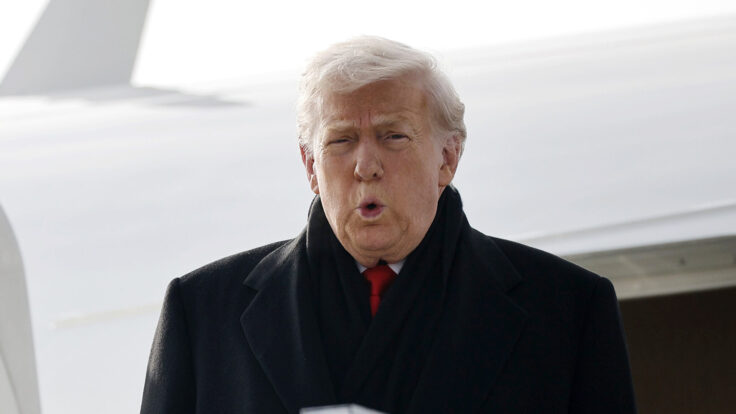
Late Sunday night, Trump
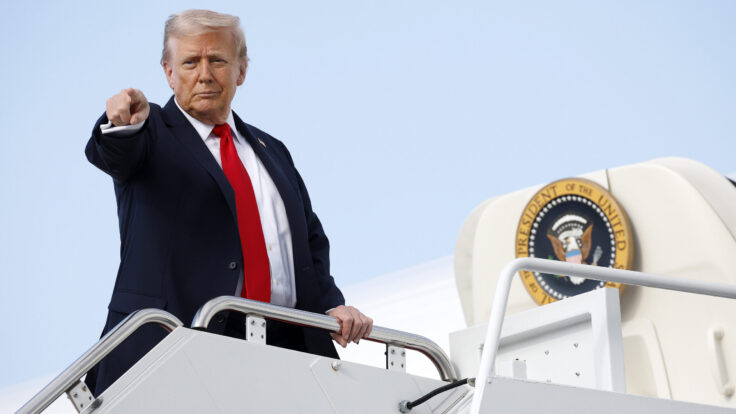
posted—and some of his top aides, including Karoline Leavitt and James Blair, reposted—a statement encouraging Republicans to vote to release the Epstein files, which will likely cause the number of yeas to skyrocket. “We have nothing to hide,” he wrote. “It’s time to move on from this Democrat Hoax perpetrated by Radical Left Lunatics in
order to deflect from the Great Success of the Republican Party.” Giving Republicans the okay is a dramatic about-face for Trump, who spent months trying to block the release of the documents and was, until very recently, pressuring Republicans to stand down. But the apparent face-saving maneuver became necessary as it became increasingly clear that he was set to face the biggest defection of party members since January 6.
Sources I spoke to Friday and through the weekend expected that
Trump would have worked extremely hard to whip members against the vote. “This is personal for him,” one senior Republican aide said, predicting that the president might try to turn the screws on members, even though the vote seems certain to pass, to ensure there is no veto-proof margin and to peel off as many Republicans as possible. His un-endorsement of Greene over the weekend spooked some of her Republican colleagues, Rep. Ro Khanna told me in the Meet the
Press green room. Summoning Boebert into the Situation Room didn’t exactly alleviate Republican jitters, either.
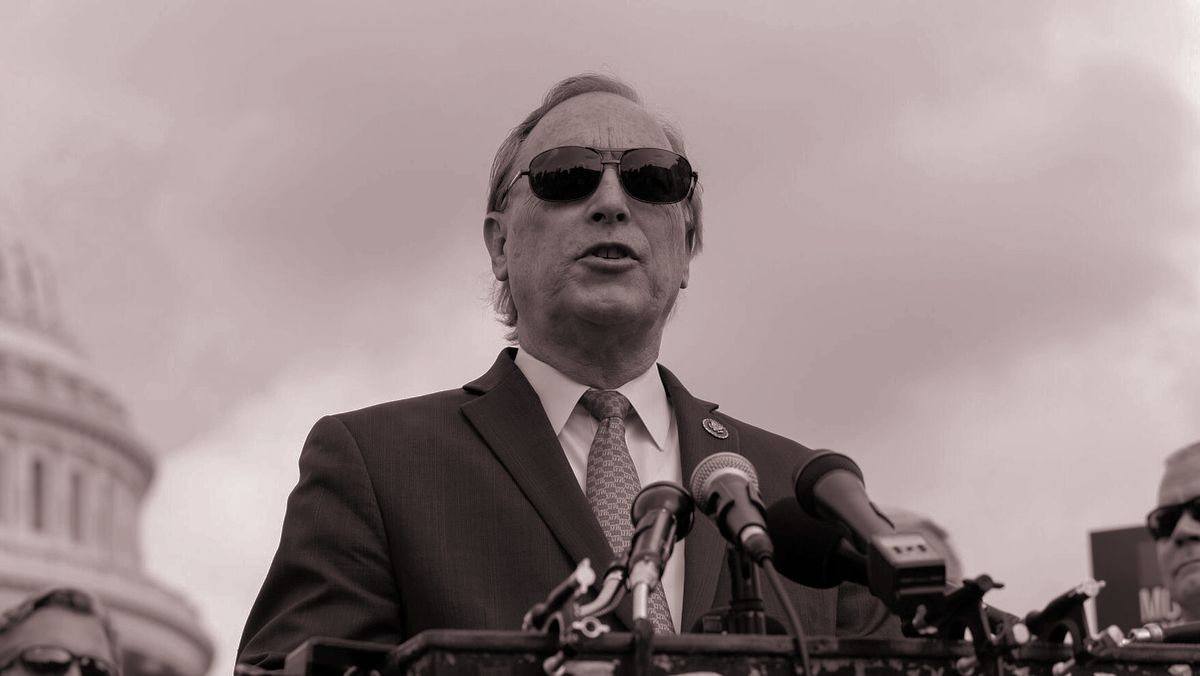
Before Trump’s announcement, a vote to suppress the Epstein files would have forced members to choose between Trump and angering red-meat primary voters. Freedom Caucus member Andy Biggs, who is running in a crowded primary for governor in Arizona, had said he’d vote to release the files—essentially choosing his own political future over Trump, two things
that are usually closely intertwined. Rep. Mace, one of the four Republican signatories on the discharge petition, hasn’t changed her vote despite Trump’s efforts, likely losing any chance of securing Trump’s endorsement in her South Carolina gubernatorial primary. Rep. Ralph Norman, another Freedom Caucus guy, is running in that same primary. He called for “transparency” in September and supported the House Oversight Committee’s investigation, but didn’t respond
to a text message about how he’ll vote on the measure this week.
Meanwhile, Trump’s announcement was also an extension of his attempt over the past few days to redirect the Epstein narrative away from him, calling on Attorney General Pam Bondi to specifically investigate the Democrats named in the latest batch of emails released by the House Oversight Committee. But that seems unlikely to satisfy Republicans, or to scare Democrats. After all, many of the lawmakers in
Congress today have little connection to the bold-faced names of a bygone era—Bill Clinton, Larry Summers, etcetera—who appear in the files. Besides, as one Republican strategist put it, the political goal for Democrats isn’t necessarily to flip Republicans, but to throw “sand in the gears of base mobilization.” And the Epstein scandal is the perfect wedge issue to demoralize G.O.P. voters and convince them to stay home. |
Despite this fresh hell, healthcare might actually cause even more of a headache for Republicans.
When the government shutdown started, one Republican strategist told me the party couldn’t let the standoff become a debate over healthcare—an issue that the party rarely wins on. And though they made no concessions on healthcare policy the end the shutdown, they were unable to prevent the national conversation from pivoting there. A poll by Democratic firm Navigator found that Republicans are losing the healthcare costs blame game with voters by 16 points. Similarly, polling of battleground
House districts by Republican firm McLaughlin & Associates found that 39 percent of battleground voters said healthcare was their biggest affordability concern, slightly edging out the cost of everyday needs. After an off-year election where Republicans lost on affordability, the party is belatedly realizing that health insurance is an issue they can’t afford to ignore.
But changing the course of political history is no easy feat. Democrats lost the 2010 midterms because they made massive
changes to the beleaguered healthcare system with the Affordable Care Act. Republicans lost the 2018 midterms because they tried to take it away. Trump and Republicans lost in 2020 over Covid. In 2022, Republicans underperformed in the midterms after they celebrated the Supreme Court eliminating a right to abortion. All the while, Democrats have been the party of healthcare for nearly a century. Every major healthcare advancement was signed into law when a Democrat sat in the White House—from
the emergence of health coverage in the New Deal, to the establishment of Medicare and Medicaid under L.B.J., to the A.C.A. |
|
|
Trump is acutely aware that Republicans need to address healthcare costs, but Republicans
are skeptical that he’ll come up with a plan—something he’s been teasing for more than a decade now. Indeed, according to multiple senior Republican aides, the White House hasn’t notified Congress of any specific healthcare components that should be changed. Trump has talked publicly about redirecting A.C.A. subsidies directly to people to put in their Health Savings Accounts, an issue that Republicans are getting behind. But beyond that, any notion of a Trumpcare alternative remains
entirely undefined.
Historically, Republicans have been better at repealing or rolling back healthcare than at providing it. After all, the G.O.P. has traditionally pushed for fewer interventions in markets. And yet even in this more populist moment, when Trump has aggressively dictated terms to businesses, Republicans remain rudderless and divided on the issue, struggling to even agree on what to tackle: Do they push to reform subsidies? Address waste, fraud, and abuse? Or
propose a broader overhaul of the system? Vulnerable Republicans in swing districts, including Virginia Rep. Jen Kiggans and California’s David Valadao, want to extend A.C.A. subsidies immediately, knowing they’ll be punished by midterm voters if premiums shoot through the roof. Polling by McLaughlin found that 57 percent of battleground voters are likely to vote for a candidate that extends A.C.A. subsidies. “Letting the healthcare tax credits expire makes
incumbent Republicans vulnerable and provides Democrats a significant advantage on an informed generic ballot,” the firm said in a recent memo.
But a significant number of conservatives will never support any expansion of the Affordable Care Act, which is why the current Republican strategy has coalesced around making Obamacare as unpopular as possible—bashing it as too expensive or a giveaway to insurance companies, a bit of convenient selective populism. But altering the A.C.A.
in an election year is not only infeasible—big legislation is usually done in off years—but politically risky. The most likely outcome, as one Republican operative put it, is that Trump will simply “return to A.C.A. bashing with the same promise he has always made—something better… very soon.” |
|
|
Join Emmy Award-winning journalist Peter Hamby, along with the team of expert journalists at Puck, as they let you in
on the conversations insiders are having across the four corners of power in America: Wall Street, Washington, Silicon Valley, and Hollywood. Presented in partnership with Audacy, new episodes publish daily, Monday through Friday. |
|
|
Unique and privileged insight into the private conversations taking place inside boardrooms and corner offices up and
down Wall Street, relayed by best-selling author, journalist, and former M&A senior banker William D. Cohan. |
|
|
Need help? Review our FAQ page or contact us for assistance. For brand partnerships, email ads@puck.news. You received this email because you
signed up to receive emails from Puck, or as part of your Puck account associated with {{customer.email}}. To stop receiving this newsletter and/or manage all your email preferences, click here. |
Puck is published by Heat Media LLC. 107 Greenwich St., New York, NY 10006 |
|
|
|