 |
|
Hello and welcome back to The Best & The Brightest, your Tuesday foreign policy edition.
If you missed the debut of Tara Palmeri’s awesome new election podcast, Somebody’s Gotta Win, then what are you still doing reading this? Go and listen to it immediately!
Today, we will examine the reasons for last week’s crash of the ruble, what it says about the state of Russia’s wartime economy, and how Russian elites are girding themselves for more instability.
But first… the latest Capitol Hill chatter…
|
Feinstein Fallout & the House ’24 Casualty List
By Abby Livingston |
|
- California’s Money Pit: Donors are excited about the California Senate race to finally replace Dianne Feinstein, but some influential Democrats are not amused by the bonanza of fundraising among the top three contenders, Adam Schiff, Katie Porter and Barbara Lee. After all, the party faces an unusually nightmarish Senate map in 2024, raising questions about whether the collective $36 million that the trio have raised so far this year could be better spent in a state that is, you know, actually competitive. (Of course, fundraising isn’t zero sum; Schiff and Porter, in particular, are magnets for small-dollar donors who might have no interest in contributing to other Democrats.)
But at least one seasoned House Democratic operative offered a different view: California is a jungle primary state, and a showdown between Democratic Senate candidates might help get out the vote in the general election. In other words, these Senate candidate coattails—as expensive as they may be—may be a blessing for other Democratic candidates further down-ballot, providing a chance to pick back up some of the House seats they lost last cycle.
|
- Hot Retirement Summer: A flurry of House retirements usually indicates that the political climate has turned against a party, but according to my conversations, the retirement rumor mill has been conspicuously quiet this summer. So far, nearly everyone on the official House casualty list is making a play for higher office, suggesting that members from both parties are envisioning a favorable 2024 cycle. Typically, resignations are announced in the summer before the next election year as members come to grips with the reality that they’ll either lose reelection or get stuck in the minority.
But according to one House G.O.P. operative, there’s no urgency this year to make retirement decisions until the holidays. Historically, the late fall/winter window is another high season for retirements—which, this year, will come after an unusually busy fall of legislating. We might yet get another round of names on the casualty list.
|
- A House Divided: The 2024 fight for the House majority could not be more competitive during this typically hushed period on the congressional calendar, according to operatives in both parties. Typically, the off-year August recess is when vulnerable members scuttle back to their districts for a reality check on their party’s appeal among constituents. These are often unhappy reunions; remember the screaming town halls back in 2009? But this cycle, the fate of the House remains a mystery to even the cockiest prognosticators.
The uncertainty mostly revolves around Trump and Roe. Democrats are still smarting from their 2020 losses—the last time Trump was on the ballot, when they thought they would expand their majority. For their part, Republicans are understandably wary of how much abortion will play against them in a post-Dobbs world. Moreover, unresolved redistricting in New York, North Carolina, and several Southern states remain complicating factors.
|
- Seen Not Hurd: Will Hurd is none-too-pleased with Fox News and the R.N.C. for leaving him out of Wednesday night’s Republican presidential debate. The former Texas Republican House member raged about the process, calling it “arbitrary,” “unclear,” “unacceptable,” lacking in consistency and transparency. And Hurd took a veiled shot at fellow anti-Trumper Chris Christie, stating that “the biggest difference between me and every single candidate who will be on the debate stage in Milwaukee is that I have never bent the knee to Trump.”
|
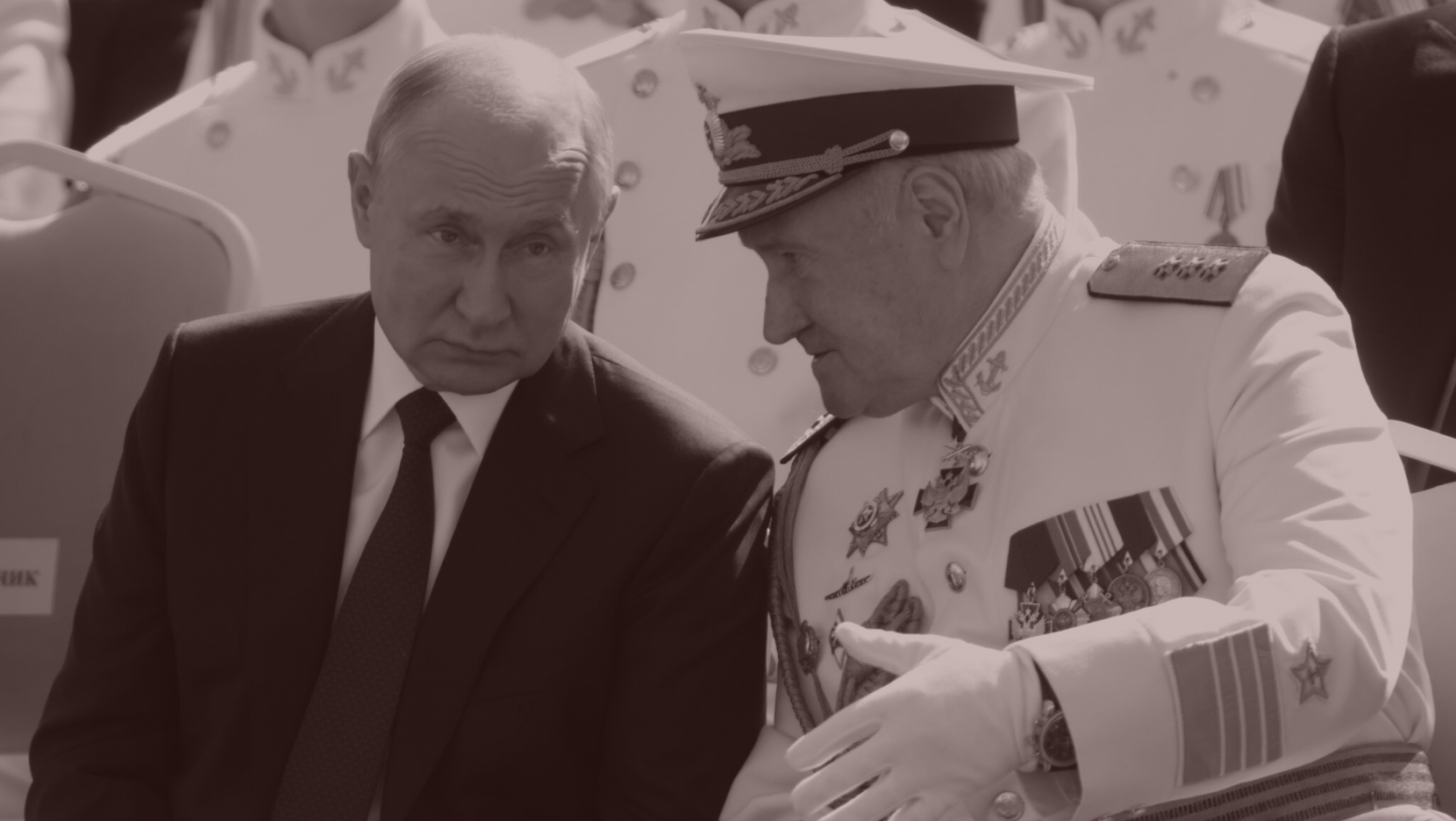 |
| War & Profit |
| Inside Moscow, the war economy is booming: restaurants are packed, businesses have pivoted to Asia, and, somehow, elites are richer than ever. But with prices rising and the ruble plummeting, insiders worry the good times are a mirage. |
|
|
|
| Last week, the ruble punched through a psychologically important threshold: 100 rubles to the dollar. When I left Moscow a decade ago, the exchange rate was about 30, and on the eve of Vladimir Putin’s invasion of Ukraine, it was just under 80. When Russian tanks crossed the border in February 2022, the ruble crashed to 120 before stabilizing for months at the head-scratching low of 60 for the second half of the year. Since the beginning of 2023, it’s been creeping steadily upward, and has been scratching at the 100 ceiling for a good part of the summer.
All of last week, friends and family in the West—all vehemently opposed to the war—sent gleeful memes about the collapsing Russian currency, hoping that it was a harbinger of economic calamity for the Kremlin. But as usual, in Moscow, things looked very different. “They are even richer,” a friend in Moscow texted when I asked him how the residents of the chic Patriarch Ponds neighborhood are living through these uncertain times. “It is amazing. Never seen so many Lambos and Rolls as last year.” What about the ruble crisis, I asked? “Don’t care,” he texted. “They live in Russia, taking salaries in rubles and spend their money in Russia.”
A friend of his is an interior designer who has been freed by the war of competition. Her problem, she now says, is being able to finish all the jobs that have fallen in her lap, not getting new customers. Another friend, who works for a Russian oligarch, told my friend, “You have no idea how much money there is in Russia right now.” Said another, “Only a fool wouldn’t be able to earn money right now.”
For many Russians, it’s like living in two parallel universes at once. “In Moscow, we all start the morning by looking at Telegram to see where drones are hitting in Moscow,” another source told me. “But the restaurants are still overflowing.”
The Russian economy seems to exist in another dimension, too. One successful Russian businessman recently recounted to me how, in the year and a half since Western companies fled the country en masse, the economy has adjusted and Russians’ endless craving for foreign imports are still being met—either by increased domestic production, by friendlier countries like Turkey and China, or through parallel imports. “All the closed shops have reopened as new businesses,” the businessman said of a recent trip to one of Moscow’s mega-malls.
“Instead of IKEA, there’s a big Turkish furniture company,” he continued. “There are lots of unknown clothing stores, including some very decent ones. Cosmetics have changed, household chemicals have changed. But the parallel imports are here, too. If you have money, you can get parmesan and prosciutto.” Sure, prices have risen—the price on parallel imports includes the logistical cost of getting all those Western goods through various middlemen and around sanctions-related obstacles—but that didn’t faze the businessman. “I make obscene money now,” he shrugged, “So I don’t look at the price tags.” |
|
|
| How is this possible in a country sanctioned to the nines, and in an economy isolated from half the world, including from the customers it banked on for decades? The short answer is war. “There are some problems, but all serious economists will tell you that there are no problems with the economy when you have a war,” a source close to the Kremlin told me. “Industry is producing, people are spending. War isn’t always a catastrophe, even considering sanctions, because everything here is focused on the internal market.”
Are there some problems? Sure. There’s a growing budget deficit, yes, and a depreciating currency, okay, but these are hardly harbingers of the apocalypse, the source close to the Kremlin said. “These aren’t the kinds of problems that end in catastrophe,” they explained, waving everything off. “No one outside the Ministry of Finance cares about the budget deficit. In Turkey, inflation is 80 percent without any war and Erdogan won an election in spite of it, so I wouldn’t overreact. G.D.P. will rise by 1.5 percent or fall by 1.5 percent, is that a catastrophe? No, it’s not a catastrophe.”
As for how the Russian people were affected, the source, who spoke to me by phone from a large, Western city, was equally dismissive. “The average person has a harder life because things have gotten more expensive, but they just tell them it’s because the West hates you and is punishing us,” the source said. “It’s because of sanctions, which is true. In this one way, the propaganda isn’t lying.” As for the well-off, well, they’re more than fine, though the sanctions have driven them back into Putin’s arms. “All the big businessmen who wanted to invest in something in the U.S. or E.U., they were kicked out and now they can only invest in Russia,” smirked the source. “And Putin can say, I told you so.”
The source understood that the West felt like it had to do something to punish Russia for invading Ukraine, but they were skeptical that the sanctions were having their intended effect. “The idea of sanctions is that we’ll make things so bad that the people will pick up pitchforks and storm the barricades,” the source said. “But it’s not the 1920s and ’30s when there were famines [in the Soviet Union]. There won’t be famine because of modern technology. Okay, it’ll be a little worse and people will continue living in a closed economy, but that’s not a reason for revolution. I just can’t see it.” |
|
|
| It’s a fascinating predicament and certainly not one I anticipated, given the unprecedented sanctions and the imposition of an oil price cap. Somehow, I expected crushing poverty and belt-tightening, as during World War II, not a roaring war boom. But the warning signs are there, and even the regime’s defenders have told me they’re worried. “Prices are really rising,” one Moscow insider told me. “It’s a serious situation and it would be strange to deny it.”
The ruble’s troubles in recent weeks are just the most obvious indicator that all isn’t totally well under that glittery façade. The war, as well as the sanctions, have created a perfect storm for the ruble. To keep up with a colossal and expensive land war that shows no signs of ending any time soon, the Kremlin has had to spend, spend, spend. It has to spend to produce more tanks and ammunition, more optics and weapons. It has to spend to recruit soldiers, doling out signing bonuses that are many multiples of the average Russian salary, as well as monthly paychecks that are similarly inflated. (Same with the payouts to the families of the dead and wounded, of which there are now hundreds of thousands.) It has to invest in all kinds of perks, like soft loans for soldiers’ mortgages or wiping out their debts. As a result, the poorest regions of Russia, which have sent the most men to fight, are now flooded with cash. As are the regions that have military-related industries.
Moscow, which has always had the highest concentration of wealth in a rich but cartoonishly economically unequal country, is swamped with cash, too, but for different reasons. The people who live here are very Westernized and have far more expensive tastes, but now that Russia is completely isolated from the West, where do they spend their money? Where do they invest? Western banks are now allergic to Russian customers, travel westward is now far more complicated and expensive, and your credit cards don’t work. The ruble has become an essentially unconvertable currency so, once you get there, no one will trade you Euros and dollars for them. For the same reason, trade transactions are now denominated in rupees, renminbis, and the like. Euros and dollars have become hard to find and banks charge hefty fees to move them around, so people and companies hoard them. “When the country’s economy is half-isolated, it’s hard to take money out because there’s nowhere to invest it except here,” the source close to the Kremlin explained. “It’s like in Iran, where real estate is very expensive. That’s the effect of closed economies.”
“Here is the problem: the Russian economy is running on steroids and the steroids are military expenditures,” a strategist at a big international bank told me. “In a perfect Keynsian example, all this money trickles down. People’s income is growing faster than the economy. Where do they get all this money? From the budget. All this war economy created redistribution of incomes, helping people who are poorer become richer faster. The poorer you are, the faster your income is growing. This is especially true for Buryatia, Dagestan—all the places where they conscripted cannon fodder and all the regions where tanks are produced.”
Where can all this new money go? “The demand for imports is growing and it’s not only because people want to buy produced goods, but also because you need investment in import replacements, things like microchips and the like,” the strategist said. “Industrial capacity is at its maximum so you can’t increase production. The Russian stock market is up, but this is artificial. The property market is growing despite the geopolitical risks—you would be absolutely mad to buy anything here.”
In short, said the strategist, “The war has created a lot of extra money and there are signs of the economy overheating.” The foundering ruble is just the flashing signal on the dashboard. |
|
|
| Normally, a weak currency would be good for an exporter of raw materials like Russia. But, because of the war and subsequent sanctions, Russia’s export market has shrunk as its core customers in the West have turned away. This means that, even as the Kremlin is on a wartime spending spree, its revenues have fallen. Russian energy is sold at a big discount—even as some countries have found loopholes to evade the oil cap—and then the money gets stuck in countries like India. One solution, the businessman told me, is to use India as a transit point for parallel imports, denominating those trades in rupees, then giving the rubles you get at home from your customers to the Moscow oilmen.
And so, at the end of last year, the Kremlin budget saw something it hadn’t seen in a long time: a deficit. It’s only getting bigger. This spring, Russia hit the deficit figure it had expected to see for the entire year in April. But the war is still going. Those tanks need to be made and soldiers need to be paid. So the Kremlin is leaning in on deficit spending, flooding the market with increasingly meaningless rubles and setting off an inflationary spiral.
As a result, the Russian Central Bank last week hiked interest rates by three percentage points to 12 percent. Still, the ruble continued to tank, stopping only when news came out, through managed leaks to the business press, that the Kremlin had leaned on fertilizer companies to release the foreign currency in their coffers. This coaxed the ruble down to 93 and it has stayed around there as of this writing. But how long will this strange fix last?
“Don’t buy the bullshit that a cheap ruble is good for the budget,” the strategist said, alluding to the defense that, because all of its costs were in rubles, a devalued currency made paying the bills cheaper for the Kremlin. “A cheap ruble is not good for the budget. It leads to inflation, which means you have to borrow at high interest when you have to raise money, you have to pay higher interest rates to service the debt, and you have to pay more in salaries. The general rule is that a 10 percent decline in ruble is a one-percent rise in inflation.”
And inflation in Russia is a scary word. “Everyone knows what inflation leads to in Russia,” said the Moscow insider. “It becomes not just an economic question, but a political one.” The Kremlin only takes economic protest seriously and it sees inflation as something that could make the population restive. This is a problem because, these days, the Kremlin is starting to pivot toward the March 2024 election. Putin will be re-elected, of course, but the Kremlin has revealed that it wants to see some truly North Korean numbers this time: 70 percent turnout and 75 percent of the vote for dear leader.
In spite of everything it has done to stifle any real expression of political sentiment, the Kremlin is notoriously obsessed with polls, approval ratings, and elections, and making sure that, even if it is carefully engineered, the result seems realistic. “In America people think that elections are decided ahead of time, which is true, but they want them to be decided without a huge gap between results and polls, so that there are no protests of any significant size,” said the Moscow insider. “The Kremlin is really careful with popular opinion, especially in this sense.” And as anyone in the White House can tell you, nothing can squelch your re-election dreams faster than runaway inflation.
That said, it’s not clear what the Kremlin will do to buy that support other than by deficit spending, which will continue to push inflation upwards as the Central Bank hikes interest rates, which will serve as a brake on some of Russia’s recent war-fueled growth. (Tellingly, Bloomberg now thinks the risk of Russia slipping into a recession has more than tripled.) Somehow, people I spoke to think, Russia will continue hobbling on, no matter how many self-inflicted injuries it accumulates. “It’s not the end of the Russian economy,” said the strategist. “The middle class will pay for all this. It’s always the problem of who is going to pay and someone will. The deficit will be a constant problem, inflation will be a constant problem, but they will manage.” It reminded me of Clifford Gaddy’s famous characterization of Russia’s as “the cockroach economy”: rudimentary but incredibly, pathologically hardy.
In the meantime, Russian businesses, already used to extreme uncertainty, are girding themselves for even more of the same. “There’s a lot of volatility and I don’t know what to do with it,” the Russian businessman told me. “Last May, it became clear that my [import] business was completely destroyed. I had to build it back from nothing, using shit and sticks. It’s not very stable but it’ll be in the black for three months, that’s all I can say for now.” The people in his social and economic sphere, the millionaires of Moscow, were perhaps getting their fill of the instability. “People are starting to realize they need lifeboats,” the businessman said. “They don’t believe that there will be concentration camps here, but they think that the person who comes after Putin will be even worse, even if he won’t hang on for long. Still, they all would prefer to watch it unfold from a peaceful country.” |
| That’s all from me, friends. I’ll see you back here next week, by which point I expect you to have listened to Tara’s amazing new podcast. Until then, good night. Tomorrow will be worse.
Julia |
|
|
|
| FOUR STORIES WE’RE TALKING ABOUT |
 |
| Hollywood vs. A.I. |
| The legal tech reckoning, Disney drama, and more. |
| ERIQ GARDNER & MATT BELLONI |
|
 |
|
 |
|
 |
|
|
|

|
 |
|
|
|
Need help? Review our FAQs
page or contact
us for assistance. For brand partnerships, email ads@puck.news.
|
|
You received this email because you signed up to receive emails from Puck, or as part of your Puck account associated with . To stop receiving this newsletter and/or manage all your email preferences, click here.
|
|
Puck is published by Heat Media LLC. 227 W 17th St New York, NY 10011.
|
|
|
|