{{ 'now' | timezone: 'America/New_York' | date: '%b %d, %Y' }} |
|
|
Welcome back to The Varsity. I’m John Ourand.
It’s the end of an
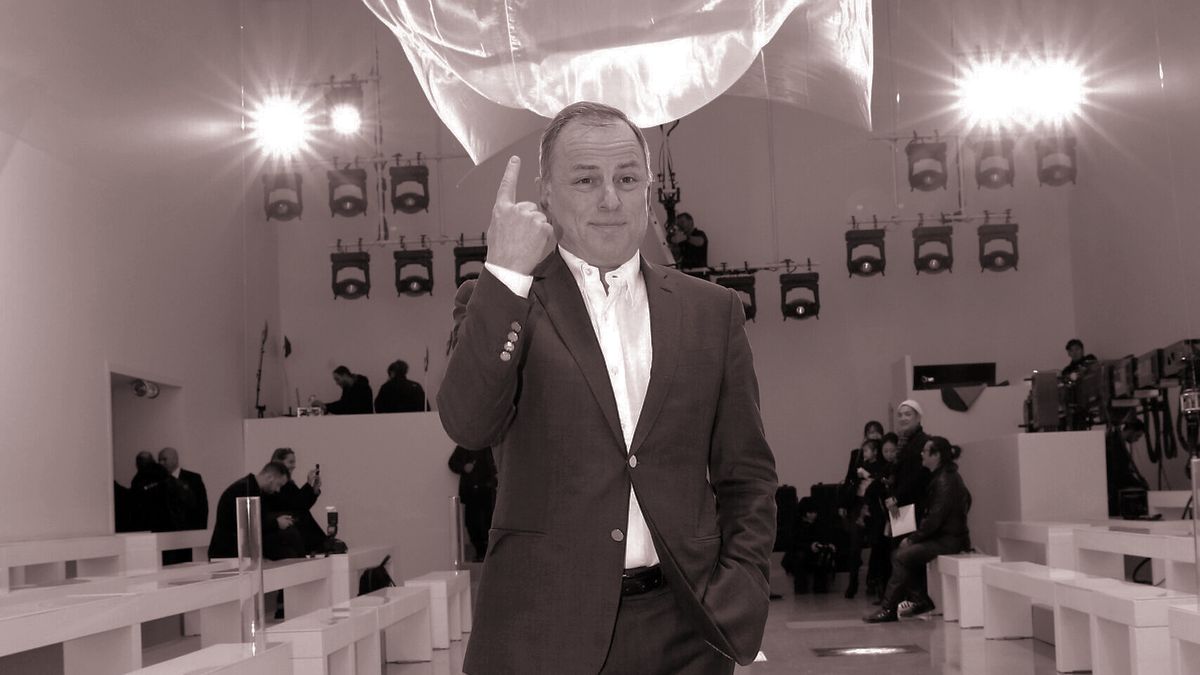
era at MLS. Gary Stevenson, the league’s deputy commissioner and top media executive, plans to depart after next year’s World Cup. Stevenson, a sports business veteran who’s been with MLS since 2013, was the architect of the league’s 10-year, $2.5 billion deal with Apple. “In the next eight months, we’re going to put the finishing touches on MLS 3.0,” he said in an
interview with SBJ, “so that once I leave, and I think once [commissioner Don Garber] leaves, it’ll be in a place [where the] next group can take it and evolve it.”
Meanwhile, in today’s issue, Julia Alexander breaks down exactly when and why Penn
Entertainment’s ESPN partnership failed. As with all of Julia’s pieces, the whole story is worth reading, but the key to me is this sentence: “When ESPN chairman Jimmy Pitaro and Penn C.E.O. Jay Snowden shook hands in 2023, DraftKings and FanDuel were already basically a duopoly, controlling about two-thirds of the market, according to Casino Reports.” In other words, the jig was up even before it started.
Take it away, Julia… |
Stat of the Week: 24 Percent
|
That’s the percentage of YouTube TV subscribers who are planning to cancel, or have already
canceled, the service because it “no longer delivers the core content they signed up for,” according to a study conducted this week by market research firm Drive Research. Any survey result should be taken with a grain of salt—especially one that lumps together people who have canceled with those merely contemplating it—but there’s no doubt that the Monday Night Football blackout, now in its second week, is taking a toll. Indeed, reams of data suggest that cord-cutters
with a v.M.V.P.D. subscribe primarily for sports, and mostly for football. It’s fair to assume that another weekend without SEC college football could be enough for a meaningful number of subscribers to consider canceling in favor of a competitor. |
- Iger’s ManningCast nonevent: Last night, both my X and Threads feeds were packed with journalists and fans waiting to hear Bob Iger give some kind of update on the Disney–YouTube TV standoff during his appearance on ESPN2’s ManningCast. Instead, all they got was a conversation about young Bob’s glory days at Ithaca College 50 years ago. Yawn.
But what exactly were we hoping Eli and Peyton
Manning, football greats turned TV hosts, would get out of Iger? Many people assumed that Disney was putting Iger on the show to spin the company narrative in a controlled setting, but I think that would have backfired. This is one of the rare times in carriage dispute history when more consumers are blaming the network than the distributor. Why risk alienating customers further? - The Disney-YouTube piracy problem: The best text I’ve
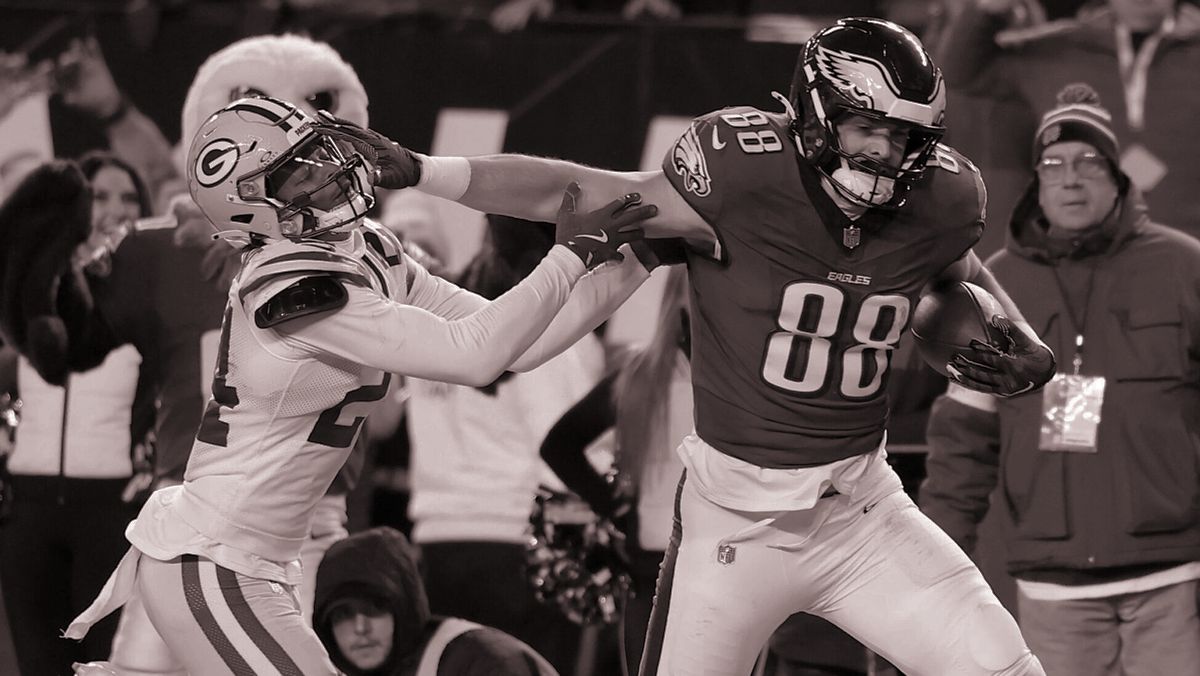
received during this entire Disney–YouTube TV ordeal was about this week’s Monday Night Football Eagles–Packers matchup, from a pal who works for a major technology company: “I’m just going to find a stream on TikTok. I’ll deal with the lines.” For those who aren’t using social media to illicitly stream sports, “the lines” refers to the simple visual tricks that people deploy to evade content-recognition systems when broadcasting copyrighted material.
As I’ve been writing for
years, piracy is a much bigger issue than many people recognize—and far more consequential than many leagues or media companies want to acknowledge. According to a fascinating new YouGov Sport poll commissioned by The Athletic, nearly 5 million Brits—or about 9 percent of the U.K.’s adult population—had watched sports via an illegal stream in
the last six months, with the vast majority of them (predictably) pirating soccer matches. And that number has been rising year over year. (Another 5 million or so said they didn’t know the answer or preferred not to say.)
None of this is surprising. As sports rights costs increase and broadcasters pour their energy into streamers, audiences can feel like they’re paying more for a worse experience. And finding a pirated stream of any given game is often as easy as poking your head
into a subreddit or going on TikTok. Everyone I talk to in sports media agrees: It’s a major problem, and a deeply unsolvable one. - Solitaire confinement: Last week, ESPN personalities faced heavy public backlash for promoting Solitaire Cash, a mobile app marketed as a game of skill that actually involves heavy doses of chance. Mina Kimes issued a public apology, while others—including Stephen A.
Smith, Dan Orlovsky, Laura Rutledge, and Kendrick Perkins—have not. Papaya Gaming, the company behind the app, is currently being sued over some of the game’s practices, which led to the mea culpa. (Defector has a nice breakdown.)
The affair is
yet another example of ESPN’s precarious position when it comes to gambling. ESPN isn’t a betting company, but it’s been playing in the space, where it’s got a new partner in DraftKings (incidentally, a Papaya Gaming investor). At the same time, Jimmy Pitaro’s talent and programs are increasingly covering betting scandals in pro sports. Where does it end? Or, at the very least, when do the guardrails come up?
|
A little more on this topic… |
|
|
The company’s splashy move into the app-based gambling market faced stiff
headwinds from the start. In fact, it likely never stood a chance. |
|
|
Anyone who took the under on the ESPN–Penn Entertainment marriage can cash out now. Less than three
years after the gambling company became the network’s official sportsbook partner, ESPN is ditching Penn for a new deal with DraftKings, a much larger rival. Shocker. Penn executives had the odds stacked against them from the start: When ESPN chairman Jimmy Pitaro and Penn C.E.O. Jay Snowden shook hands in 2023, DraftKings and FanDuel were already basically a duopoly, controlling about two-thirds of the market, according to Casino Reports. Alas, ESPN
Bet was never able to move the needle in a competitive market, allowing Pitaro to walk away from the deal.
In many ways, the failure of the Penn deal reflects the importance of first-mover advantages and audience lock-in. DraftKings and FanDuel were already established players when the Supreme Court opened the door to sports gambling in 2018. These days, BetMGM and Caesars are doing okay, and Fanatics has been growing its market share. But other insurgents have flamed out: Sports
Illustrated Sportsbook, Fox Bet, and MaxBet all launched around the same time as ESPN Bet, and none could make it work. Brand recognition alone won’t beat out product development in the digital betting space.
There are a couple explanations for this attrition. Power users—the most important customers to the lifetime value of a betting app—tend to use few platforms and typically have one go-to option. Casual gamblers, who might go to Vegas once a year to play some blackjack, may experiment
with these platforms if there’s the right incentive, but they aren’t sticking around. To wit: ESPN Bet’s launch promotion of $250 in free bets for new users drove more than 1 million new signups within the first six weeks of launch. But ESPN took a loss on those customers—about $335 million that quarter.
By the end of Q1 2025, after the $250 promotion ended, ESPN Bet reportedly dropped from 11 percent market share to 7 percent, according to Sports Handle, an industry trade. “On
the positive side, ESPN Bet has acquired a lot of new users,” Ryan Sigdahl, a partner and analyst at Craig-Hallum Capital Group, observed last March, per Sports Handle. “On the negative side, the company is spending about twice as much as they initially guided, yet it has equated to high-single-digit handle share initially versus their medium-term targets of 10 to 20 percent share.” And, of course, ESPN Bet’s market share only degraded from there. |
That’s not to say it’s impossible to break into the sports betting market, or that the
DraftKings–FanDuel duopoly is invincible. The key to winning over consumers, as always, is creating a better mousetrap. ESPN Bet didn’t offer anything compelling enough to persuade users to swap apps. But two newish insurgents have proven that there are still ways to differentiate in a crowded market.
Kalshi and Polymarket are two of the fastest growing apps that offer sports betting—in part because they aren’t technically sports betting apps. (In fact, the Casino Reports
analysis I cited earlier doesn’t mention either company.) Instead, both have been promoted as platforms for prediction markets—where users can wager on everything from elections to the Oscars—that just happen to include sports, uh, predictions, allowing them to operate in all 50 states.
But of course, betting on game outcomes is where all the money is. Kalshi, for instance, really entered the sports market in January with the Super Bowl, the most bet-on sporting event in the
country. By September, when the new football season kicked off, Kalshi was one of the largest sports betting platforms in the U.S. One Thursday Night Football game between the Philadelphia Eagles and the New York Giants saw more than $45 million in trading volume and close to an additional $10 million in parlays and player props, per analysis from Legal Sports Report. Sports trades now account for up to 80 percent of all trading volume on the platform, according to Kalshi, and have
surpassed $2 billion. On Polymarket, sports betting isn’t as big of a draw, but continues to increase each month.
Both apps—which cater to politics nerds, day traders, and other finance types—offer a user experience more akin to Robinhood, the investing platform that first gamified the stock market for the r/WallStreetBets generation. The simple interface is well suited to Gen Z and Millennial users in the U.S., 34 percent and 42 percent of whom, respectively, bet on sports in the second
quarter of 2025, according to a recent TransUnion survey. One could argue that prediction markets—which involve hundreds of thousands or millions of people betting against each other, rather than against the odds as determined by sportsbooks—are more enthralling than traditional sports betting, too. And the fact that it allows for people in states without access to DraftKings and FanDuel to participate in sports gambling is just the cherry on top. The day after Kalshi rolled out its
ability for bettors to place “combos,” known in the gambling world as parlays, both DraftKings’ and FanDuel’s stock dropped by 10 percent.
All of this may help explain why Kalshi has seen its overall user base grow by 20 times while trading volume grew by more than 200 times since October 2024. It’s available in around 1,500 markets, with plans to reach 3,000 more by the end of this year. How is ESPN Bet—or any other sportsbook-come-lately—supposed to compete with better apps and better integrated financial systems in markets that disallow its product? Even DraftKings C.E.O. Jason Robins is hedging, recently announcing that the company will enter the prediction markets business. (Trump Media and Technology Group is supposedly adding prediction markets to Truth Social, too.)
Anyway, ESPN Bet’s
problem turned out to be the most obvious issue that analysts saw coming: Nothing about what makes ESPN an extraordinary sports network was reflected in its sports gambling app. |
Thanks, Julia. See you all on Thursday.
John |
|
|
Puck sports correspondent John Ourand and a rotating cast of industry insiders take you inside the executive suites
and owners boxes where the decisions that shape the entire sports business are made. You’ll hear interviews with players, network execs, and everyone in between. The Varsity is an extension of John’s private email for Puck by the same name. New episodes publish every Wednesday and Sunday. |
|
|
Ace media reporter Dylan Byers brings readers into the C-suite as he chronicles the biggest stories in the industry:
the future of cable news in the streaming era, the transformation of legacy publishers, the tech giants remaking the market, and all the egos involved. |
|
|
Need help? Review our
FAQ page or contact us for assistance. For brand partnerships, email ads@puck.news.
You received this email because you signed up to receive emails from Puck, or as part of your Puck account associated with {{customer.email}}. To stop receiving this newsletter and/or manage all your email preferences, click here. |
Puck is published by Heat Media LLC. 107 Greenwich St., New York, NY 10006 |
|
|
|