• Washington
  • Wall Street
  • A.I.
  • Hollywood
  • Media
  • Fashion
  • Sports
  • Art
  • Join Puck Newsletters What is puck? Authors Podcasts Gift Puck Careers Events
  • Join Puck

    Directly Supporting Authors

    A new economic model in which writers are also partners in the business.

    Personalized Subscriptions

    Customize your settings to receive the newsletters you want from the authors you follow.

    Stay in the Know

    Connect directly with Puck talent through email and exclusive events.

  • What is puck? Newsletters Authors Podcasts Events Gift Puck Careers
 
Puck logo
 
Dry Powder

Hello, and welcome back to Dry Powder. 


In today's email: The saga of Dan Novack, the maverick First Amendment attorney who persuaded the Justice Department to turn over its draft complaint against JPMorgan Chase for due-diligence issues leading up the financial crisis, and who is now engaged in an even more grueling battle to force the F.B.I. to cough up documents relating to its 2006 investigation of Jeffrey Epstein. 


Thanks,

Bill


P.S. If this email was forwarded to you, you can sign up for Puck here.

epstein

The Epstein Posthumous Legal Battle

One lawyer’s quest for ten thousand pages of documents surrounding the F.B.I.’s 2006 investigation of the now-deceased predator. Plus: Notes on my dealings with the S.E.C. and Lazard Frères.

William Cohan

WILLIAM D. COHAN

Dan Novack, an enterprising First Amendment attorney, is one of the country’s foremost experts at prying documents out of the federal government using the Freedom of Information Act, or FOIA. Novack first came to my attention several years ago, after he successfully obtained a draft complaint in which Benjamin Wagner, then the U.S. Attorney for the Eastern District of California, alleged inconsistencies with JPMorgan Chase’s due-diligence process in the lead-up to the financial crisis. The document was never filed, and shortly thereafter, JPMorgan reached a then-record $13 billion settlement with the Department of Justice. I later wrote about the saga for Vanity Fair. If Novack hadn’t unearthed it, despite the bank’s efforts to keep it buried, it’s likely it never would have seen the light of day.


Since then, of course, Novack has been keeping busy. In addition to being a pro-bono FOIA attorney, Novack is associate general counsel at Penguin Random House, the big book publisher, and has served as counsel to First Look Media, the publisher of The Intercept, and as counsel to A360 Media, the publisher of, among others, The National Enquirer and RadarOnline. It’s in the latter role that Novack has been trying for nearly five years to get the F.B.I. to cough up documents stemming from the agency’s 2006 investigation of Jeffrey Epstein, the notorious sex trafficker. 


You can imagine how that’s been going. Starting in April 2017, Novack’s clients, RadarOnline and James Roberston, one of the three authors of the 2019 book, Epstein: Dead Men Tell No Tales, filed a FOIA request with the F.B.I. about its Epstein investigation. In May 2017, after the F.B.I. failed to respond to his request, Novack filed a lawsuit in the Southern District of New York. In October 2017, the federal court ordered the F.B.I. to process 500 pages a month from the agency’s main Epstein investigative file and to turn over any disclosable material to him. 


For the next 21 months, the F.B.I. complied with the request, but as I myself have experienced with prior FOIA requests, the vast majority of the pages produced were redacted, or blacked-out. As justification, the F.B.I. cited, according to Novack, a desire to protect Epstein’s privacy—“a notorious convicted sex offender,” Novack wrote, incredulously, in one court filing. The documents the F.B.I. produced were virtually indecipherable. There was a snippet here about how “JE” said that “he knew models” and also something about how he “eats salad” and drinks “lots of water” and, bizarrely, the word “exercise” floating by itself in a sea of emptiness. Another, barely more legible document, mentions that the F.B.I. interviewed Alfredo Rodriguez, Epstein’s butler at his mansion in Palm Beach for many years. But what Rodriguez told the F.B.I. was blacked out before it was shared with Novack.


In August 2019, following Epstein’s arrest one month earlier—based, in part, on the F.B.I.’s investigation—the agency offered a new justification for redacting so much of its monthly document production: FOIA regulation 7A, which attempts to guard against the release of documents that might interfere with a legal proceeding. The F.B.I. continued to cite 7A even after Epstein’s suicide, but Novack wasn’t told why until federal prosecutors announced they were building a case against Ghislaine Maxwell, Epstein’s longtime girlfriend and partner. The F.B.I. redacted almost all of the material Novack received between August 2019 and January 2020, when the F.B.I. stopped producing documents altogether. Maxwell was arrested on July 2, 2020.


The F.B.I. has been trying to get the judge in Novack’s case, Paul Gardephe, to toss it out on summary judgment. Novack, meanwhile, has been trying to convince the judge to force the F.B.I. to turn over the documents to him, on his summary judgment motion. In an August 2021 court filing, Novack wrote that he couldn’t quite believe that the F.B.I. “justifies withholding more than ten thousand pages of material principally on the basis that release of the records would interfere with the prosecution of Epstein’s alleged co-conspirator Ghislaine Maxwell.” On October 29, he wrote Judge Gardephe a letter reiterating his disbelief that the F.B.I. was withholding its Epstein investigation files—many of which Maxwell and her attorneys had already seen; she had access to something like 1 million documents from the government’s files, according to the Maxwell court docket—to try to prevent Maxwell from getting an advantage in her trial. 


“The agency continues to insist that releasing documents Ghislaine Maxwell has already seen to the public would give her an advantage at trial,” he wrote, with his emphasis. “How?...This case has never been about personal privacy or law enforcement. It is about the personal privacy of law enforcement. If the government wished to shield itself from embarrassment via the law enforcement exemption, it should have investigated Ghislaine Maxwell in 2006—or at any point prior to Plaintiffs’ 2017 FOIA request. An agency cannot upgrade its exemptions by creating new facts. Especially when those facts are themselves temporary.” He continued: “Once Ghislaine Maxwell’s trial commences next month, the factual basis for the law enforcement exemption will evaporate. The FBI’s invocation is therefore entirely cynical—a tactical gaming of FOIA merely to delay an inevitable public reckoning.”


On December 30, of course, Maxwell was convicted of recruiting and grooming teenage girls for Epstein to abuse. She is to be sentenced in June. For his part, Novack believes that with Epstein’s death and Maxwell’s conviction, the F.B.I. has run out of reasons not to share the Epsetin documents with him and the public. “Why are they trying to protect Epstein and Maxwell?,” he wondered aloud to me in a recent interview. He figures the F.B.I. is determined to withhold the documents because they reflect poorly on the Department of Justice and how they handled the 2006 investigation of Epstein. He’s hoping the judge will rule in his favor, and soon.

Sometimes persistence pays off when it comes to FOIA. As part of writing The Last Tycoons, my 2008 book about the investment bank Lazard Frères, I lodged a FOIA request with the Securities and Exchange Commission to try to obtain documents related to Lazard’s involvement with International Telephone & Telegraph’s highly controversial proposed acquisition of Hartford Fire Insurance Co., in 1969. At $1.4 billion, it was the largest merger ever, at the time. The intrigue about the deal involved what Lazard and its two prominent investment bankers, Felix Rohatyn and Andre Meyer, allegedly did for ITT, Lazard’s client, on whose board of directors Felix also served, in order to try to insure that ITT’s acquisition of The Hartford would qualify as a tax-free deal for Hartford’s shareholders, making a deal with ITT more attractive to them. 


There were SEC investigations and grand jury appearances regarding whether Lazard pulled off some shady stuff to help ITT. It all looked pretty ugly, and potentially worse. There was a risk that Felix might have been indicted for what he did, which would  snuffed out the career, in its adolescence, of one of Wall Street’s most legendary investment bankers. As a former Lazard banker myself, I was determined to figure out what happened. 


At first, the S.E.C. denied my FOIA request for the Hartford investigation documents. I pushed back, arguing that some of the material had been already made public years before to the journalist Cary Reich for his excellent Financier, an unauthorized biography of Meyer. Thanks to Reich’s endnotes, I was able to provide the S.E.C. with the file number for the Hartford investigation. The agency didn’t see that coming. Cornered, the S.E.C. relented and acceded to my request. It shipped some 40 unmarked, uncatalogued boxes of documents to a warehouse outside of Philadelphia for my perusal. When I got there, the boxes were stacked up against one wall. It was overwhelming. The documents had been thrown into the boxes, willy-nilly. I started thumbing through what was there, only to be told by a warehouse employee that I had one hour to go through the boxes, after which time I had to leave and the boxes were to be returned to Washington. I protested. 


Long story short, I managed to convince the S.E.C. to FedEx the boxes, at my expense, to its New York office, in the Woolworth Building, so that I could go through them meticulously. Day after day, hour after hour, for several months, I trekked downtown to go through the ITT-Hartford material, taking notes and figuring out what had happened. Some nights, I closed down the S.E.C.’s office after the government employees had long departed. I was allowed to make only a few copies of a document here and there. (Don’t ask me why.) 


Finally, I brought my laptop down to the S.E.C. and just started writing up what I found, using the files that I had eventually put into a recognizable order. In “Felix the Fixer,” Chapter 5 of The Last Tycoons, I told the complete story for the first time—and for what will probably be the last time—of what the Lazard bankers did for ITT in the Hartford deal that almost put the firm’s star banker out of commission, and how Lazard and Felix managed to slither away, pretty much unscathed. It’s quite a tale and couldn’t have been told without those 40 boxes of documents. 


Here’s to hoping Dan Novack succeeds in getting the Epstein documents he is seeking from the F.B.I.

FOUR STORIES WE'RE TALKING ABOUT

cocktail

The CW Fire Sale

It's amazing in retrospect that the CW lasted as long as it did. Here's who wins, and who loses, in the streaming era sale.

MATTHEW BELLONI

money bag

Ron Conway's Lost Cause

Inside Silicon Valley's furious, noble, predictably doomed pressure campaign to get Manchinema to “yes” on voting rights.

TEDDY SCHLEIFER

money bag

Microsoft in the Metaverse

Gaming, like Hollywood, is experiencing a wave of M&A action. Will the White House intervene to stop Microsoft's $69 billion deal?

JULIA ALEXANDER

card

Wall Street Bonus Fever

What’s really going on between Wall Street’s blockchain envy, bonus season at Goldman, and Larry Fink’s god complex.

WILLIAM D. COHAN

 
swash divider
Facebook Twitter Instagram LinkedIn

You received this message because you signed up to receive emails from Puck.


Was this email forwarded to you?

Sign up for Puck here.


Sent to {{customer.email}}

Unsubscribe


Puck is published by Heat Media LLC.
64 Bank Street
New York, NY 10014


For support, just reply to this e-mail.

For brand partnerships, email ads@puck.news

SEE THE ARCHIVES

SHARE
Try Puck for free

Sign up today to join the inside conversation at the nexus of Wall Street, Washington, A.I., Hollywood, and more.

Already a member? Log In


  • Daily articles and breaking news
  • Personal emails directly from our authors
  • Gift subscriber-only stories to friends & family
  • Unlimited access to archives

  • Exclusive bonus days of select newsletters
  • Exclusive access to Puck merch
  • Early bird access to new editorial and product features
  • Invitations to private conference calls with Puck authors

Exclusive to Inner Circle only


Latest Articles from Wall Street

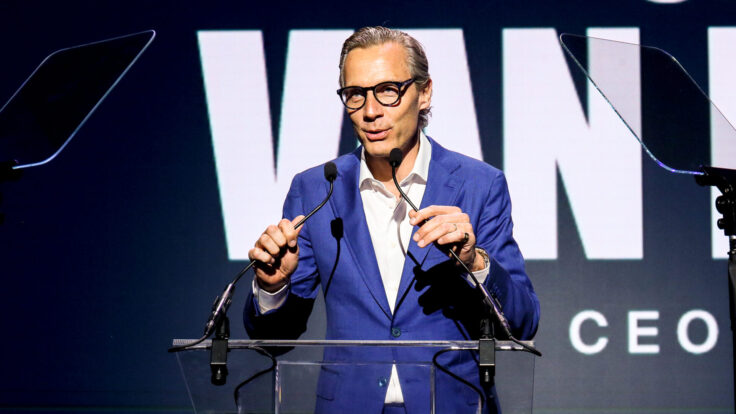
Geoffroy van Raemdonck
William D. Cohan • January 19, 2022
The Saks Financial Colonoscopy
Amid a torrent of bankruptcy filings, a blunt declaration by Saks Global’s newly appointed chief restructuring officer lays out precisely what went wrong and when, and who got screwed hardest—plus which risk-hungry investors are likely to call the shots moving forward. As it turns out, the company’s capital structure became “unsustainable” almost immediately after its $2.7 billion acquisition of Neiman Marcus Group in December 2024.
David Ellison
William D. Cohan • January 19, 2022
The Ellison Way of Parenting
David Ellison’s latest schemes to wrest Warner Bros. from Netflix have proved insufficient after his previous negotiating tactics ran up the price. Meanwhile, he’s losing the respect of the WBD guys across the table. But will his dad come to the rescue with another, say, $10 billion to bail him out?
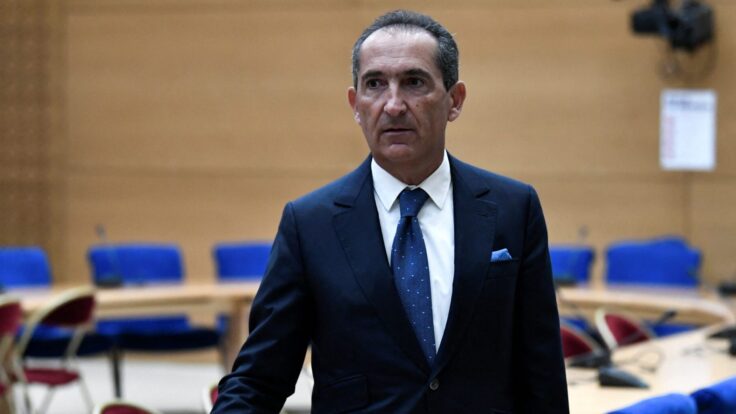
Patrick Drahi
William D. Cohan • January 19, 2022
A History of Creditor-on-Creditor Violence
Wall Street invented the coercive liability management exercise, which allows companies to play their creditors against one another as they extract beneficial terms for themselves—a now-routinized tradition referred to as “creditor-on-creditor violence.” But now Apollo, Oaktree, BlackRock, and JPMorgan Chase are teaming up to put an end to this mess.


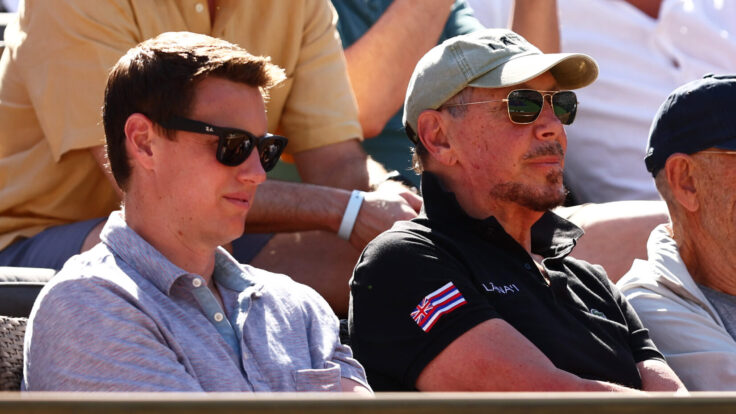
Larry Ellison, David Ellison
William D. Cohan • January 19, 2022
The Zaz–Ellison Dagger Contest
Warner Bros. Discovery’s most recent S.E.C. filing reveals the latest battle lines between the company and its hostile suitor. In particular, the document evinces a deep distrust of Paramount Skydance’s proposed deal financing, recasting the $108 billion all-cash offer as an $87 billion L.B.O. that could fall apart before closing.
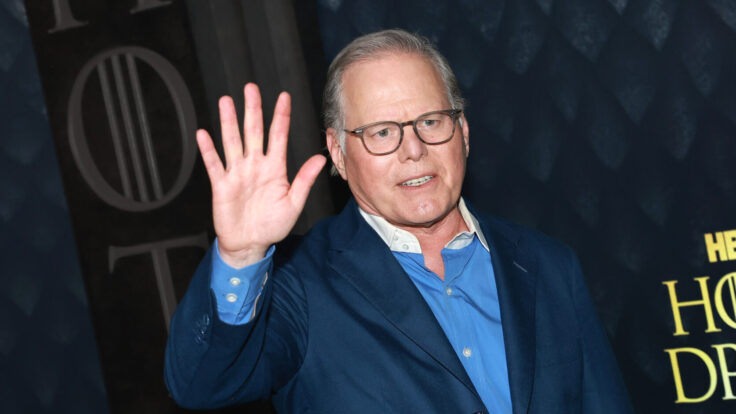
David Zaslav
William D. Cohan • January 19, 2022
What Is Zaz TV Really Worth?
The battle for Warner Bros. Discovery is increasingly coming down to how Netflix and Paramount Skydance value the declining TV assets (and CNN) that David Zaslav is determined to separate from the Warners mothership. Versant, which just started trading on Nasdaq this week, may provide the answer.
greg abel
William D. Cohan • January 19, 2022
Make Berkshire Hathaway Great Again?
Greg Abel, the handpicked successor to Warren Buffett, faces one of the most exalted and daunting jobs in finance: determining what to do with the staggering $358 billion bequeathed to him by the most legendary investor of his generation. Herewith, three proposals for what Abel should buy with all that cash.


David Ellison, Larry Ellison
William D. Cohan • January 19, 2022
Zaz Is From Mars, the Ellisons Are From Venus
Murmurs from sources close to the Warner Bros. Discovery deal illuminate the latest machinations surrounding the Paramount-Netflix showdown—and where this thing is headed.


Get access to this story

Enter your email for a free preview of Puck’s full offering, including exclusive articles, private emails from authors, and more.

Verify your email and sign in by clicking the link we just sent.

Already a member? Log In


Start 14 Day Free Trial for Unlimited Access Instead →


Latest Articles from Wall Street

Larry Ellison
William D. Cohan • January 19, 2022
“Larry Didn’t Show Up, and David Got Ahead of His Skis”
Everything you wanted to know about the Warner Bros. Discovery board’s doubts with the Ellisons’ bid (but were afraid to ask) is revealed in its 14D-9 filing—a mother lode of alleged Paramount missteps, from squabbles over consent provisions and breakup fee reimbursements to junior lien debt and the financial capacity of the world’s fifth-richest man.
larry ellison david ellison
William D. Cohan • January 19, 2022
Ellison Irrevocable Trust Issues
Despite their numerous bids for all of WBD, a rift has opened between the principals at Paramount Skydance and the board and advisors of their target company—at least for now. Can money heal all wounds?
larry ellison david ellison
William D. Cohan • January 19, 2022
The Ellisons at the Gates
Paramount has raised the stakes in its hostile bid for Warner Bros. Discovery, and may yet go higher. Now Netflix must decide how much it wants to venture into junk credit-rating territory, or play games with its stock, to secure the prize.


Larry Ellison, David Ellison
William D. Cohan • January 19, 2022
Netflix’s $83B Math & The Ellison Hostile Meter
A talmudic reading of the mishegas following the $83 billion Netflix-WBD deal: Zaz’s personal economics; the likelihood that this turns hostile; the unusual consortium of banks underwriting the deal; the value of the Gunnar stub; regulatory open questions; the $5.8 billion breakup fee; and more.
Leon Black
William D. Cohan • January 19, 2022
The Epstein Monologues
The recently released, one-sided correspondence between Jeffrey Epstein and Leon Black illustrates a discourse between a hustler and a billionaire with too much money and too little time on his hands. So why couldn’t Black get rid of him sooner?
Mike Mayo
William D. Cohan • January 19, 2022
Wall Street Enters the “Cockroach” Wars
The multitrillion-dollar growth of private credit is fueling an acrimonious debate on Wall Street over whether this surging shadow market is the future of finance or the seed corn of the next crisis. Is Rowan right? Or Dimon? Or Gundlach? As Mike Mayo put it, someone is wrong.


david zaslav
William D. Cohan • January 19, 2022
Zaz the World Turns
News, notes, and palace intrigues from all sides of what might become the largest M&A deal of the year: the three-way tussle for David Zaslav’s Warner Bros. Discovery.
Get access to this story

Enter your email to get access to one article and free previews of our private emails from Puck authors and editors.

OR

Already a Member? Sign in


Latest Articles from Wall Street

wall street 1929
William D. Cohan • January 19, 2022
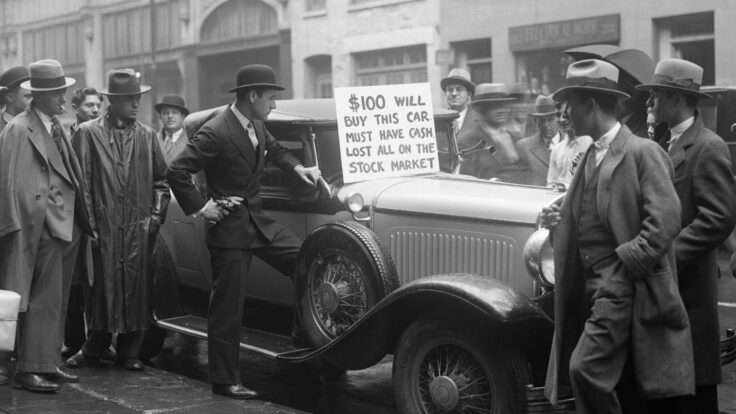
The Spirit of ’29
Financial history doesn’t repeat itself, but it does often rhyme. Amid a speculative frenzy, deregulation, trade wars, and a handful of megacaps propping up the markets, some of Wall Street’s brightest minds wonder whether 2026 might resemble 1929.
Marc Rowan
William D. Cohan • January 19, 2022
Street Credit
A recent string of bankruptcies and defaults suggests some challenges in the seemingly indomitable private credit market. And yet, according to some O.G.s, things have never been better. Apollo’s Marc Rowan lays bare the risks and rewards.
David Ellison
William D. Cohan • January 19, 2022
Ellisonology 101
In his first earnings call as C.E.O. of Paramount Skydance, David Ellison offered a masterclass in corporate optimism, promising “synergies” and artfully dodging questions about a possible Warner Bros. Discovery takeover. Alas, the time to act is here.


Michael Bloomberg
William D. Cohan • January 19, 2022
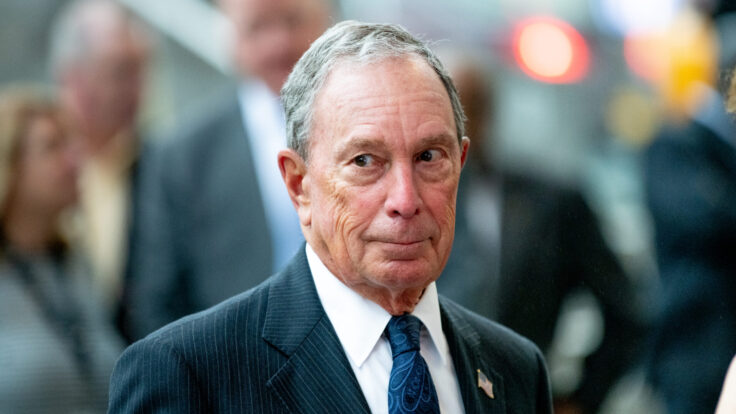
What Does Bloomberg Want for Bloomberg L.P.?
A modest proposal for how New York’s $100 billion man could bequeath his namesake, and its monumental profits in perpetuity.
Jim Chanos
William D. Cohan • January 19, 2022
The Mag Seven Itch
The market is notching record highs for the so-called Magnificent Seven—or should that be Mag 10?—but a subterranean counternarrative is forming as once-secure food and consumer staples crater, and cracks emerge in the $3 trillion private-credit boom.
Brian Roberts
William D. Cohan • January 19, 2022
The Brian Roberts–WBD Bull Case
A new analyst note highlights a heightened sense around Wall Street that Comcast co-C.E.O. Brian Roberts doesn’t merely want WBD, but also truly needs the company—and has a real shot at the asset.


Jamie Dimon
William D. Cohan • January 19, 2022
Jamie’s Castle in the Sky
Dimon’s $3 billion (or maybe as much as $5 billion, really) new headquarters is the physical embodiment of his fortress balance sheet and a metaphor for our fractional banking system. But the seeming permanence of its bronze facade shouldn’t fool old Wall Street hands, who know nothing is forever.


  • Terms
  • Privacy
  • Contact
  • FAQ
  • Careers
© 2026 Heat Media All rights reserved.
Create an account

Already a member? Log In

CREATE AN ACCOUNT with Google
OR YOUR EMAIL

OR

Use Email & Password Instead

USE EMAIL & PASSWORD
Password strength:

OR

Use Another Sign-Up Method

Become a member

All of the insider knowledge from our top tier authors, in your inbox.

Create an account

Already a member? Log In

Verify your email!

You should receive a link to log in at .

I DID NOT RECEIVE A LINK

Didn't get an email? Check your spam folder and confirm the spelling of your email, and try again. If you continue to have trouble, reach out to fritz@puck.news.

CREATE AN ACCOUNT with Google
CREATE AN ACCOUNT with Apple
OR USE EMAIL & PASSWORD
Password strength:

OR
Log In

Not a member yet? Sign up today

Log in with Google
Log in with Google
Log in with Apple
Log in with Apple
OR USE EMAIL & PASSWORD
Don't have a password or need to reset it?

OR
Verify Account

Verify your email!

You should receive a link to log in at .

I DID NOT RECEIVE A LINK

Didn't get an email? Check your spam folder and confirm the spelling of your email, and try again. If you continue to have trouble, reach out to fritz@puck.news.

YOUR EMAIL

Use a different sign in option instead

Member Exclusive

Get access to this story

Create a free account to preview Puck’s full offering, including exclusive articles, private emails from authors, and more.

Already a member? Sign in

Free article unlocked!

You are logged into a free account as unknown@example.com

ENJOY 1 FREE ARTICLE EACH MONTH

Subscribe today to join the inside conversation at the nexus of Wall Street, Washington, A.I., Hollywood, and more.

START 14-DAY FREE TRIAL

  • Daily articles and breaking news
  • Personal emails directly from our authors
  • Gift subscriber-only stories to friends & family
  • Unlimited access to archives
  • Bookmark articles to create a Reading List
  • Quarterly calls with industry experts from the power corners we cover