 |
|
Happy Wednesday, and welcome back to Dry Powder.
|
|
Are Twitter’s freewheeling operations—stiffing vendors and potentially risking being put into involuntary bankruptcy—a sign that the place is totally rudderless, or that some larger strategy is afoot? Today, a close look at Elon Musk’s self-inflicted, possibly deliberate, financial crisis.
|
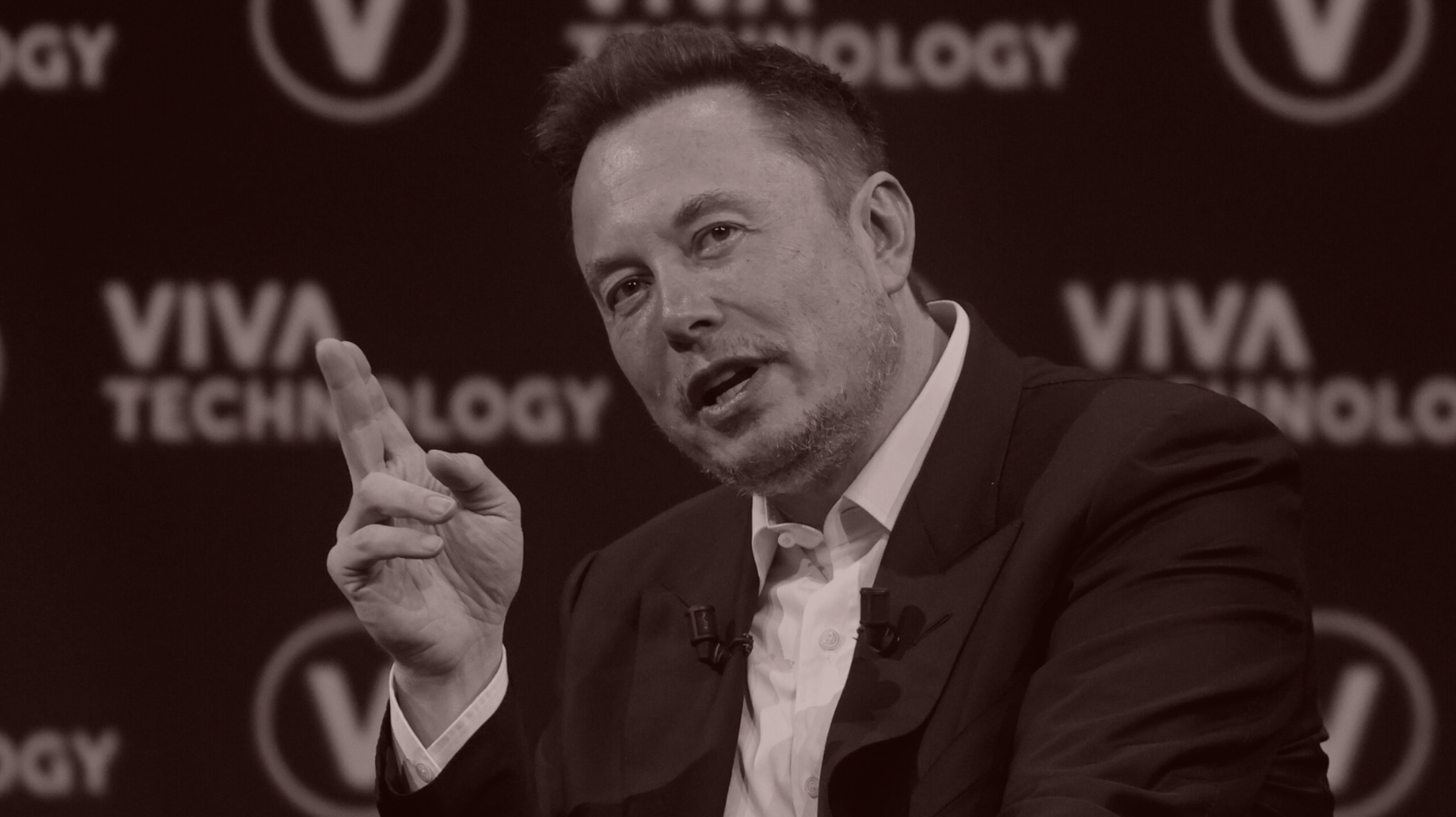 |
| The Elon Twitter Debt Vulcan Chess Theory |
| The world’s richest man, and newest media mogul, is developing a habit of stiffing Twitter’s creditors. Is he protecting Twitter’s balance sheet or playing a cynical game of Wall Street gamesmanship? |
|
|
|
| In one of her first actions as the newly-appointed C.E.O. of Twitter, Linda Yaccarino paid off an overdue bill. Thanks to some potentially crazy logic of her boss, Elon Musk, Twitter had not paid some of the $300 million that it owes annually to Google for cloud computing services. Yaccarino, a longtime advertising executive with strong relationships across the industry, did what she had to do and mended fences with Google and its parent company, Alphabet. That was a smart, albeit necessary, move. With a market value of $1.5 trillion, Alphabet has infinitely more resources to fight over unpaid bills than even Musk, the world’s richest person, with a net worth these days of around $225 billion.
But Yaccarino has a lot more work to do on the bill-paying front. After all, in his brief and chaotic stint running his new media enterprise, Musk has apparently chosen not to pay lots of big Twitter bills. As a result, the company currently risks facing an involuntary bankruptcy filing. As I noted earlier this month, the rules for this procedure are very straightforward: A company with more than 12 creditors can be vulnerable when any three of them who have not been paid what they are legitimately owed get together and file an involuntary bankruptcy of the company in court.
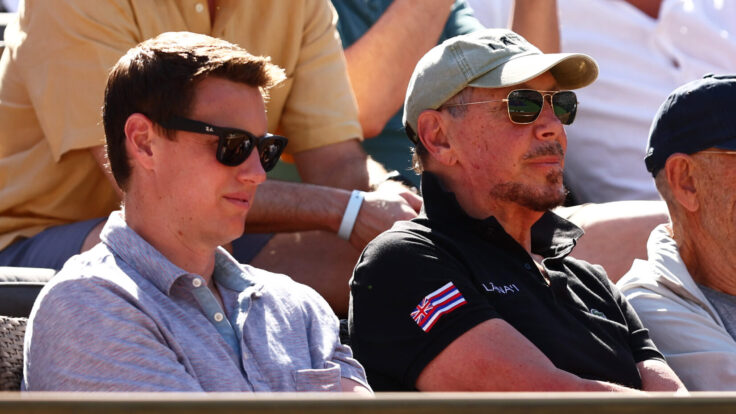
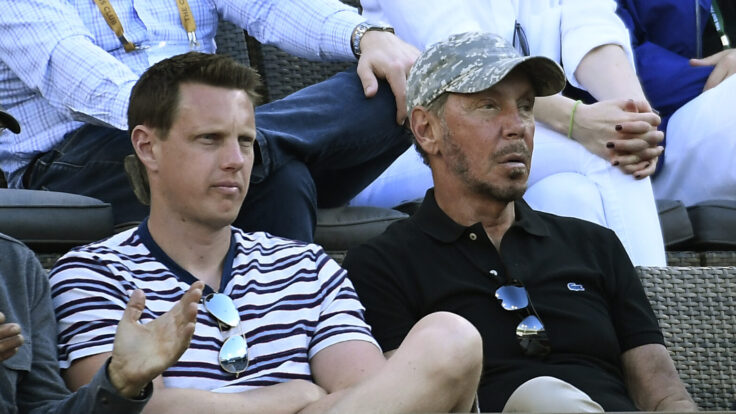
It’s hard to fathom many smaller creditors trying to engage in full-scale litigation with one of the world’s wealthiest men, but Elon’s Twitter appears to be countenancing such a potential risk, almost even egging it on. Insider reported last week that Twitter has not paid Oracle “in months,” even though its co-founder and executive chairman Larry Ellison, the world’s fourth richest man with a net worth of $132 billion, invested $1 billion in Elon’s Twitter buyout, making him the third largest investor in the deal after Elon and the Saudi billionaire, Alwaleed Bin Talal (net worth $15 billion).
Musk was also in the process of stiffing at least three of the Wall Street professionals who worked for Twitter in 2022. As I reported two weeks ago, Elon has not yet paid Joele Frank, a Wall Street public relations expert, the $830,500 Twitter allegedly owes her eponymous firm for professional services. According to a complaint filed May 26 in New York State court, Twitter retained Frank and her firm for public relations services, starting in January 2015. Elon terminated Joele Frank’s contract on November 16, leaving six unpaid invoices outstanding for services rendered between September and October 2022, plus legal expenses to be reimbursed.
Elon’s Twitter also stiffed Innisfree M&A, a proxy solicitation firm, out of the nearly $2 million the company owed the firm for services it performed for Twitter during the heat of the battle with Elon, according to a lawsuit Innisfree filed in February in a New York State court. A month earlier, Charles River Associates, a Boston-based management consulting firm, likewise sued Elon’s Twitter to try to get paid the $2.1 million they were owed in connection with “economic consulting” services the firm provided between August 15 and October 27 of last year. Long story short, Twitter did not pay Charles River’s bills, either, even after Charles River contacted Alex Spiro, Elon’s personal attorney at Quinn Emanuel, who did not respond to Charles River, according to its complaint.
Both the Innisfree and Charles River Associates lawsuits have been dismissed with prejudice—meaning they can’t be refiled—suggesting that Elon’s Twitter has recently settled with them. The attorneys representing the two plaintiffs against Twitter did not respond to a request to confirm that the lawsuits have been settled. The eponymous Frank, normally quite loquacious, declined to say more about the dispute with Elon. “It’s litigation,” she emailed me. “We don’t comment.”
But settlement or not, Twitter’s freewheeling operations are enough to make one wonder if the place is rudderless and chaotic or, perhaps, a larger strategy is afoot. |
|
|
| It’s not exactly clear just what Elon is up to here by continuously stiffing people and playing hardball. Is he just being Elon, repeating a chess move he occasionally used at Tesla, such as when the company sought leniency on rent bills during Covid? Or is he playing some sort of Vulcan mind game to drive down the value of Twitter even further than he already has, by threatening bankruptcy in order to potentially pick up the outstanding $13 billion of bank debt at a severe discount? It’s anyone’s guess, of course, but the latter option would be a significant event on Wall Street.
A class action lawsuit, filed in May in federal court in San Francisco, also alleged that Elon also stiffed a group of current and former Twitter employees. Plaintiff Mark Schobinger, representing the group, accused Elon’s Twitter of failing to pay them their 2022 cash bonuses as promised. (Schobinger was the company’s senior compensation employee.) The lawsuit alleges that Ned Segal, Twitter’s former chief financial officer, “repeatedly” promised to pay Twitter employees, including Schobinger, their cash bonuses at 50 percent of the so-called unspecified “target” amount, even after Elon bought Twitter. According to the complaint, the group of Twitter employees “relied upon the promise that they would receive their 2022 bonus when choosing to remain employed by Twitter following Musk’s acquisition of the company and/or deciding to forgo other employment opportunities.” But, according to the complaint, Twitter never paid.
According to my partner Eriq Gardner, who is a wizard at ferreting out all sorts of obscure litigation and reporting on it expertly, there is plenty more Elon-related Twitter litigation. As shared two weeks ago, Elon and lots of former Twitter employees are in arbitration with him regarding unpaid compensation and other severance-related promises he made to them. Notably, Elon is not paying the bills of JAMS, the arbitrator. Recently 15 former Twitter employees went to court to compel Elon to pay JAMS’ fees so the arbitrations could be processed. According to those court documents, Twitter finally agreed to pay JAMS’ fees to start the arbitrations but was still not paying additional arbitration fees “in a timely way.”
According to a brief Eriq provided me from Ethan Jacobs, the attorney for the plaintiffs, Twitter does “not deny that they deliberately attempted to delay their former employees’ litigation for as long as possible by slow rolling the payment of case initiation fees,” and only paid them on May 5—60 days after the payments were due—“in direct contravention of the public policy favoring arbitration as a speedy and inexpensive procedure for resolving disputes.” Eriq has also uncovered a lawsuit brought by Twitter’s San Francisco landlord against the company for failure to pay the rent, a lawsuit against Twitter from a private jet company, and a lawsuit against Twitter from a litigation consulting firm. And of course, Twitter has been evicted from its Boulder, Colorado office for failure to pay the rent owed. |
| Cheapskate or Vulcan Chess? |
|
| Why is the world’s richest man willing to stiff Twitter landlords, former employees, professionals, and so many others out of what they are contractually owed? Even if it is a pattern of behavior that Elon enjoys, or a grim financial necessity given how poorly Twitter is performing, it makes no sense for him to do these things as the principal owner of Twitter—unless, perhaps, he is willing to risk an involuntary bankruptcy filing, should any three creditors decide to file that petition with a bankruptcy court, the cost of which would then be borne by the debtor, in this case Twitter.
Sure, this is just a theory—Elon’s strategy is knowable only to he himself—but it is a tantalizing one, with high risk and potential reward. If a bankruptcy filing, which Elon discussed last November, were a possibility, it would likely drive the value of Twitter’s $13 billion in debt even lower than the 50 cents on the dollar that the Wall Street banks that own it—including Morgan Stanley, Bank of America and Barclays—could probably get if they tried to sell it today.
Let’s play this out: If Twitter were to file for bankruptcy—either involuntarily or voluntarily, or threaten to file for bankruptcy—Elon could potentially swoop in and buy the debt for pennies on the dollar, and keep control of Twitter, while at the same time effectively eliminating that $13 billion of debt, getting a debt-free Twitter back in the process. He could also presumably settle all the outstanding bills against Twitter (and its corresponding litigation) for pennies on the dollar, too—these would likely become general unsecured claims of the bankrupt Twitter estate.
It’s not clear when all these Elon histrionics might come to a head. Three stiffed creditors could file an involuntary bankruptcy at any time, of course. The big Wall Street banks that own the Twitter debt have received two interest payments so far, with the third pending in September. Who knows what the Federal Reserve has told them about when they will be required to sell the debt, or else write it down and take reserves against it. That clock has been ticking since last November. And don’t forget: Wall Street banks are in the moving business, not the storage business. So that debt is going to have to move off the banks’ balance sheets, and soon, I would think.
Will Elon buy it, as he would be smart to do? The potential strategy would tarnish his image on Wall Street as a guy who pays his bills, which could boomerang across his empire to include Tesla, SpaceX, and Starlink, which are all always in need of other people’s money. But he may have other motivations. If he doesn’t buy that debt, Twitter could fall into the hands of
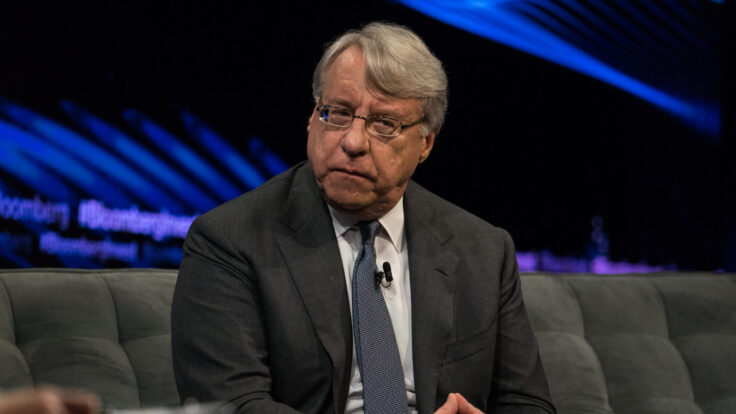
the oh-so-clever distressed investor community—the likes of Apollo Global Management, or Oaktree Capital Management, or Jeffrey Gundlach’s DoubleLine.
If that happens, then Elon would find himself having paid $44 billion for Twitter only to find it owned by someone else. Understanding his strategy is damn near impossible, but even he would likely admit that it’d be foolish to risk losing the company over a series of unpaid bills—especially ones that amount to couch cushion money for him. |
|
|
|
| FOUR STORIES WE’RE TALKING ABOUT |
|
|
|
|
|
 |
|
|
|
Need help? Review our FAQs
page or contact
us for assistance. For brand partnerships, email ads@puck.news.
|
|
You received this email because you signed up to receive emails from Puck, or as part of your Puck account associated with . To stop receiving this newsletter and/or manage all your email preferences, click here.
|
|
Puck is published by Heat Media LLC. 227 W 17th St New York, NY 10011.
|
|
|
|