{{ 'now' | timezone: 'America/New_York' | date: '%b %d, %Y' }} |
|
|
Welcome back to Dry Powder. I’m Bill Cohan.
We’re in the midst of the holiday
season, and want to wish you all a joyous time with friends and family. There will be no Dry Powder on either December 24 or December 31, which leaves today’s issue and the one on December 28 as the final installments of 2025. Happy holidays and New Year’s.
Today, I’m focusing on the fascinating 14D-9 filing that Warner Bros. Discovery recently submitted with the S.E.C. This extraordinary document provides the most detailed road map yet of the rollicking WBD sales process—and
confirms much of what I wrote about last Sunday, including the WBD board’s ongoing concerns about the reliability of the Ellisons’ equity commitment to Paramount Skydance’s all-cash bid. After all, if the money’s not there and ironclad, then the providers of the $54 billion in debt—Apollo, Bank of America, and Citigroup—could walk away without consequences, and the
Ellisons’ $30-a-share bid would evaporate like rain in the Sahara.
In scintillating detail, I’ll explain below why and how WBD came to distrust the $40.7 billion that the Ellisons and other PSKY investors brought to the deal. It’s an incredible series of twists in this ongoing saga.
Mentioned in this issue: The Ellisons, Devin Nunes, Michael and Charles Schwab, Donald Trump, Donald
Trump Jr., Jared Kushner, Gerry Cardinale, Ted Sarandos, Greg Peters, Samuel Di Piazza, Gunnar, Zaz, JB Perrette, Bruce Campbell, Gerhard Zeiler, and more…
But first… |
- Trump
goes nuclear (why not?!): Just when you might have thought investors in Trump Media & Technology Group stock were beginning to face the reality that the company was little more than Donald Trump’s continuous stream of Truth Social–borne hot air—it had little revenue to speak of this year, and the stock was down 70 percent for 2025 as of Wednesday—along came a truly bizarre merger announcement that suddenly has the stock soaring. C.E.O. Devin Nunes
declared that TMTG would merge with TAE Technologies, a Google-backed nuclear fusion company, in a $6 billion deal. On the news, TMTG was up 54 percent in the last two days. The value of Trump’s roughly 115 million shares jumped by some $500 million.
Yes, Trump’s struggling social media platform is buying a nuclear fusion company. And why not? In the SPAC era, who needs strategic logic for a merger anymore? After the deal closes, the TMTG shareholders will own about half
of the combined company and the TAE shareholders—including Google, Goldman Sachs, New Enterprise Associates, Michael Schwab (son of Charles, who is also an investor)—will own the other 50 percent. Michael Schwab will be chairman of the combined company’s board and Donald Trump Jr. will be a director because, you know, he must know a thing or two about nuclear fusion. “Trump Media & Technology Group built uncancellable infrastructure to
secure free expression online for Americans, and now we’re taking a big step forward toward a revolutionary technology that will cement America’s global energy dominance for generations,” Nunes said.
To ensure that investors didn’t miss his meaning, Nunes also spoke about how the new TMTG would be a valuable source of cheap energy for the A.I. revolution now underway in America, because nuclear fusion will be the “most dramatic energy breakthrough” since the 1950s. Talk about A.I. slop!
|
And now to the main event… |
|
|
Everything you wanted to know about the Warner Bros. Discovery board’s doubts with the
Ellisons’ bid (but were afraid to ask) is revealed in its 14D-9 filing—a mother lode of alleged Paramount missteps, from squabbles over consent provisions and breakup fee reimbursements to junior lien debt and the financial capacity of the world’s fifth-richest man. |
|
|
Warner Bros. Discovery’s 14D-9 filing, which dropped this week, offered the latest and clearest explanation
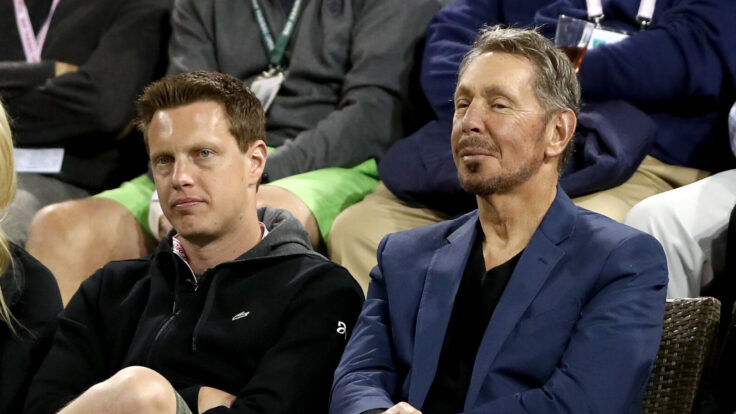
yet of why the company’s board just can’t seem to get comfortable with Paramount Skydance’s $30-per-share, $108 billion all-cash offer for the company. As I noted last week, it all started with doubts about whether the Ellisons’ $40.7 billion of equity would definitely show up at the close of its hostile offer. Yes, of course, Larry Ellison is good for the cash, but the assurances that he and his son David have thus far
offered haven’t yet satisfied the WBD board.
The bid is backstopped by the Larry Ellison Revocable Trust, which holds 1.16 billion of his Oracle shares. And while that entity would presumably satisfy the boards of most target companies, it hasn’t placated WBD in a dynamic auction. The trust, after all, is revocable—Larry can change it anytime he likes. |
|
|
A MESSAGE FROM OUR SPONSOR |
Houndstooth House started as a shared vision between two friends – now it’s been named a Small Business of the Year.
Over the past 20 years, founders Denise Cotter and Michelle Marino have grown their two-woman design firm into a thriving business with a 10,000-square-foot showroom and eight employees.
At U.S. Bank, we know that bold growth starts with meaningful support. That’s why we support over 1.1 million small businesses with personalized resources and expert guidance. For visionaries like Denise and Michelle, we’re more than a bank –
we’re a partner in progress.
|
|
|
Another troublesome wrinkle in the Paramount bid is the provision that allows its other
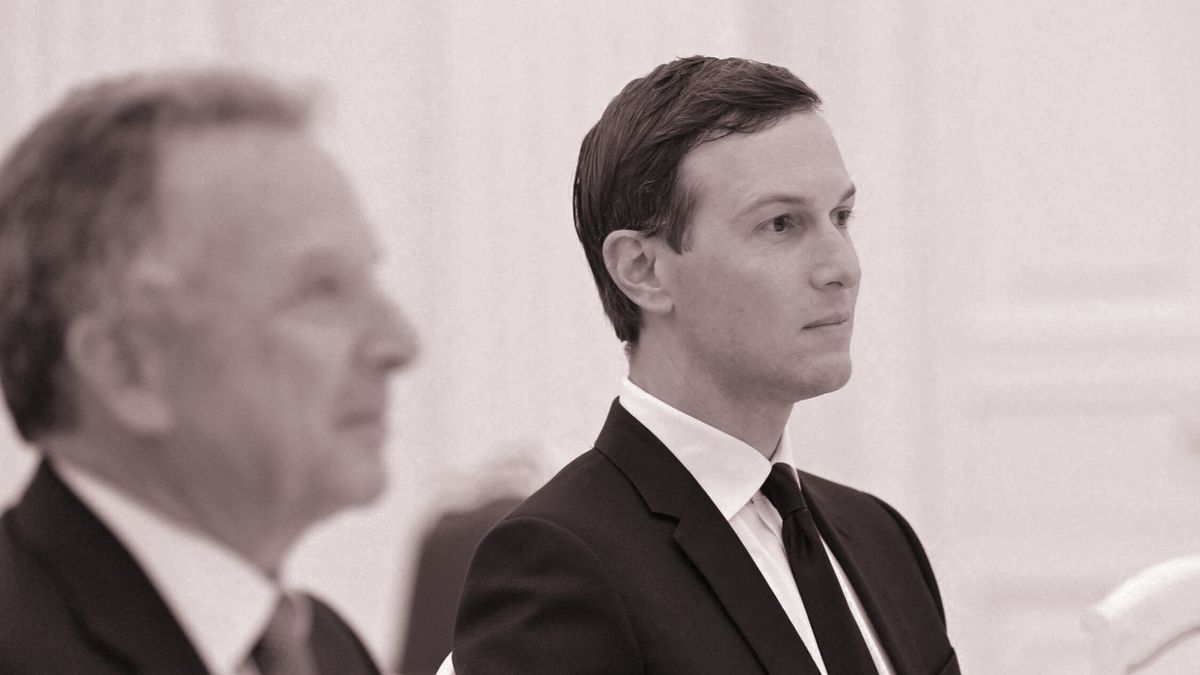
equity partners—including three Gulf sovereign wealth funds, which are ponying up $24 billion collectively—to walk away from the deal if any of the other partners decide not to fund it, and without consequence. As I predicted last Sunday, Jared Kushner’s Affinity Partners and its $200 million equity commitment dropped out this week. Does that mean the other partners might also drop out? Who knows? But you can see why it might be giving the WBD board cause for concern. “Larry
didn’t show up, and David got ahead of his skis,” is how one person close to this deal on the WBD side put it to me recently.
For his part, Gerry Cardinale, the Ellisons’ partner at RedBird Capital, told my partner Matt Belloni that any doubts about the Ellisons’ equity commitment constituted “a false narrative”
and “a bunch of red herrings” designed to justify a decision that David Zaslav seemed to have already made to sell to Netflix. “You can’t tell me,” he said, “that on a $108 billion deal that the second [now fifth] richest guy in the world is backstopping with us, and is the largest economic owner of this, when you look at these bids next to each other—you can’t tell me you’re going to go immediately to exclusivity with Netflix.” But, of course, that is what happened: The WBD
board preferred Netflix’s latest bid of $27.75 per share, in cash and stock, just for Streaming & Studios, along with the Discovery Global equity stub. (A transcript of Matt’s conversation with Gerry has also made it into WBD’s S.E.C. filings.)
The 14D-9 revealed other surprising details that help explain the WBD board’s preference—particularly PSKY’s ongoing insistence on having a right to approve various balance sheet cleanups that WBD needs to undertake between signing and
closing, a period that could last 18 months or longer. For its part, Netflix didn’t demand a similar consent, and agreed to merely be consulted on WBD’s management of the business pre-closing. Then there’s the matter of breakup fees and other alleged faux pas that might not seem like much on their own, but which cumulatively created a feeling of discordance. (Usual disclosure: Through a recent transaction, Zaz is a de minimis investor in Puck; RedBird is a minority investor.)
|
Of Leverage, Liens & Breakup Fee
Etiquette
|
First, as part of the brilliant exchange offer that it executed last summer, WBD received a bridge loan from
JPMorgan Chase. There remains $15.4 billion outstanding on the bridge loan that must be paid or refinanced by the end of 2026. That balance will be listed as a current liability—due to be repaid within one year—in the 2026 WBD financial statements that will be filed next year. If there’s any question about whether that loan can be refinanced with new, long-term debt—new WBD loans or bonds—the company’s accountants have no choice but to issue a “going concern” opinion on those financial
statements.
That’s a significant red flag that could impact WBD’s ability to enter into all sorts of new contracts, including with sports leagues, Hollywood talent, and trade creditors—effectively preventing the company from operating in the normal course of business. There would likely not be a problem if WBD can refinance the bridge loan under its own authority. But if PSKY’s consent to the refinancing is required between signing and closing, and if, for whatever reason, executives at
the company decided not to provide it, then that “going concern” opinion becomes a big problem for WBD.
Sure, Gerry or the Ellisons might argue, they wouldn’t have a heavy hand and would want only what’s in the best interest of the company. But investors speak through their terms, and this is a significant point of leverage. PSKY also insisted on having consent over a pending exchange of $15 billion of existing WBD debt for new “junior lien notes.” If the exchange
weren’t completed between signing and closing, and in any event by the end of 2026, then WBD would “trigger a penalty” of $1.5 billion “without any compensation” for that penalty from PSKY, according to the 14D-9.
The financial and legal advisors for WBD discussed this point repeatedly with PSKY’s financial and legal advisors, but attorneys for the suitor insisted on the consent provisions in its markup of the merger agreement. Eventually, in its December 4 bid, representatives
for PSKY agreed to allow the exchange to occur—but only if WBD agreed to a provision, when it did the exchange, that would have the new bonds be callable at par, not higher than par, which is a far more typical call-provision language. According to someone familiar with the various negotiations, “Their consent was, on the face of it, Yeah, fine—subject to a condition that will never be satisfied. And so if the condition is not satisfied, then you’ll need to come [back] to me.”
Meanwhile, Netflix played nice on this front, too, giving up its right to consent and settling on being merely consulted on this exchange.
Another irritant to the WBD crowd was how PSKY intended to handle the payment of the $2.8 billion breakup fee that would be due and payable to Netflix within days of the WBD board’s decision to switch its recommendation to PSKY in the event that the board determined its bid offered more value. Of course, WBD would have to pay that fee out of its own
coffers, but it is traditional M&A etiquette for the company busting up another’s merger agreement to agree to effectively reimburse its suitor for the fee. For example, in 2017, Comcast offered to pay the breakup fee to the Fox Corporation if it decided to sell its Hollywood assets to the cable guys in Philly instead of Disney. (Ultimately, of course, Fox sold the businesses to Disney.) But, in this case, PSKY made no such offer. |
|
|
A MESSAGE FROM OUR SPONSOR |
Behind every thriving local business is a story worth telling. For Houndstooth House, that story begins with Sioux Falls
entrepreneurs Denise Cotter and Michelle Marino – and a partnership with U.S. Bank.
What started as a shared vision for a flexible, family-first design studio has grown into an award-winning business with a 10,000-square-foot retail space, an eight-person team. Now named a Small Business of the Year, their journey is proof that heart and hard work go hand in hand.
U.S. Bank is proud to be a part of their story – and over 1.1 million others like it.
|
|
|
The 14D-9 makes clear that the WBD board concluded that the combination of the two sticking points—the
non-reimbursement of the $2.8 billion breakup fee, and the $1.5 billion penalty for failing to exchange the $15 billion of WBD debt—would cost the company significantly. “This total amount of $4.3 billion in immediate and near-term costs represents a loss of value of approximately $1.66 per share of WBD Common Stock, on a pre-tax basis, if the PSKY Merger Agreement is entered into but not consummated,” according to the WBD filing. I don’t know whether the WBD board reduced the PSKY $30-a-share
bid by $1.66 per share—lowering it, at least in their minds, to something like $28.34 per share. But the combination of this perceived reduction, plus the concerns about the Ellisons’ equity commitment, plus the valuation of the Netflix bid for Streaming & Studios and the Discovery Global stub, suggests why the WBD board was unanimous in going with Netflix—at least for now. (A spokesman for PSKY declined to comment. But someone close to the PSKY action said that it will, of course, pay the breakup fee, and work with WBD to effect the exchange between signing and closing. “They are running out of things to complain about the bid,” this person said.) |
Of course, a higher bid from PSKY—something in the range of $34 per share, in cash, or another $10 billion or
so, and unequivocally backstopped by Larry—would throw the whole calculus of the deal back to the drawing board. But, as Gerry suggested to Matt, PSKY won’t go there yet. These guys are shrewd negotiators, and the WBD board hasn’t technically responded to their sixth but presumably not final offer.
In the meantime, WBD is marching forward with Netflix. On Wednesday, there was a well-publicized meeting on the Warner Bros. lot between Zaz and Netflix co-C.E.O.s Ted
Sarandos and Greg Peters to “talk about the future,” as someone familiar with the conversation told me. Netflix has also started down the regulatory approval process, completing the required Hart-Scott-Rodino filings. The company is starting the process required by the European regulatory authorities, too. For its part, WBD is also working on the filing of its proxy statement for a shareholder vote on the Netflix deal. Also on Wednesday, Samuel Di
Piazza, the chairman of the WBD board, said on CNBC that the proxy would be filed by late spring, early summer of 2026.
And yet despite these attempts to demonstrate that the train is leaving the station, PSKY remains as feisty as ever. In a press release on Wednesday, the company reiterated in no uncertain terms that its equity was secure. “Paramount has lined up all necessary financing to deliver its offer to WBD shareholders, and it is not subject to any financing conditions,”
it wrote. “Paramount’s offer will be financed by $41 billion of new equity backstopped by the Ellison family and RedBird Capital and $54 billion of debt commitments from Bank of America, Citi, and Apollo.” It also laid into the WBD board and its advisors for “the absence of any engagement” with PSKY about its $30-a-share bid. “WBD seeks to justify racing to conclude an inferior deal with Netflix with a ‘kitchen sink’ litany of purported questions and concerns.”
Matt has already
noted some of the staggering windfalls that will come out of this evolving deal. Zaz will get a $30 million cash bonus plus his various stock and options, which will vest upon change of control, giving him a total payout of roughly $568 million. Gunnar Wiedenfels’ total adds up to $145 million;
JB Perrette, the C.E.O. of global streaming and games, will receive $167 million; Bruce Campbell, the chief revenue and strategy officer, will receive $138 million; and Gerhard Zeiler, the president of WBD international, will receive $95 million.
But don’t forget the WBD investment bankers, who will also be rather well paid, the S.E.C. filing reveals. Both Allen & Co. and JPMorgan Chase will receive fees of $85 million each—$45 million of
Allen & Co.’s fee and $50 million of JPMorgan Chase’s will be payable when the Netflix deal closes. Evercore’s fee is $55 million. And given that this deal is nowhere near its conclusion, those compensation totals and fees will only go up. Thankfully, everyone will eat this Christmas. |
|
|
Puck sports correspondent John Ourand and a rotating cast of industry insiders take you inside the executive suites and owners
boxes where the decisions that shape the entire sports business are made. You’ll hear interviews with players, network execs, and everyone in between. The Varsity is an extension of John’s private email for Puck by the same name. New episodes publish every Wednesday and Sunday. |
|
|
An essential, insider-friendly Hollywood tip sheet from Matthew Belloni, who spent 14 years in the trenches at The
Hollywood Reporter and five before that practicing entertainment law. What I’m Hearing also features veteran Hollywood journalist Kim Masters, as well as a special companion email from Eriq Gardner, focused on entertainment law, and weekly box office analysis from Scott Mendelson. |
|
|
Need help? Review our
FAQ page or contact us for assistance. For brand partnerships, email ads@puck.news.
You received this email because you signed up to receive emails from Puck, or as part of your Puck account associated with {{customer.email}}. To stop receiving this newsletter and/or manage all your email preferences, click here. |
Puck is published by Heat Media LLC. 107 Greenwich St., New York, NY 10006 |
|
|
|