 |
 |
|
Welcome back to The Stratosphere.
|
|
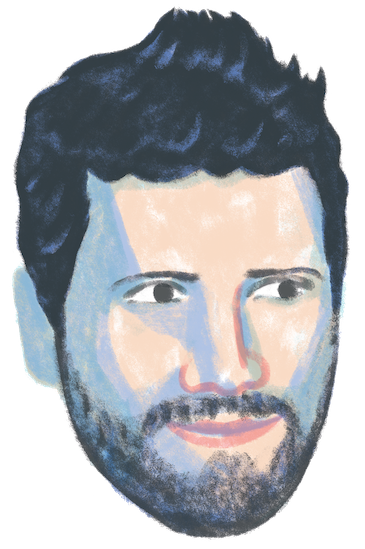
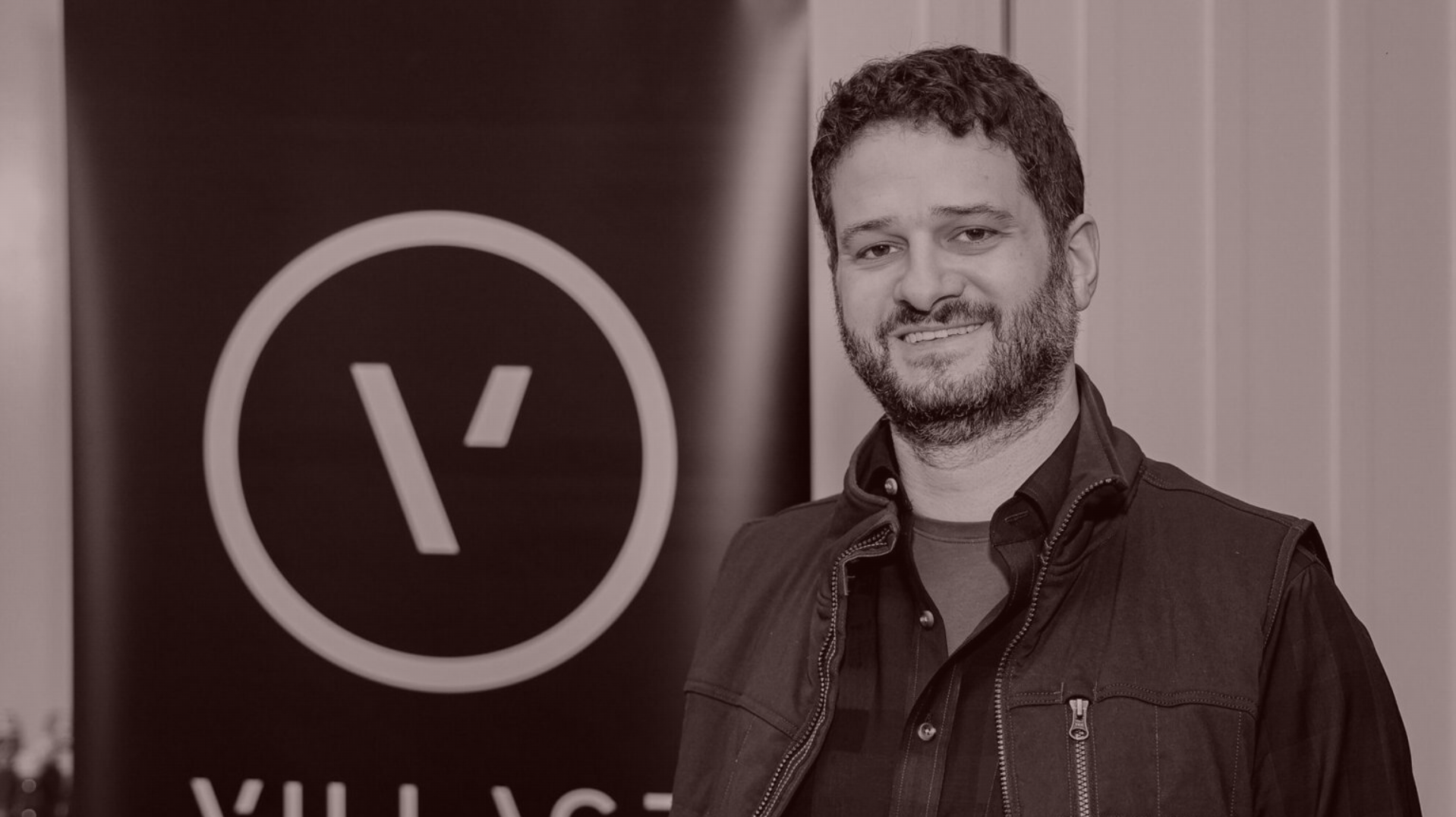
There is probably no Silicon Valley personality who has commanded my respect more over the last decade than Dustin Moskovitz. The guy who co-founded Facebook has always struck me as the most opinionated billionaire philanthropist—arriving at a clear point-of-view on giving at a very young age, rather than playing it safe for decades before plotzing and handing the foundation to the kids.
In many ways, Dustin has almost felt like a figment of my imagination, a Zelig-like figure in everything I cover. And yet, I’ve never met him. It turns out, I learned this week, that it’s not personal. Neither had Joe Biden.
Tonight, a deep look at the ambitions and cultural footprint of Dustin right now. He’s pitching a highly ambitious political program to help Biden in 2024, squabbling with allies of Marc Andreessen (yes, we have the Dustin private emails that were making the rounds), and he is lighting into Elon Musk, a brave display of leadership and uncommon gusto for a public-company C.E.O.
But first…
- Nicole Shanahan 101: “Do you think there is any chance in hell that Nicole becomes RFK’s VP?” I messaged a source of mine on Signal last Wednesday afternoon. “I’d have said no, but I saw that the announcement is in Oakland and now I’m entertaining the idea.”
I was talking about Nicole Shanahan, the Bay Area philanthropist who flickered into the national consciousness after an ugly dustup between Elon Musk, The Wall Street Journal, and her ex-husband Sergey Brin. After all, Shanahan had put millions of dollars into R.F.K.’s super PAC, and was the brains behind his Super Bowl ad. Plus, she is from Oakland. And would it be a crazier pick than Aaron Rodgers?
Indeed, after talking to sources over the course of that week, I reported on Saturday that the R.F.K. campaign—badly in need of more cash for their ballot access campaign—is looking seriously at Shanahan as a V.P. Why? In part because she could bring money to the table. Some R.F.K. allies have been cryptically informed in recent weeks, I’m told, that they won’t have to worry about the candidate’s fundraising problems in the not-so-distant future.
While I’m not ready to go so far as other publications that are claiming Shanahan is the expected pick, I’ll just say that there has been considerable buzz about her in R.F.K.’s inner circle over the last few days. Yes, the campaign recently registered a KennedyShanahan URL, though that tells you nothing definitive since it also registered a KennedyRodgers domain, and more. But in my conversations with the official Kennedy campaign and other sources over the last week, I can confirm that she’s in the running.
|
 |
| DustinBucks |
| The Facebook co-founder and effective altruist Dustin Moskovitz spent up to $100 million to beat Donald Trump last cycle. This time around, with an eye on beating back the Andreessens and Musks of the world, he is finally leaning into his power… and his checkbook. |
|
|
|
| On a Thursday in February, the same morning that he was scheduled to meet with the widow of Alexey Navalny, Joe Biden found himself at the Fairmont Hotel, atop Nob Hill, staring at a total stranger half his age. Dustin Moskovitz, the 39-year-old billionaire seated across from him, was probably more responsible than any other donor for vaulting Biden into the presidency. And yet, somehow, the two had never met.
Moskovitz, like the other Harvard kids who won the roommate lottery with Mark Zuckerberg and became Silicon Valley royalty, is often dismissed as some accidental co-founder of Facebook, the ultimate example of being in the right place at the right time. But Moskovitz caught lightning in a bottle a second time with Asana, the public software company he founded in 2008. He and his partner in all things, former Wall Street Journal reporter Cari Tuna, whom he met on a blind date, would become the patron saints of effective altruism—particularly during the post-S.B.F. correction—with $25 billion to dole out through their Open Philanthropy charity.
Moskovitz is unlike any other ultra-wealthy donor I have covered: insanely intelligent and well-read on political topics, but also skeptical, almost hostile, toward the influence-peddling game. For all his earnestness, he has sometimes appeared to shirk the civic duty he extols, shying away from using his money to achieve his political objectives. In September 2016, before committing $20 million to groups backing Hillary Clinton, he wrote a Medium essay entitled “Compelled to Act” that bared his introspection. “This decision was not easy, particularly because we have reservations about anyone using large amounts of money to influence elections,” he wrote. “That said, we believe in trying to do as much good as we can, which in this case means using the tools available to us.” He would later express regret about getting involved in the election too late.
Four years later, Moskovitz spent more $50 million to elect Biden—and the real number, accounting for dark money donations, is probably more like twice that, I’m told. The ostensible predicate of the Moskovitz-Biden summit at the Fairmont, previously unreported, was to discuss safety in artificial intelligence, a topic that has consumed Dustin during the last year or two, as it has for so many effective altruists. But the subtext was obvious: Wouldn’t it be great if Moskovitz and Tuna could fork over that amount of cash again? Shortly thereafter, the couple cut at least one “super-max” check ($929,000) to the Biden campaign, I’m told, and I hear this is just the start. “Cari and I were excited to meet President Biden and thank him for his work,” Moskovitz told me. |
|
A MESSAGE FROM OUR SPONSOR
|
 |
| Invest in the Movement to Rebuild America's Infrastructure
The previous congress passed landmark legislation that channels unprecedented levels of funding to roads, bridges, ports, renewable energy systems, and more. Now comes the work of getting it built. The Global X U.S. Infrastructure Development ETF (PAVE) harnesses this theme by investing in dozens of leading companies, including those involved in construction, engineering, heavy equipment, and raw materials.
Learn More about PAVE |
|
|
| Desperately Seeking Dustin |
|
| The mere fact that Moskovitz would even accept a meeting with the leader of the free world surprised several people connected to him, when I told them about this San Francisco rendezvous—making him probably the only Democratic billionaire on Earth about whom such a sentence could be written. But the former Zuckerberg lieutenant has entered a different era in his public life, one in which he has made himself not only a fully realized political player but also an unlikely Cassandra of Silicon Valley, displaying a highly unusual willingness to call out his peers, according to a dozen sources in his orbit. “They view Trump as so dangerous. They are not going to make the same mistake again,” said one friend of the couple.
Much like he sees Trump as a threat to American democracy, Moskovitz has taken up the quixotic task of publicly casting fellow Burning Man enthusiast Elon Musk as a threat to American business. Over the last few months, he has directed his acerbic wit in a real dark direction. “Ok new argument: he’s no longer *just* destroying the trust commons in tech, he’s trying to destroy the entire country. He just told American voters that Biden is importing voters and planning something worse than 9/11,” Moskovitz recently posted online. “WAKE UP. SPEAK OUT. HE IS DANGEROUS TO US ALL.” Moskovitz posts about Musk ceaselessly—up to a dozen times a day— sometimes making you forget that he is a public company C.E.O. (All of this happened, naturally, on an X competitor; if a tree falls on Threads, does it make a noise? Several people who are among his closest friends and admirers told me they weren’t even aware of Dustin’s posts. “This is good stuff,” said one as he scanned them at my behest. “He should post this on Twitter.”)
But Moskovitz’s true intellectual foil is Marc Andreessen, a former friend and one of Asana’s earliest investors, whose “accelerationist” agenda includes loosening guardrails around artificial intelligence. Moskovitz was particularly pissed off in the aftermath of Andreessen’s October techno-optimist manifesto, which called out effective altruism and tech ethics as “enemies” of humanity. Two days later, he decided to disclose that a16z had invested in an Asana competitor following the company’s I.P.O., a very rare bit of violence in an industry where public criticism is seen as breaking some shibboleth. “He feels like he’s one of the few people in tech who can withstand the wrath of someone like Marc. Marc has no power over him,” one close friend of Dustin’s told me. “All the rest of us are a little afraid of him.”
But the mild-mannered Moskovitz was being even more combative privately. When Andreessen shared his tome to a listserv of Andreessen Horowitz portfolio company C.E.O.s, the sycophantic reply-alls began to pile up. Then, Doomer Dustin had to take away the Kool-Aid. “I consider myself a techno-optimist as well, but to go all the way to this extreme is unreasonable and unethical (indeed, he says ethics itself is the enemy!) Do you really wish to abdicate your responsibility entirely? To consider no risks whatsoever, lest you consider too many? I sincerely beg you all to look past the rhetoric and think for yourselves. Did you even read it???” Moskovitz wrote in a chain that was sent my way. He encouraged the C.E.O.s “to have an actual debate instead of just to cheerlead a man who steadfastly refuses to engage in discussion at all. If not, I’ll take my cue to bow out of this community for good.”
Moskovitz ended up going back and forth privately with a different portfolio company C.E.O., Harry Halpin, who at one point re-engaged the entire thread, exposing Moskovitz’s replies. “I am so fucking sick of skeptics telling me to not believe my lying eyes,” Moskovitz wrote to Halpin. The thread was widely forwarded around Silicon Valley, and I’m told the a16z partnership found Dustin’s request to be removed from their community to be embarrassing. This past weekend, Andreessen kept it up, tweeting a critical screenshot about Moskovitz and Open Philanthropy—a far cry from the firm’s policy to “never publicly criticize any entrepreneur or startup (doing so is a fireable offense).”
A series of Politico articles that suggested he was infiltrating the government and financially benefiting from the A.I. safety movement put Moskovitz over the edge. A few weeks later, he took to Medium, seemingly out of nowhere, to publish his most extensive public commentary since “Compelled to Act.” He offered a spirited, classically Dustin dissertation on A.I., E.A., S.B.F. and p(doom). The Medium post was so striking to me because Dustin had never appeared totally comfortable in the public eye. I asked Moskovitz—on Threads, naturally—why he’d decided to post this now. “I was complaining about not being understood/getting caricatured and [Asana co-founder] Justin Rosenstein said write a long read about it,” he replied. Moskovitz may be willing to pound the keyboard with public, entertaining, sometimes newsworthy takes, but he declines almost all interview requests, including one to talk about Elon for this story. “I strongly prefer to use my own words and mediums, especially on a topic like this,” he said. |
|
|
|
|
| Moskovitz’s political evolution into Biden’s biggest donor surprised everyone who has known him since Facebook. Friends of his told me it was their sense that Dustin would not have really cared if Mitt Romney had won in 2012 and cut the capital-gains rate or whatever. There was even a rumor a few years ago that he and Tuna had once supported the libertarian Cato Institute. Moskovitz maintained a friendship with Peter Thiel, an Asana angel investor, praising his philanthropy back in 2011 for “taking the extreme position on these things because it encourages a different kind of public debate.” “He’s generally been of the ilk who doesn't like the rough and tumble of some of the dealmaking that happens in politics,” said another longtime friend, adding that Moskovitz “has also been somewhat skeptical when it comes to government effectiveness.”
Plenty of my sources know exactly where they were when “Compelled to Act” dropped in September 2016. “When he gave the money in 2016, you could’ve knocked me out of my chair. I was so surprised,” Eric Ries, another close friend, told me. In that post and a follow-up, Moskovitz voluntarily disclosed all of the dark money groups he was supporting, part of a broader bias toward transparency that has defined his approach to philanthropy. He eventually wised up: By the time 2020 rolled around, the guy who founded a place called Open Philanthropy stopped disclosing dark money gifts (even when I asked), motivated by an understandable desire not to tip his hand to Republicans. I spent way too much of 2020 chasing a then-little-known super PAC called Future Forward, which I had heard was being stood up by Dustin & Co., but they wouldn’t spill, and I couldn’t nail down his involvement until that October.
The Future Forward storyline revealed the way that power was trending in Democratic politics. Over the last few years, a group of young, effective altruism-aligned, heavily white and male, somewhat cultish operatives from places like the Analyst Institute have gradually ascended in Democratic politics. They comprise a proud clique that bonds over the coin of the realm in this insular subculture: randomized controlled trials, or social-science experiments that try to determine, for instance, whether a postcard or some other form of mailer is the more cost-effective way to generate a Democratic vote. These operatives form the spine of places like Future Forward; the donor-advisory network Mind the Gap, the brainchild of S.B.F.’s mom, Barbara Fried; and small groups with intentionally innocuous names to avoid detection, like the Center for Essential Information. Several of them had a brush with scandal after they were drawn into S.B.F.’s sphere of influence, and those who stayed away thank their lucky stars they didn’t end up fending off indictments and buried in legal fees.
Two of these operatives—Matt Lackey, a data savant who would later orbit S.B.F., and Otis Reid, an MIT economics Ph.D.—have served as aides-de-camp to Dustin. Moskovitz’s team didn’t do a ton during the midterms—Reid, ensconced in Chicago, signed up to do philanthropic work at Open Phil, a clear sign that campaigning was not a priority. But everyone (including me) noticed when Otis returned to full-time donor-advising late last year. “The fact that Otis is [again] working for Dustin should tell you pretty much everything you need to know,” said one person close to their network.
I’ve also learned that Moskovitz recently hired the savvy Jonathan Robinson—most recently a top advisor at the Democratic data giant Catalist and also part of this new crop of operatives—to help bring even more rigor to his political giving. “Literally the most balls-and-strikes of the operatives you know,” one person close to Robinson told me. The hiring of Jonathan, who is more of a D.C. insider than Otis, is being read by Moskovitz’s peers as essentially a decision by Team Dustin to double-down on politics.
That is certainly the perception inside Biden HQ, which I’m told “expects them to do at least the same as last time,” a source close to the Biden operation tells me. That wasn’t always a guarantee. Throughout 2023, there was widespread uncertainty in big-money circles about whether Moskovitz would step up again as a donor, especially if someone other than Trump was the Republican nominee. What is the negative expected value of a Nikki Haley presidency, after all? Reid is known to wield spreadsheets that assess the marginal value of each additional dollar, two sources told me, and whether it would be better spent on politics or one of Moskovitz’s other priorities, such as curbing factory farming or distributing malaria nets. I don’t even know if that’s knowable, but it speaks to the culture (or mirage) of objectivity that surrounds all things Dustin.
That algorithm has led Moskovitz to typically prioritize funding the “very boring stuff,” said one fellow donor-advisor, including nonprofits such as the Voter Participation Center, a tax-deductible 501(c)3 and a Mind the Gap favorite that has historically turned out Democrats (not explicitly, of course!) by focusing on registering progressive constituencies like Black and Hispanic voters. But given Trump’s recent gains with people of color, Moskovitz’s team is telling other Democrats that they now see it as more cost-effective to focus on partisan voter registration, or efforts that explicitly identify Democrats through 501(c)4 dark money nonprofits, even if it means forgoing the tax deduction.
Ironically, Future Forward could end up without Dustin’s money this cycle. The group, as I first reported in late 2022, ended up being so successful, thanks to Dustin’s support, that it gained favor with top White House advisor Anita Dunn and became the blessed super PAC for the Biden reelection effort. The Silicon Valley group became the mainstream group, and money is vigorously flowing into Future Forward, thanks in part to donor calls for the group being done by Biden himself, I’m told. And because Moskovitz’s team is constantly looking for, in the parlance of E.A., neglect—or places where a marginal dollar makes the biggest difference—they could largely let other donors scale Future Forward, or at least wait until the fall to make a decision. The Moskovitz team remains a big believer in much-maligned late-in-the-cycle television, but I’m told that Robinson, Reid, and the Dustin Team are spending their time these days trying to find what might provide the new edge in big-money politics. So far, at least, they have largely been disappointed.
Finally, though, Moskovitz is at least playing the Washington game at a higher level. I gently criticized Dustin in 2021 when I argued that if he wanted Congress to pass a pandemic-prevention bill, he had to lean into the leverage he enjoyed as a megadonor, pick up the phone, and put Joe Biden on speed dial. Moskovitz, it seems, now knows that his work as a policy advocate can’t be divorced from his work as a political animal. Especially if he wants to beat back his enemies.
And so there he was, a few years too late, with President Joe Biden, pressing his case on A.I.—and showing a pulse in the fight. “Too many in big tech and V.C. circles are trying to avoid any safety and security rules,” a person close to him told me of the meeting. “Dustin appreciates the president’s responsible, bipartisan, and pro-innovation leadership in the face of intense industry lobbying.” |
|
|
|
| FOUR STORIES WE’RE TALKING ABOUT |
 |
| Reality Bites Bravo |
| Penetrating the lawsuits threatening the essence of reality TV. |
| ERIQ GARDNER |
|
 |
| Pitaro Murmurs |
| News and notes on the Iger succession bake-off. |
| JOHN OURAND |
|
 |
|
 |
| Teenage Riot |
| Would a TikTok ban affect Biden’s reelection bid? |
| PETER HAMBY |
|
|
|
|
|
 |
|
|
|
Need help? Review our FAQs
page or contact
us for assistance. For brand partnerships, email ads@puck.news.
|
|
You received this email because you signed up to receive emails from Puck, or as part of your Puck account associated with . To stop receiving this newsletter and/or manage all your email preferences, click here.
|
|
Puck is published by Heat Media LLC. 227 W 17th St New York, NY 10011.
|
|
|
|