|
Hello and welcome back to The Best & The Brightest. I’m Leigh Ann Caldwell, in disbelief that we are already coming to the end of another school year. Welcome to June and potentially another Northern Lights show tonight.
Today, I’m exploring the impacts of DOGE after Elon Musk. Not that Musk is really ever going to leave, but the idea of DOGE is here to stay—even if Congress, which is actually responsible for cutting the size of government, does little to fulfill the ersatz agency’s mandate.
But first…
|
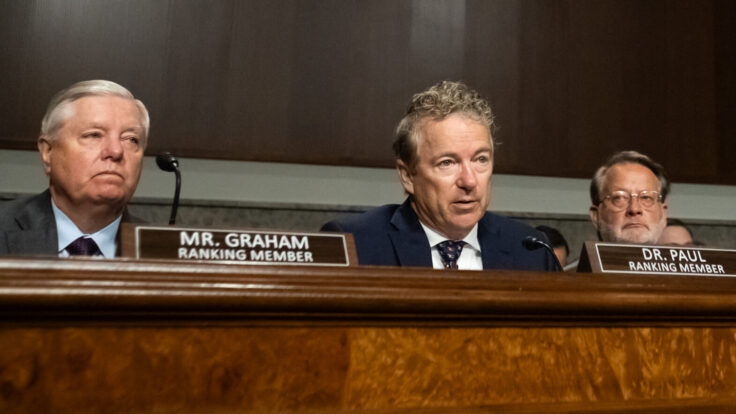
- The Bluegrass resistance: The Republican resistance to Donald Trump is concentrated in a state that the president won by 31 points in November. Kentucky’s three high-profile members of Congress—former Senate Republican Leader Mitch McConnell, Sen. Rand Paul, and Rep. Thomas Massie—are the most consistently critical Republicans pissing inside the tent, leading my former Washington Post colleague and Hill sage Paul Kane to dub them “the Bluegrass resistance.”
Massie, who’s been a steadfast opponent to Trump’s agenda because it increases the deficit, is one of the only Republicans to not kowtow to the president’s consistent threats to defeat him in a primary. In fact, Massie has relished the beef, and is fundraising off of Trump’s rhetoric. McConnell, free from the shackles of leadership, has spoken against Trump’s tariffs and foreign policy, and even voted against three of his top nominees, including Defense Secretary Pete Hegseth and Director of National Intelligence Tulsi Gabbard. I wrote in early February that “this enigma amplifies questions about how McConnell plans to spend his hard-earned, out-of-fucks-to-give twilight era.” In the months since, McConnell has clarified the enigma.
Meanwhile, last week, Paul won the right to say “I told you so” on trade. He was one of the only Republicans to say that Trump was overstepping his constitutional authority by imposing widespread tariffs and justifying trade imbalances as a national emergency, which the Court of International Trade just deemed out of bounds. Paul has also pushed back on Trump and Republicans’ messaging about their massive tax and spending bill, because it raises the debt limit by $4 trillion—the single largest increase ever.Of course, McConnell is retiring at the end of the Congress, and Paul and Massie are so confident in their own brands that they say they aren’t worried about their political futures. And while they aren’t necessarily tanking or shapeshifting Trump’s agenda, it’s at least a little fun to watch the Bluegrass resistance take hold amid an era when fealty is the norm.
|
|
|
|
A MESSAGE FROM OUR SPONSOR
|
In America, farming isn't just a profession; it's a purpose. With 880 million acres of farmland and more than 2 million people dedicated to producing our food in America, farmers are the backbone of our economy. In communities nationwide, Bayer employees work alongside farmers to bring cutting-edge innovations in breeding, crop protection, and technology to their fields. American farmers trust our tools because we have a purpose, too: helping farmers thrive.
Learn more at Go.Bayer.com/Purpose.
|
|
|
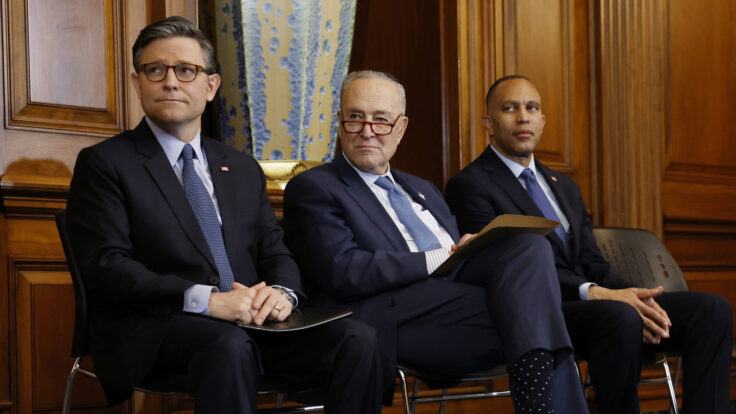
- The great deficit debate: House Speaker Mike Johnson insisted on Sunday that the Republicans’ tax and spending bill will not add to the deficit. “It’s not going to add to the debt,” he said on NBC’s Meet the Press. Later during the same interview, he went even further: “I am telling you this is going to reduce the deficit,” he argued. Of course, that hardly squares with what the experts are saying. The nonpartisan Congressional Budget Office states that the bill will add $3.8 trillion to the deficit over 10 years. The Committee for a Responsible Federal Budget estimates that it would add $3.3 trillion to the debt—or $5.2 trillion, if the bill’s provisions don’t expire and are made permanent. Wall Street has been warning the White House about how the bill could upset the bond markets.Johnson and Republicans insist that economic growth would be the factor that reduces the deficit, and that the independent analyses don’t factor it in. But if the bill only extends individual tax brackets at current levels, maintains most business tax rates, and eliminates some tax credits in newer industries, such as renewables, it’s hard to see how much growth it will unleash.
|
|
|
|
As Elon Musk exits the White House, Republicans are scratching their heads over what all the chaos really accomplished, and how DOGE’s slapdash attempts to trim the budget stack up next to the $4 trillion budget-buster they just jammed through the House. As Trump himself reportedly said, “Was it all bullshit?”
|
|
|
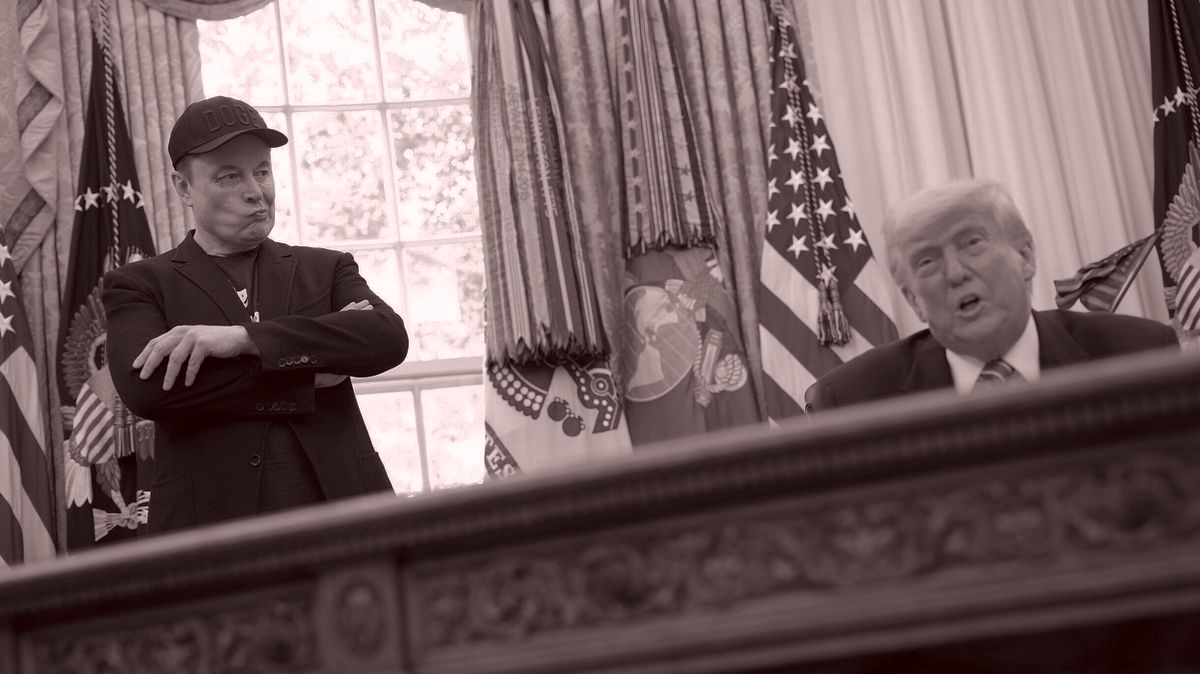
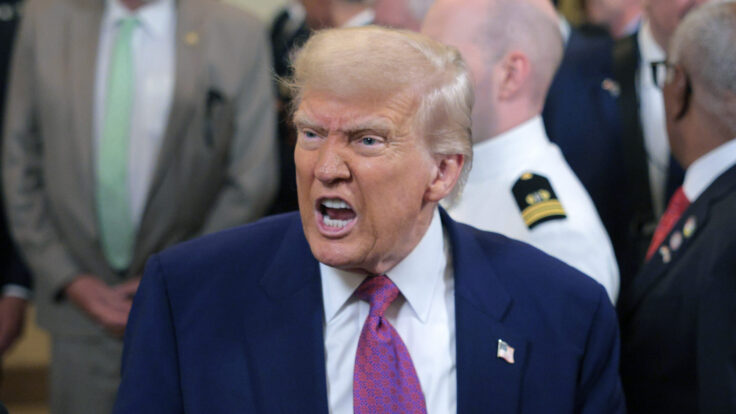
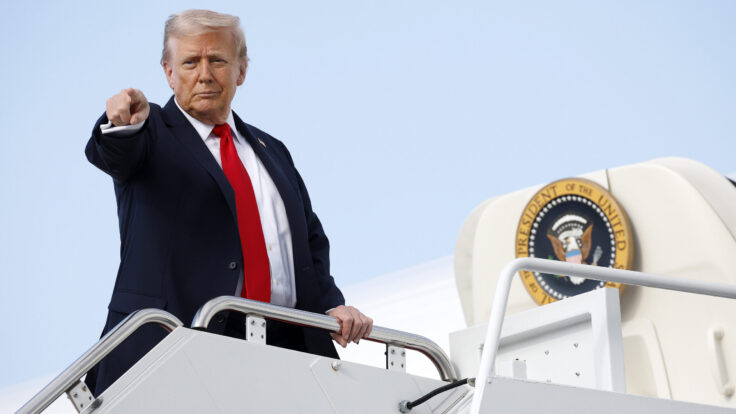
At President Trump’s farewell news conference for departing “special employee” Elon Musk on Friday, the world’s wealthiest man declared that DOGE was only “just beginning.” For his part, Trump called Musk’s actions “sweeping and consequential,” and gifted him a gold key to the White House—symbolic, perhaps, of the promise that he might return. The reality, of course, is that DOGE has been one of the most chaotic, overrated, and ineffective components of Trump’s second term so far—a significant accomplishment in itself. On some level, that’s what the press conference was memorializing.
DOGE, the so-called Department of Government Efficiency, wreaked havoc on government agencies, upended federal employees’ lives, and is working to collect and digitize information on Americans—a privacy incursion that should make old-school Republicans apoplectic. And yet DOGE never accomplished its stated objective of dramatically downsizing the government. Yes, some have taken the “ Fork in the Road” buyout offer, and others have been laid off, but Musk severely underperformed. He and Trump claimed on Friday to have cut $160 billion in government programs, while the DOGE website offers a slightly meatier $175 billion. Whatever the true size of the cuts, which Musk’s team has repeatedly revised down, they are just a fraction of the $2 trillion that Musk originally promised. As Trump himself reportedly wondered aloud, in front of his advisors, “Was it all bullshit?”
|
|
|
|
A MESSAGE FROM OUR SPONSOR
|
The heartbeat of American agriculture can be heard at every farmer's market and dinner table, spanning 880 million acres, supported by over 2 million people, and contributing $1.5 trillion to our economy.
Thousands of Bayer employees work alongside American farmers, providing access to innovations and support to implement them effectively. Bayer's advanced breeding, crop protection, and digital technology tools are reshaping the future of farming, and we're invested in every field, acre, and harvest. We share the same purpose as American farmers: helping agriculture thrive so we can bring high-quality, abundant, and diverse food to millions. Learn more at Go.Bayer.com/Purpose.
|
|
|
|
DOGE did cancel many government contracts, and took credit for eliminating others that were already set to end. But the larger project of rooting out fraud and abuse—or more accurately, “waste,” as defined by Republicans with a very different idea of what constitutes productive spending—quickly ran into a constitutional wall. Courts have slowed or stymied some of the actions directed by Musk, and many funds that were withheld by the administration may ultimately be released. (The Impoundment Control Act of 1974 clarifies that doing otherwise would be unconstitutional.) Remember, it’s up to Congress to allocate federal dollars. Yet efforts by the so-called DOGE caucuses on the Hill to memorialize Musk’s cost-cutting via new legislation have mostly been a failure. Perhaps a more accurate name for these members is DINO—Doge in Name Only.
|
When Elon Musk and Vivek Ramaswamy started DOGE in late November, nearly every Republican wanted to attach themselves to its unofficial mandate. At last, after decades of vowing that their party would shrink the size of government and reduce spending, here was a seemingly viable effort to rally behind—all run by a guy who threw around cash on a whim and could support them in the future. Musk, of course, had semi-recently made waves for buying Twitter and laying off roughly 80 percent of its employees. Now he was promising to bring a similar discipline to the administrative state, with himself as a heat shield.
DOGE caucuses sprang up across Capitol Hill, with Republicans jockeying to join. Trump ally Rep. Marjorie Taylor Greene, who had been a constant foil to Speaker Mike Johnson, became the top Republican on the official DOGE subcommittee created by leadership. (She has since stopped threatening Johnson’s job.) “It’ll be amazing what we can do,” Greene told me back in December, touting a goal of slashing $2 trillion from the budget.
But in the intervening five months, they have done very little. The House and Senate DOGE committees haven’t met recently, nor have they sent any suggestions for funding cuts to the Appropriations Committees, the ones actually responsible for determining government spending. Greene’s subcommittee started relatively strong, holding hearings on government waste and foreign aid, but has since resorted to hauling in low-hanging partisan fruit that has little to no impact on the federal budget—such as cutting funding for the Corporation for Public Broadcasting, the nonprofit behind NPR and PBS, and “keeping men out of women’s sports.”
And DOGE has mostly withered on the vine. I reached out to nearly two dozen Republicans to ask what the Hill DOGE groups have been doing, and lawmakers—including many who are purportedly part of the caucus—either didn’t respond, or said that the committees haven’t done much. That’s because cutting government spending is politically fraught. As I’ve reported here before, as soon as DOGE began impacting their districts, G.O.P. members started backchanneling with the administration to shield government programs from elimination or cuts. Members who had Musk’s cellphone number would call him directly to plead their case. Over and over, Republicans heard from constituents that they voted for Trump, but not for this.
|
|
|
|
In their first DOGE meeting on Capitol Hill, in December, some lawmakers, including Rep. Chip Roy and Sen. Thom Tillis, warned Musk and Ramaswamy about the perils of cutting government funding. Every program has a constituency and a champion on the Hill. Also, reducing government was never a novel idea. President Bill Clinton cut the government workforce by more than 250,000 jobs during his presidency, which he touted in his 1996 State of the Union address, declaring that the “era of big government is over.”
Clinton’s approach, which gradually reduced hiring and encouraged retirement, might have been instructive. From the beginning, however, Musk’s team preferred to move fast and break things—what software engineers sometimes call a “scream test,” wherein you unplug critical functions to discover what’s truly necessary… or, in the case of the federal government, which stakeholders yell the loudest.
|
|
In retrospect, some Republicans admit that DOGE has been a missed opportunity. The administration has taken months to send Congress a package of specifics that would codify some DOGE cuts. And while a $9 billion package focusing on the U.S. Agency for International Development, PBS, and NPR is expected to hit the Hill on Tuesday, obviously $9 billion is a drop in a $7 trillion bucket—and even those cuts could be hard to stomach. I’m told the bill is being viewed as a “trial balloon”—if it can pass Congress, it’s possible the White House will send a second one.
There are, of course, historical reasons to expect inaction. Republicans tried to pass a $15 billion rescission package during Trump’s first term, but didn’t have the votes. Some Republicans support the soft power of USAID. Other Republicans in rural districts rely on public media for information, entertainment, and the safety alert system. Plus, House Republicans just passed a bill that would add about $4 trillion to the deficit, and the Senate will do the same in the coming weeks. While the Big Beautiful Bill makes cuts to government programs such as Medicaid and food assistance, those sacrifices are largely canceled out by lowering taxes on high-income households, as well as an extra $300 billion for defense spending and the border, including $25 billion for Trump’s “golden dome” missile defense shield over the U.S.
Hours after the Trump/Musk press conference on Friday, the administration sent Congress a second attempt at a budget. Though still incomplete, it outlines steep cuts to hundreds of programs, including early childhood education, cancer research, Pell grants, clean water and air programs, and United Nations dues, and completely eliminates the U.S. Agency for International Development.
The Friday night budget dump also seemed to be the official handoff from Musk to Russ Vought, the director of the Office of Management and Budget, and a Christian nationalist budget wonk who threatens to be a much more effective bureaucrat than Musk. Vought, after all, is the architect of Project 2025, the carefully planned, yearslong effort to massively shrink the federal government while shifting its powers and authority to the president. Where Musk and his band of Washington outsiders failed, perhaps Vought and his network of policy insiders and ideologues will have more success—or at least do a better job of getting Congress on board.
|
|
|
|
Join Emmy Award-winning journalist Peter Hamby, along with the team of expert journalists at Puck, as they let you in on the conversations insiders are having across the four corners of power in America: Wall Street, Washington, Silicon Valley, and Hollywood. Presented in partnership with Audacy, new episodes publish daily, Monday through Friday.
|
|
|
|
Unique and privileged insight into the private conversations taking place inside boardrooms and corner offices up and down Wall Street, relayed by best-selling author, journalist, and former M&A senior banker William D. Cohan.
|
|
|
Need help? Review our FAQ page or contact us for assistance. For brand partnerships, email ads@puck.news.
You received this email because you signed up to receive emails from Puck, or as part of your Puck account associated with . To stop receiving this newsletter and/or manage all your email preferences,
click here.
|
|
Puck is published by Heat Media LLC. 107 Greenwich St, New York, NY 10006
|
|
|
|