 |
|
Welcome back to The Stratosphere.
|
|
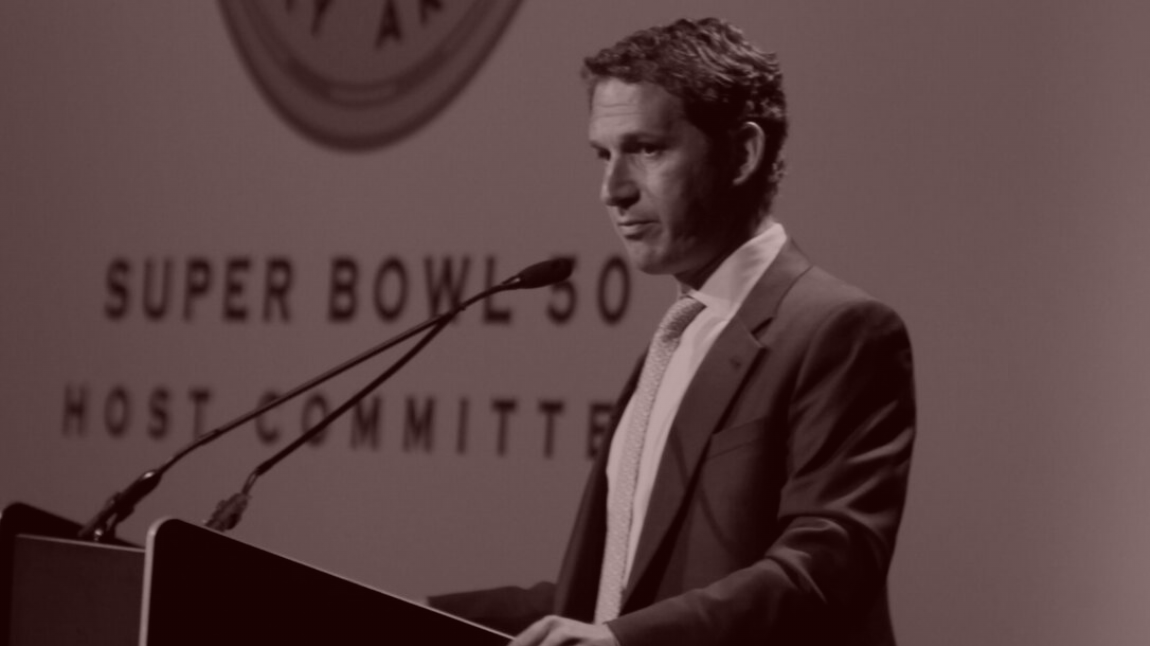
Greetings and happy Tuesday. Today, a story at the intersection of Silicon Valley and San Francisco politics: the buzzy, possibly oversold mayoral bid of Daniel Lurie, the suave, likable nonprofit founder who Silicon Valley hoped would be the man to dethrone London Breed. Can he deliver?
- But first… a quick bit of news that just crossed the transom… Elizabeth Warren, that famous critic of money in politics, is the co-headliner—along with Raphael Warnock and Hakeem Jeffries—of this week’s Democracy Alliance summit in Washington, according to an agenda I’ve seen. Warren, back in the day, did plenty of big-money fundraising, and she is no longer running for president on purity politics and asking rivals to swear off super PACs. Of course, the Democracy Alliance, the progressive mega-donor group, isn’t what it was back in the day, either…
|
 |
| The Count of San Francisco |
| Daniel Lurie, the charming Levi Strauss heir running to be San Francisco’s next mayor, is ideally positioned to be the outrage vessel for the Pac Heights crowd. So why is Silicon Valley skeptical of his campaign? |
|
|
|
| San Francisco occupies a special place in the conservative psyche, with its problems dementedly caricatured and grossly exaggerated by people like Elon Musk, who rarely leave the Tenderloin to livestream their war zone reports. Its domestic affairs are often scrutinized like the Talmud for some greater meaning. When voters recalled progressive district attorney Chesa Boudin last year, it fed a narrative, fairly or not, that the progressive left was too progressive, even for San Francisco. I no longer read the innumerable articles about low-occupancy rates in the city’s downtown office buildings, because if you’ve read one of those think pieces, you’ve read them all. So when Mayor London Breed runs for reelection a year from now, you can bet her bid will inevitably draw national eyeballs and fuel Tucker segments about the fentanyl crisis, the “doom loop,” and why, exactly, the deodorant is locked up at Walgreens.
Enter Daniel Lurie, the 46-year-old It-boy of Pacific Heights, founder of Tipping Point and would-be avatar of this political zeitgeist, who announced six weeks ago that he would be challenging Breed for the mayorship. Lurie is a Democrat, and clearly not of the same political class as Elon or Tucker, but he is tapping into some of the same frustration. The talk around town this year has been that he would successfully harness the resentment and money emanating from the tech industry and its billionaire class to ascend to higher office. Over the last year, Lurie has gone on an aggressive listening tour—seriously, has anyone not had a coffee with Daniel recently?—sitting down with almost every major donor and power broker in the city, seemingly on a mission to convince them that he, a Levi Strauss heir, was the guy to take down Breed and restore the city to glory.
He has the résumé for it. Almost 20 years ago, Lurie founded the charity Tipping Point, Silicon Valley’s answer to Wall Street’s Robin Hood Foundation. In fact, Lurie started his career at Robin Hood and came home to the Bay Area with a goal of similarly collecting money from the region’s wealthiest citizens to combat the problems of its poorest. Each year at their annual breakfast, which I’ve been to, Lurie steps up onto the rostrum and delivers his sincere, perfectly calibrated tearjerker routine about poverty in the Bay Area. Much like Lurie’s friend, Robin Hood C.E.O.-turned-Maryland Governor Wes Moore, Lurie is extraordinarily effective in the fundraising arena. He raised over $500 million for Tipping Point, making him one of the city’s most prodigious bundlers, before stepping down as C.E.O. in 2019.
Along the way, Lurie became something of a boundary-crossing, even contradictory, figure—between the haves and have-nots, the tech workers and the city’s true locals, etcetera. He travels among the upper-crust, but if you walk with him, he can also tell you, on a block-by-block level, how a homeless encampment looks different than it did two weeks ago, when he was last there. He is a fierce defender of San Francisco—he chaired the city’s host committee for Super Bowl 50 in 2016—but is also the kind of person whom his tech executive friends call up to complain about lockdowns, the media, or the human feces they just stepped in. In many ways, he has been an interminable candidate-in-waiting This fall, he finally followed through and announced he’d take on Breed.
Lurie, whom I’ve known for years, is exceedingly polite and charming in private, and canny about his public image. You cannot have a conversation with a major player in San Francisco who fails to mention what a “good guy” he is. But, oddly enough, Lurie’s candidacy has yet to win over many of the leading lights that have helped him get here in the first place. |
|
|
| That lack of passion surprised me as I began reporting this story. For the past year, San Francisco business leaders have been straight-up pissed about the state of the city, and by all accounts Lurie should be the perfect vessel for their outrage. One public-company C.E.O., Prologis chief Hamid Moghadam, who was held up at gunpoint on his Pac Heights porch last year, has quietly started a network of concerned C.E.O.s called the Partnership for San Francisco, I’ve learned. Moghadam is close with Lurie, but he’s holding off on an endorsement for now: “Hamid thinks very highly of Daniel Lurie but has not yet decided who he wants to back at this point,” a spokesperson told me.
Plenty of the tech and tech-adjacent people I contacted for this story told me they came away from their listening tour get-togethers with Lurie less than impressed. In private communications to friends, elder statesman Ron Conway has been privately dismissive of his candidacy, I’m told; on a recent private call with the advocacy group Neighbors for a Better San Francisco, Conway reaffirmed his support for Breed’s efforts to crack down on drugs, a source on the call told me. (Conway declined to comment.)
Also privately dismissive of Lurie is Garry Tan, the Y Combinator chief who is fashioning himself as a next-gen, Conway-esque figurehead for the city’s moderates. In fact, Tan quietly hosted a fundraiser for Breed in mid-June at his home in the Mission, I’ve learned, though he told me he is “not against Lurie” and wants voters to list them as their top two choices in the city’s ranked-choice system. (“He’s a good person,” Tan said, the standard Lurie honorific.) Mike Moritz, the legendary investor and another ascendant player in San Francisco affairs, who is backing a new political outfit and a challenger to the Chronicle, is likely to stay out of the race entirely.
The sense is that Breed has both shifted right, but also managed to endear herself to possible enemies, smothering them with access. She is on texting terms with everyone from Conway to Tan to Marc Benioff and has neutralized a lot of her critics in the last six months or so, just as Lurie’s campaign was really getting going. Other business leaders are simply in no rush to take sides a year out. Lurie likes to name-check Benioff as someone he has worked with, including to me in a recent interview, but Benioff told me, “I don’t really know him,” essentially punting on my question. “As the largest employer and philanthropist in the city, it’s not appropriate for me to weigh in on the mayoral race,” Benioff texted me.
With a $500 individual contribution limit, the real money is with these billionaires and their independent-expenditure groups (which are similar to super PACs). Lurie, who is likely to reject the $1.2 million in public matching funds and instead self-fund several million from his family fortune, has quietly tasked some top political operatives with raising big money, I’ve learned: A new independent-expenditure committee named Believe SF was recently set up by a pair of longtime Gavin Newsom strategists, Dan Newman and Brian Brokaw, to raise unlimited funds for Lurie. (Lurie’s wife works for Newsom, coincidentally.) Tech supporters include Okta founder Fred Kerrest and former Twitter C.F.O. Ned Segal.
On dozens of private Zooms with top Bay Area philanthropists, including many with ties to Tipping Point, Newman and Brokaw have pitched Lurie’s optimistic vision and path to victory. They’ve told others that they’re trying to raise between $7 million and $10 million for the effort, I’m told. Newman and Brokaw declined to comment, including on how much they have raised thus far, but the presence of top-flight aides suggests there is real money behind them, somewhere. |
| Straight Outta Pac Heights |
|
| One of those donors could be Lurie’s mom, the billionaire philanthropist Mimi Haas—an heir, via her second marriage, to one of the foundational families of San Francisco and the Levi Strauss denim fortune. Lurie is old money by the standards of San Francisco: Growing up, he was a fixture of the Nob Hill Gazette and society balls, and now lives in Pacific Heights, with a second home in Malibu (Breed will talk about that second home plenty). Close friends include Trevor Traina, the Pacific Heights socialite, and celebrity event designer Stanlee Gatti. Gatti told me he had talked Lurie up to tech leaders like Conway, but he wants to see Lurie self-fund his entire race, à la Bloomberg. I told him that would be terrible optics. “Is it a bad thing to be rich?” Gatti asked me.
Breed isn’t resting on her laurels, either. Two weeks ago, biotech executive Bryan Giraudo, who helped lead the ouster of Boudin, filed paperwork for a pro-Breed super PAC called Fighting for San Francisco’s Future. The group has raised close to $1 million, I’m told, including a $250,000 donation from Ripple founder Chris Larsen, who is Breed’s most vocal defender in the business community. “Daniel is a let’s-have-impact kind of guy,” said Larsen, who has supported Tipping Point in the past but draws a distinction between Lurie the Tipping Point C.E.O. and Lurie the mayoral candidate. “He sees the city he loves that’s having some real problems, and he’s stepping up. So you can’t fault him for that. But again, there’s not a mayor problem here. And frankly, it’s a waste of resources to be backing another mayoral candidate that basically agrees on everything that London does.”
Several Lurie skeptics in my Rolodex encouraged me to spend time with Lurie and see if he connected. On a recent Wednesday night in the city’s North Beach neighborhood, I joined Lurie and about 50 people in his network (including two from kindergarten) who packed tightly into a wine bar full of Halloween lanterns, salami boards and plenty of talk about “accountability”—one of Lurie’s favorite watchwords.
On the stump, Lurie is lacking in the electricity department and a bit soft-spoken—clearly a first-time candidate trying to translate his one-on-one skills to the movement-building part of politics. It’s hard to imagine a Lurie die-hard—he “takes up no space,” as someone told me—although he was better in Q&A, when he abandoned some of his vaguer rhetoric about the city’s vibes and talked more practically about crime and education, and enumerated his actual disagreement with Breed on shelter beds. (In general, he casts Breed as someone who says the right things but hurries away from results.) On the way out, a few well-wishers wanted a handshake on the sidewalk. “Don’t be scared to give a few bucks tonight. Every dollar counts,” he told them.
I followed him out of the bar into a silver Volkswagen hatchback, where we both piled into the back seat for the 15-minute drive to his next event, near Market Street. I began by asking him about the Breed team’s apparent intention to caricature him as some “rich, white tech guy” fighting to unseat a Black woman who grew up in public housing. (Breed supporters picketed his launch event with signs referencing his $15 million estate in Malibu, for instance.) “I haven’t heard her say that,” he told me. “I am not going to run from all the opportunities that I’ve been given, the fact that my stepfather was part of a great, iconic company. … I’m proud of where the resources and opportunities came from. What I’ve asked people to do—and it’s a fair thing to be asking of me—is, ‘What have you done with it?’”
I asked him about the mood in the business community and how he could ride that anger to victory. “There is anger,” he said. “There’s frustration. And people can see with their own eyes that what is coming from City Hall is not working. You talk to business leaders—they know it’s not working. I think that they will come out in droves for a candidacy like mine. It’s going to be data-driven. It’s going to be about holding people accountable. It’s going to be about getting results. And I think what I keep talking about [that] appeals to leaders in all sectors is: Own it. As mayor, the city is your responsibility. People are tired of the finger-pointing.”
Before he exited the car, I noted that if he were to lose, it would not be for lack of money. “We’re going to have the resources to win this election,” he agreed. “We will be able to get the message out. If they come after me personally, we’ll be able to engage.” Then he got out on Sansome Street and walked into his next event: a reception for a city fund sponsored by companies like Amazon, Comcast, Cruise and—according to a list on the door—by Daniel Lurie, himself. |
|
|
|
| FOUR STORIES WE’RE TALKING ABOUT |
 |
|
 |
| Givenchy Goss |
| Inspecting the rumor mill surrounding Sarah Burton. |
| LAUREN SHERMAN |
|
 |
|
 |
|
|
|
|
|
 |
|
|
|
Need help? Review our FAQs
page or contact
us for assistance. For brand partnerships, email ads@puck.news.
|
|
You received this email because you signed up to receive emails from Puck, or as part of your Puck account associated with . To stop receiving this newsletter and/or manage all your email preferences, click here.
|
|
Puck is published by Heat Media LLC. 227 W 17th St New York, NY 10011.
|
|
|
|