{{ 'now' | timezone: 'America/New_York' | date: '%b %d, %Y' }} |
|
|
|
Hello, and welcome back to The Best & The Brightest. I’m Leigh Ann Caldwell.
School was let out early, after-school activities were canceled, and the House canceled votes today because of the threat of severe weather, including tornadoes. That weather never materialized, which is great for everyone’s safety, but D.C.’s capacity for freakouts never ceases to amaze.
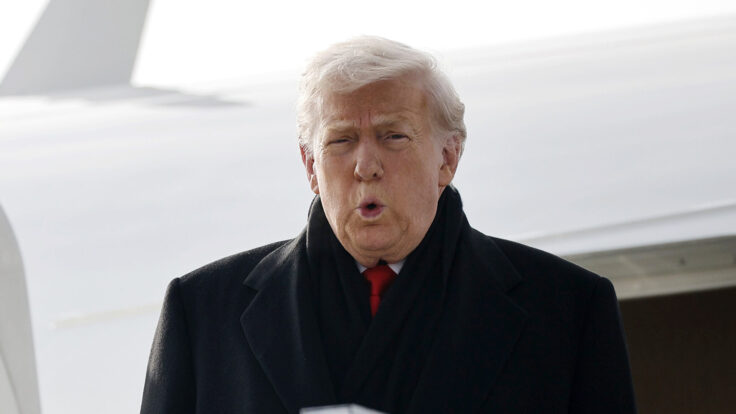
President Donald Trump announced today that his chief of staff, Susie Wiles, has been diagnosed with breast cancer, which she says doctors detected early. Healing
thoughts and prayers for Susie. In other medical news, Trump blurted out in an unrelated press conference that Rep. Neal Dunn, Republican of Florida, has been diagnosed with a terminal heart condition. There had been chatter about a midterm retirement and rumors that his health was declining, and Speaker Mike Johnson is down to a one-seat majority he can’t afford to lose. Trump offered to get Dunn all the medical help he needs so he can remain
in Congress for the rest of his term.
Also: Thoughts and prayers to J.D. Vance, who has been tasked with leading an anti-fraud task force. It sounds a lot like the impossible job that Joe Biden foisted on Kamala Harris when he asked her to solve the root causes of the migrant crisis.
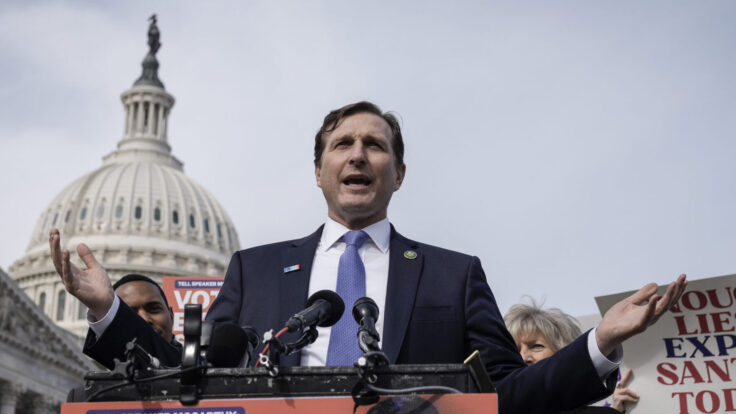
In today’s issue, I have a quick look at how both parties are trying to find a rhetorical edge in the D.H.S. shutdown, which has entered its fourth
week. Plus, Abby takes a look at the bitter Illinois Senate primary tomorrow and explains why Sen. John Cornyn is the purest symbol of the Republican Party of yesteryear.
Mentioned in this issue: John Cornyn, Hakeem Jeffries, Greg Casar, Dick Durbin, Jan Schakowsky, Laura Fine, Daniel Biss, Kat Abughazaleh,
Mike Simmons, Bushra Amiwala, Ken Paxton, James Talarico, Tony Gonzales, and more… |
|
|
|
A MESSAGE FROM OUR SPONSOR |
Across the country, harmful corporate insurer practices are driving up costs and delaying care for patients and
families. Prior authorization requirements, AI-driven coverage denials, and excessive red tape shift medical decisions away from doctors and into corporate offices. These barriers can postpone critical treatment, increase out-of-pocket costs, and add stress during already difficult moments. Hospitals are focused on delivering timely, appropriate care, but insurer interference too often stands in the way. It’s time to
prioritize patients over paperwork and ensure access to affordable, reliable healthcare. Learn more about how these practices are impacting care and what can be done. |
|
|
|
- Fresh
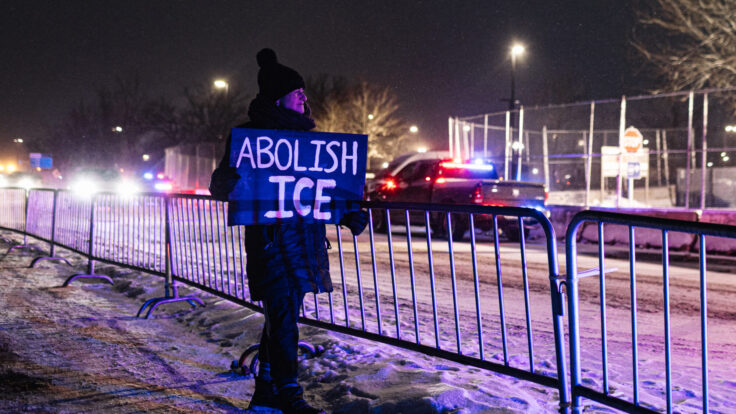
D.H.S. funding hell: The partial government shutdown has entered its fourth week and the stakes are rising. T.S.A. agents have missed their first full paycheck, and the C.E.O.s of 10 major airlines just placed a full-page open letter in The Washington Post, calling on Congress to pay air-traffic controllers, T.S.A. agents, and U.S. customs
agents. “Once again air travel is the political football amid another government shutdown,” they wrote. Notably, they didn’t blame either party and steered clear of the actual reason for the shutdown—aggressive ICE and Border Patrol tactics.
And speaking of air travel: At the airport in Austin today, Rep. Greg Casar saw the cameras waiting to greet Sen. John Cornyn, and jumped into the scrum to tell the reporters that Cornyn should join Democrats in fully
funding the T.S.A. Then Cornyn rolled up and got out of his car, and Casar asked him to “put his money where his mouth is” and vote to fund the T.S.A. only. “Not acceptable,” Cornyn responded. “How about all the terrorist attacks? … Do you want those to continue? Tell the Democrats to vote for D.H.S.” I hope their assigned seats back to D.C. were next to each other.
|
|
|
|

| Abby Livingston
|
|
- AIPAC gambles on
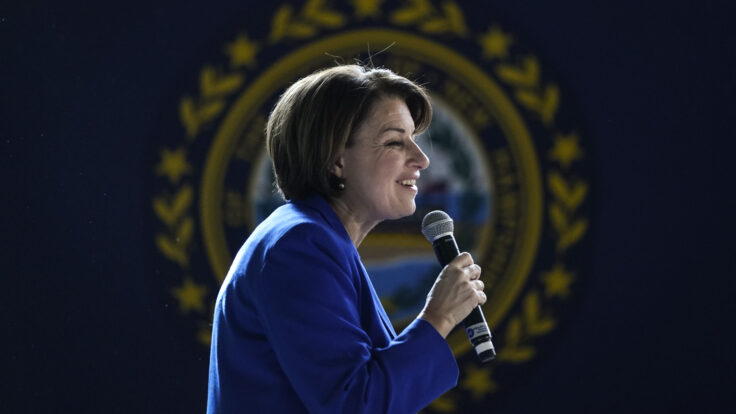
Chicago: The focal point of the Democratic political world will shift to Chicago on Tuesday for the Illinois primaries. The Senate battle royale to replace retiring Sen. Dick Durbin is front of mind, of course, but party operatives are even more interested in the scuffle to replace retiring Rep. Jan Schakowsky in the 9th district. And no interest group has more riding on the race—or has spent more—than AIPAC and its affiliates.
One such group, Elect
Chicago Women, has spent $5.3 million supporting State Sen. Laura Fine—including funding attacks on Evanston Mayor Daniel Biss, who has criticized the conduct of Israel’s war in Gaza. But Biss has deep ties to Israel himself, and political observers on the ground wonder if the anti-Biss spending from pro-Israel groups could
backfire by elevating the upstart Dem candidate Kat Abughazaleh, one of the loudest pro-Palestinian candidates running this cycle.
Seeking to forestall that outcome, a different AIPAC-linked group, Chicago Progressive Partnership, has spent $165,000 attacking Abughazaleh, per Politico. A Chicago
Democratic consultant texted me that AIPAC and its affiliates should “consider themselves extremely lucky” that two lesser-known lefty candidates, Mike Simmons and Bushra Amiwala, “are refusing to drop out, or it would be Kat without it even being close.” Not confused enough? Over the weekend, another AIPAC-aligned group boosted Amiwala with a new ad that appeared to be aimed at pulling votes away from Abughazaleh. Amiwala immediately disavowed them.
|
|
|
|
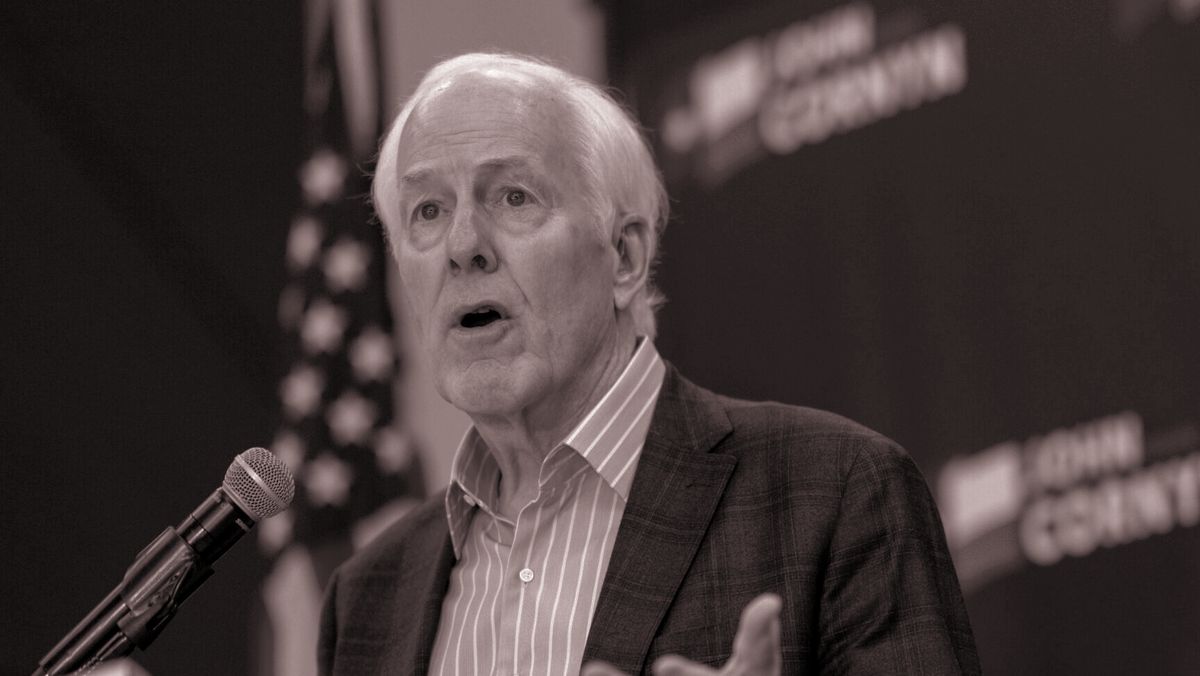
Senator John Cornyn is fighting for his life in the Texas Republican runoff against a deeply
flawed opponent. He’s also a symbol of what ails his party in the Trump era—and a cautionary tale for why money can’t fix everything. |
|
|
|
Republican John Cornyn, the four-term senior senator from Texas, is suddenly fighting for
his political life to hold the seat he’s occupied for more than two decades. Party operatives have practically begged Donald Trump to jump into the primary runoff race and endorse Cornyn over his scandal-plagued but scrappy opponent, Texas Attorney General Ken Paxton. And yet, Trump has held off—perhaps because he views the dangling sword over Cornyn’s head as leverage, or he sees a bit of himself in Paxton. Either way, it’s hardly clear whether a belated Trump
nod would drag Cornyn over the finish line.
That’s a problem for national Republicans, who are betting the house—to the tune of at least $70 million so far—to keep Paxton off the ballot in the general. Paxton, after all, has generated perhaps the fattest oppo file in politics: He’s been impeached, acquitted, accused of stealing a Montblanc pen, and divorced
“on biblical grounds.” Most strategists argue Cornyn is the only Republican who can beat Democrat James Talarico, at least without having to siphon millions of dollars from other Senate races. |
|
|
|
A MESSAGE FROM OUR SPONSOR |
Harmful corporate insurer practices are increasing healthcare costs and creating unnecessary barriers to care. Prior authorization delays,
coverage denials, and excessive administrative requirements slow treatment and drive-up expenses for patients and families. Reform is needed to ensure medical decisions are guided by doctors, not corporate red tape. Learn why curbing these practices is essential to lowering costs and protecting timely access to care. |
|
|
|
The party had some reason to hope after the March 3 primary, when Cornyn narrowly
placed first, advancing to a May runoff with the wind at his back. Cornyn’s allies hoped this would signal to Trump that their guy was a winner—albeit barely—and were ebullient when reports surfaced over a week ago that Trump’s imprimatur was imminent. But one Cornyn donor I spoke to at the time remained concerned, telling me that Trump needed to endorse
within the following week to capitalize on the momentum.
That was 10 days ago. And instead of putting the issue to rest, Trump continues to dangle his endorsement over not just Cornyn, but the entire Senate Republican conference, as leverage to get them to blow up the filibuster to pass the SAVE America Act. Last week, Paxton goaded the president, even offering to drop out if it did pass. So as much as Republicans have dreaded this runoff, it’s proving yet more excruciating than anyone
had anticipated only weeks ago.
Sure, not everyone is worried. Some Texas Republicans cannot see any scenario in which either Republican nominee loses the general election. The first wave of opposition research on Talarico, the seminarian Democratic nominee with a long history of liberal statehouse speeches and social media activity, heartened Republicans everywhere. “Anybody who says ‘Jesus is nonbinary’ and ‘There are six sexes’”—references to
remarks Talarico made in the state House—“that ain’t gonna happen in the state of Texas,” insisted a Texas Republican
consultant.
Even so, a good night for Texas Republicans in November could mean spending a fortune to hold on to a Senate seat that’s otherwise been reliably safe for the party. Meanwhile, there are all kinds of wildfires breaking out downballot, thanks to the G.O.P.’s own redistricting project, the national political environment, and one hell of a congressional scandal. One Dallas Republican source has taken to casually referring to the political affairs in his state as “a
meltdown.” In other words, the party may be on track for a Pyrrhic victory in the Senate, but a great deal of damage has already been done. |
Texas used to be where national Republicans went to fix their political problems in other states. Does a
candidate need more money for the Raleigh media market? Go to Dallas and Houston to fundraise. Worried about losing the House? Call Austin, and Texas will pony up more seats in redistricting. (The most recent gerrymandering go-round was, after all, the second time in 25 years that national Republicans deployed this tactic outside the normal redistricting cycle.) This time, though, Texas Republicans are consumed with their own dramas and just about tapped out for everyone else’s. As the Texas
consultant put it, “The state of Texas is on fire, dammit.”
In many ways, Cornyn’s dilemma is a microcosm of the state’s—and the party’s—larger spiritual problem. As a vestige of the pre-Trump G.O.P. and a former two-term chairman of the N.R.S.C., Cornyn lived through the turbulent 2010-2012 era, when the Republican establishment saw its incumbents and favored candidates fall to fatally flawed Tea Party candidates who twice cost them the Senate majority. Cornyn helped write the playbook
for dealing with this threat, and now he’s deploying it himself: Run your primary campaign like your life depends on it. Of course, the guns-blazing approach comes at a cost—about $70 million has been spent on reelecting Cornyn so far, out of the $95 million spent on the Republican primary in total. “That’s the G.D.P. of small countries,” said a Washington-based Republican consultant. “That’s crazy.”
But the deeper concern is what the mess in Texas means for Republican efforts beyond the
state. If Cornyn’s reelection were a gimme, the senator would be inviting Republican incumbents and challengers to meet his Texas donors, traveling the country fundraising for colleagues as a bold-faced Senate headliner; and raising ungodly amounts of money for the N.R.S.C. But Republican infighting in the state, and the looming threat of a genuinely competitive general election, means most of that money and energy is staying at home. And every dollar spent in Texas is money not going out to
House and Senate races elsewhere. |
|
|
|
Republicans also anticipate that the Texas donor set will prioritize local candidates over vulnerable
out-of-state Republican members or challengers. “Everyone just assumes they can go through River Oaks and Highland Park and pick up a couple hundred thousand dollars and head home,” said a Dallas-based Republican consultant. “With the donor fatigue that is sure to set in after the runoff, and with several open congressional seats in Texas, the donors are going to face the races they have here.” National Republican sources say the message has been received, and few federal candidates are
bothering to book Texas fundraising junkets in the near term. “Texas, [which] has long been the kingmaker in Republican politics, has decided to shut down its Strait of Hormuz,” said the Washington-based Republican consultant. |
The
Hispanic Miscalculation
|
Among all the worst-case scenarios running through distressed Republican minds at the moment, the notion that
Talarico could actually win is perhaps the least likely. But the problems also run downstream, thanks in part to the party’s own redistricting efforts. Most national Republicans maintain confidence they will gain a handful of Texas seats, partly based on fielding mostly strong nominees and weak fundraising among Democratic candidates. But some anxious Texas Republicans are starting to ponder the possibility they could wind up with a net loss of Texas House seats this cycle,
even with redistricting.
Most Republicans, in fact, now concede that it’s unlikely they’ll pick up the full five seats they expected when they drew the map in the summer. They did so in part based on how Trump performed with Hispanics in 2024, assuming that those voters had permanently realigned toward the G.O.P. But that bet may prove ill-timed, especially given the scale of Hispanic alienation over ICE brutality and the ongoing impact of tariffs—not to mention suddenly surging gas
prices amid the war in Iran. “We’ve lost that fragile coalition,” said a Houston Republican.
Texas Republicans now argue that caution is merited and that even money may not solve these problems. “The intensity, geez Louise, you can’t manufacture that,” the Houston Republican told me after watching the organic Hispanic surge in the Democratic primary earlier this month. “There aren’t enough mailers for that.”
Even worse for them, some Republican-held seats are also possibly up for
grabs—or will at least cost money to hold. Republican Rep. Tony Gonzales withdrew from his race thanks to an extramarital scandal. The de facto Republican nominee in his district is now a YouTube gun enthusiast who has posted videos with Nazi references and touted Confederate heritage. And just like many
other Republican problems in Texas, this one was entirely self-inflicted. |
|
|
|
Join Emmy Award-winning journalist Peter Hamby, along with the team of expert journalists at Puck, as they let you in on the
conversations insiders are having across the four corners of power in America: Wall Street, Washington, Silicon Valley, and Hollywood. Presented in partnership with Audacy, new episodes publish daily, Monday through Friday. |
|
|
|
Unique and privileged insight into the private conversations taking place inside boardrooms and corner offices up and down Wall
Street, relayed by best-selling author, journalist, and former M&A senior banker William D. Cohan. |
|
|
|
Need help? Review our
FAQ page or contact us for assistance. For brand partnerships, email ads@puck.news.
You received this email because you signed up to receive emails from Puck, or as part of your Puck account associated with {{customer.email}}. To stop receiving this newsletter and/or manage all your email preferences, click here.
|
Puck is published by Heat Media LLC. 107 Greenwich St., New York, NY 10006 |
|
|
|
|