 |
|
Happy Sunday, and welcome back to Dry Powder.
|
|
You don’t get as rich as Warren Buffett or Nelson Peltz without knowing when to cut and run. In today’s issue, a close look at the former’s fourth-quarter sale of 30.4 million Paramount shares—and what it tells us about the status of Shari’s fraught deal process—plus a dissection of the latter’s Disney stock dump in the middle of a proxy fight.
But first, my partner Dylan Byers with an update on Zucker’s latest P.E. play…
|
- A Zucker-Zaz Deal Reunion: Jeff Zucker’s RedBird IMI has agreed to acquire the London-based production company All3Media for £1.15 billion from its joint owners, Warner Bros. Discovery and Liberty Media—which is to say, David Zaslav and John Malone. The deal, ironically, allows Zucker to acquire an asset from the two guys who helped facilitate his departure from CNN in a no-prints manner. (Yes, technically, Zucker left before the deal was consummated, but Chris Licht was already looming in the background.) Strange bedfellows, I know.
I noted Zucker’s interest in the asset back in December, and my partner Matt Belloni scooped the deal in last Thursday’s edition of What I’m Hearing. All3Media boasts more than 30,000 hours of scripted and unscripted content in its library, including shows like The Tourist, Fleabag, and The Traitors, as well as Squid Game: The Challenge. And at £1.15 billion, it’s slightly cheaper than repaying the Barclay family debt for The Telegraph and Spectator. —Dylan Byers
|
 |
| Buffett’s Big Short |
| The Oracle of Omaha, presumably pissed that his underlings did the Paramount deal in the first place, is cutting his losses and apparently voting with his feet on a sale process run by his old banker, Byron Trott. Plus: Peltz’s defeat. |
|
|
|
| There are few more painful harbingers of a sullied M&A process than what befell Paramount Global last week: the announcement that two of the company’s largest institutional shareholders had unloaded stock at that fraught moment between deal rumor-mongering and the announcement of any such deal. In other words, they sold before the stock traded up after an agreed-upon sale. That’s pretty unusual.
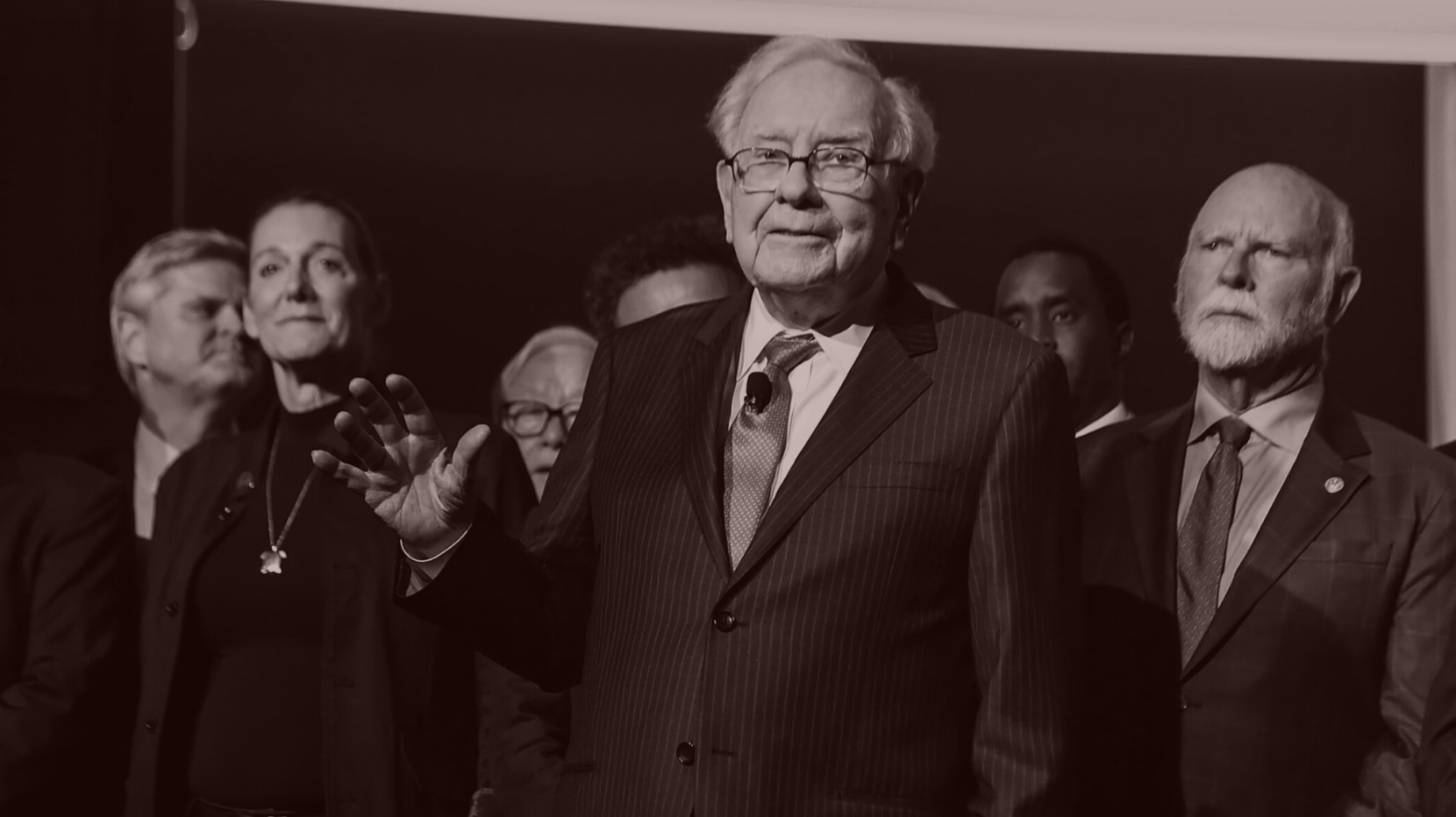
It turns out that during the fourth quarter of 2023, Warren Buffett sold 30.4 million shares of Paramount, or about one-third of his stake in the company. I’ve never quite understood why Buffett bought into the stock in the first place, but I’ve long posited that his heirs-apparent convinced him to do it, he went along with their call, and he’s been annoyed at them ever since. (Anyway, Buffett didn’t respond when I asked recently.) It also turned out that John Rogers Jr. over at Mellody Hobson’s Ariel Investments, which owned 11.33 million Paramount shares at the end of the third quarter of 2023, reduced the firm’s stake down to 11 million shares, or 3 percent, in the fourth quarter.
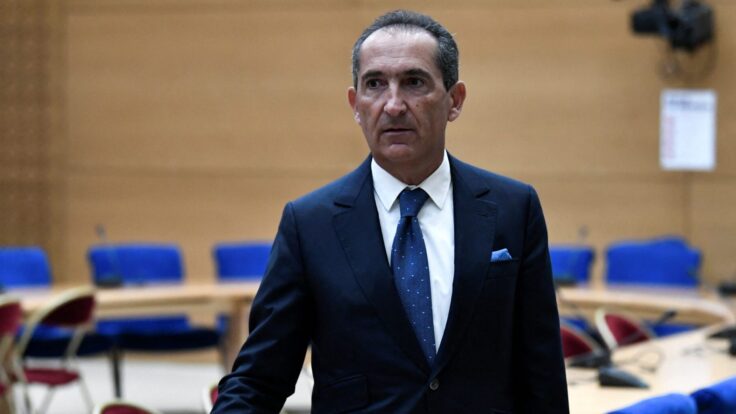
Alas, even the highly regarded Byron Trott, once Buffett’s favorite Goldman banker who now represents Shari and NAI in the sale process, seems unable to reverse what’s looking increasingly inevitable. Paramount’s stock was down more than 7 percent for the week, and is now down 17 percent since the beginning of the year. Say what you want, but that’s not how a stock in the middle of a takeover process reacts; that’s how a stock reacts when it’s the subject of a takeunder, or a failed process. My bet is that Shari isn’t getting out during this cycle. Better for her, I think, to wait for the macroeconomic conditions across the industry to stabilize and to try again in a few years.
As my faithful readers know all too well, this deal is far from a simple one—partly because the Redstones used NAI as a family heirloom for way too long, partly because Shari never should have recombined Viacom and CBS four years ago, partly because her timing for the sale couldn’t be worse, and partly because of the various debt covenants and obligations that are likely to be triggered as a result of the sale of the company. To wit, a buyer can either attack the Paramount bounty from the NAI level (which includes various debts and liabilities—like the 1,500 movie theaters, some of which are in Russia; plus $250 million in debt, plus another $125 million pref to Trott’s firm—and pay a hefty control premium to the Redstone family) or simply try to acquire all of Paramount Global, with an enterprise value these days of around $22 billion ($14 billion of net debt and $8 billion of equity value). The catch with the former, of course, is that a change-of-control of NAI would also likely trigger a repayment of $11.2 billion of the Paramount senior notes. Heavy cake for almost any buyer.
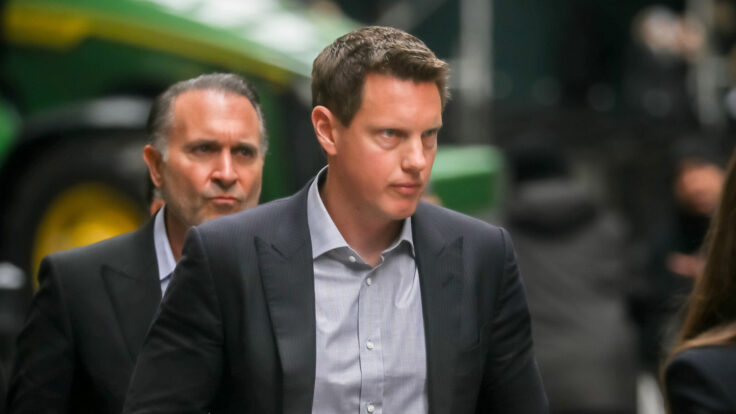
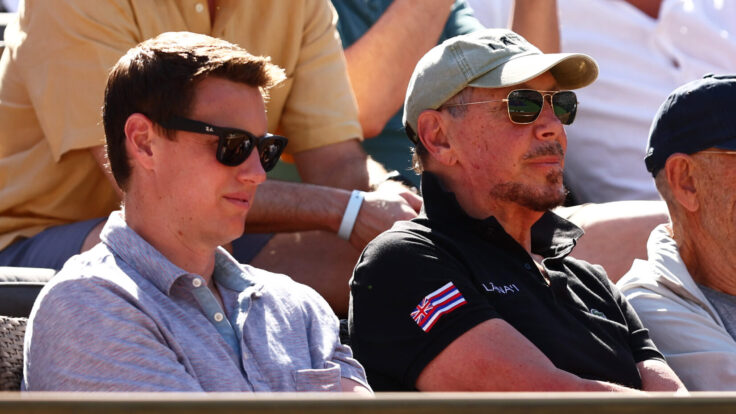
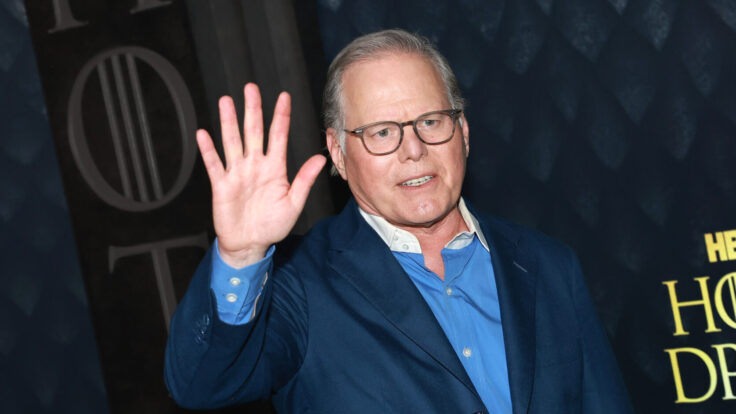
Another increasingly obvious challenge to Trott’s sale process is that David Ellison is really looking like the only interested buyer here. My Wall Street sources confirm what my partner Matt Belloni recently noted: Byron Allen is not being considered a serious bidder in Shari’s sale process. Trott and the Redstones would be wise to keep him at arm’s length given the opacity of his financing for a deal the size of Paramount Global. And, let’s face it, David Zaslav isn’t going to buy Paramount Global either. He’s already got his hands full with WBD, his publicly traded leveraged buyout of a company, with $43 billion of net debt, EBITDA projections he’s been having trouble meeting, and a BBB credit rating hanging on the cliff. No way he adds to his financial woes with another $14 billion of Paramount’s net debt, plus Paramount’s fading EBITDA in its linear TV business and the losses at Paramount+.
And last but not least, Ellison doesn’t really seem to want Paramount Global; he just wants Paramount, the movie studio. If Ellison buys NAI and steps into Shari’s shoes as the controlling shareholder of Paramount, there’s really no need for him to buy the rest of Paramount, a company that he would already control. That wouldn’t bode well for the long-suffering Paramount Global shareholders. And even if his mega-billionaire father were to guarantee the senior notes, a transaction would seem likely to tank the overall company’s stock, given all that seems to be propping it up these days is takeover talk. (This is not investment advice.) Normally, institutional investors, such as Buffett and Rogers, hold their positions until a deal is announced; that’s when they often sell out to the arbitrageurs, who come along to assume the risk that the deal will close, or be recut, or not. But here, apparently, both Buffett and Rogers are paring back their holdings well before the deal announcement. That’s telling. In fact, I’m sure they would sell more if they didn’t fear it would depress the stock further.
The smart money needs to get out before that happens, if it can. That, to me anyway, is why Buffett sold a third of his stake in the stock last quarter. He must realize there is no real offer for Paramount Global coming, and if there is a real offer for NAI, it’s not going to be good for him and the other shareholders.
Bottom line: This is a mess. Anyone who buys NAI will have their hands full with mishegoss at that level, and will likely have to deal with the Paramount senior notes at closing. And even if a deal for NAI were to happen, that spells trouble for the non-Redstone Paramount Global shareholders. Meanwhile, there seem to be no bidders for all of Paramount Global. So what’s a non-Redstone family shareholder to do in this situation? Why, sell, of course, while something can still be salvaged. Which is exactly why Warren Buffett is getting out while he still can. |
|
|
| Speaking of selling… Nelson Peltz sold some 7.3 percent of his fund’s stake in Disney during the fourth quarter. Trian now owns 6.77 million Disney shares, worth $755 million these days, down from 7.3 million shares at the end of the third quarter of 2023. (He also continues to have voting control over Ike Perlmutter’s 25.5 million Disney shares.) Why would Peltz sell down his stake in Disney in the middle of a high-profile proxy fight with the company, when he’s trying to get board seats for himself and former Disney C.F.O. Jay Rasulo? Beats me. But it’s not a good look, that’s for sure.
The obvious explanation is profit-taking. Since the beginning of the year, the Disney stock is up 23 percent and nearly 30 percent in the last six months, which more or less encompasses the time period of Peltz’s second intifada against Disney. Why not take some profit on a portion of your stake in Disney and hope that nobody notices?
Peltz certainly didn’t mention selling down during his interview with CNBC’s Sara Eisen this past week. In fact, if you listened to Peltz during that interview, you’d think he’d be a buyer of more Disney stock, not a seller. After telling Eisen that Bob Iger’s latest moves—his management shake-up at ABC, announced sports streaming partnerships, and ESPN micro-deals—were just “throwing spaghetti against the wall,” he insisted that Trian would emerge victorious in the current proxy fight. “Oh, come on,” Peltz said. “We’re not going to lose, okay? Let’s get that straight. I mean, the people who own this stock, they want action. They don’t want promises, okay? That’s not what they want. We’re going to win. We never—we never plan and state what we’re going to do if we lose because we don’t lose.”
In fact, Peltz has lost. If he really thought he was going to win and be able to implement his proposed strategic changes, he’d be betting on the stock to go up, not down. Otherwise, why bother? I assume he’ll be selling more this quarter too, just like Buffett at Paramount. He made a profit of around $150 million during his first proxy fight with Disney a year ago, before abandoning it before the actual shareholder vote in April. He now owns 25 percent less stock in Disney than he did a year ago, and he’s already taking profits, as his holdings continue to whittle down. Sometimes it’s important to watch what these guys do, not what they say on CNBC.
I know Nelson, at 81 years old, really likes being back in the spotlight, which is especially useful currency with his Palm Beach buddies during the cold, winter months up north. But he’s not going to win this thing, no matter what he says on TV. The tide has turned against him, again. The increase in the Disney stock is the only signal you need to know that Iger is going to win, again. (Whether he deserves victory is another matter.) The only question now is whether Nelson will pull up stakes before the April shareholder vote, again. My bet is he gets out while the getting is good, just like his friend Warren Buffett with Paramount. You don’t get as rich as these guys without knowing when to cut and run. |
|
|
|
| FOUR STORIES WE’RE TALKING ABOUT |
 |
| Browne & Black |
| A candid chat with an American fashion success story. |
| LAUREN SHERMAN |
|
 |
|
 |
| Catch-81 |
| The Cafe Milano crowd on the political topic du jour. |
| TARA PALMERI |
|
 |
|
|
|
|
|
 |
|
|
|
Need help? Review our FAQs
page or contact
us for assistance. For brand partnerships, email ads@puck.news.
|
|
You received this email because you signed up to receive emails from Puck, or as part of your Puck account associated with . To stop receiving this newsletter and/or manage all your email preferences, click here.
|
|
Puck is published by Heat Media LLC. 227 W 17th St New York, NY 10011.
|
|
|
|