 |
|
Happy Wednesday, and welcome back to Dry Powder.
|
|
Today, notes on an antitrust lawsuit that hits close to home: Nearly two years ago, the D.O.J. sued to block Penguin Random House’s $2 billion deal for Simon & Schuster, which would turn the Big Five publishing houses into a Big Four. What the hell happened? And more importantly, would preventing a merger actually benefit writers? Herewith, a definitive breakdown of where things stand.
|
 |
| The Billion-Dollar Book Deal of the Century |
| Penguin Random House has been waiting two years to pay some $2 billion for Simon & Schuster. Is the Justice Department sticking up for aggrieved authors, or being a political pain in the ass? |
|
|
|
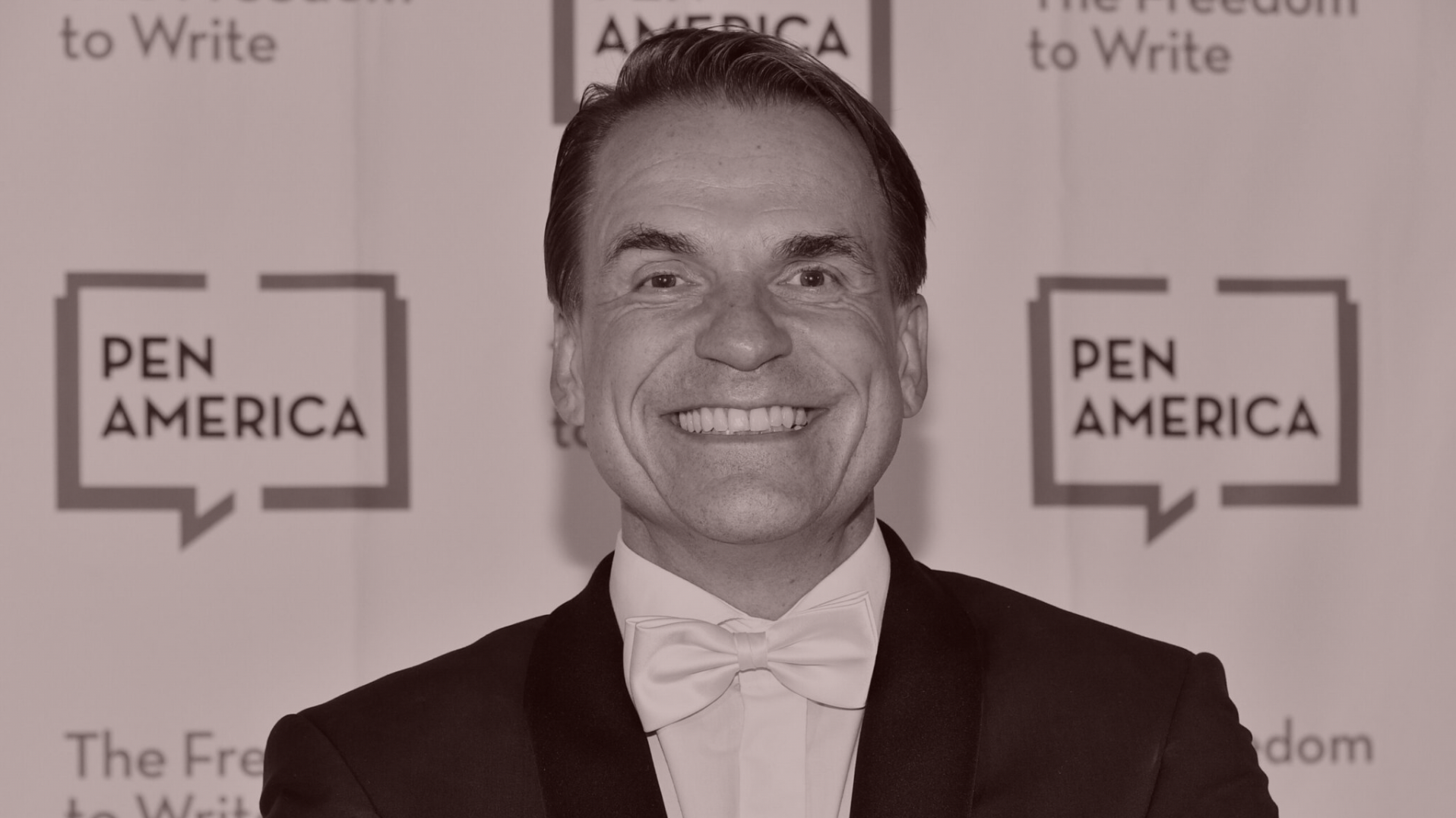
| Way back in November 2020, a few weeks after Joe Biden defeated Donald Trump to become the 46th President of the United States, the company then known as ViacomCBS, and now known as Paramount Global, announced the sale of its profitable and respected book publishing business, Simon & Schuster, to Penguin Random House, the industry behemoth, for $2.175 billion. Although relatively small by current deal standards, the proposed acquisition had a huge impact in the book publishing industry since it would combine the largest trade book publisher, P.R.H., and the third-largest trade book publisher, S&S, into one company, further cementing P.R.H.’s industry dominance with revenues of the combined businesses expected to reach $3 billion.
Along with the usual commentary regarding his excitement about the deal, Markus Dohle, the C.E.O. of Penguin Random House., which is a wholly owned subsidiary of Bertelsmann AG, told Publishers Weekly, the industry bible, that he didn’t expect “any antitrust issues to arise,” adding it was “a good day for books, book publishing and reading.”
Well, here we are, some 18 months later, and the deal is probably no closer to closing. Biden’s Justice Department has decided to try to block the combination on antitrust grounds, with a trial scheduled to begin Monday, August 1 and to continue until Friday, August 19. The post-trial findings of fact and conclusions, plus the objections to them, bring the timing—at least at the moment—to late September 2022 and then, presumably, it will be for U.S. District Court judge Florence Pan, in the District of Columbia, to take it from there, with an expectation that she will rule on the matter before the end of the year.
This is not the usual course of events for a merger, even for one that the Justice Department seeks to block on antitrust grounds. When the Justice Department starts making noises about threatening to block a merger, the two sides usually try to resolve the matter through negotiations, perhaps by agreeing to sell a division, or a business, to make the acquisition smaller, or by some other creative solution. Or if no compromise can be crafted, most acquirers end up dropping the deal, rather than try to fight it out with the D.O.J. in court, for obvious reasons. (The attempt to compromise went nowhere in this case.) In 2001, Jack Welch decided to drop GE’s acquisition of Honeywell after the European Commission demanded one concession after another for its approval. It was too much water torture for Jack. He likened the E.C.’s demands to him buying an 18-hole golf course but only getting 15 holes.
Of course, I am sure that Dohle got plenty of legal advice along the way about how the antitrust concerns would not be, or should not be, a problem. Why else would he say publicly that he didn’t expect antitrust to be an issue? P.R.H. has also agreed to pay a “termination fee” of $200 million if for some reason the deal does not close. Again, Dohle would have been unlikely to put $200 million on the line unless he was highly confident that antitrust would not be an issue.
In any event, the last thing either side wants is a trial. You will recall that the Trump Justice Department tried unsuccessfully to block AT&T’s acquisition of TimeWarner. It proved to be an embarrassment for both sides—for Justice because anyone with half a brain knew that its case was a loser (and politically motivated) from the start. And for AT&T, well, because it never should have bought TimeWarner in the first place—let alone for $108.7 billion—a fact it realized relatively quickly, which is probably why David Zaslav, and Discovery Communications, were able to merge with TimeWarner to form Warner Bros. Discovery last year. Now, TimeWarner is Zaz’s problem to solve, along with the $55 billion of debt that AT&T made the deal’s price of admission.
Now, it seems that politics is once again at play, what with the antitrust division of the Justice Department trying to stake out new ground by targeting the threat of job losses. The consensus seems to be there is no longer any chance for settlement. There is a new, strict timetable, marching toward the August 1 trial date. Expert discovery is over on July 5. Three days later, the expert reports are to be filed with executive summaries. There will be a status conference on July 11. Pre-trial briefs are due July 15, with the final pre-trial conference scheduled for July 25.
Meanwhile, Simon & Schuster continues to perform under Jonathan Karp, its C.E.O. In the last 12 months, ending March 2022, S&S generated revenue of $1.03 billion and EBITDA of $258 million. Suddenly, P.R.H.’s purchase price of $2.175 billion is looking reasonable at 8.4x EBITDA. No wonder P.R.H. is still keen to do the deal. |
|
|
| The government, of course, is still keen to block the merger. In its complaint, filed last November, John Read, the lead prosecutor on the case at the Justice Department, put forth the novel argument that the acquisition should be prevented because it will hurt people like me—authors—because the combination of the two firms would reduce, over time, the amount of money paid to authors (known in the business as “advances”) for the right to publish their books. According to this argument, by removing an element of competition from the marketplace—turning the Big Five publishing houses into the Big Four—authors will have a harder time maximizing their advances.
It’s a noble argument. The Justice Department is sticking up for authors and their advances! “Penguin Random House and Simon & Schuster compete head-to-head to acquire publishing rights to hundreds of books every year, and this competition has resulted in substantial benefits for authors of anticipated top-selling books,” Justice argued. “Penguin Random House and Simon & Schuster are frequently invited by agents to bid in auctions for the rights to these books, and they are often the final two bidders. Competition between Penguin Random House and Simon & Schuster has resulted in higher advances, better services, and more favorable contract terms for authors. The proposed merger would eliminate this head-to-head competition, enabling the merged firm to pay less and extract more from authors who often work for years at their craft before producing a book.”
That’s all well and theoretically true. But in its complaint, the government relied on outlier cases to make its argument. The first example included in the complaint, from 2019, documented what happened when S&S tried to acquire a memoir preemptively by a Grammy-award winning singer by offering the artist an exceedingly rare $5 million advance. When this offer was rejected, S&S increased the advance offer to $6 million. P.R.H. countered with $7 million plus $2.5 million in potential bonuses. This prompted a S&S executive to email his boss, “I’m concerned that if we offer less than $8 million, [the author’s agent] will go back to P.R.H.. She said they were willing to offer more.” S&S won the deal by offering an advance of $8 million.
In another example from the government’s complaint, S&S, P.R.H. and Hachette were bidding on the rights to publish a book based on a Broadway play. As a result of the competition among the three publishing houses, the bidding for the book advance reached $1.4 million, with both S&S and P.R.H. offering that amount. “At that point the auction was a dead-heat, with each publisher trying to win the ‘beauty contest’ between them by pointing to the superior services each could provide to the author, including marketing, publicity, and editorial support,” according to the complaint. In the end, P.R.H. won the day, although the government does not reveal why. There were other examples for books about the Mueller investigation, gender inequality and a first novel—with S&S defeating P.R.H. with an advance of $700,000—and for a book about the opioid crisis, which P.R.H. won with an advance of $825,000. (Read did not respond to a request to elaborate on the D.O.J. complaint or why the D.O.J. is taking the case to trial.) |
|
|
| Not surprisingly, writing on behalf of both P.R.H. and S&S, Dan Petrocelli, the O’Melveny and Myers superlawyer who represents both P.R.H. and Bertelsmann, did his best to shred the government’s arguments. Justice “wants to protect the most successful authors, those with sophisticated agents and the most lucrative book contracts,” Petrocelli wrote in December. He asserted that the Justice Department “invents a market” to publish “anticipated top-selling books” that excludes the vast majority of authors “and lacks any basis in either the real world or accepted market-definition analysis.”
Petrocelli also rejected the idea that the Big Five becoming the Big Four would screw over authors. He called the argument “factually wrong and legally baseless.” During the past three years, he noted, three of the top ten highest selling authors have been published by publishers other than the Big Five.
He also offered a version of how the give-and-take for book advances works in the real world. “The royalty advance for a proposed book is driven mainly by the reader-demand a particular editor anticipates for that particular book,” Petrocelli wrote. “Because books are not commoditized consumer products, editors at different publishers have different expectations for any given book. There is no identifiable advance level above which only certain publishers compete for book rights.” He wrote that the Justice Department cannot “cannot claim harm to a market without identifying the essential facts that define the alleged market.”
One attorney familiar with the case told me that for the government to prevail, Judge Florence Pan, who was a Biden appointee and who is very smart, has to conclude that competition will be significantly lessened by the acquisition. The essence of the case, he said, was to determine the extent that competition is curtailed by the combination. It can’t be just a little, he said, because we have a free enterprise system where people have the right to enter freely into contracts with one another. That’s sacrosanct. |
| “No Man But a Blockhead Ever Wrote, Except for Money” |
|
| I have no idea what the outcome of this trial will be. But I fear the Justice Department is barking up the wrong tree with its argument about how the advances paid to authors may somehow be diminished as a result of the combination of S&S and P.R.H. This may turn out to be another embarrassing moment for Justice along the lines of the AT&T/TimeWarner decision. And either way, S&S will be sold. Paramount Global has listed it as a “discontinued operation” for more than a year now, and it certainly fits its strategy to become more of a streaming pure play that likely gets sold, itself, to a larger media entity in the space.
If P.R.H. is not allowed to buy it, then neither will any of the other big publishing houses, one can assume, since they don’t want a yearslong legal battle with the Justice Department. That leaves a private equity firm or some entity aside from the Big Five without the resources to pay the kind of advances that authors always covet. And that’s not a step forward is it? Indeed, as Samuel Johnson once famously noted, writers expect to be paid for their work.
Indeed, the publishing business has been consolidating for years, and that trend actually gives it power to compete against its true competitor—not the fellow houses, but Amazon, which owns the metadata on consumer interest and book buying that publishers so covet. As an author of six published books, with the seventh on the way in November—courtesy of a Portfolio/Penguin, an imprint of Penguin Random House—I don’t get the argument that advances for authors will be diminished if the Big Five becomes the Big Four. Advances will pretty much be what they will be, especially for established authors. First, publishers look at an author’s track record of selling books based on how previous publications sold. There’s not much an author can do to change past sales. If they are off the charts—say with a Michael Lewis or Dan Brown—then the advances are going to be gargantuan no matter how many publishing houses there are, (unless someday there is only one.) But big-dollar advances are the exception rather than the rule, and between paying the agent, paying the taxes and stretching that advance out over four payments during the time it takes to write and to publish a book, most writers aren’t getting anything like rich.
Yes, since hope springs eternal, a first time author or a one-and-only memoir by a famous singer might well command a bigger advance with a fifth player competing rather than only four players (ignoring for a moment that of course there are many more than five publishing houses, although it’s fair to say small houses aren’t going to pony up for an $8 million advance.) Without a previous track record to worry the sales force, there is no telling how high an advance can go. The Obamas certainly proved that to be the case.
The bigger impediment to higher advances for authors is not competition among the publishing houses; rather, it’s the option that’s embedded in every book publishing contract that gives the publishing house a right of first-refusal on publishing an author’s next book. For full-time writers, it’s that option that has the effect of putting a damper on advances, especially if the “last book” doesn’t sell as well as hoped or doesn’t make the bestseller lists. That’s when the discussion about advances becomes a unilateral conversation between an author and his or her publisher.
Sure, an author is free to reject the publisher’s advance for a new book as being too low and to take the new book to the market, but that decision opens up another can of worms, forcing an author to start again with a whole new editor and publisher team and to answer questions about why things didn’t work out at the last publishing house. If the Justice Department really wants to take up the cause for authors, the best way would be to somehow eliminate the free option that is a non-negotiable—for mere mortals, that is—part of the publishing contract.
Then again, maybe if P.R.H. is successful in completing the S&S deal, there could be an unexpected and counterintuitive twist that few in the industry have anticipated. In fact, if the deal goes through, it may well turn out that smaller publishers have more appeal because they can offer more bespoke services than a large behemoth. It’s the same argument that M&A boutiques on Wall Street have been making for decades about the advantages they offer to clients over the big Wall Street banks. As ever, it’s an argument with some appeal.
Ironically, the deal could indeed help smaller publishers. To know for sure though, we’ll have to await the August trial and Judge Pan’s decision. |
|
|
|
| FOUR STORIES WE'RE TALKING ABOUT |
 |
| Kavanaugh's Confession |
| In a post-Roe world, each and every subject related to abortion will invite legal scrutiny. |
| ERIQ GARDNER |
|
 |
|
 |
| Hollywood Economics |
| Mega-producer Jason Blum discusses the evolution of entertainment economics in the streaming age. |
| MATTHEW BELLONI |
|
 |
| G.O.P.'s Roe Chatter |
| They're being careful not to gloat, but they're also shocked at the lack of Dem pushback. |
| JULIA IOFFE |
|
|
|

|
|
|
| You received this message because you signed up to receive emails from Puck
Was this email forwarded to you?
Sign up for Puck here
Sent to
Unsubscribe
Interested in exploring our newsletter offerings?
Manage your preferences
Puck is published by Heat Media LLC
64 Bank Street
New York, NY 10014
For support, just reply to this e-mail
For brand partnerships, email ads@puck.news |
|
|