 |
|
Welcome back to Dry Powder.
|
|
And thanks as always for supporting our work here at Puck.
In today’s column, it pains me to deliver some unfortunate news: The Big One is here. It stinks, I know. The fault, as I have been warning, lies squarely with the Federal Reserve, and the central bank’s post-‘08 easy-money morphine drip. Herewith, a concise history of Bernanke’s folly, and a look at how the smart money on Wall Street is buckling up.
Bill
|
 |
| The Big One Is Here |
| If it looks like a recession, and smells like a recession, and the bond market is priced like a recession, then guess what: it’s here. |
|
|
|
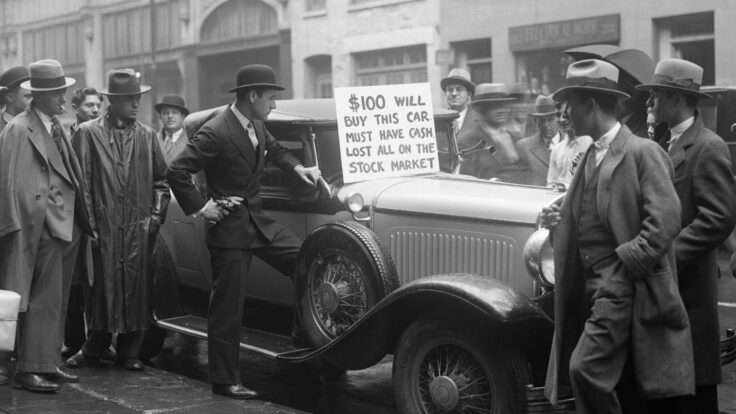
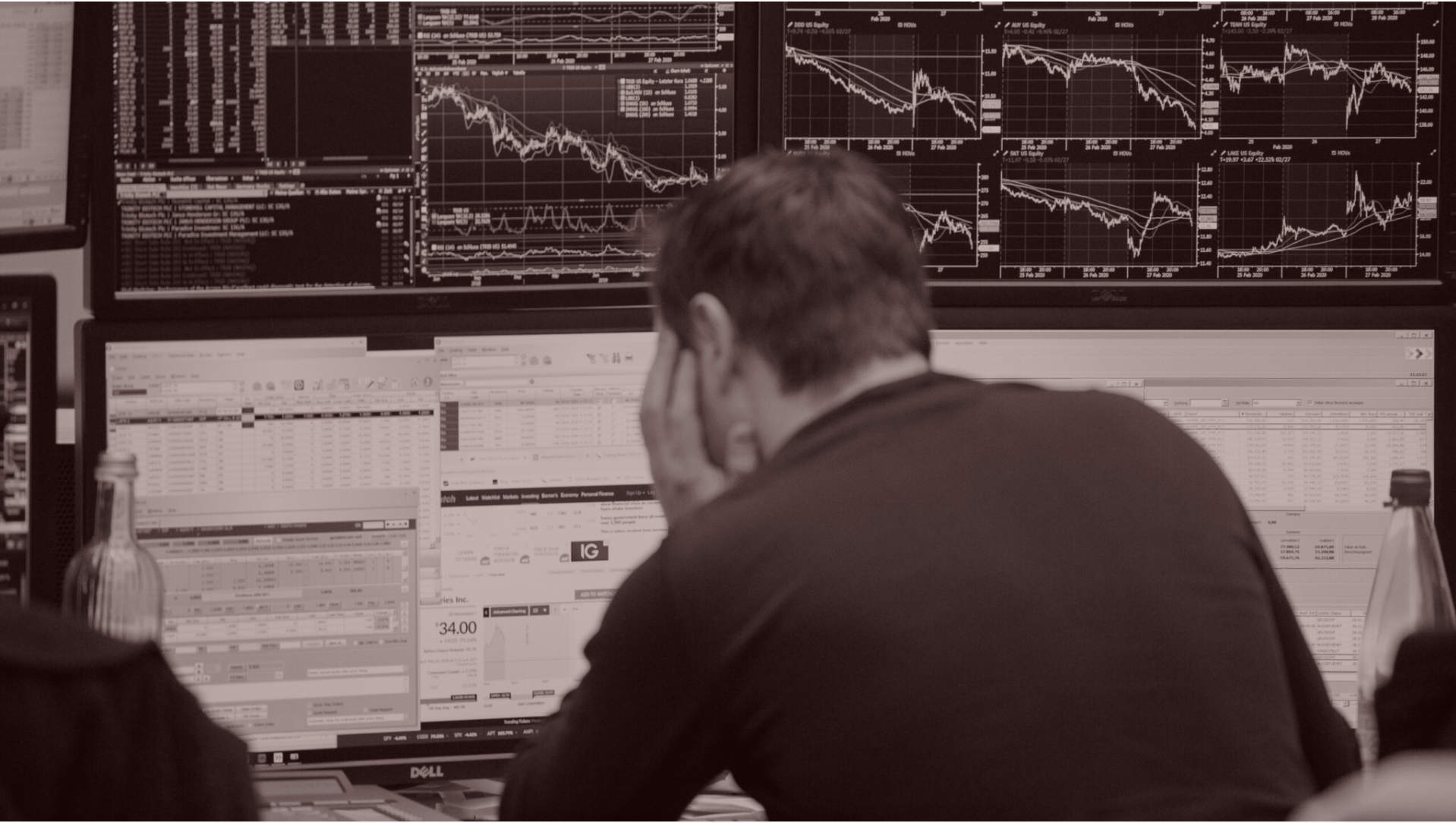
There’s no denying anymore that the financial markets are in the midst of the long anticipated correction. The smart money around Wall Street has shifted from debating the possibility of an economic downturn to the question of its duration, and depth, and the possibility of timing the bounce and maybe figuring out a way to make money from it. It stinks, I know. Many novice investors who piled into the high-growth stocks in 2020 have no historical memory of a bear market, let alone a period of high inflation. But the past is never dead, as Faulkner said. It’s not even past.
Indeed, the D.N.A. of the current market meltdown can be traced back to the 2008 financial crisis. That mess, which wiped both Bear Stearns and Lehman Brothers from the Wall Street map—and probably would have cratered others had the federal government not intervened with a massive bailout—saw the Dow Jones Industrial Average peak at around 14,000 before falling to around 6,500, in March 2009. It was a nosedive of 54 percent.
By that decidedly unscientific measure, we would still have a long way to go before investors get back in the buying mood. Notwithstanding Warren Buffett’s first quarter purchases—loading up the truck on the stocks of Apple, Chevron and Occidental Petroleum, among others—it still feels a bit soon to believe the blood has been fully let. As rough as the markets have been in the last six weeks or so, the Dow Jones is down only about 13 percent from its January 2022 peak of 36,800. The tech-heavy Nasdaq has taken more lumps. It peaked at around 16,000 last November and is down about 29 percent since then. Bitcoin, which has mostly traded alongside the Nasdaq, is down 57 percent. (This is not investment advice.)
But, as some economists like to say, perhaps this time will be different. And maybe it will be. One big difference between 2008 and 2022 is the health of the surviving Wall Street banks. That crisis was caused by time bombs that the banks implanted in their own balance sheets by issuing shitty (née “sub-prime”) mortgage-backed securities to anyone who could fog a mirror and then holding on to the stubs they couldn’t sell. The subsequent loss of investor confidence in the bank’s balance sheets almost wiped out Wall Street. (Some people may have preferred that outcome.)
There’s none of that now, or none that we can easily discern anyway. Thanks to the denouement of the 2010 Dodd-Frank law that effectively re-regulated Wall Street, over its strenuous objections, the big banks have more capital than ever before, and they are permitted to take fewer risks than ever before. The alchemy has worked wonders for Wall Street. In 2021, JPMorgan Chase earned some $47 billion in profit, a record. Goldman Sachs earned $21 billion in profit, also a record. For those who take comfort from such things, the Wall Street banks are not the cause of this correction, nor will they be responsible, it seems, if this correction turns into a rout.
|
|
|
No, the blame this time around lies squarely with the Federal Reserve, and the policies the central bank enacted after the 2008 financial crisis and that the Fed has kept in place pretty much since then. It was in and around March 2009 when the Federal Reserve, then led by Fed chairman Ben Bernanke, vowed to do whatever it took to pull the economy out of its funk. Bernanke, with a Ph.D. in economics from M.I.T., was a student of the Great Depression and was determined that his Fed would not repeat its tight-money mistakes during the 1930s, which he believed prolonged the financial agony. He decided to flood the zone with cheap money, and brought along most of his fellow Fed governors to make that happen.
Ever since 2009, we have essentially been living under the Bernanke monetary regime, aided and abetted by his two successors, Janet Yellen and Jerome Powell. And Powell has just been renominated for another four-year term. The Fed does many things at the same time, of course, but the two overarching policies of this era in the Fed’s history have been designed to drive down short-term interest rates, which the Fed controls directly, to near zero, and to drive down long-term interest rates, which Bernanke et al. figured out how to control indirectly, to their lowest levels in recorded human history. The so-called Zero Interest Rate Policy, or ZIRP, was the Fed’s plan to reduce short-term interest rates to zero in the years after the financial crisis and to leave them there. That made short-term borrowings very inexpensive. And this was a boon for Wall Street banks, which obviously use a lot of short-term financing to run their businesses on a day-to-day basis.
But most people, of course, want to borrow money for longer than overnight, or for longer than 30 or 60 days. They want a long-term mortgage to buy a house or a long-term loan to buy a car. Also corporations like to borrow money for long periods of time too, five years, seven years, ten years. People who make money from money—including the entire private-equity and hedge fund industries—also like to borrow money for longer stretches of time, too. (Of course, sometimes they like a shot of that cheap, short-term money to make a quick profit arbitrage.) There is, after all, a huge constituency of people who would love to borrow for a period of years, especially when the money is close to free.
That’s what I think led Bernanke and his Fed brethren to devise, and then to adopt, the so-called Quantitative Easing policy that has been in place since 2009. In its simplest terms, Q.E. was a way for the Fed to go into the market and buy all sorts of bonds—from Treasuries to mortgage-backed securities, and maybe even a junk-bond fund or two—to drive up the price of these bonds, and bonds more generally, and in turn to lower the yields, effectively lowering the cost of long-term money for everyone. Cheap money, especially if sustained over a long period of time, has the wonderfully stimulating effect of getting all sorts of people to borrow money and then using it to refinance higher-priced debt, or to invest in big new ideas, or to invest in stupid ideas like GameStop and AMC, or the vast array of meaningless cryptocurrencies.
I think it’s safe to say Bernanke’s plan worked better than he, or his fellow Fed governors, could have possibly imagined. The assets on the Fed’s balance sheet exploded from $900 billion, in 2008, to nearly $9 trillion these days. That’s nothing to sneeze at.
The land was awash in nearly-free capital. Asset prices zoomed, whether for art, housing, N.F.T.s, Bitcoin, or record catalogs. Investors couldn’t get enough of anything that offered a high-yield, and that meant the risky corporate bonds, or risky leveraged loans, or covenant-lite senior debt, or a huge number of high-flying stocks, with little underlying economic support other than a mania driven by the fear of missing out. When the pandemic hit, in March 2020, the Fed merely doubled down on both ZIRP and Q.E., hardly missing a beat. Now, of course, we are paying the price. The backsliding in the equity markets is lighting up CNBC.
|
|
|
But, as usual, the real action is going on in the bond market, which is probably four times the size of the stock market and the place that is often the leading indicator of trouble and how profound it will be. And once again, the Fed is driving the action. It has basically come out and said that in order to tame runaway inflation—running at about 8.5 percent per year, the highest rate in 40 years—it is cutting off the twin spigots of ZIRP and Q.E. The morphine drip is coming out of our collective arms.
The Fed raised short-term interest rates 25 basis points at its March meeting, and then by 50 basis points at the May meeting, the biggest rate hike in 22 years. Now, the speculation is that it will keep raising short-term interest rates throughout the year, by as much as 300 basis points or so. It also seems to be hinting that it will pull the plug on Q.E. and that it will no longer continue buying debt securities in the market and will let those that it owns mature, without replacing them. This means that the Fed is now determined to raise both short-term and long-term interest rates—more evidence that the aforementioned morphine drip is coming out, perhaps a decade too late by some estimates. The $9 trillion assets on the Fed’s balance sheet have been reduced by nearly $20 billion in the last week or so.
Is this a sign of the beginning of the end? Powell has lost his courage before—back in 2018 and early 2019—after he got hogtied by Donald Trump during a February 2019 dinner, about which there has been far too little reporting. Whether Powell & Co. follows through or not this time on its pledges to end ZIRP and Q.E., the debt markets have already started voting. It’s not a pretty scene. Let’s look at my favorite bellwether, the average yield on a high-yield bond, as shared by the Federal Reserve Bank of St. Louis. The average yield is now 7.42 percent. Last August, the yield was under 4 percent, suggesting that investors were willing to take crazy risks—buying the bonds of companies with less than stellar credit ratings—and not get properly compensated for taking those risks. The 342 basis point back-up in the yield is a whopping 85 percent increase in eight months. (It’s zooming up so fast every day now, I can barely keep track of it.)
And that’s not even the worst of it. The yield increases are just beginning in my humble opinion. I remember all too well the days when a high-yield bond actually had a high yield, something in the 10 percent to 12 percent range, and that was without the equity warrants, designed to sweeten that yield for investors. (That’s before Mike Milken, the junk-bond pioneer, started taking the warrants for himself.) To get junk bonds to start yielding 10 percent, as they should to compensate investors for the risks they are taking, will require a lot more pain for those people who thought a yield of 4 percent was the answer to their prayers. And it’s happening. According to the Financial Times, the value of junk bonds trading at 70 cents on the dollar, or below, has risen to $27 billion, from $14 billion, at the end of 2021. As one example, the yield on Rite Aid’s $850 million bond, due 2026, has increased to 13 percent, from around 7 percent at the end of last year.
Then there’s the back-up in yield on one of our safest securities: the 10-year Treasury. On May 2, the yield on the 10-year Treasury hit 3 percent for the first time in nearly four years. (It’s around 3.05 percent these days). The yield on the 7-year Treasury is even higher, at 3.1 percent. At the beginning of 2022, the yield was 1.55 percent, or half where it is now. That’s an incredible increase in such a short time.
Higher rates will mean everyone will be paying more for the money they want to borrow, for a new car or a new home or to pay bills. Companies may be less willing or less able to refinance their existing debt, increasing the risk of a payment default, and probably leading to a new wave of corporate bankruptcies, which have been at historic lows in the past few years. People who invested in high-flying stocks will pay the price as they return to Earth, or worse, potentially when they find a new home in bankruptcy court. The meme stock phenomenon—AMC, GameStop, Blackberry—is pretty much over. SPACs are pretty much over. N.F.T.s feel like they are ending as a way to speculate, anyway, at least for now. As for Bitcoin, which many have touted as a hedge against inflation and as a hedge against flailing financial markets, that too is a little worse for the wear. Since its peak in November, Bitcoin is down 57 percent, worse than the Nasdaq, which is a bit surprising to be honest. It could be worse but I’m not feeling like Bitcoin is the super-hedge that many people hoped it would be.
I’ve been writing for years about the insanity in the bond market and how it has become virtually uninvestable. That’s clear to everyone now, or it should be. But the bloodletting is not done, not by a long shot. (Again, not investment advice.) Maybe when the yield on the average high yield bond reaches 10 percent, it’ll be time to buy high-yield bonds again. But not until then. As for the stock market, there is more pain to come. But we’ll get through this and then it will make sense to buy bonds and begin to think, like Warren Buffett is already thinking, that it’s time to buy some downtrodden stocks again, too.
|
|
|
|
| FOUR STORIES WE'RE TALKING ABOUT |
 |
| The Dave-Oz Implosion |
| The two megarich MAGA poseurs may have beat each other into submission—and handed the race to someone else. |
| TINA NGUYEN |
|
 |
| The Putin Bildungsroman |
| Putin’s rough-and-tumble childhood in the dvors of Leningrad shaped his thinking and actions to this day. |
| JULIA IOFFE |
|
 |
| Politico's Inside Man |
| Four reasons why the unprecedented SCOTUS leak likely came from a culprit beyond standard media speculation. |
| ERIQ GARDNER |
|
 |
| Larry Ellison's Ascendance |
| In his twilight years, the private-island-dwelling former Democrat has become a force in GOP political fundraising. |
| THEODORE SCHLEIFER |
|
|
|

|
|
|
You received this message because you signed up to receive emails from Puck
Was this email forwarded to you?
Sign up for Puck here
Sent to
{{customer.email}}
Unsubscribe
Interested in exploring our newsletter offerings?
Manage your preferences
Puck is published by Heat Media LLC
64 Bank Street
New York, NY 10014
For support, just reply to this e-mail
For brand partnerships, email ads@puck.news |
|
|