|
Welcome back to Dry Powder. I’m Bill Cohan.
Everyone on Wall Street has a point of view on the Trump administration’s handling of the economy. But no matter your perspective—whether we’re anticipating dark times, or envisioning the precipice of a new golden era for deregulation and M&A—there’s no denying that we’re in a period of transition. The esteemed Wells Fargo analyst Mike Mayo sits firmly in the latter camp. “To me, this is the most significant positive regulatory inflection point for banks in three decades,” he told me, while offering the caveat that the next month or two will bear out whether his optimism is justified.
In our conversation, which is the meat of today’s issue, he also offered some pearls of wisdom for C.E.O.s during these strange times and heaped praise on our new Treasury secretary, Scott Bessent. I hope you enjoy our conversation as much as I did.
But first, some notes from Eriq and Lauren…
|
|
|
 |
Eriq Gardner |
|
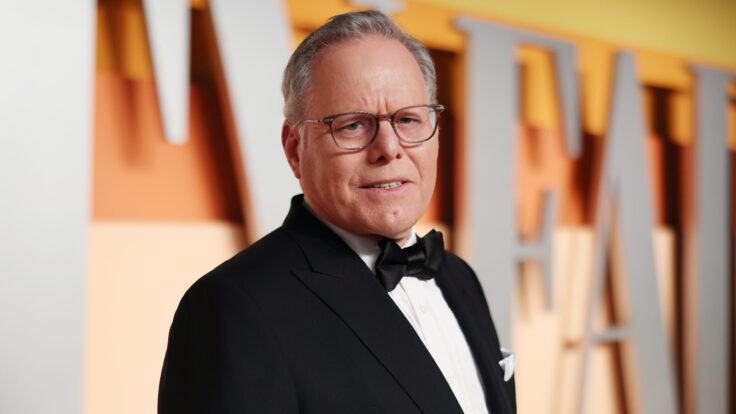
- Trump targets Paul Weiss: Unlike his executive orders aimed at the D.C. law firms Perkins Coie and Covington & Burling, Donald Trump’s retaliatory action against Paul Weiss—suspending security clearances, restricting access to government buildings, and putting federal contracts with the firm under review—figures to have a broader impact for the media and entertainment industries, which has used the firm extensively through the years. Rupert Murdoch’s companies, Fox and News Corp., have relied on Paul Weiss for internal investigations dating back to the Roger Ailes scandal. On the transactional side, the firm has played a key role in financing Skydance, creating Warner Bros. Discovery, and structuring the merger of WWE and UFC into TKO Group. Currently, Paul Weiss is defending CAA in Julia Ormond’s lawsuit over its alleged role in a Harvey Weinstein assault, and pursuing Spotify over claims it underpaid royalties to song publishers. Many of these matters involve significant interaction with the federal government, making it likely that Paul Weiss will challenge the constitutionality of the order—as Perkins Coie has already done.Trump’s targeting of big law firms has fomented somewhat of a crisis in the legal community, which is struggling to figure out an appropriate response. Over the past few days, I’ve spoken to several Paul Weiss clients, who told me they remain supportive of the firm, and have no plans to seek other representation.
|
|
|
 |
Lauren Sherman |
|
- No more drowning your sorrows in alcohol?: It’s fun to speculate about LVMH’s succession process now that chairman and C.E.O. Bernard Arnault is proposing that he stay on for at least another nine years. But behind the scenes at the €330 billion company, the real stressor is Trump’s recent threat of a 200 percent tax on alcohol imported from the European Union. Ostensibly, this would be retaliation for the E.U.’s proposed 50 percent tax on American whiskey, which is set to go into effect April 1.The 200 percent tax would include French wine, champagne, and cognac… affecting a large portion of Moët Hennessy’s wine and spirits sales in the U.S., its largest market. Of course, the wine and spirits division made up just 7 percent of LVMH’s overall sales in 2024 and 7 percent of profits. (It used to be far more, but the popularity of fashion and leather goods has overwhelmed the rest of the business over the past 15 years.) It’s yet another reason there’s analyst pressure for co-C.E.O.s Alexandre Arnault and Jean-Jacques Guiony to spin the division off into a separate company, allowing investors who don’t touch alcohol to take stakes in the larger org. Regardless, this is not a great situation for a company that believes part of its mission is to preserve and export French culture—and employs thousands of French people. It’s also a reminder that Trump will engage in trade warfare wherever he sees fit, whether he is tight with the Arnaults or not.LVMH can, however, put pressure on the French government and the E.U. to walk back the proposed tax. But there’s only so much the group can do. (The French love taxes.) A few days ago, Prime Minister François Bayrou said it was probably a mistake to tax American whiskey, and called for further negotiations. But April 1 is less than two weeks away, and the decimation of France’s wine and spirits industry, however temporary, would undoubtedly impact LVMH’s bottom line and could threaten hundreds of thousands of jobs in France. Anyway, it’s not good, and will be a test of what the policy wonks at LVMH might do if Trump eventually imposes further tariffs on handbags and shoes, too. Good thing clients travel right to Paris to buy their couture.
|
|
|
|
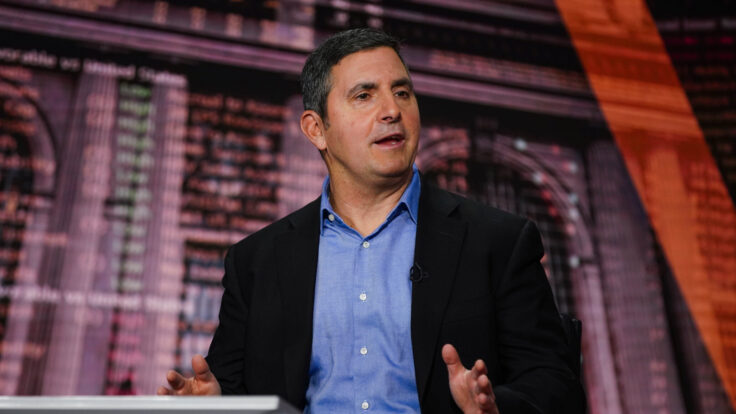
Mike Mayo, the august Wells Fargo analyst, offers the bull case for Trump’s hard reset of the economy, strangling bureaucracy, gutting Dodd-Frank, and why he thinks the banking sector is ready to rip. Has Mike sipped the MAGA Kool-Aid, or should everyone just chill out?
|
|
|
|
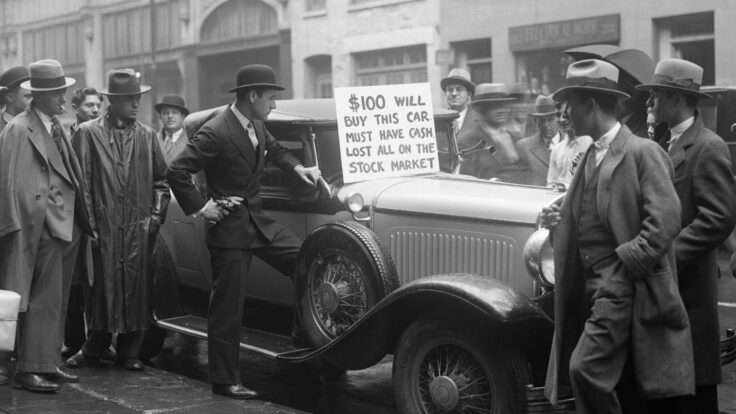
These are wild times on Wall Street, which had been anticipating unbridled growth and empire-building on the eve of Trump II. Now faced with escalating trade wars and the slashing of government staff and services, the investor class is in for a rocky ride. The stock market has given up trillions of dollars in post-election gains, M&A activity is all but frozen, and analysts are forecasting lower G.D.P. growth and higher inflation. Some recession signals are flashing red. For many, the “detox” that Treasury Secretary Scott Bessent has been spinning feels more like an emetic.
Others are unabashedly bullish. Mike Mayo, the singular equity research analyst at Wells Fargo Securities, has long been one of the most insightful and thoughtful prognosticators on Wall Street’s prospects. He’s just back from weeks of conversations with investors in both the United States and Europe. What better time, I figured, to chat with Mike about what investors are saying privately about the jittery financial markets in the wake of the second coming of Trump and what it may mean for Wall Street and our economy? What follows is a lightly edited and condensed version of our conversation.
|
|
Bill Cohan: So, Mike, you’ve been traveling around the country, and in Europe, talking to investors, taking their pulse about the economy and the new Trump administration, which is determined to upset the apple cart. What are you hearing from investors, and what are your own conclusions?
Mike Mayo: If I put my bank or corporate analyst hat on, this would be the new C.E.O. playbook: Highlight all the things that are wrong, blame those problems to justify a transition period, exploit those problems into front-loading changes, and rip the band-aid off. Warn that this may involve some short-term pain and disruption, but stress that it’s all in the name of superior structural long-term performance.
So whether applied to my analysis of a bank, or the economy, I think that kind of sums up the bull case. And the evidence of that being the case is that the administration has specifically referred to a period of “detox,” of “transition.” They said, “If it causes a recession, so be it, because we’re looking at the long-term benefits.”
In some ways, it’s like what Jamie Dimon did when he first became C.E.O. at JPMorgan a quarter-century ago. He highlighted the things that were wrong. He said there was a period of transition. He said they had to take on the tough problems. He ripped the band-aid off. He warned there could be some short-term pain, but that things would be better in the long term. So whether it’s the Jamie Dimon playbook, or the new C.E.O. playbook, I think that’s a good lens to understand what’s taking place. The only problem is, there’s no Jamie Dimon. So what you’re seeing here is some inconsistent messaging, and almost unprecedented policy uncertainty, and a very clear message from investors that they can only stomach so much policy uncertainty—on again, off again, on again, off again will only work for so long.
|
|
|
|
A MESSAGE FROM OUR SPONSOR
|
|
|
|
Who should wary investors and bankers look to for a modicum of comfort here?
The best hope here is Scott Bessent, the Treasury secretary. When he talks, it’s like prose to investors and financial firms and bank firms. He speaks prose. That is, “In Scott Bessent We Trust.” That’s really what it comes down to. In the last Trump administration, it was “In Gary Cohn We Trust.” In this administration, it’s Scott Bessent. [And the message seems to be]: Don’t sacrifice one iota of safety and soundness. Then, having done that, remove as much bureaucracy as humanly possible. The idea of bureaucracy busting, eliminating red tape, making it more efficient for banks to serve their customers can be a win, win, win. Banks can make more money, the customers will get some of those benefits, and the regulatory agencies can save money.
To me, this is the most significant positive regulatory inflection point for banks in three decades. The problem is the short-term pain for long-term gain. If the short-term pain, and policy uncertainty, and flip-flopping, becomes too much, then the animal spirits that were there at the start can dissipate, and become a vicious cycle downward.
That’s nice in theory, Mike. That’s the ideal spin you could put on what’s going on here. Is there any proof that there’s anything to what you just said?
Well, people equals policy. You have Michelle Bowman nominated to become the vice chairman of the Fed. You’re going to have new heads of the O.C.C., the F.D.I.C., the S.E.C., the Treasury, and C.F.P.B.—and this is probably one of the more pro-business administrations that you’ve seen in a long while—and some very unique deregulation. As I’ve been on the road, people say, “Wait a minute, banks and deregulation could cause big problems.” But we’re just talking about regulation of banks going from a 10, to like a six, or a five. The pendulum is swinging back. [Since the 2008 financial crisis], capital is double, liquidity is double, financial firms are strong. The investment-grade bond market considers bank bonds as safe as corporate bonds.
We’re not talking about crazy leverage, crazy lending, or anything that led to the global financial crisis. You’re just talking about ridding the complexity, and the red tape, to make banking more efficient, and to have banks become less marginalized, and be more of the heart of the economy. The banks’ loan and deposit ratio is historically low, so banks have the capacity to put a lot more loans on their books. The blueprint makes absolute sense, but it comes down to the execution. Can they execute? Can people stay on message? Can others gather around Scott Bessent and let him take the lead more?
|
|
Do investors have faith that this group is going to execute on this blueprint?
I just got back from two weeks of seeing investors in Europe, after a couple weeks of seeing investors in the U.S. The three words that came up most often were: I don’t know. So it’s really testing the fortitude of investors in banks, and perhaps elsewhere. You’re granted a certain amount of leeway, just like when Jamie Dimon took over, to go ahead and implement the changes that you think are necessary. You don’t have forever to do so. Whether it’s the first 100 days, or by the end of the second quarter, if we’re still talking about policy uncertainty, and it’s July Fourth, there’s significant trouble.
We’re hearing from investors: Don’t let the perfect be the enemy of good. In a merger, go ahead and make the decisions. They might not be perfect, but it’s more important to make those decisions, so everyone can run the business. In other words, what I’m hearing from investors is, What are the rules of the game? Until you know the rules, there’s a degree of paralysis for CapEx, for capital markets, for big strategic moves by corporations. Investors know that corporations and investors need to know the rules of the game before they truly jump into the next several years.
You transition from regulatory risk to political risk to policy risk, and the policy risk is a lot more than almost everyone I’ve spoken to had expected. The goal is to make banks more of the heart of the financial system. The stock market’s reaction over the last month shows there’s a big disconnect here. So that’s a warning, and hopefully someone is paying attention so that they can stay on message and execute the plan.
I think the consensus [among investors] is, We’re going to step out of the way, let whatever happens, happen, and then step back in, if and when [the administration gets] further along with their plans. I’m talking about beyond bank deregulation. I’m very [excited about] bank deregulation. I think this is needed to help eliminate some of the frictional costs in banking. This reminds me of the mid-1990s, which was also a time when people underestimated deregulation and the potential benefits. People tend to overestimate deregulation in the short term, and underestimate it in the long term.
Okay, but we know that in the 1990s, when there was deregulation and Glass-Steagall fell, we had the consolidation, and a lot of people believe that led to what happened in 2008…
You had five years that I thought were extremely appropriate [after the bank deregulation], but then it kept going. On a scale from one to 10, the starting point, you deregulated down to almost nothing. It was the Wild West. I got fired a couple times for being too negative, and then things blew up. But that’s not the starting point here. Now, the $7 trillion investment-grade bond market says that bank bonds are as safe as corporate bonds. So you’re starting at a point where banks are strong.
|
|
|
|
A MESSAGE FROM OUR SPONSOR
|
|
|
|
But Dodd-Frank pushed a lot of the risk out of the Wall Street banks and the depository institutions into the shadow banks and the alternative asset managers. Do we really want to return to a time when depository institutions are taking risks again?
Don’t you want to have more of your country’s commerce go through the regulated banking system, instead of all the non-banks? There’s no question that the private credit, and the non-banks, have made inroads against the banks, but the banks’ lack of loan growth recently is simply a degree of paralysis while everybody waits to find out what the rules of the game are going to be. A lot of these [non-bank] loans are a different credit box than where banks want to operate.
It’s a nice gig to be head of a bank—as long as you don’t blow up, you tend to keep your job. So it’s been 15 years of de-risking of the banking industry, de-risking of leverage, de-risking of the liquidity, de-risking of your customers, de-risking of your trading book. But there’s still a chance that defeat will be grabbed from the jaws of victory. Washington needs to stay on message. Get the rules of the game finalized over the next month or two. Let Scott Bessent be Scott Bessent. Deregulate for growth, and project greater certainty about the path ahead, to allow for the major capital expenditures and capital market actions.
|
The Jamie Dimon Protection Act
|
|
Do you think the big banks will be allowed to do M&A deals again?
Yes, I think mergers are back. This was just a case of well-intended, but misguided, public policy for the last 15 years. The lack of large mergers simply keeps a deep moat around JPMorgan. It was the Jamie Dimon Protection Act. Like you have some rare species in the world. But I don’t think Jamie Dimon needed the protection against bank mergers. There should be several large national banks.
When I worked at the Fed back in 1988, the idea was, once a merger application was submitted, it would be decided on within 60 days, with the 60-day rule. That’s where I think it could be win, win, win for everybody. Uncertainty doesn’t help anybody. So if you’re going to deny a merger, or if you’re going to say, These are types of deals that we turn down, fine, turn it down, just make the rules transparent, so everybody can move on. There is a chance that this is a very unique opportunity—that if you’re thinking of a deal for the rest of your life, and you have such a pro-business administration, and if you’d want to do it in the next 12 to 18 months, this is your moment.
Do you think that’s why these bank C.E.O.s are sucking up to Trump?
Banks are a heavily regulated industry, so they do what they think is best for the shareholders. That’s it. That’s the win.
I’ll take that as a yes. And why do you think the market has crapped out since Inauguration Day?
Well, I think it was just the degree you had the animal spirits, banks were leading the market. There were expectations of loan growth accelerating, the chance for a capital market super cycle, deregulation, and a tone from the top that free markets are going to rule, as opposed to bureaucracy. That was music to investors’ ears.
But the flip-flop on a myriad of policy issues, day to day, has taken such a toll, that you’re not seeing the big pickup in loan growth and investment banking. The months of January and February were less than expected, and there’s a degree of paralysis until the rules are decided. Investors can only stomach so much. Just like if there were a new bank C.E.O., I’d say, all right, find the problems, bring them out in the open, deal with them. There’s a period of pain and transition, but then you have to get on with it.
|
|
It sounds like we’re at a critical juncture, here.
Yes, this is a very critical juncture. You’re in a window here for a couple more months. We’ll make or break whether my bull case for banks plays out, or whether they wind up in a ditch.
So you’re bullish on the banking sector?
At the moment, I’m bullish on the banking sector. But, in the end, good economics is good politics. I think there’s enough collective pressure by corporate America to not fritter away this opportunity. It’s testing my conviction. I’m saying my earnings adjustments are at risk, because of the paralysis for business activity, but I still think you come out on the other side.
It’s like when you take Amtrak: All aboard! So I’m shouting All aboard the bank train, but I’m also shouting, Mind the gap! One year from now, I think you’ll be in a good place, but it’s tricky over the next month or two, depending on how this policy stuff plays out. Especially in Europe. Boy, they were so pessimistic in Europe about what’s happening here from a policy standpoint. I guess what I’m saying is, Buy the chaos.
Wow, that’s a bold statement.
Well, you buy chaos, and you sell certainty.
It’s what Warren Buffett says: When everyone else is freaking out, be the buyer. That looks good when it works out. It doesn’t look so good when it doesn’t.
Having said that, the caveat is, don’t go on vacation for more than two days.
|
|
|
|
A professional-grade rundown on the business of sports from John Ourand, the industry’s preeminent journalist, covering the leagues, players, agencies, media deals, and the egos fueling it all.
|
|
|
|
Join Emmy Award-winning journalist Peter Hamby, along with the team of expert journalists at Puck, as they let you in on the conversations insiders are having across the four corners of power in America: Wall Street, Washington, Silicon Valley, and Hollywood. Presented in partnership with Audacy, new episodes publish daily, Monday through Friday.
|
|
|
Need help? Review our FAQ page or contact us for assistance. For brand partnerships, email ads@puck.news.
You received this email because you signed up to receive emails from Puck, or as part of your Puck account associated with . To stop receiving this newsletter and/or manage all your email preferences, click here.
|
|
Puck is published by Heat Media LLC. 107 Greenwich St, New York, NY 10006
|
|
|
|



_01JPADSS7ARAYEFBQ0CY98Q9VX.jpg "Oscar
de la Renta")
_01JPADSRWEG5TBRPBW1Q3X046B.jpg "Oscar de la Renta")