Welcome to Dry Powder. I’m Bill Cohan.
By the time this private
email tumbles down the field into your inbox, I’ll be hosting a very private event at the Westmoor Club here on Nantucket with a few of my partners: Marion Maneker, the inimitable author of Wall Power (sign up here…), our franchise on the art market; Leigh Ann Caldwell, the brilliant Capitol Hill expert who shepherds The Best & The Brightest (sign up here…); and Puck co-founder Jon Kelly. We’ll be leading a discussion on the intersection of Wall Street and Washington, and the attendant spillover into the art and luxury markets, with a group of leaders across related industries. Perhaps I’ll share some recollections in a future edition.
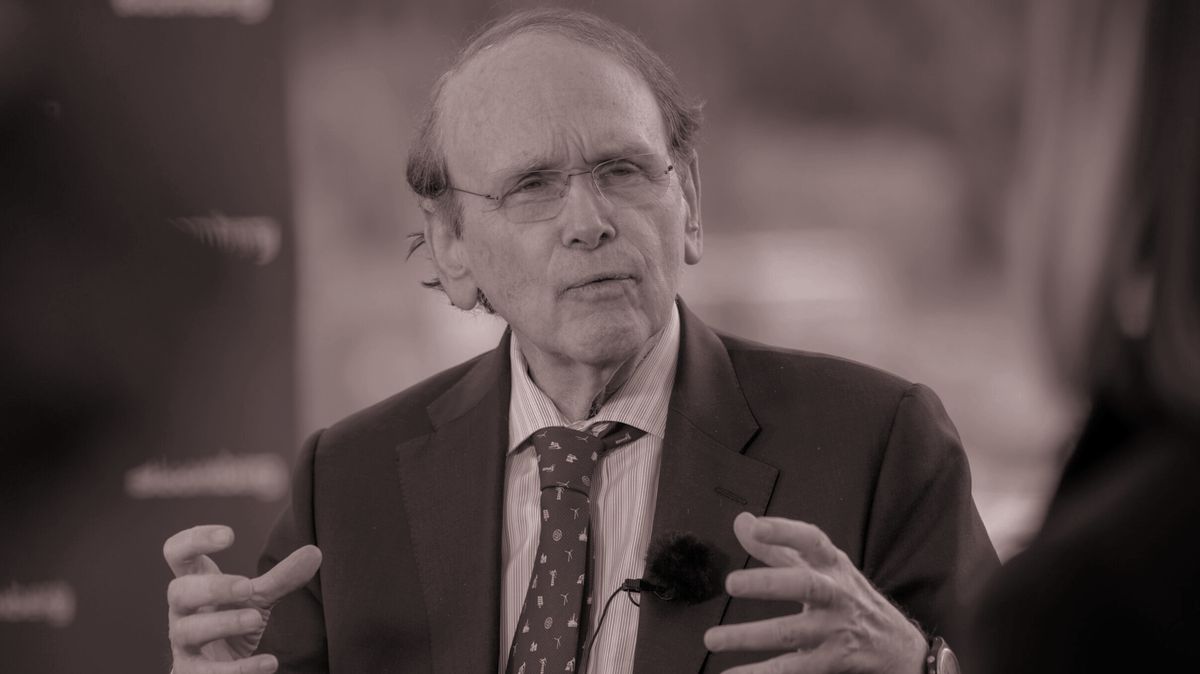
In tonight’s issue, my annual summer conversation with my friend
Dan Yergin, the Pulitzer Prize–winning author of The Prize, vice chairman of credit-ratings behemoth S&P Global, and much-sought-after thought leader on the energy markets. We caught up following a global sojourn that took him to the Middle East, Japan, Singapore, and Malaysia. As usual, we met at my kitchen table in Nantucket.
But first… |
-
The Lazard library: Thanks to several of you in the Dry Powder coterie, I have been properly reminded of a few other authors from the broader Lazard community, like myself and my friend Jonathan Foster, who recently published On Board: The Modern Playbook for Corporate Governance, the subject of a previous item. (Congratulations, Jon.)
For instance, I somehow managed to overlook my friend Sujeet Indap,
the superb Financial Times journalist and Lazard New York alum, who wrote an excellent 2021 book, The Caesars Palace Coup, about the ill-fated buyout of Harrah’s by Apollo and TPG. (TPG, of course, is an investor in Puck.) I’ve written plenty about Sujeet’s book, which he wrote with Max Frumes, and I mention it again (of course) in my upcoming Apollo book, so I’m not sure how it slipped my mind. But it did.
One reader alerted me
to John “Edward” Horner Chancellor, the author of three books, who was once described as “one of the greatest financial historians alive.” Chancellor worked at Lazard Brothers in London in the early 1990s—who knew? I also forgot about that other great author and polymath Bruce Wasserstein, who ran Lazard after September 11th until his untimely death in October 2009. Along with Mark J.
Green, the onetime New York City public advocate and near-mayor, Bruce edited the 1972 legal essay anthology With Justice for Some, which included an introduction by Ralph Nader, whom Bruce worked for before becoming a banker. In 1978, Bruce also wrote a book on corporate finance law. His magnum opus, Big Deal—about, you know, big M&A deals—was published in 1998. It has many pages.
Peter Orszag,
the current Lazard C.E.O., has also contributed to a number of essay collections, with such titles as Aging Gracefully, Taxing the Future, and Saving Social Security. (Orszag was the director of the Office of Management and Budget during the Obama administration.) He is also a rather prolific user of LinkedIn and drops plenty of short essays there. Recently, Orszag co-authored an essay in Foreign Affairs, “The Troubled Energy Transition,” with
Atul Arya and my friend Dan Yergin, the subject of today’s issue.
Lastly, one loyal reader alerted me to the 2015 self-published memoir A Taste for Happiness, by the late Lazard patriarch Michel David-Weill. M.D.W., as he was known inside Lazard, “wrote” the book along with Patricia Boyer de LaTour, a longtime
journalist at Le Figaro, and I think it’s safe to say he didn’t write a word of it. But he left us with the profound thought that, as “one who knows the true value of happiness, … it’s up to you to live a happy life,” which is probably easier to do if you inherit an investment bank and then sell it for billions. - Apollo touches grass: Alternative asset managers just want to have fun. At least, I think that’s the logic behind
the Apollo Credit Olympics. The skill-style competition, which has been held for the past three years on Randalls Island, near Icahn Stadium, was the brainchild of Carl Icahn, the longtime frenemy of Apollo founder Leon Black. “We want people who are willing to test some of those norms and just be outside-the-box thinkers,” Apollo co-president John Zito said on a recent podcast. This year’s
event had about 550 participants, up from 180 in its first year, along with a bunch of top-notch food trucks, including one from Walter’s Hot Dogs, in Mamaroneck (supposedly the best hot dogs out there). The hype man from the New York Rangers was also on hand.
The competition featured a pretty standard corporate-games lineup, with a bunch of trust exercises, I gather—except for the last challenge. Zito, the firm’s likely heir apparent to C.E.O. Marc Rowan, had the firm’s
growing credit team meet at 5 a.m. at the massive Fulton Fish Market in the Bronx, where they purchased three 50-pound cod.
Zito grew up visiting Milbridge, Maine, where they hold an annual relay race where participants have to carry a greased codfish while dressed in a fisherman’s getup and getting sprayed with firehoses. A version of that race was the final, winner-take-all event of the Apollo Credit Olympics, with the losers having to take a turn in a dunk tank. “We still are trying to
have fun here,” Zito said on the podcast. “You’ve got to have fun coming to work and enjoy doing it.”
As Zito told me, “Everyone in our credit business remembers the greased cod race.” I’m not surprised. Over to you, Jon Gray. Can Blackstone top this?
|
And now on to the main event… |
|
|
Welcome to the fourth annual State of the Energy Markets conversation with my
friend Dan Yergin, Pulitzer Prize–winning author and vice chairman of S&P Global. |
|
|
Dan Yergin, the Pulitzer Prize–winning author of
The Prize and vice chairman of S&P Global, recently sat down at my kitchen table in Nantucket for a wide-ranging conversation on the latest machinations in the energy market. Dan, a renowned industry thought leader, had just returned from a global sojourn that took him to the Middle East, Japan, Singapore, and Malaysia. He was brimming with insights. The conversation marked our fourth
annual symposium on the topic—a summer rite of passage here at Puck.
All is flux in the energy world. And this year, everyone’s attention is focused on electricity. Specifically, can enough be produced in the U.S. to support Big Tech’s seemingly insatiable
demand for computing power to fuel their A.I. fever dreams? These days, Dan explained, data centers account for over 4 percent of U.S. electricity consumption—a number that could increase to 10 percent in five years. And then there are the power needs for chip production. “Everywhere I go now,” he said, “there’s concern about the adequacy of electricity, and the reliability of the system.”
He conceded that wind and solar are not going to provide what’s needed. For now, we’re going to have
to rely on modern, natural gas-fueled electric turbines. He cited the increasing demand for those turbines at the big three manufacturers, GE Vernova, Siemens, and MHI (Mitsubishi). In 2022, he said, these three manufacturers sold one gas-powered turbine between them. Now, if you want one, you’ll have to wait until 2030. Of course, many utilities have already put in their orders.
Then there’s the ongoing nuclear power renaissance. “Five years ago, it was kind of finished in terms
of new build,” Dan told me. Now, Big Tech is driving the revival in order to facilitate the industry’s staggering A.I. investments. To meet Microsoft’s energy demands, Constellation Energy is restarting one of the reactors at the infamous Three Mile Island, in Pennsylvania. Amazon has cut a deal with Talen Energy, also in Pennsylvania.
Meta has a new arrangement with an Illinois nuclear company. Glenn Youngkin, the governor of Virginia, which has more data-center demand than the next five states combined, is talking about building a fusion plant.
But like the gas turbine situation, these are solutions for 2030
and beyond. “Nuclear is not a tomorrow solution,” Dan said, adding that he’s not surprised by the resurgence of interest in nuclear, given the demand for higher “base loads,” or the minimum amount of electricity a grid can supply continuously. Renewable sources, like wind and solar, can only provide power on an intermittent basis. The companies spending tens of billions on data centers “need to assure themselves of having reliable power,” he said. “That’s a wager on nuclear as being part of that
solution.” In other words, more capacity is on the way—which, naturally, begs the question of how much capacity is enough, and whether the industry is on the verge of another oversupply situation. |
Meanwhile, another significant bottleneck is the availability of copper. Energy alternatives, such
as wind and solar and the batteries that power E.V.s, use lots of copper. So do data centers. Defense contractors, too. As defense spending in both the U.S. and Europe ratchets up, the copper supply is challenged. So far this year, the price of copper has risen 41 percent.
In Washington, where Dan lives with his wife, Angela Stent, a leading Russian foreign policy expert, there is near-panic about the surging demand for copper and the lack of
supply. “That’s where all these energy issues intersect with geopolitics,” Dan noted. “It’s the competition, and rivalry, and tension with China—because China has a dominant role in the supply chains for minerals.” The U.S. has two copper projects underway, he said, both of which are years away from being operational. One has received an indication of interest, for financing, from the Export-Import Bank. The other, which moved ahead in May after the Supreme Court
refused to hear an appeal by members of the San Carlos Apache Tribe—who consider the Arizona site to be sacred—is being developed by Resolution Copper.
It’s not just a mining problem, it’s also a processing problem. The U.S. once had more than 19 copper smelters, Dan said. Now, there are only two in operation.
China, meanwhile, has more than 50. “The processing of minerals is also where the Chinese have a very dominant position,” he said. “It’s very hard to build anything in the United States because of permitting and judicial delays,” Dan said. “It would be impossible to build the Interstate Highway System today, given our current system.” |
Nuthin’ but an L.N.G. Thang…
|
Fortunately, the U.S. has become the world’s dominant producer and exporter of liquified natural
gas. In fact, L.N.G. represents about half the value of our exports of semiconductors, and twice the value of the Hollywood exports of film and TV shows. “It’s become a very strategic business,” Dan said. Without it, Putin might have prevailed more easily in his invasion of Ukraine after he cut off Russian L.N.G. supplies to Europe. Instead, the U.S. was able to supply Europe with the needed L.N.G. Anyway, L.N.G. can also be used to power the electric turbines that will
be coming online to supply the needed electricity. That business is obviously doing very well, Dan said.
As for the oil business, Dan explained that the U.S. has gone from producing some 5 million barrels a day in 2008 to 13.5 million in 2025. There are also 6 million barrels a day of what are called “petroleum liquids.” It was thought, at one point, that the U.S. oil production might reach 15 million barrels a day. “Now,” he said, “there is a sense that the U.S. may have reached
its peak in terms of oil production. It’s a very large peak. It’s more than Saudi Arabia. It’s more than Russia.”
Of course, oil supply is also a function of the price of oil, now around $70 per barrel. But if Trump succeeds in jawboning that down to where the price of a gallon of gas at the pump is under $2, oil production will fall off. Oil demand has been generally flat for decades in the U.S., with most of the growth during the last 20 years coming from China. But with China shifting
to electric cars in a big way, the country’s demand for oil has fallen dramatically. “There’s a huge debate,” Dan said. “OPEC sees buoyant growth for decades to come. The International Energy Agency sees it flattening out. I would still have the view that I had in The New Map”—his 2020 bestseller—“that, probably by the early 2030s, we’ll see oil demand flatten. Not a sharp decline, but plateau.” Regardless, he said, the U.S. is “still the dominant player in world oil and natural
gas.”
In the past, Dan and I talked about hydrogen’s potential as a new, viable, and massive source of energy. This time around, though, he was less sanguine. “There was a lot of excitement about hydrogen two or three years ago,” he told me. “But the air has pretty much gone out of that. It won’t be anywhere near the scale that was anticipated.”
Then there’s the matter of the ongoing competition with China for economic supremacy. Dan described it as “The Art of the Deal
versus the Long March.” He was in Beijing in December when he came to the realization that the Chinese are focused on self-sufficiency, and reorienting their trade away from the United States to other parts of the world. Only 15 percent of Chinese exports go to the United States, Dan said. “They don’t need to buy soybeans from the United States. They can buy it from Brazil. If you look at their pattern of exports, you can see that they clearly are reorientable.”
Before we wrapped things
up, Dan told me about a conversation he had with a senior official in Asia. “He talked about how China looks at the U.S. as a disordered society, as dysfunctional, and they’re not,” Dan said, “They have their own way of operating—as a very controlled society. The Chinese really do see the U.S., in some ways, in decline, even as we have what is actually the most successful large economy in the world.” |
|
|
Join Puck’s chief political columnist, John Heilemann, as he roams the corridors of power and influence in America on
this twice-weekly interview show, taking you beyond the headlines with the people who shape our culture: icons and up-and-comers, incumbents and insurgents, moguls and machers in the overlapping worlds of politics, entertainment, tech, business, sports, media, and beyond. The conversations are rich and revealing, unrehearsed and unexpected… and reliably impolitic. A Puck-Audacy joint, new episodes drop every Wednesday and Friday. |
|
|
The industry’s go-to source for unflinching reporting on the trillion-dollar business of artificial intelligence -
perhaps the single most important technology of our time. Ian Krietzberg, the powerhouse journalist behind The Deep View, delivers twice-weekly insights into the latest dealmaking and breakthroughs in A.I., and how the intersecting worlds of finance, entertainment, media, and politics are being transformed in its wake. |
|
|
Need help? Review our FAQ page or contact us for assistance. For brand partnerships, email ads@puck.news. You received this email because you signed up to receive emails from Puck, or as part of your Puck account associated with {{customer.email}}. To stop receiving this newsletter and/or manage all your email preferences, click here. |
Puck is published by Heat Media LLC. 107 Greenwich St, New York, NY 10006 |
|
|
|